
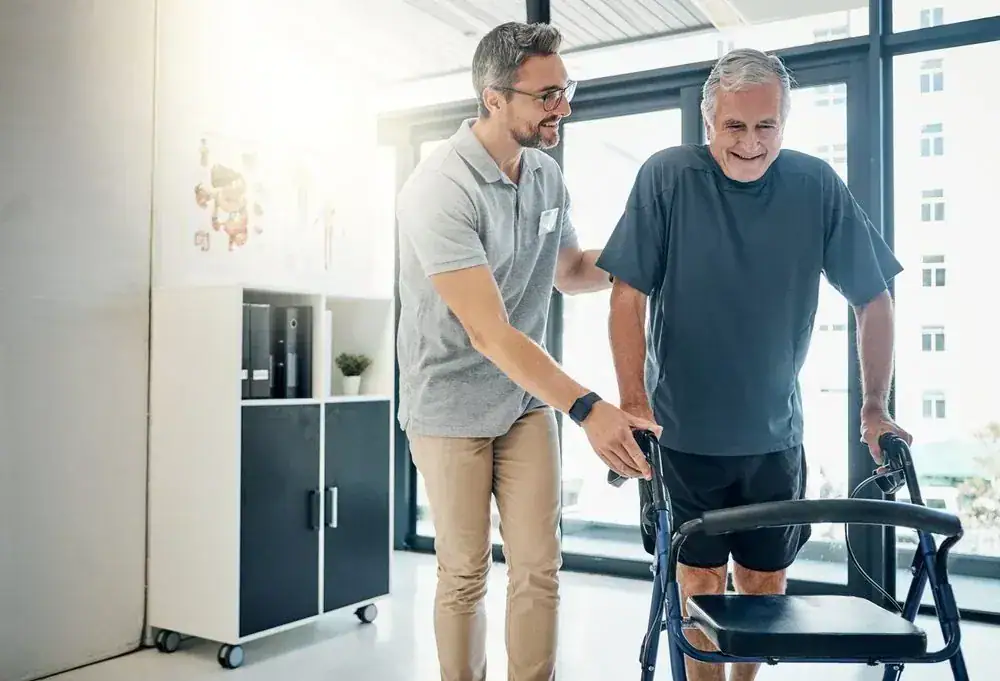
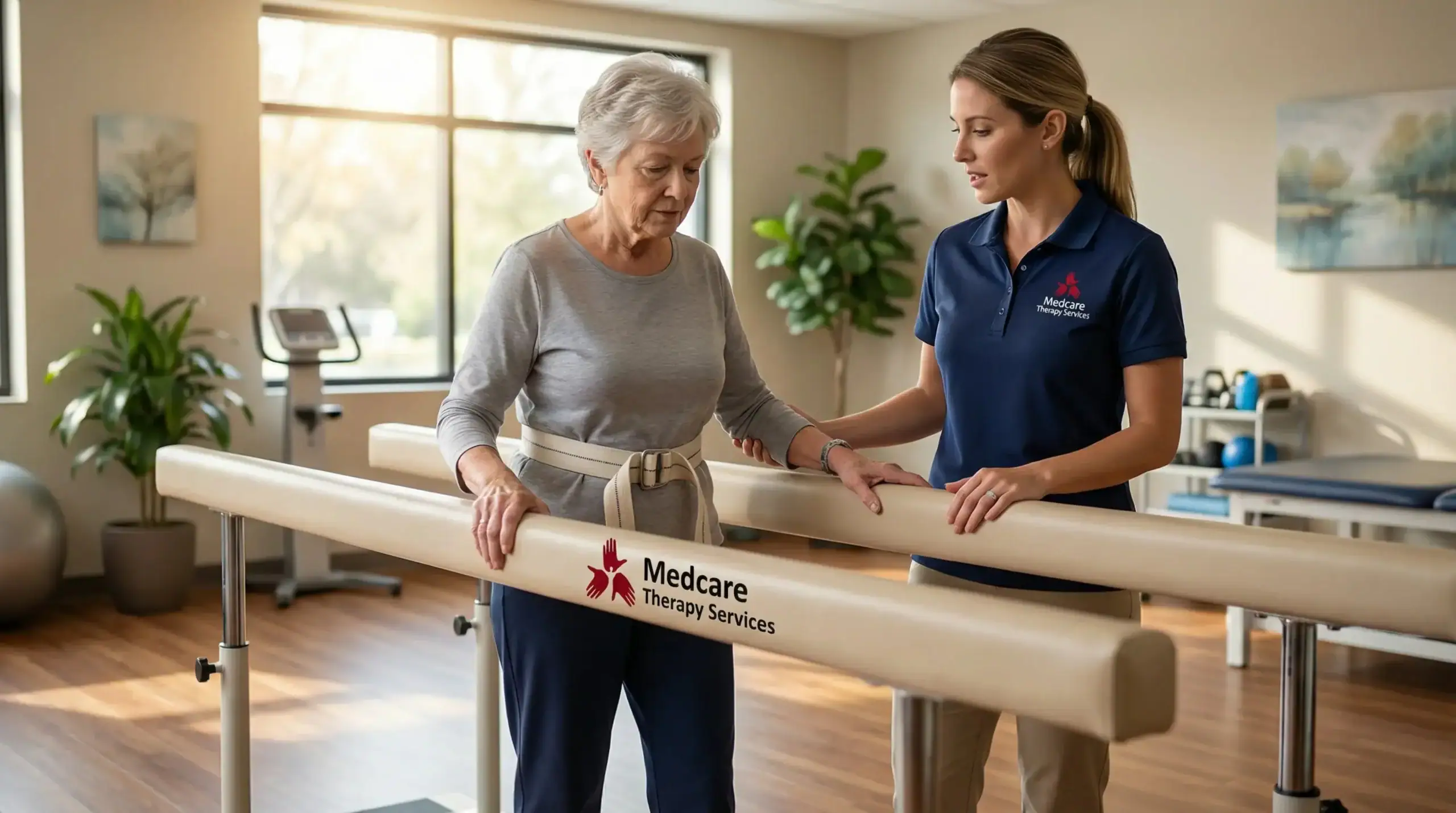
You stop second-guessing every step. Getting up from a chair doesn’t require a strategy. Walking to the mailbox or reaching into a cabinet becomes automatic again, not something you plan around.
That’s what happens when balance training actually works. Research shows that seniors who do targeted balance exercises three times per week can cut their fall risk nearly in half. Not by avoiding movement, but by rebuilding the strength and coordination that makes movement safe.
Physical therapy for balance isn’t about learning to be more careful. It’s about training your body to respond when your weight shifts, when the ground is uneven, or when you need to catch yourself. The goal is simple: you move with less fear and more control, in your own home, on your own terms.
We’ve been serving Long Island since 2010. We specialize in home-based care for seniors who have difficulty getting to a clinic—or who simply prefer the convenience and comfort of staying home.
Every therapist on our team is licensed and trained in elderly fall prevention. We accept Medicare and most commercial insurance, and we handle the paperwork so you don’t have to. Our focus is on making care accessible, not complicated.
We’re based here on Long Island, and we understand what seniors in Wainscott, NY and the surrounding areas are dealing with. You’re not a number. You’re someone who deserves to feel steady and safe in your own space.

It starts with a fall risk assessment in your home. A licensed physical therapist evaluates your strength, balance, gait, and the layout of your space. We’re looking for specific factors—weak legs, slow reactions, vision issues, medication side effects—that increase your risk.
From there, you get a personalized plan. That might include strengthening exercises, balance drills, coordination work, or training for everyday movements like getting in and out of the shower. Sessions happen in your home, typically two to three times per week, and they’re built around what you need to do, not what a textbook says.
You’ll also get guidance on fall hazards in your home—loose rugs, poor lighting, clutter—and strategies to reduce risk without turning your house into a hospital room. The work is practical, not theoretical. And because it’s done where you actually live, the improvements carry over into real life immediately.

Ready to get started?
Every plan includes a comprehensive fall risk assessment, one-on-one sessions with a licensed physical therapist, and a customized exercise program you can do between visits. You’ll work on strength, flexibility, and balance—the three systems your body relies on to stay upright.
We also train you on functional movements. That means practicing the things you actually do every day: standing from a chair, walking on different surfaces, reaching overhead, turning quickly. These aren’t generic senior balance exercises. They’re specific to your body and your routine.
On Long Island, where one in three adults over 65 falls each year, this kind of targeted intervention matters. You’re not just doing exercises. You’re retraining your body to handle the unexpected—a wet floor, a curb, a moment of dizziness—so those moments don’t end in injury. And because we come to you, there’s no transportation barrier, no waiting room, and no risk of falling on the way to therapy.

Yes. Medicare Part B covers outpatient physical therapy when it’s medically necessary and prescribed by a doctor. Fall prevention qualifies if you’ve had a fall, you’re at high risk of falling, or you have a condition that affects your balance or mobility.
You’ll need a referral or prescription from your physician, but once that’s in place, Medicare typically covers the majority of the cost. Most patients pay a copay or coinsurance depending on their plan. We handle the billing and work directly with Medicare, so you’re not stuck navigating the system on your own.
If you’re not sure whether you’re covered, we can verify your benefits before the first visit. The goal is to remove barriers, not create them.
Most people notice a difference within four to six weeks if they’re consistent with their exercises. That doesn’t mean you’re suddenly walking a tightrope—it means you feel steadier on your feet, you’re less afraid of falling, and everyday movements feel more controlled.
The timeline depends on where you’re starting from. If you’ve been sedentary for a while or you’ve already had a fall, it may take longer to rebuild strength and coordination. But even small improvements—being able to stand on one foot for a few extra seconds, or getting out of a chair without using your hands—add up to real-world safety.
Research shows that balance training done three times per week for 12 weeks can reduce fall rates by nearly half. The key is sticking with it. Balance isn’t something you fix once and forget. It’s something you maintain, and we’ll give you the tools to do that long after therapy ends.
You’re training in the environment where you actually live. That means we can address the real hazards in your home—the step into your bathroom, the layout of your kitchen, the lighting in your hallway—and build exercises around the movements you do every day.
There’s also no transportation barrier. For seniors with mobility issues, getting to a clinic can be stressful, exhausting, or even risky. In-home therapy eliminates that. You get the same quality of care without the logistics.
And frankly, most people are more comfortable at home. You’re not self-conscious. You’re not rushing. You can ask questions, move at your own pace, and focus on what matters. The therapy is built around your life, not the other way around.
Absolutely. In fact, if you’ve already fallen, you’re at higher risk of falling again, which makes physical therapy even more important. A fall often happens because of an underlying issue—weak legs, poor balance, slow reflexes—and those issues don’t go away on their own.
Physical therapy helps you rebuild the strength and coordination you lost, whether that’s from the fall itself, from being less active afterward, or from the fear that keeps you from moving as much. We also work on fall recovery techniques, so if you do lose your balance, you’re better equipped to catch yourself or get up safely.
The goal isn’t to erase what happened. It’s to make sure it doesn’t happen again. And if you’re dealing with lingering pain or limited mobility from a previous fall, we address that too. You’re not stuck where you are right now.
Yes, when they’re done correctly. That’s the whole point of working with a licensed physical therapist. We don’t hand you a generic exercise sheet and hope for the best. We assess where you are, what you can safely do, and how to progress without putting you at risk.
Early exercises might be done while holding onto a counter or sitting in a chair. As you get stronger, we add challenge—standing on one foot, walking heel-to-toe, shifting your weight. Everything is controlled, supervised, and adjusted based on how your body responds.
The irony is that avoiding movement because you feel unsteady actually makes things worse. Your muscles get weaker, your balance gets worse, and your risk goes up. The safest thing you can do is work with someone who knows how to rebuild your stability step by step. That’s what we do.
Start by talking to your doctor. Let them know you’re interested in physical therapy for fall prevention or balance training. They’ll write a referral or prescription, which is required for Medicare coverage.
Once you have that, contact us. We’ll verify your insurance, schedule an initial assessment, and send a licensed therapist to your home. The assessment takes about an hour and covers your medical history, current mobility, balance, strength, and any fall risks in your environment.
From there, we build your plan and start therapy. Most patients do two to three sessions per week for eight to twelve weeks, but the timeline depends on your needs and goals. You’re in control of the process. We’re just here to make sure it works.
Other Services we provide in Wainscott