
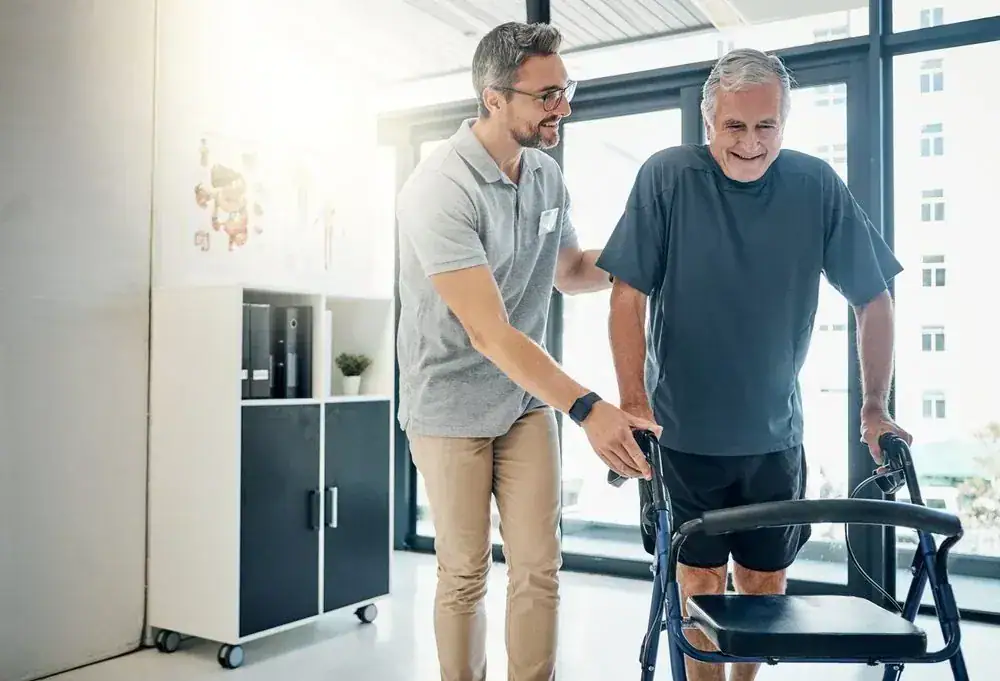
You stop planning your day around what might go wrong. You walk to the mailbox without that grip of anxiety. You get up from your chair without calculating the risk.
That’s what happens when your balance improves. Not just physically—though your legs do get stronger and your posture steadies—but mentally. The fear that’s been quietly running your life starts to fade.
Regular balance exercises can cut your fall risk in half. Not by luck. By retraining how your body responds when you shift weight, turn quickly, or step onto uneven ground. Your brain and muscles learn to work together again, the way they used to before age or illness interrupted that connection.
You’re not trying to become an athlete. You’re trying to stay independent. To keep doing what matters without wondering if today’s the day something goes wrong. Physical therapy for balance gives you that—not by making promises, but by strengthening the systems that keep you upright.
We’ve worked with seniors across Nassau County for over a decade. We’re not new to fall prevention, and we’re not guessing at what works.
Our therapists are licensed, Medicare-certified, and experienced in geriatric care. They’ve seen what happens when someone falls—and what it takes to prevent it from happening again. They know the difference between exercises that look good on paper and exercises that actually make you steadier on your feet.
We serve Thomaston and surrounding Long Island communities with in-home physical therapy. That means you don’t have to arrange transportation or worry about getting to an appointment. Your therapist comes to you, evaluates your home environment, and builds a program around your actual daily life—not a clinic setting that doesn’t match how you move at home.

First, your physical therapist evaluates your balance, strength, gait, and any medical conditions affecting your stability. They watch how you move through your home—where you hesitate, what you hold onto, what makes you unsteady. This isn’t a generic assessment. It’s specific to you and your space.
Then they design a program. You’ll do exercises that strengthen your legs and core, improve your posture, and retrain your balance reflexes. Some exercises challenge your stability in controlled ways—standing on one foot, shifting your weight, turning your head while walking. Others build the muscle endurance you need to move confidently all day, not just for five minutes.
Your therapist adjusts the program as you improve. What felt hard in week one becomes your baseline by week four. The goal isn’t to make you perfect. It’s to make you functional, confident, and safe in the environment where you actually live.
Most patients see measurable improvements in 6-8 weeks. Better walking speed. Less fear. More willingness to do the things they’d been avoiding. And because it’s Medicare-covered outpatient therapy, you’re paying 20% of the approved amount after your Part B deductible—not out-of-pocket rates that make you choose between your safety and your budget.

Ready to get started?
Nassau County ranks fourth in New York State for fall-related incidents among seniors. In this county alone, 88% of injury hospitalizations for adults over 65 are caused by falls. That’s not a statewide average—that’s your neighbors, your community, the people you see at the grocery store.
Thomaston’s older homes, uneven sidewalks, and aging population create specific risks. Stairs without railings. Bathrooms with slippery tile. Rugs that bunch up. These aren’t just inconveniences—they’re fall hazards that physical therapists trained in home safety know how to address.
Our fall prevention programs combine balance exercises with environmental modifications. Your therapist doesn’t just make you stronger—they help you see the risks in your home you’ve stopped noticing. A loose cord. Poor lighting. A step you’ve been navigating for years that’s become dangerous as your vision or balance changed.
We also work with post-surgical patients, stroke survivors, and people managing Parkinson’s or arthritis. Conditions that affect your balance don’t pause while you recover from something else. You need a program that accounts for all of it—your surgery, your chronic condition, your actual home, your real limitations. That’s what personalized care means. Not a template. A plan built for your situation.
Yes. Medicare Part B covers outpatient physical therapy when it’s medically necessary—and fall prevention qualifies if your doctor determines you’re at risk. After you meet your Part B deductible, you pay 20% of the Medicare-approved amount. There’s no cap on how much Medicare will pay for medically necessary therapy.
Here’s what matters: your therapy has to be prescribed by a doctor and provided by a Medicare-certified therapist. We meet both requirements. Your physician refers you, we verify your coverage, and we handle the billing. You don’t need to figure out Medicare’s rules on your own.
Some people assume fall prevention is “wellness” and not covered. That’s not true. If you’ve already fallen, if you have a condition that affects balance, or if your doctor believes you’re at significant risk, therapy is considered medically necessary. We’ve been doing this since 2010—we know how to document and bill so your coverage applies.
You’ll do exercises that retrain your body’s balance reflexes and build the strength you need to stay upright. That includes standing on one leg, weight shifts, heel-to-toe walking, and controlled movements that challenge your stability without putting you at risk of falling during the exercise itself.
Your therapist might have you practice standing up from a chair without using your hands, walking while turning your head, or stepping over objects. These aren’t random—they mimic real-life situations where people lose their balance. You’re training your body to react correctly when something unexpected happens.
You’ll also do core and leg strengthening. Weak hips and ankles are common culprits in falls. Exercises like seated marches, calf raises, and gentle squats build the muscle endurance that keeps you stable throughout the day, not just during therapy. Everything is adjusted to your current ability. If you can’t stand unassisted yet, you start seated or holding onto something. The program grows with you.
Most people see noticeable improvements in 6-8 weeks if they’re consistent with their exercises. That doesn’t mean you’re “cured” in two months—it means your balance, strength, and confidence are measurably better than when you started.
Some changes happen faster. You might feel steadier within the first few weeks as your muscles start responding to the work. Other changes, like walking speed or fear reduction, take longer because they involve retraining your brain’s automatic responses to instability.
Your therapist tracks your progress with objective measures—how long you can stand on one leg, how fast you walk, how you score on standardized balance tests. You’re not guessing whether it’s working. You’re seeing data that shows whether your fall risk is actually decreasing. If progress stalls, your therapist adjusts the program. The timeline isn’t one-size-fits-all, but consistency matters more than intensity. Doing your exercises three times a week will get you further than doing them once a week at twice the effort.
You can do them at home—and for many people, that’s actually better. We provide in-home physical therapy throughout Thomaston and Nassau County. Your therapist comes to you, which eliminates the transportation barrier that stops a lot of seniors from getting the care they need.
There’s another advantage to home-based therapy: your therapist sees the environment where you actually live. They notice the lighting in your hallway, the height of your toilet, the throw rug in your kitchen. They can recommend modifications and teach you exercises using the furniture and layout you interact with every day.
That said, some people prefer going to a clinic. We have affiliated therapy centers if that’s your choice. But if getting to appointments is hard—if you don’t drive anymore, if your family can’t always take you, if the effort of leaving your house feels like too much—in-home therapy removes that obstacle. You’re more likely to stick with a program when it doesn’t require logistics you can’t manage.
It’s not too late. In fact, people who’ve already fallen are exactly who should be doing this. Your risk of falling again is higher after your first fall, especially if that fall shook your confidence or caused an injury that affected your mobility.
Physical therapy after a fall focuses on two things: rebuilding the strength and balance you lost during recovery, and addressing whatever caused the fall in the first place. If you fell because of weak legs, poor balance, or a health condition, those issues are still there. Therapy fixes the root problem, not just the aftermath.
Many people become more cautious after a fall—which sounds smart but often backfires. You start avoiding activities, which leads to muscle weakness and stiffness, which makes you even more likely to fall. Therapy breaks that cycle. You regain strength in a controlled setting, your confidence comes back, and you’re less likely to limit your life out of fear. The best time to start fall prevention is before your first fall. The second-best time is right now.
You could—but you’d be guessing at what you actually need. Online exercises aren’t tailored to your specific balance deficits, your medical history, or the layout of your home. A generic video doesn’t know if you have arthritis, neuropathy, or vision problems that change which exercises are safe and effective for you.
A physical therapist evaluates your individual risk factors and designs a program that addresses them. If your problem is weak ankles, you need different exercises than someone whose problem is inner ear issues or medication side effects. Therapy isn’t just exercises—it’s assessment, progression, and adjustment based on how your body responds.
There’s also accountability. Most people don’t stick with exercises they find online because there’s no structure, no follow-up, and no one checking if they’re doing them correctly. Incorrect form can make balance exercises useless or even dangerous. Your therapist watches your technique, corrects your posture, and makes sure you’re actually getting stronger—not just going through motions that feel like exercise but don’t reduce your fall risk. And since Medicare covers it, you’re paying a fraction of what you’d assume therapy costs.
Other Services we provide in Thomaston