
You stop planning your day around what feels safe. The bathroom at night doesn’t feel like a risk. Getting the mail becomes routine again, not something you think twice about.
That shift happens when balance improves and your body remembers how to catch itself. Physical therapy for balance isn’t about eliminating every risk. It’s about building strength and coordination so one misstep doesn’t turn into a hospital visit.
Most people who fall once will fall again within six months. That’s not inevitable. With the right senior balance exercises and gait training, your risk drops significantly. You regain confidence in how you move. Your family stops worrying every time the phone rings.
The goal isn’t just preventing falls. It’s getting back to the life you had before fear started making decisions for you.
We’ve been providing in-home physical and occupational therapy across Nassau and Suffolk County for over a decade. We specialize in treating people who can’t easily get to a clinic, which in Stewart Manor often means seniors who’ve already had a fall or close call.
Our therapists are trained in Otago fall prevention protocols, which are among the most researched and effective programs available. We accept Medicare and most commercial insurance, and we handle the paperwork so you don’t have to.
Stewart Manor has one of the higher median ages on Long Island, and many homes here were built decades ago without the accessibility features newer construction includes. We understand the specific challenges that creates. Our team knows how to assess your home environment and your physical capabilities to create a plan that actually fits your life.

First, a licensed physical therapist comes to your home for an assessment. They’ll watch how you walk, test your balance, check your strength, and look at your living space. This isn’t a quick visit. They’re identifying what’s putting you at risk, whether that’s weak legs, poor lighting, loose rugs, or something else entirely.
From there, they build a personalized exercise program. These are balancing exercises you can do at home, usually starting simple and progressing as you get stronger. You’re not joining a gym or using complicated equipment. Most of it involves chairs, countertops, and your own body weight.
Sessions happen one to three times per week depending on your needs and insurance coverage. Your therapist will also recommend home modifications if needed, like grab bars or better lighting, and teach you techniques for safer movement during daily activities.
Progress gets tracked. You’ll see measurable improvements in balance, strength, and walking speed. The program typically runs several weeks to a few months, but the skills and strength you build stay with you long after therapy ends.

Ready to get started?
Every program starts with a comprehensive fall risk assessment in your home. Your therapist evaluates your balance, gait, strength, vision, medications, and environmental hazards. They’re looking at the full picture, not just one factor.
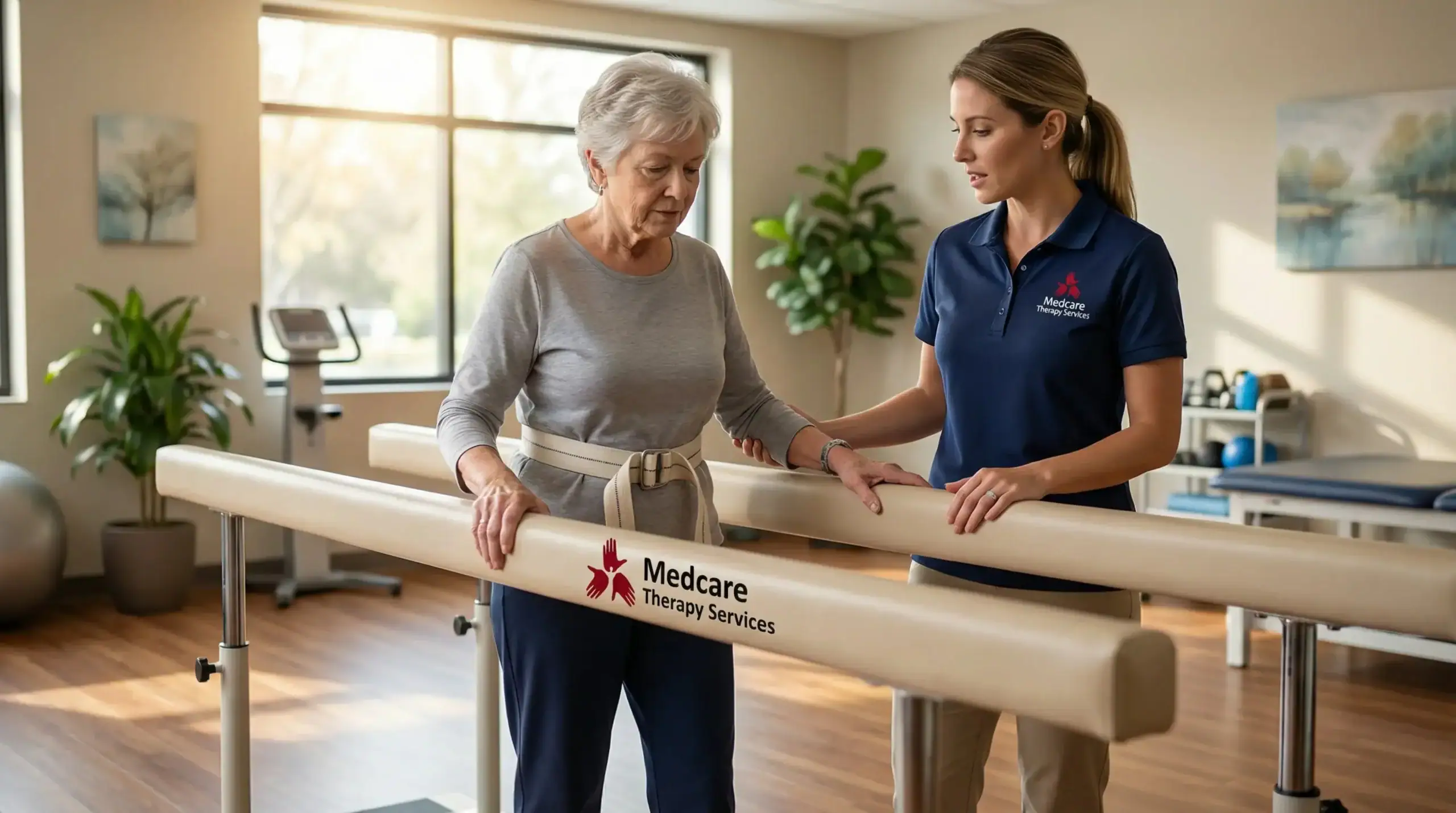
You’ll receive a customized exercise plan focused on improving balance, leg strength, and reaction time. These senior balance exercises are evidence-based and designed specifically for fall prevention in the elderly. Your therapist demonstrates each movement, watches your form, and adjusts as needed.
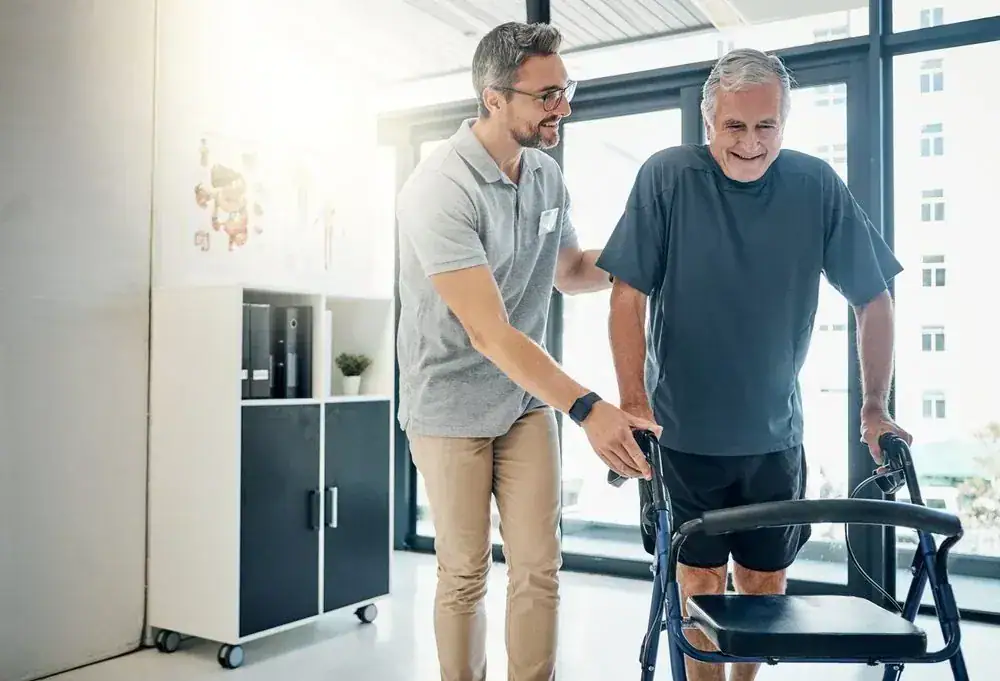
Gait training is a major component. You’ll work on walking patterns, foot placement, and how to navigate obstacles safely. If you use a walker or cane, we’ll make sure you’re using it correctly.
Home safety recommendations come standard. In Stewart Manor, where many homes have stairs, narrow hallways, or older bathrooms, small changes can make a big difference. Your therapist will point out specific risks and suggest practical solutions.
Family education is part of the process too. If you have adult children or a spouse involved in your care, they’ll learn how to support your progress without taking over.

If you’ve fallen in the past year, you need it. That’s the clearest indicator. Falling once doubles your chance of falling again, and the second fall is often worse than the first.
But you don’t have to wait for a fall. If you feel unsteady when you walk, if you grab onto furniture or walls for support, if you’ve had any close calls, those are signs your balance isn’t what it should be. Difficulty getting up from a chair without using your arms is another red flag. So is avoiding activities you used to do because you’re worried about falling.
Your doctor might have mentioned fall risk during a recent visit. Certain medications affect balance. So do conditions like arthritis, Parkinson’s, diabetes, or a history of stroke. Age alone isn’t a reason, but the reality is that muscle strength and reaction time decline over time if you’re not actively working to maintain them.
If any of this sounds familiar, an assessment makes sense. We’ll tell you exactly where you stand and whether therapy would help.
Yes, if you meet Medicare’s homebound criteria. That means leaving home requires considerable effort, and when you do leave, it’s infrequent and for short periods. You don’t have to be bedridden. Many people in Stewart Manor qualify because they have difficulty with stairs, don’t drive, or feel unsafe walking outside alone.
Medicare Part B covers physical therapy when it’s medically necessary and prescribed by a doctor. Fall prevention qualifies, especially if you’ve already fallen or have documented balance issues. You’ll have a copay after your deductible is met, typically 20% of the Medicare-approved amount.
We handle the verification and billing directly with Medicare, so you’re not navigating that process yourself. Most commercial insurance plans also cover home-based physical therapy, though specifics vary by plan.
If you’re not sure about your coverage, we can check your benefits before the first visit. No one should skip therapy because they’re unsure about cost. We’ll give you a straight answer about what you’ll owe.
The biggest advantage is that we’re treating you in the environment where you actually live. A clinic has flat floors, bright lighting, and grab bars everywhere. Your home doesn’t. We see the real obstacles you deal with every day: the step into your bathroom, the throw rug in the hallway, the poor lighting by your bed.
That means the exercises and strategies we teach are immediately practical. You’re not trying to translate what you learned in a gym to your own kitchen. You’re practicing in your kitchen.
For people who’ve already fallen or feel unsteady, getting to and from appointments is stressful. You’re worried about the car ride, the parking lot, the waiting room. That stress goes away when the therapist comes to you. You can focus entirely on the work instead of the logistics.
In-home therapy also makes it easier to involve family members who live with you. They see what you’re working on and how they can help. That support makes a real difference in long-term outcomes.
Most programs run between six and twelve weeks, with visits one to three times per week. That’s not a rigid timeline. Some people progress faster. Others need more time, especially if they’re recovering from an injury or managing multiple health conditions.
The research on fall prevention shows that meaningful results take consistency over several weeks. You’re rebuilding strength and retraining your nervous system. That doesn’t happen in two or three sessions. Early on, you’ll work closely with your therapist to learn the exercises and make sure you’re doing them correctly. As you improve, visits might spread out while you continue exercising independently.
Even after formal therapy ends, the exercises don’t stop. The goal is to give you a routine you can maintain on your own. Many people keep doing their balance exercises a few times a week indefinitely because they feel the difference when they don’t.
Your therapist will track specific metrics like how long you can stand on one foot, how fast you walk, and how well you handle obstacles. When those numbers improve and you feel steady again, that’s when the program wraps up.
It’s not too late. People who’ve fallen multiple times often see the biggest improvements because there’s more room to build strength and balance. The fact that you’re asking the question means you’re ready to do something about it, and that’s the hardest part.
Multiple falls usually point to a combination of issues: muscle weakness, poor balance, environmental hazards, or all of the above. A thorough assessment will identify what’s contributing to your falls so we can address each factor. Sometimes it’s as simple as improving leg strength. Other times we need to work on reaction time, adjust how you’re using a walking aid, or change something in your home setup.
The fear that comes with repeated falls is real, and it often leads people to move less, which makes the problem worse. Physical therapy helps break that cycle. You’ll start with exercises that feel manageable and safe, then gradually progress as your confidence builds.
Plenty of people come to us after two, three, or more falls and go on to live independently without another incident. What matters is starting now, not how many times you’ve fallen before.
Absolutely, and we encourage it when it makes sense. If you live with a spouse, adult child, or caregiver, having them present for at least some sessions helps everyone stay on the same page. They’ll learn what you’re working on, how to assist without doing too much, and what warning signs to watch for.
Family members often have questions about how to make the home safer or what to do if you do fall. Your therapist can address those concerns directly and demonstrate proper techniques for things like helping you up from a chair or supporting you on stairs.
That said, some people prefer to do therapy one-on-one, and that’s fine too. This is your program. We’ll work with whatever setup makes you most comfortable and gets the best results.
If your family lives out of the area, we can provide updates with your permission so they know how you’re progressing. Many adult children feel relieved just knowing their parent is working with a professional and taking fall prevention seriously.
Other Services we provide in Stewart Manor