
You stop planning your day around what might go wrong. The bathroom at night doesn’t feel like a risk anymore. Getting the mail, walking to the car, reaching for something in the kitchen—these stop being calculations and start being automatic again.
That shift happens when your legs are stronger, your reflexes are sharper, and your body knows how to catch itself. Physical therapy for balance isn’t about eliminating every risk. It’s about rebuilding the strength and coordination that let you move through your day without second-guessing every step.
Most people who fall once will fall again—not because they’re careless, but because the underlying issues never got addressed. Weak hips, poor ankle stability, slow reaction time, vision changes, medication side effects. These don’t fix themselves. But they do respond to the right exercises, the right training, and a plan that’s built around what your body actually needs.
We’ve been treating patients across Long Island for years, with locations in Smithtown and Speonk. Our physical therapists work with older adults every day—people dealing with balance issues, recovering from falls, or just noticing that movement doesn’t feel as steady as it used to.
St. James has one of the larger senior populations in Suffolk County, and we see the patterns. Homes built decades ago weren’t designed with aging in mind. Stairs without railings, bathrooms without grab bars, rugs that slide. These aren’t just inconveniences—they’re fall risks. And when you combine environmental hazards with physical decline, the risk compounds quickly.
We don’t treat everyone the same because no two people are the same. Your program is based on how you move now, what’s limiting you, and what you’re trying to get back to. That’s how senior balance exercises actually work—when they’re specific, progressive, and tied to real-world movement.
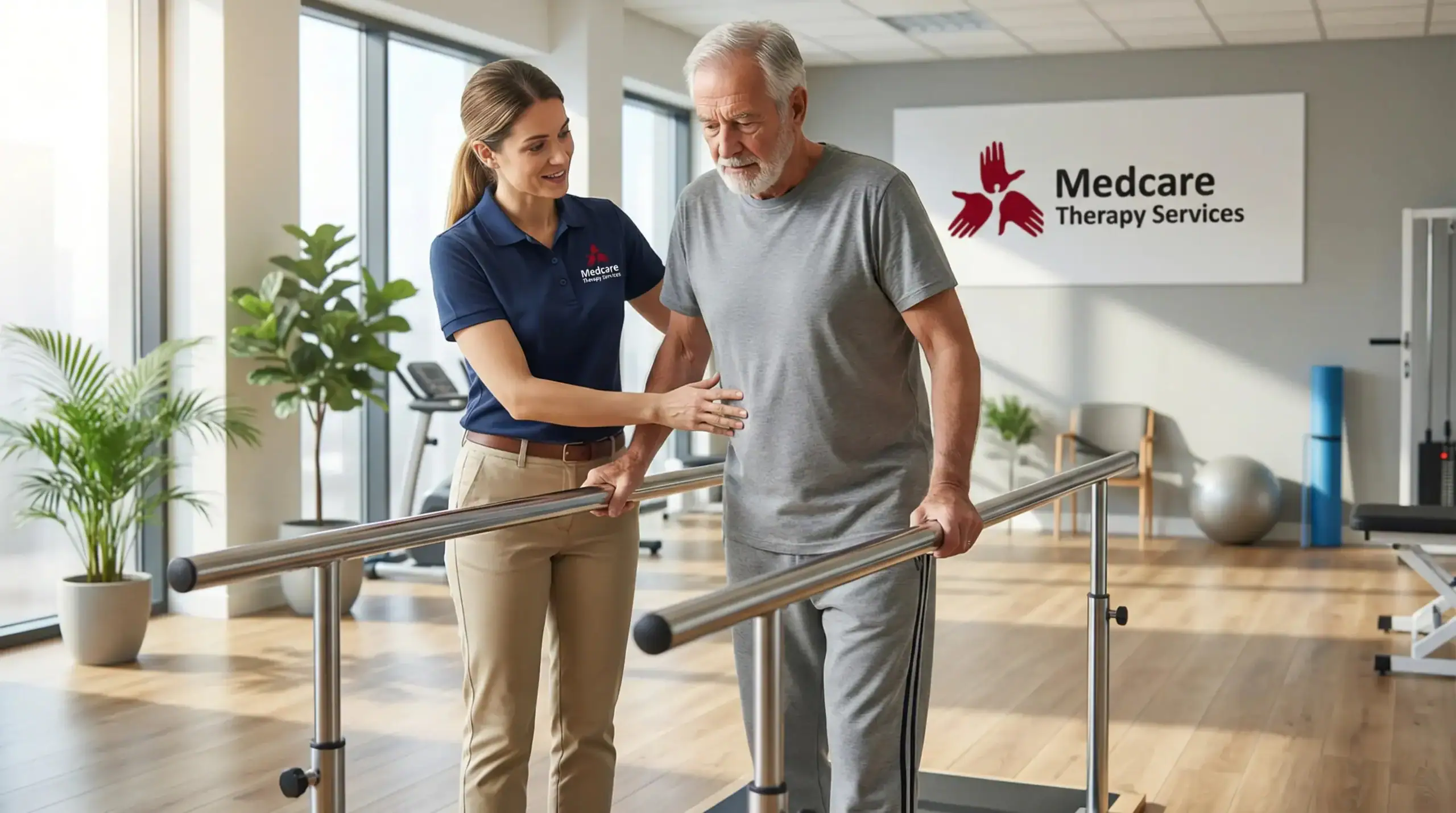
You start with an assessment. We look at your medical history, medications, past injuries, and any conditions affecting your movement—things like arthritis, neuropathy, Parkinson’s, or stroke. Then we test how you move: your gait, your balance in different positions, your strength, your coordination, and how quickly you react when your balance is challenged.
From there, we build a program. It usually includes strength training for your legs and core, balance exercises that get progressively harder, coordination drills, and gait training to improve how you walk. If you use a cane or walker, we make sure you’re using it correctly. If your home has hazards, we talk through modifications—better lighting, removing clutter, installing grab bars where they’ll actually help.
Sessions are typically scheduled two to three times a week. You’ll also get exercises to do at home, because consistency is what creates change. As you get stronger and more stable, we adjust the program. The goal isn’t to keep you in therapy forever. It’s to get you strong enough and confident enough that you don’t need us anymore.

Ready to get started?
Every program starts with a full fall risk assessment. That means evaluating everything that could contribute—your strength, flexibility, balance, vision, medications, footwear, and home environment. We’re looking for the real reasons you’re at risk, not just checking boxes.
Your treatment plan will include exercises tailored to your ability level. These might be seated exercises if standing is difficult, or more advanced balance challenges if you’re already fairly stable. Strength work focuses on the muscles that matter most for preventing falls: glutes, quads, calves, and core. Balance training includes static holds, weight shifts, and dynamic movements that mimic real life—like reaching, turning, or stepping over obstacles.
In Suffolk County, about 56% of falls happen inside the home, most often in the bathroom, kitchen, or bedroom. We address that directly. You’ll get guidance on home safety modifications, and if needed, training on how to use assistive devices correctly. Many people use walkers or canes incorrectly, which actually increases fall risk instead of reducing it.
Medicare typically covers fall prevention physical therapy when it’s medically necessary, which it usually is after a fall or if you’re showing clear balance deficits. We handle the billing and work with your insurance so you can focus on getting stronger.
If you’ve fallen in the past year, you need it. Falling once doubles your chance of falling again, and the second fall is often worse than the first. But you don’t have to wait for a fall to start.
Other signs include feeling unsteady when you walk, needing to hold onto furniture or walls when you move around the house, avoiding activities because you’re afraid of falling, or noticing that your balance isn’t what it used to be. If you’ve had a stroke, deal with neuropathy, take multiple medications, or have conditions like Parkinson’s or arthritis, your risk is higher. A physical therapist can assess your fall risk and tell you whether therapy makes sense. Most people wait too long. The best time to address balance issues is before a fall happens, not after.
The exercises that work are the ones that challenge your balance in a controlled way and build the strength you need to recover when you start to lose your footing. That means exercises like single-leg stands, heel-to-toe walking, weight shifts, step-ups, and sit-to-stand drills. These aren’t complicated, but they need to be progressed correctly.
You start where you are. If standing on one foot for even a second is hard, that’s your starting point. Over time, you add difficulty—closing your eyes, standing on an unstable surface, or adding head turns. The goal is to train your body to react quickly and effectively when your balance is challenged in real life. Strength work is just as important. Weak legs are one of the biggest fall risk factors, and you can’t balance well if your muscles aren’t strong enough to hold you upright. A good program combines both—balance drills and strength training—and adjusts as you improve.
Most people start noticing improvements within a few weeks, but meaningful change takes consistency. You’re not just learning new exercises—you’re retraining your nervous system, building muscle, and improving coordination. That takes time.
A typical fall prevention program runs anywhere from six to twelve weeks, depending on your starting point and goals. You’ll usually come in two to three times per week, and you’ll have exercises to do at home on the other days. The people who see the best results are the ones who show up and do the work between sessions. If you’re recovering from a fall or dealing with significant weakness, it might take longer. If you’re catching balance issues early, you might progress faster. The timeline isn’t one-size-fits-all, but the process is proven. Consistency beats intensity every time.
Medicare Part B typically covers physical therapy when it’s medically necessary, and fall prevention usually qualifies—especially if you’ve already fallen, you have documented balance deficits, or you’re at high risk due to a medical condition. Your doctor will need to refer you, and we’ll handle the rest.
Coverage includes the evaluation, treatment sessions, and any skilled interventions like gait training or balance rehabilitation. There may be a copay depending on your plan, but most people find that the cost is manageable, especially compared to the cost of a fall. The average emergency room visit after a fall costs nearly $9,000, and that doesn’t include rehab, lost independence, or long-term care. Preventing a fall is a lot cheaper than recovering from one. If you’re unsure about your coverage, call us. We’ll verify your benefits and walk you through what’s covered before you start.
We’ve been doing this for years, and we focus on getting you results without dragging out treatment longer than necessary. You’re not a number here. Your therapist will know your name, your goals, and what’s actually limiting you—and your program will reflect that.
We also take the time to assess everything that contributes to fall risk, not just your strength or balance. That includes your home environment, your medications, your footwear, and how you’re moving through daily activities. A lot of clinics skip that part. We don’t. Our locations in Smithtown and Speonk give you flexibility, and our team has extensive experience working with older adults who are dealing with complex medical histories. We’re also rigorous about communication and follow-through. If something isn’t working, we adjust. If you’re progressing faster than expected, we push you harder. The goal is always the same: get you stable, confident, and independent again.
Yes. Even if you’ve fallen more than once, physical therapy can reduce your risk going forward. The key is identifying why you’re falling and addressing those specific factors. Falls aren’t random—they follow patterns, and those patterns are fixable.
Maybe your legs are too weak to catch you when you trip. Maybe your balance reactions are too slow. Maybe you’re not picking up your feet when you walk, or your vision has changed and you’re misjudging distances. These are all things we can work on. Post-fall rehabilitation focuses on rebuilding strength, improving your confidence, and teaching your body how to recover when your balance is challenged. A lot of people who’ve fallen multiple times stop moving as much because they’re afraid, and that makes everything worse. Therapy gets you moving again in a safe, controlled way. You won’t eliminate every risk, but you can significantly lower it—and that makes a real difference in how you live.
Other Services we provide in St. James