
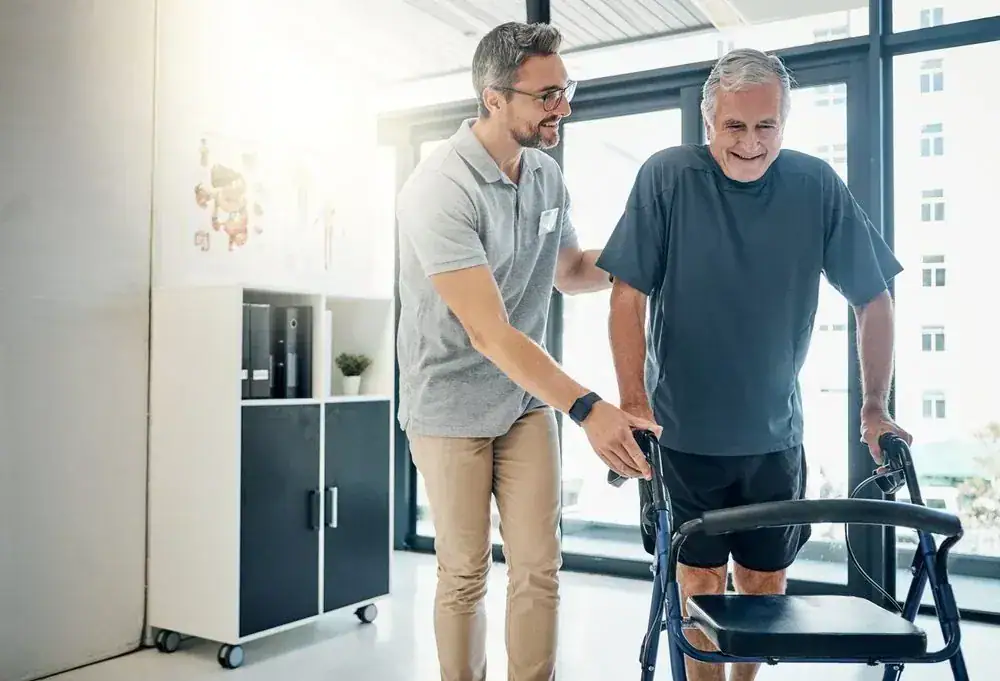
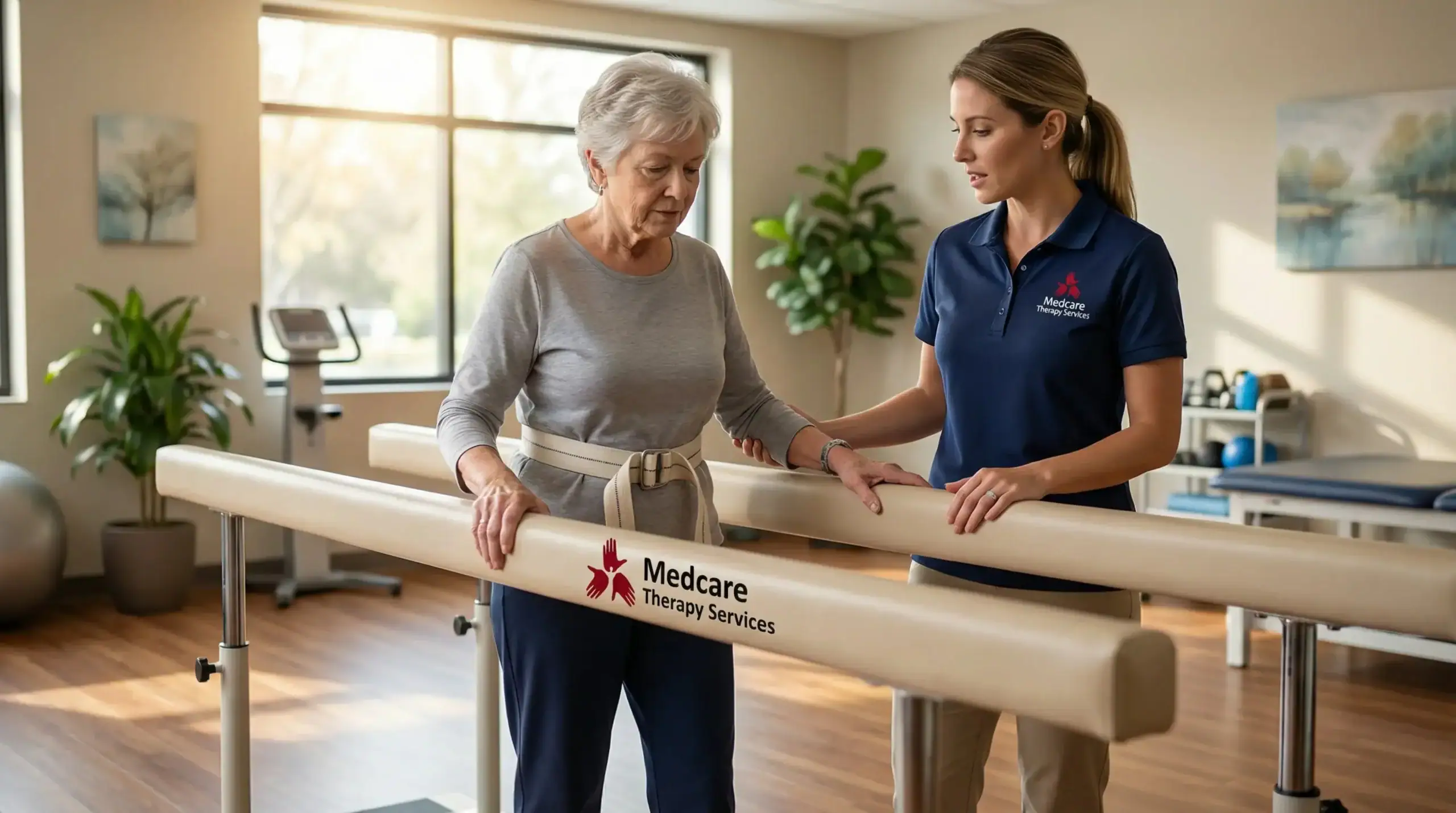
You know the feeling. That split-second hesitation before you get up from the couch. The way you grip the counter a little tighter when you reach for something. The mental checklist you run through before walking to the mailbox.
That’s not aging. That’s your body telling you something’s off with your balance, your strength, or both. And here’s what matters: it’s fixable.
Physical therapy for balance isn’t about wrapping you in bubble wrap or telling you to slow down. It’s about rebuilding the strength in your legs, retraining your balance systems, and giving you back the confidence to move through your day without fear. You’ll notice it first in small ways—standing up feels easier, walking feels steadier, and that constant worry starts to fade.
In Nassau County, 88% of injury hospitalizations for adults over 65 are fall-related. You’re not imagining the risk. But you’re also not stuck with it. With the right program, you can reduce that risk significantly and keep doing what you love in your own home.
We’ve been serving South Floral Park, NY and surrounding Nassau County communities for years. We’re not a corporate chain that rotates therapists every few months. We’re local, and we understand what it’s like to navigate homes built decades ago, to deal with Long Island winters, and to want to age in the place you’ve called home for years.
Our therapists specialize in fall prevention and balance training for older adults. That means we’re not just running you through generic exercises. We’re assessing your specific risk factors, your home environment, your medical history, and your goals—then building a program around what you actually need.
You’ll work with the same therapist throughout your care. They’ll know your name, your concerns, and what’s working. That consistency matters when you’re trying to rebuild confidence after a fall or prevent one from happening in the first place.
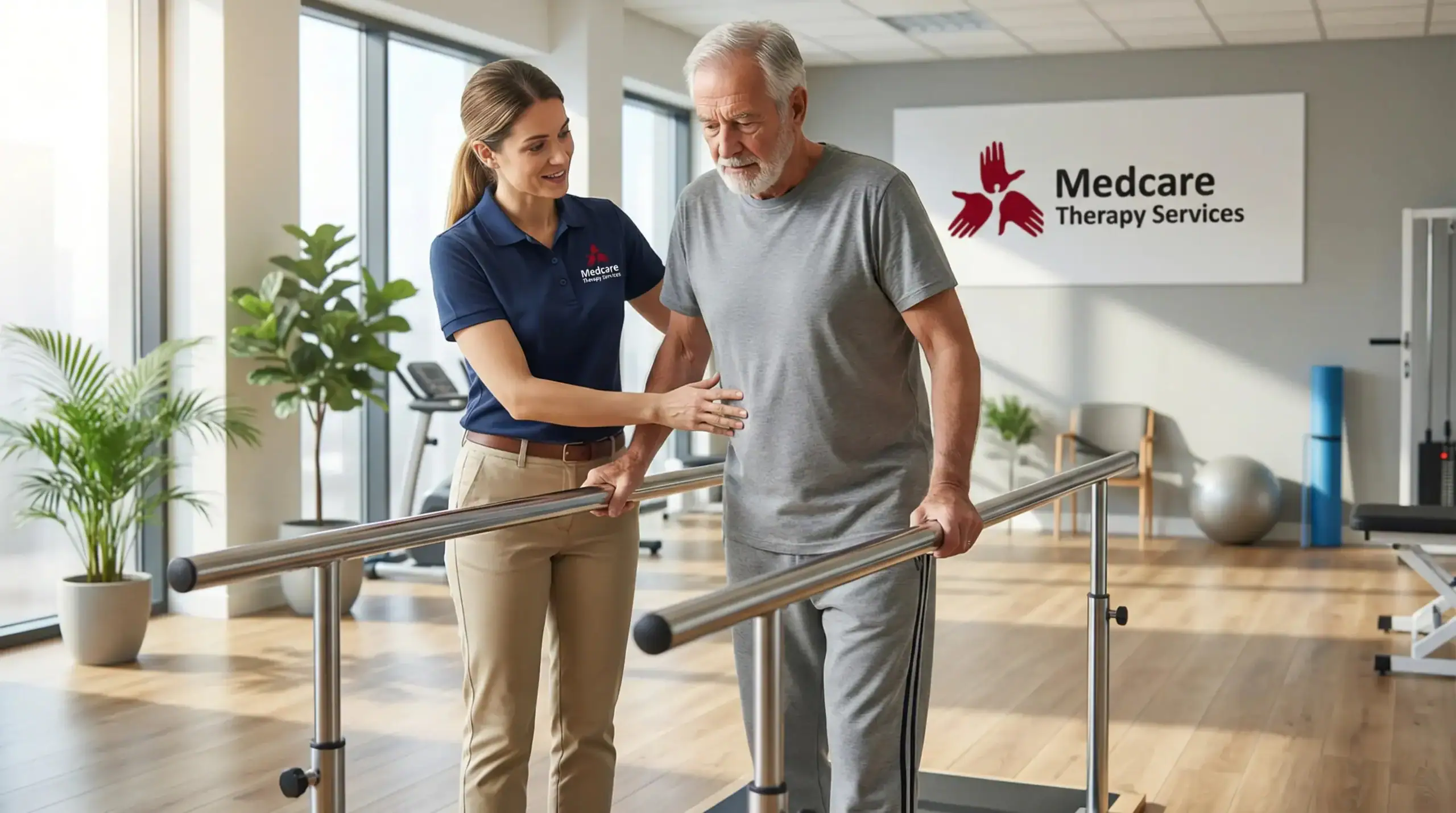
Your first appointment is a full fall risk assessment. We’re looking at your balance, your gait, your strength, your medications, and any previous falls or near-misses. We’ll ask about your home setup—lighting, stairs, rugs, bathroom layout—because 60% of falls happen at home, and we need to know what you’re working with.
From there, we build your program. That typically includes strength training for your legs and core, balance exercises that challenge your stability in safe, controlled ways, and gait training to improve how you walk. If you’ve been avoiding certain movements because they make you nervous, we’ll work on those specifically. The goal is to retrain both your body and your confidence.
You’ll come in for sessions based on what your schedule and insurance allow—usually two to three times per week to start. Each session builds on the last. You’ll also get exercises to do at home, because consistency between visits is what makes the difference. We’ll track your progress with objective measures, so you can see the improvement in real numbers, not just how you feel.
If we identify environmental hazards during your assessment, we’ll walk you through modifications you can make at home. Simple changes—better lighting, removing tripping hazards, adding grab bars—can cut your fall risk in half.

Ready to get started?
Every program includes a personalized fall risk assessment that identifies your specific vulnerabilities. We’re looking at things like medication side effects, vision issues, muscle weakness, and balance deficits. Taking four or more medications increases your fall risk, and we’ll coordinate with your doctor if that’s a factor.
You’ll get targeted strength training focused on your lower body and core. Weak legs are one of the biggest predictors of falls, and we can rebuild that strength at any age. Balance exercises progress from basic to advanced as you improve—starting with supported movements and gradually removing that support as your stability increases.
Gait training helps you walk more safely and efficiently. If you shuffle, if your steps are uneven, or if you have trouble navigating curbs and uneven surfaces, we’ll address that directly. We also work on reaction time and coordination, so if you do start to lose your balance, your body knows how to recover.
For South Floral Park, NY residents, we understand the local terrain—sidewalks that heave in winter, older homes with narrow hallways and steep stairs, the need to navigate ice and snow several months a year. Your program accounts for the real-world conditions you face, not just what happens in our clinic. We’ll also discuss home safety modifications specific to your living situation, because preventing falls isn’t just about what you do here—it’s about what happens when you walk through your front door.
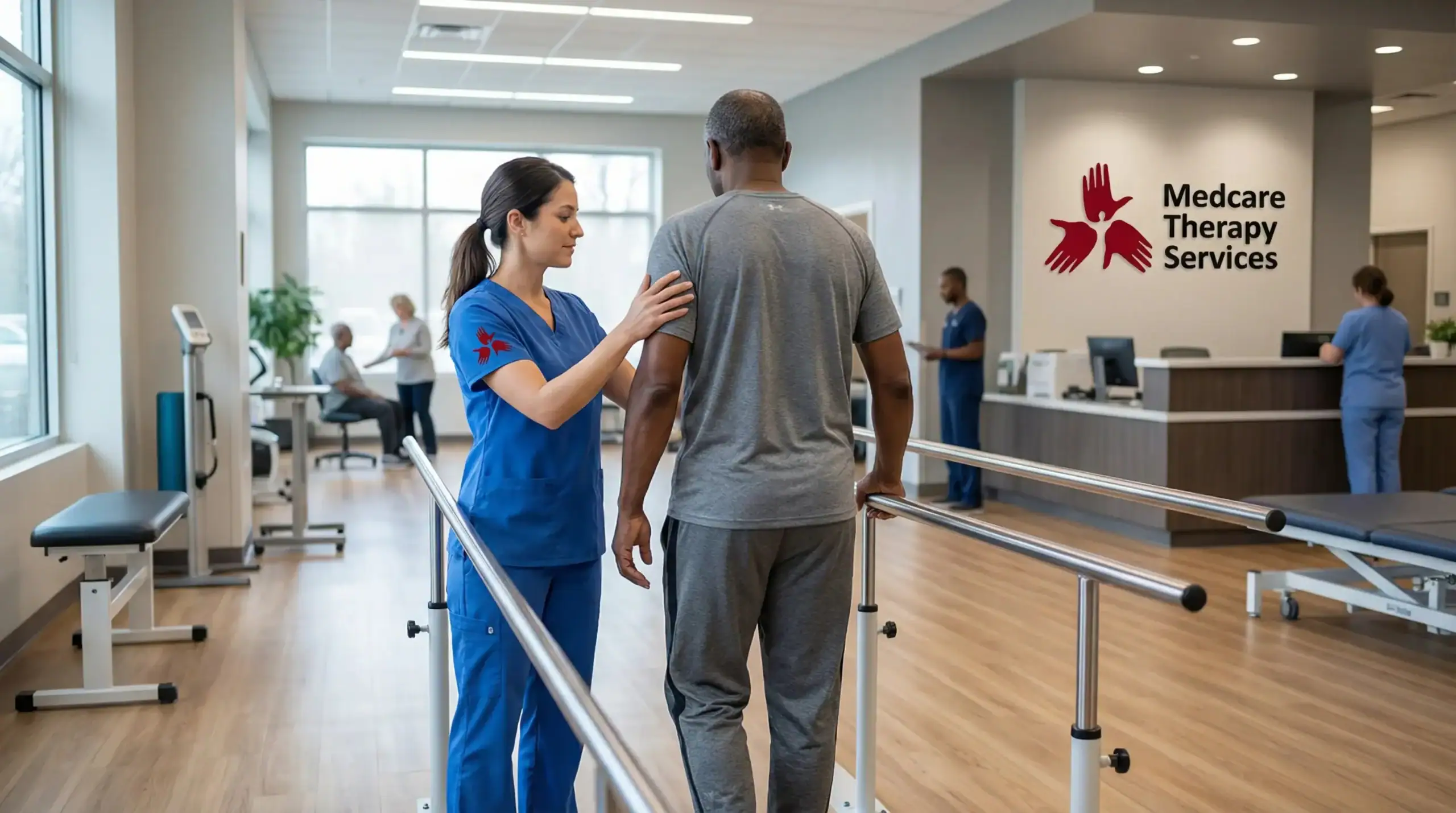
If you’ve fallen in the past year, your risk of falling again doubles. That’s the clearest indicator. But there are others that matter just as much.
Do you feel unsteady when you stand up or walk? Do you avoid certain activities because you’re worried about losing your balance? Do you take four or more medications daily? Have you noticed your legs feel weaker than they used to? Any of these put you in a higher-risk category.
Here’s the thing: one in four adults over 65 falls every year. That’s 25% of the senior population. In Nassau County specifically, falls account for 88% of injury hospitalizations for older adults. You’re not overreacting by taking this seriously. A fall risk assessment gives you objective data about where you stand and what needs attention. Even if you haven’t fallen yet, if you’re noticing changes in your balance or strength, that’s your window to prevent a fall before it happens.
We start with your history. Previous falls, near-misses, medical conditions, medications, surgeries—anything that might affect your balance or increase your risk. Conditions like Parkinson’s, arthritis, stroke, or osteoporosis all factor in.
Then we do physical testing. We’ll watch how you walk, how you stand up from a chair, how you turn, and how you handle balance challenges. We test your leg strength, your reaction time, and your ability to maintain stability when your balance is disrupted. We’re also looking at your vision, your footwear, and whether you use an assistive device correctly.
We’ll ask about your home environment. Do you have stairs? Loose rugs? Poor lighting? Clutter in walkways? These aren’t small details—environmental hazards account for 30-50% of falls in older adults. The assessment usually takes about an hour, and at the end, you’ll know exactly what your risk factors are and what we can do about them. No guessing, no generic advice—just a clear picture of where you’re vulnerable and how to fix it.
Yes, if they’re the right exercises done consistently. Generic “senior fitness” classes aren’t the same as targeted balance training designed around your specific deficits.
Balance exercises work by retraining the systems your body uses to stay upright—your inner ear, your vision, your proprioception (your sense of where your body is in space), and your muscle strength. When those systems get weak or stop communicating well, you become unstable. The right exercises rebuild that communication and strengthen your body’s ability to catch itself before you fall.
Research shows that structured balance and strength training can reduce fall risk by 30-40%. But it has to be progressive, meaning it gets harder as you get better, and it has to challenge the specific areas where you’re weak. That’s why working with a physical therapist matters. We’re not just handing you a sheet of exercises. We’re watching how you move, identifying what’s breaking down, and adjusting your program as you improve. The seniors who see the biggest reduction in fall risk are the ones who stick with their program and do their home exercises between sessions. It’s not magic—it’s consistent, targeted work that pays off.
Most people notice a difference within four to six weeks if they’re coming in consistently and doing their home exercises. That doesn’t mean you’re done in six weeks—it means you’ll start feeling steadier, stronger, and more confident by then.
The timeline depends on where you’re starting from. If you’ve had a recent fall and lost a lot of confidence, it might take a bit longer to rebuild that mentally, even as your physical balance improves. If you’re dealing with a chronic condition like Parkinson’s or neuropathy, we’re managing your risk and slowing decline, not eliminating the condition itself.
What you’ll notice first is usually strength. Getting up from a chair feels easier. Your legs don’t feel as shaky. Then balance starts to catch up—you feel steadier on your feet, you’re not grabbing for support as often, and that constant low-level worry starts to ease. By three months, most people have made significant, measurable progress. But here’s the reality: balance and strength require ongoing maintenance. Once you’ve built them back up, you need to keep working at it, even if it’s just a few exercises a week at home. The good news is that once you know what to do, it doesn’t take much to maintain what you’ve gained.
It’s not too late. In fact, you’re in the highest-priority group for fall prevention, because falling once doubles your chances of falling again. But that statistic also means there’s a huge opportunity to intervene.
After a fall, most people develop what’s called the “fear-fall cycle.” You’re afraid of falling again, so you move less. Moving less makes you weaker. Being weaker makes you more likely to fall. It’s a loop, and it’s one of the biggest reasons people end up losing their independence after a single fall.
Physical therapy breaks that cycle. We rebuild your strength and balance, yes, but we also rebuild your confidence by putting you in controlled situations where you can challenge your balance safely. You’ll practice the movements that make you nervous—standing up, turning, walking on uneven surfaces—with support and guidance until they stop feeling dangerous. We also figure out why you fell in the first place. Was it a strength issue? A balance issue? A medication side effect? An environmental hazard? Once we know the cause, we can address it directly so it doesn’t happen again. Plenty of people come to us after a fall and go on to stay independent at home for years. The key is acting quickly, before fear and inactivity make things worse.
Medicare Part B covers physical therapy for fall prevention if it’s medically necessary, which it is if you’ve fallen recently, if you’re at high risk, or if you have a condition that affects your balance. You’ll need a referral or prescription from your doctor in most cases.
Private insurance plans vary, but most cover physical therapy with a copay or after you’ve met your deductible. We’ll verify your benefits before you start so you know what to expect. If you have a Medicare Advantage plan, coverage works similarly to original Medicare, but the specifics depend on your plan.
Here’s what matters: the cost of a fall is astronomically higher than the cost of preventing one. The average hospital stay for a fall-related injury is over $30,000. Hip fractures, which are caused by falls 95% of the time, almost always require surgery and months of recovery. Compare that to a few weeks of physical therapy, and the math is obvious. We’ll work with you on the insurance side to make sure you’re getting the coverage you’re entitled to. If cost is a concern, talk to us. We’d rather figure out a way to get you in here than have you skip it and end up in the ER six months from now.
Other Services we provide in South Floral Park