

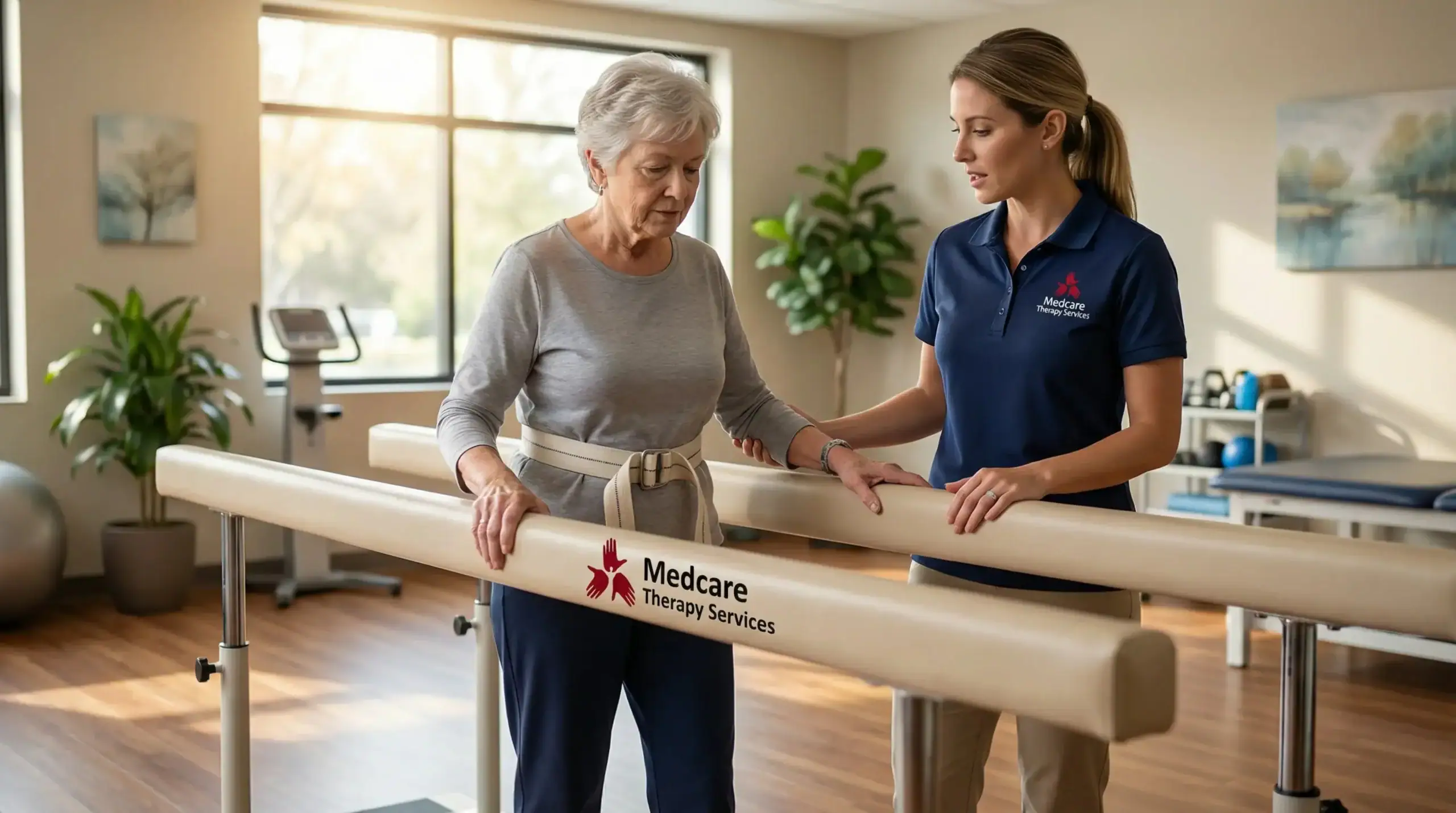
You stop limiting your life because you’re afraid of falling. That’s what happens when your balance improves and your strength comes back.
Research shows structured exercise programs reduce falls by 35-40%. That’s not a small number when you consider what one fall can cost you – not just financially, but in terms of your independence and quality of life.
The right balance exercises for seniors do more than prevent falls. They give you back the confidence to walk your dog, reach for something on a high shelf, or navigate your home without that constant background worry. You’re not just avoiding injury – you’re reclaiming activities you’ve been avoiding.
Physical therapy for balance works because it addresses the actual mechanisms behind falls: weak legs, poor coordination, reduced reaction time. When those improve, everything else follows. You move differently. You feel different. And the fear that’s been quietly running your decisions starts to fade.
We’ve been serving Shoreham, NY and the surrounding Long Island communities with physical therapy programs that keep people out of nursing homes and in their own homes. That’s not marketing language – that’s what elderly fall prevention actually accomplishes when it’s done right.
Our therapists work across multiple locations, which means we’ve seen what works and what doesn’t across different populations and age groups. We maintain verified profiles, secure patient data, and follow protocols that prevent the kind of operational chaos that disrupts your care.
In a community like Shoreham where over 26% of residents are 65 or older, fall prevention isn’t a niche service. It’s essential healthcare. And it requires providers who understand both the clinical side and the practical realities of maintaining independence in your own home.

First, we assess your specific fall risk. That means looking at your balance, your leg strength, your medications, and your home environment. We’re not guessing – we’re measuring against established benchmarks that predict fall risk.
Then we build a program around what we find. If you’re taking five or more medications, that’s a red flag we address. If your home has hazards, we identify them. If your balance is off or your legs are weak, we design senior balance exercises that target those exact deficits.
You’ll work with one of our licensed physical therapists who monitors your progress and adjusts your program as you improve. Most effective programs require at least two hours per week of structured exercise – that’s what the research shows actually reduces falls. Some of this happens in our clinic, some you’ll do at home with our guidance.
The goal isn’t just to get you through a 12-week program. It’s to give you exercises and strategies you can maintain long-term, because the benefits of combined strength and balance training can last up to five years when you stick with it.

Ready to get started?
You get a comprehensive risk assessment that looks at everything contributing to your fall risk – not just balance, but medication interactions, home hazards, vision issues, and chronic conditions like arthritis or Parkinson’s that increase your vulnerability.
Your exercise program combines balance training with muscle strengthening because that multimodal approach shows significantly better results than either one alone. We’re talking about exercises proven to improve balance measures by 16-42% compared to baseline – real, measurable changes in how your body responds to instability.
In Shoreham, where median household income is $138,125 and residents value professional healthcare, you’re likely looking for evidence-based care, not generic senior fitness classes. What you’re getting is physical therapy for balance that qualifies for Medicare coverage and follows protocols backed by peer-reviewed research.
We also provide home safety evaluations because 60% of fall-related hospitalizations happen at home. Small modifications – better lighting, grab bars, removing tripping hazards – make a measurable difference when combined with improved strength and balance.

Most people notice changes in confidence and stability within 4-6 weeks of consistent work, but the research shows programs need at least 12 weeks to produce lasting reductions in actual fall rates.
Here’s what that timeline looks like in practice: In the first few weeks, you’re building awareness of how your body moves and where your balance weaknesses are. By week 6, you’re typically stronger and more stable in controlled environments. By week 12, those improvements start translating to real-world situations – navigating uneven surfaces, recovering from trips, moving with less hesitation.
The key word is “consistent.” Programs that work require at least two hours per week of structured balance and strength exercises. If you’re only doing exercises once a week or skipping sessions, you won’t see the same results. Your body needs regular, progressive challenge to build the neuromuscular adaptations that actually prevent falls.
Medicare covers physical therapy for fall prevention when it’s medically necessary and prescribed by your doctor. That typically means you’ve either fallen recently, have documented balance deficits, or have conditions that significantly increase your fall risk.
Most Medicare Advantage plans and supplemental insurance policies also cover these services, though your specific coverage depends on your plan. We verify benefits before you start so you know exactly what you’ll pay out of pocket.
What matters more than coverage details is this: the cost of prevention is a fraction of what a fall costs. Ninety-five percent of fall-related hospitalizations get billed to Medicare, and 60% of people who are hospitalized for a fall end up in nursing homes or rehabilitation centers. A few physical therapy sessions now versus months in a facility later – the math isn’t complicated.
Physical therapy is individualized assessment and treatment by a licensed clinician. Exercise classes are group instruction with no personalized risk evaluation or medical oversight.
Here’s the practical difference: In physical therapy, we measure your specific deficits – how long you can stand on one foot, how much force your legs can generate, how quickly you can react to loss of balance. Then we design exercises that target your weaknesses. If you have Parkinson’s, your program looks different than someone with arthritis or someone recovering from a stroke.
Group exercise classes can be helpful for general fitness, but they don’t assess your fall risk factors, review your medications, evaluate your home safety, or adjust your program based on your progress. They also can’t bill insurance because they’re not medical treatment.
The research backing fall prevention is based on programs like the Otago Exercise Program – 17 specific strength and balance exercises, performed three times weekly, with professional guidance and progression. That’s not what happens in a community center fitness class.
Effective fall prevention programs combine both. You need initial assessment and periodic check-ins with a physical therapist, plus home exercises you do on your own several times per week.
Here’s how that typically works: You’ll come to our clinic for your evaluation and your first few sessions where we teach you the exercises and make sure you’re doing them correctly. Then you’ll do most of your exercise at home, following the program we’ve designed for you. You’ll come back every few weeks so we can measure your progress, advance your exercises, and make sure you’re on track.
This model works because it’s sustainable. You’re not driving to a clinic three times a week indefinitely – you’re learning exercises you can do in your living room with minimal equipment. But you’re also not left to figure it out on your own with a handout and a hope.
The home-based component is actually crucial. You need to practice balance and strength exercises in the environment where you live, not just in a clinic. That’s where the real-world carryover happens.
If you’ve already fallen, you’re actually the exact person who needs a fall prevention program most. One fall significantly increases your risk of falling again – 50% of people who fall once will fall repeatedly.
The fear that develops after a fall is just as dangerous as the physical risk. You start avoiding activities, which leads to deconditioning, which makes you weaker and more unsteady, which increases fall risk further. It’s a cycle that accelerates functional decline faster than almost anything else in older adults.
Starting a program after a fall means we’re working with real data about what happened and why. We can identify the specific circumstances – did you trip, lose your balance, feel dizzy, miss a step? That tells us what to address. We’re also dealing with the psychological component – rebuilding confidence while rebuilding strength.
The research is clear: structured exercise programs work even for people who’ve already fallen, and they work even for people in their 80s and 90s. Your age and your history don’t disqualify you. They make the intervention more urgent.
If you’re asking the question, you should get assessed. But here are the clinical risk factors: you’re 65 or older, you take four or more medications, you’ve fallen in the past year, you feel unsteady when walking, you avoid activities because you’re afraid of falling, or you have conditions like Parkinson’s, stroke history, arthritis, or osteoporosis.
In Shoreham, where over a quarter of the population is 65-plus, fall risk isn’t an edge case – it’s a predictable part of aging that we can measure and address. More than 25% of older adults fall each year. That’s not worrying for no reason. That’s responding to legitimate statistical risk.
The assessment itself is straightforward. We test your balance, your leg strength, your walking pattern, and your reaction time. We review your medications and your medical history. Then we can tell you objectively whether you’re at elevated risk and what specific factors are contributing.
What you do with that information is up to you, but at least you’re making decisions based on data instead of either ignoring the risk or letting fear run your life without knowing if it’s justified.
Other Services we provide in Shoreham