
You stop second-guessing every step. The anxiety that keeps you from walking to the mailbox or getting up in the middle of the night starts to fade.
Balance training isn’t about becoming an athlete. It’s about feeling steady enough to live your life without fear dictating your choices. Research shows that consistent balance exercises can improve your gait, posture, and stability—even if you’re over 80.
When your legs are stronger and your coordination is sharper, you’re not just preventing falls. You’re preserving the independence that lets you stay in your home, see your family, and move through your day without constantly calculating risk. That’s what physical therapy for balance actually delivers—not perfection, but confidence.
We’ve spent over a decade providing home-based physical and occupational therapy across Nassau and Suffolk County. We specialize in working with people who can’t easily leave their homes—or who simply shouldn’t have to.
We come to you. We assess your specific fall risks, evaluate your home environment, and build a personalized program that fits your body and your daily routine. Every plan is different because every person is different.
Long Island has some of the highest fall rates in New York State. Nassau County alone sees 88% of injury hospitalizations for adults over 65 tied to falls. We know the local challenges, the housing layouts, the weather patterns, and the community resources available to you in Shinnecock Hills and surrounding areas.
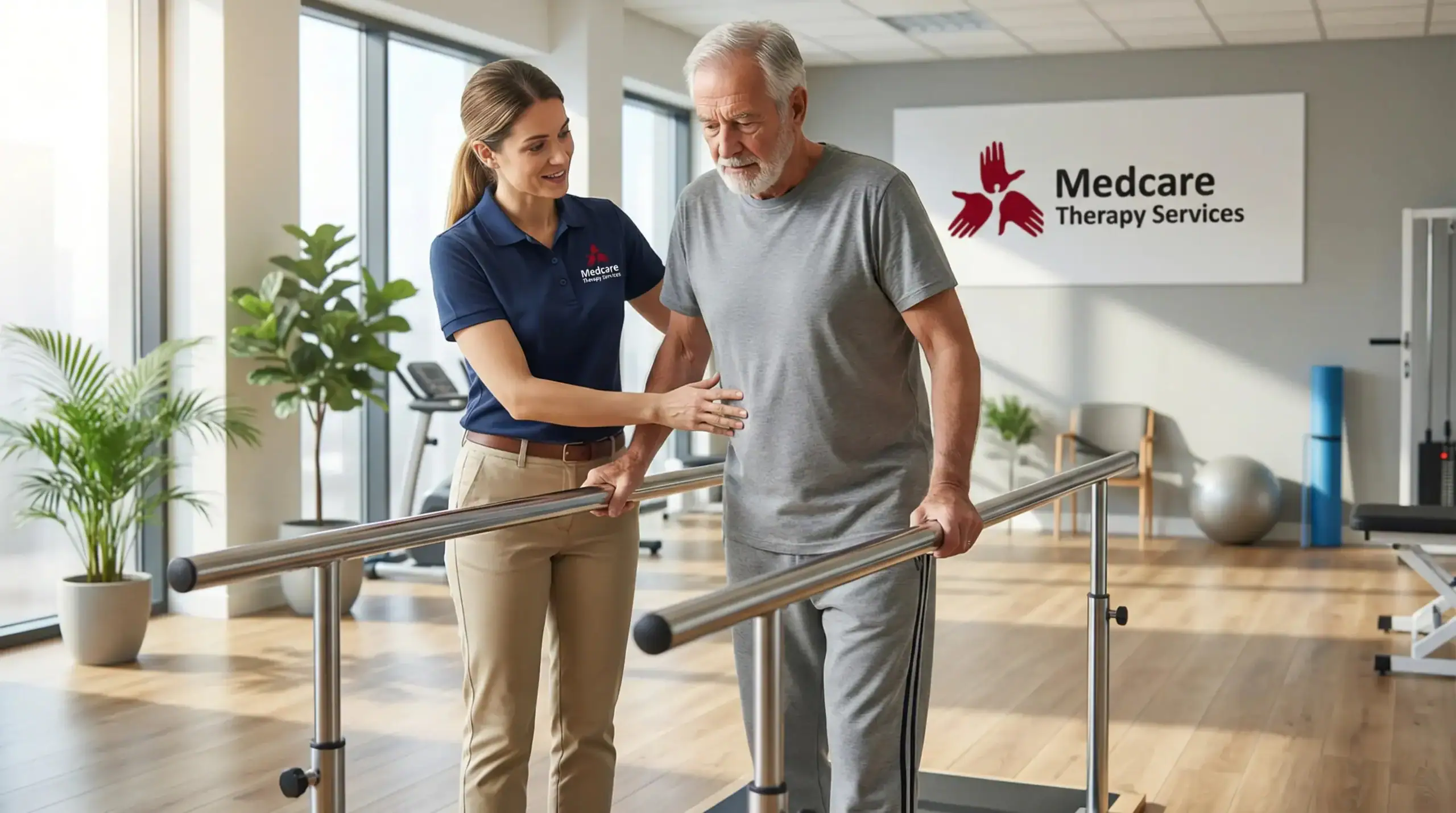
First, we come to your home and do a full fall risk assessment. We look at your strength, balance, gait, medication list, and home environment. We’re checking for the things that actually cause falls—not just obvious hazards, but subtle risks like poor lighting, medication side effects, or muscle weakness you might not notice.
Then we build your program. This typically includes senior balance exercises you can do safely at home, strength training for your legs and core, gait training to improve how you walk, and specific recommendations for making your home safer. Everything is tailored to where you are right now, not where you think you should be.
You’ll work with the same therapist consistently. Sessions happen in your home, on your schedule. We track your progress, adjust exercises as you get stronger, and keep your doctor in the loop. Most people start seeing improvements in stability and confidence within a few weeks.
The goal isn’t to make you dependent on therapy forever. It’s to give you the tools, strength, and knowledge to reduce your fall risk long-term.
Ready to get started?
You get a comprehensive home safety evaluation that identifies specific hazards in your living space. This isn’t a generic checklist—it’s a room-by-room assessment based on how you actually move through your home.
Your program includes balancing exercises designed for your current ability level, strength training that targets the muscles you need for stability, and coordination drills that improve reaction time. We also review your medications with you, since taking four or more prescriptions significantly increases fall risk.
On Long Island, where 60% of fall-related hospitalizations happen at home, this kind of targeted intervention matters. A fall-related hospital stay averages $30,000. Home safety modifications and physical therapy cost a fraction of that—and they work. Studies show a 33% reduction in spending on fall injuries over three years for people who complete fall prevention programs.
You’ll also get education on footwear, lighting, assistive devices if needed, and strategies for getting up safely if you do fall. We’re not just preventing the first fall. We’re preventing the fear and inactivity that often follow.
Most people start noticing improvements in stability within three to four weeks of consistent practice. But “reducing fall risk” and “feeling more stable” happen on different timelines.
Your body starts adapting to balance training almost immediately. Your muscles begin getting stronger, your proprioception (your body’s sense of where it is in space) improves, and your reaction time gets sharper. These changes are measurable within the first month.
The bigger risk reduction—the kind that shows up in research as a 50% decrease in fall rates—comes from sustained practice over several months. That’s when the exercises become automatic, your strength builds significantly, and your confidence lets you move more naturally instead of tentatively. Consistency matters more than intensity. Even adults over 80 show meaningful improvements in gait and posture when they stick with a structured program.
Yes, if you meet Medicare’s criteria for home health services. You need to be homebound (meaning leaving home requires considerable effort) and require skilled physical therapy services under a doctor’s order.
Fall prevention qualifies as skilled therapy when it involves assessment, treatment planning, therapeutic exercises, gait training, and patient education that only a licensed therapist can provide. Medicare Part B typically covers home-based physical therapy when it’s medically necessary and prescribed by your physician.
You’ll have a copay after you meet your deductible, but the coverage is substantial. We handle the verification and billing process directly, so you know what to expect before we start. If you have a Medicare Advantage plan, coverage works similarly but may have different copay structures. The key is getting that physician order and documenting medical necessity—which is straightforward when you have documented fall risk factors or a history of falls.
It’s not too late. In fact, having already fallen makes fall prevention therapy even more important.
After a fall, your risk of falling again increases significantly—partly due to physical factors like lingering weakness or balance issues, and partly due to psychological factors like fear of falling. That fear often leads people to limit their activity, which creates a vicious cycle: less movement leads to more weakness, which increases fall risk further.
Physical therapy after a fall focuses on rebuilding strength, restoring confidence, and addressing whatever caused the fall in the first place. Maybe it was a medication side effect, a hazard in your home, or muscle weakness you didn’t realize had developed. We identify the specific cause and treat it.
The statistics are sobering: 40% of people admitted to nursing homes after a fall never return to independent living. But those outcomes aren’t inevitable. Early intervention with targeted therapy dramatically improves your chances of staying home and staying independent. The best time to start was before the fall. The second best time is right now.
We see exactly where and how you’re actually living. A clinic can’t replicate your bathroom layout, your lighting, the throw rug in your hallway, or the two steps down to your laundry room.
Most falls happen at home—60% of fall-related hospitalizations for older adults occur in their own living space. When we come to you, we assess the real environment where you’re at risk. We see how you navigate your kitchen, whether you have grab bars where you need them, if your lighting is adequate, and how your furniture is arranged.
Home-based therapy also eliminates a major barrier: transportation. If getting to appointments is difficult, stressful, or requires help from family members, you’re less likely to be consistent. Consistency is what makes fall prevention work.
Plus, the exercises we teach you are designed for your actual space. You’re not learning balance drills on clinic equipment you don’t have at home. You’re practicing in the environment where you need to be stable. That transfer of skills is immediate and practical.
If you’re over 65, you’re statistically at risk—one in three seniors falls each year. But some factors increase that risk substantially, and many of them aren’t obvious.
Taking four or more medications puts you at higher risk, especially if any of them cause dizziness, drowsiness, or affect your blood pressure. Vitamin D deficiency, vision problems, and foot pain all contribute. So does a previous fall, even if it was minor.
Physical signs include difficulty standing from a seated position without using your hands, feeling unsteady when walking, or avoiding certain activities because you’re worried about balance. If you’ve started holding onto walls or furniture more often when you move around your home, that’s a red flag.
Here’s a simple test: stand on one foot for 10 seconds. If you can’t do that without grabbing onto something, your balance needs work. That doesn’t mean you’re destined to fall—it means you’d benefit from balance training. A formal fall risk assessment looks at dozens of factors and gives you a clear picture of where you stand and what specific interventions will help most.
Generic exercises don’t account for your specific limitations, risk factors, or home environment. Physical therapy does.
Online videos might show you how to do a tandem stand or a single-leg balance, but they can’t tell you if you’re doing it safely, whether it’s appropriate for your current ability level, or how to progress without increasing injury risk. They also can’t identify why your balance is compromised in the first place.
We assess your strength, range of motion, gait pattern, and coordination. We identify specific deficits—maybe your hip abductors are weak, or your ankle mobility is limited, or you’re not using your core effectively for stability. Then we design exercises that target those exact problems.
We also progress your program as you improve, which is critical for continued gains. What challenges you in week one won’t challenge you in week six. And we teach you how to exercise safely, how to recover if you start to lose your balance, and how to recognize when something doesn’t feel right. That guidance prevents injury and builds real, lasting stability—not just the appearance of balance.
Other Services we provide in Shinnecock Hills