
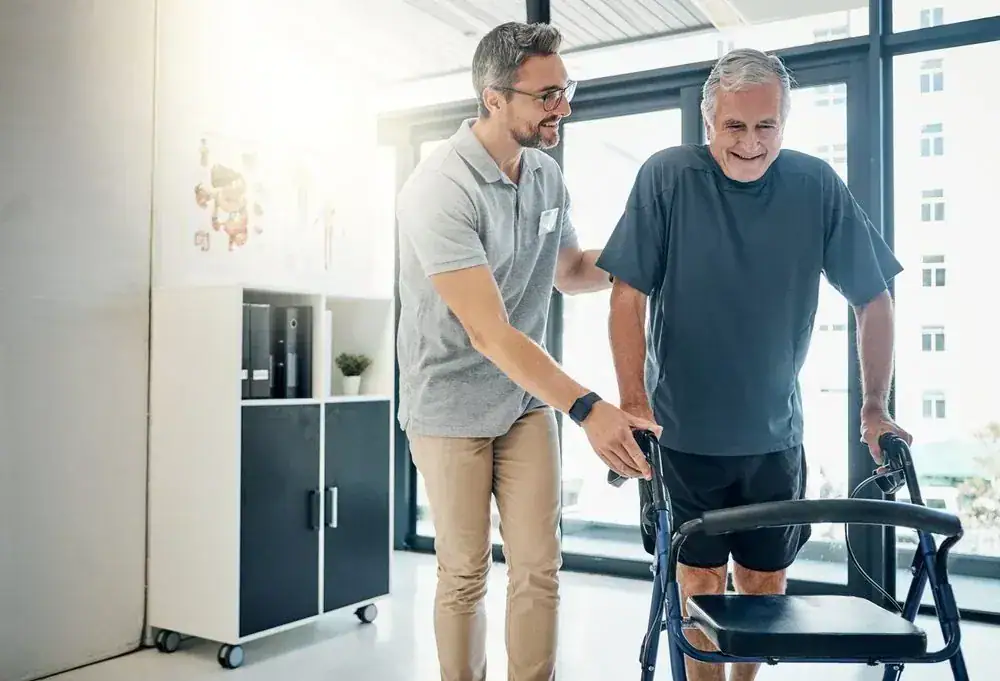
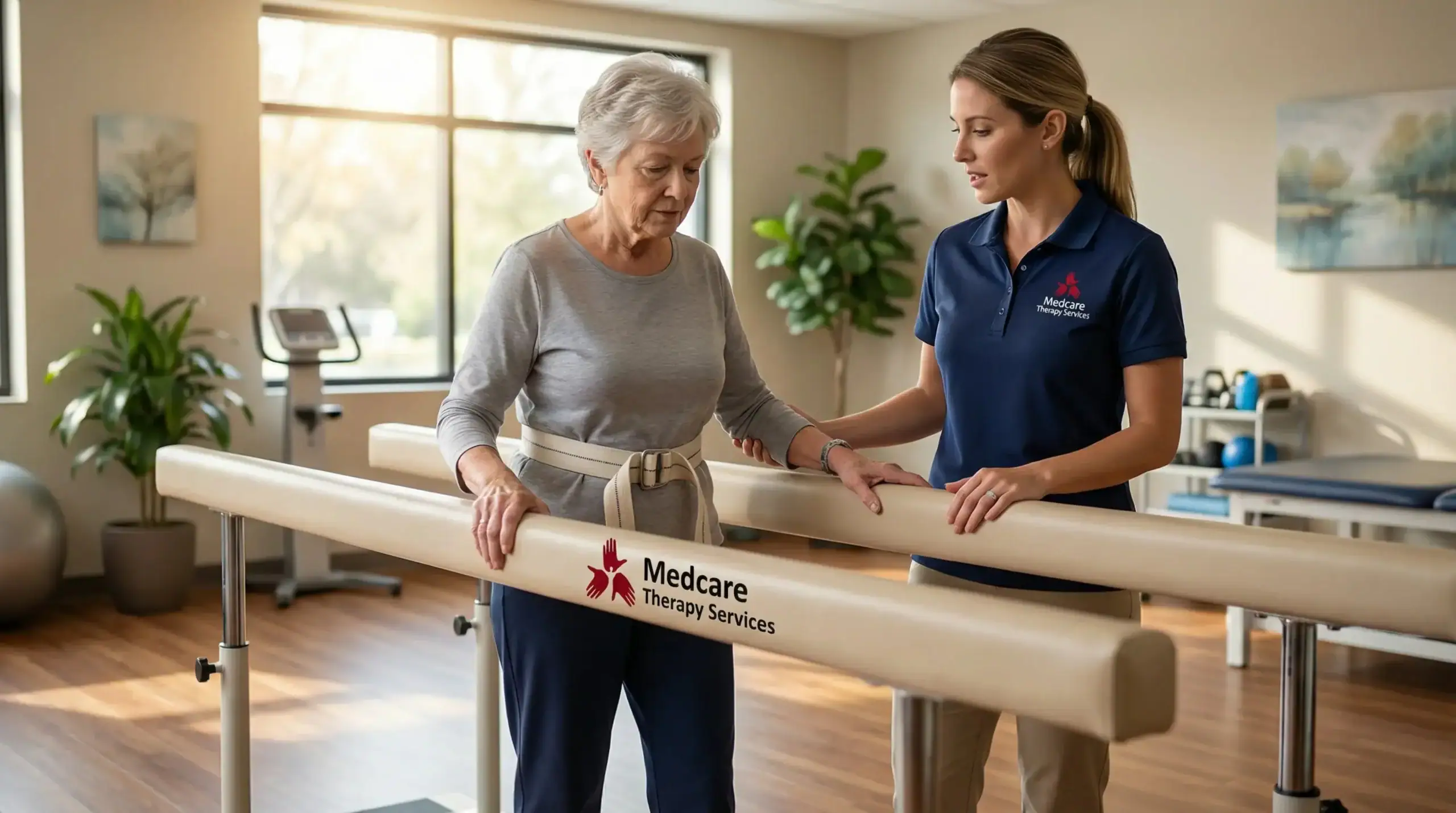
You stop second-guessing every step. Getting up from a chair doesn’t require a mental calculation. Walking to the bathroom at night feels routine again, not risky.
That’s what happens when one of our licensed therapists works with you on balance exercises designed specifically for your body and your home. You build strength in the muscles that matter most for stability. Your confidence comes back because your body starts responding the way it used to.
The goal isn’t just avoiding a fall. It’s getting back to doing what you want without that constant background worry. Research shows the right balance training can cut fall risk by up to 35 percent. But the real outcome is simpler: you move through your day feeling steady, not scared.
Medcare Therapy Services has been providing in-home physical therapy across Long Island for over a decade. That means our therapists have seen hundreds of homes, worked with seniors dealing with every level of mobility challenge, and know exactly what works when it comes to elderly fall prevention.
We’re not a corporate chain sending whoever’s available. You get licensed physical and occupational therapists who specialize in balance training and fall risk reduction. They show up on time, they listen, and they build a plan around your specific situation—not a template.
Shelter Island families trust us because we accept Medicare and most commercial insurance, and because we treat you like an actual person, not a case number. If you’ve been putting off getting help because you can’t get to a clinic easily, that’s exactly why we come to you.

First, we verify your insurance and schedule a time that works for you. One of our licensed therapists comes to your home and does a full fall risk assessment. They’re looking at your strength, your balance, how you walk, and what in your environment might be increasing your risk.
Then they build a plan. You’ll get specific exercises—things like standing balance drills, leg strengthening moves, and gait training. These aren’t generic senior exercises. They’re based on where your weaknesses are and what your goals are. Maybe it’s being able to garden again. Maybe it’s just feeling safe walking to the mailbox.
You’ll do the exercises together during each visit, and you’ll get a routine to practice between sessions. Your therapist adjusts the plan as you improve. Most people start seeing changes in their balance and confidence within a few weeks. The whole process is designed to happen in your home, using what you already have, so nothing feels foreign or intimidating.

Ready to get started?
You get one-on-one sessions with one of our licensed therapists who comes to your home in Shelter Island. Every visit includes hands-on balance training, strength exercises tailored to your ability level, and gait work to improve how you walk and move.
Your therapist will also evaluate your home for fall hazards—things like loose rugs, poor lighting, or furniture placement that’s creating risk. You’ll get practical recommendations you can actually implement, not a long list of expensive renovations.
On Long Island, especially in areas like Shelter Island where homes are older and layouts can be tricky, this kind of personalized assessment makes a real difference. You’re not just doing exercises. You’re learning how to navigate your specific space more safely. And because we accept Medicare, the cost isn’t a barrier for most people. You’re investing in staying independent longer, and that pays for itself the first time you avoid a fall that would’ve sent you to the ER.

If you’ve fallen in the past year, you need it. If you’ve had a close call or felt unsteady, you need it. If you’re avoiding certain activities because you’re worried about falling, you definitely need it.
A lot of people wait until after a bad fall to get help, but that’s backward. The whole point of fall prevention is stopping the fall before it happens. One in four adults over 65 falls every year, and those falls lead to broken hips, head injuries, and a loss of independence that’s hard to get back.
You don’t need to wait for a doctor’s referral to call us, though having one helps with insurance. If you’re noticing that your balance isn’t what it used to be, or if family members are expressing concern, that’s enough reason to get evaluated. One of our therapists can assess your risk level and tell you exactly what you’re dealing with. Even if you don’t need ongoing therapy, you’ll walk away knowing what to watch for and what exercises to do on your own.
It depends on where you’re starting from, but most programs include standing balance drills, weight-shifting exercises, and controlled movements that challenge your stability in a safe way. You might practice standing on one leg, walking heel-to-toe, or getting up and down from a chair using proper form.
Your therapist will also work on strengthening your legs and core, because weak muscles are one of the biggest fall risk factors. These aren’t complicated gym exercises. They’re functional movements that translate directly to what you do every day—bending down, reaching up, turning around, walking on uneven surfaces.
If you’re worried the exercises will be too hard, don’t be. Everything is scaled to your current ability. If you’re using a walker, your therapist works with that. If you have arthritis or joint pain, they modify around it. The goal is to challenge you just enough that you improve, but not so much that you feel unsafe or frustrated. And because it’s happening in your home, you’re practicing in the exact environment where you need to be steady.
Yes, if it’s medically necessary and prescribed by a doctor. Medicare Part B covers physical therapy and occupational therapy in your home when it’s needed to improve or maintain your ability to function. Fall prevention absolutely qualifies, especially if you’ve had a fall, you’re at high risk, or your doctor has documented balance or mobility issues.
You’ll typically have a copay or coinsurance depending on your specific plan, but the bulk of the cost is covered. We handle the billing and work directly with Medicare, so you’re not stuck figuring out paperwork on your own.
If you have a Medicare Advantage plan or supplemental insurance, coverage can be even better. The key is getting a referral or prescription from your doctor that states you need physical therapy for balance, gait, or fall risk. If you’re not sure about your coverage, call us. We verify benefits before your first visit so there are no surprises. Most of our Shelter Island clients are on Medicare, and we’ve been doing this long enough to know exactly how to navigate it.
Most people see real improvement in six to eight weeks, but it varies. If you’re recovering from a fall or surgery, it might take longer. If you’re relatively strong but just need some balance work and home safety guidance, you might be done sooner.
Your therapist will give you a clearer timeline after the initial evaluation. They’ll set specific goals with you—like being able to walk outside independently or getting in and out of the shower safely—and the length of therapy depends on how quickly you progress toward those goals.
You’ll usually have two or three visits per week at the start, then taper down as you get stronger and more confident. Even after formal therapy ends, you’ll have exercises to keep doing on your own. The habits you build during therapy are what keep you steady long-term. This isn’t a one-and-done fix. It’s about giving you the tools and strength to stay independent, and that requires some consistency on your end too.
You’re learning to be safe in the place where you actually live. A clinic can’t replicate your stairs, your bathroom layout, or the specific obstacles in your home. When one of our therapists works with you in your space, they see exactly what’s creating risk and teach you how to navigate it.
There’s also the practical side. If getting to a clinic is hard—whether it’s because you don’t drive anymore, you’re worried about falling in a parking lot, or you just don’t have reliable transportation—in-home therapy removes that barrier. You’re more likely to stick with it when it’s happening in your living room.
And frankly, a lot of people feel more comfortable at home. You’re not self-conscious about your mobility in front of a waiting room full of strangers. You can ask questions freely. Your therapist gets to know your routine, your goals, and your limitations in a way that’s just not possible in a 45-minute clinic slot. For elderly fall prevention, especially on Shelter Island where getting around can be a challenge depending on the season, in-home therapy makes sense on every level.
It’s not just exercise. It’s targeted intervention based on your specific risk factors. One of our licensed therapists evaluates why you’re at risk—whether it’s muscle weakness, poor balance, vision issues, medication side effects, or environmental hazards—and addresses those things directly.
The exercises you do are part of it, but so is education. You learn how to move safely, how to recover if you start to lose your balance, and how to set up your home to reduce risk. Your therapist might recommend grab bars, better lighting, or removing tripping hazards. They’ll also talk to you about footwear, how to get up if you do fall, and when to use assistive devices.
Research backs this up. Programs like the Otago Exercise Program, which combines strength and balance training with home safety, reduce falls by 35 percent. That’s not a small number. That’s thousands of people who didn’t end up in the ER with a broken hip or head injury. Therapy works because it’s specific, it’s supervised, and it’s designed around what actually causes falls in older adults. You’re not guessing. You’re following a plan built by someone who knows exactly what they’re doing.
Other Services we provide in Shelter Island