
You stop planning your day around what might go wrong. The fear that keeps you from walking to the mailbox or getting up at night starts to fade. Your balance improves, your legs get stronger, and the confidence you thought was gone for good comes back.
That’s what happens when fall prevention actually works. Not a handout with generic exercises. Not a one-size-fits-all program. A licensed physical therapist comes to your home, evaluates your specific risks, and builds a plan that addresses why you’re unsteady in the first place.
In Nassau County, 88% of injury hospitalizations for adults over 65 are from falls. Most of those happen at home. You don’t need more statistics—you need a plan that keeps you off that list. One that fits your body, your home, and your life right now.
We’ve been providing in-home physical therapy across Long Island for over a decade. We work with seniors who find it difficult to leave home—whether that’s due to mobility challenges, transportation issues, or simply not wanting to risk another fall before you’ve even started treatment.
Russell Gardens sits in one of the most densely populated senior communities on Long Island. We know this area. We know the homes, the needs, and the concerns that come with aging in place here. Our therapists are trained in the Otago Exercise Program, a research-backed fall prevention method that’s proven to reduce fall risk by 30% to 35%.
We accept Medicare and most commercial insurance. Our billing is transparent, our therapists are licensed, and our focus is keeping you stable, mobile, and independent.

First, a licensed physical therapist comes to your home for an evaluation. They assess your balance, strength, gait, and the layout of your space. They’re looking for why you’re falling—not just that you are.
From there, they design a custom program. That might include balance training, strengthening exercises, gait correction, or proprioceptive work to help your body understand where it is in space. If your home has risks—loose rugs, poor lighting, tricky transitions—they’ll point those out too.
You’ll meet regularly, right in your living room or bedroom. No driving. No waiting rooms. Your therapist tracks your progress, adjusts your exercises as you improve, and gives you tools to keep going between sessions. Everything is designed around one goal: reducing your fall risk so you can move through your home with confidence again.

Ready to get started?
Your program starts with a full fall risk assessment. That includes balance testing, strength evaluation, gait analysis, and a review of any previous falls or near-misses. Your therapist will also look at your home environment to identify hazards you might not notice anymore.
From there, you’ll get a personalized exercise plan. This typically includes senior balance exercises, lower body strengthening, coordination drills, and movement training that mimics your daily activities. If you’re dealing with dizziness or vertigo, vestibular rehabilitation may be part of your plan.
Long Island has some of the highest fall rates in New York State. Nassau and Suffolk counties rank 4th and 5th statewide for fall-related incidents. In Russell Gardens and surrounding areas like Great Neck, Thomaston, and Kensington, many homes were built decades ago and weren’t designed with aging in place in mind. We understand that. We work with the space you have and help you navigate it safely. Everything is covered under Medicare when medically necessary, and we handle the billing directly.

If you’ve fallen in the past year, you need it. If you’ve had a close call or feel unsteady when you walk, you need it. If you’re avoiding certain activities because you’re afraid of falling, that’s another sign.
Falls don’t just happen to people who are frail. They happen to active seniors who are still living full lives but notice their balance isn’t what it used to be. Maybe you’re catching yourself on furniture more often. Maybe stairs feel different. Maybe you’re just not as confident in your movements.
A physical therapist can measure your fall risk and tell you exactly where you stand. If you’re at risk, they’ll build a plan to lower it. If you’re borderline, they’ll give you exercises to stay strong and stable. Waiting until after a serious fall means you’re recovering instead of preventing—and recovery is always harder.
Yes, when it’s medically necessary. If your doctor refers you for physical therapy due to balance issues, a history of falls, or conditions that increase fall risk, Medicare Part B typically covers it.
You’ll need to meet the homebound requirement, which means leaving home takes considerable effort due to illness, injury, or disability. Most seniors who need fall prevention therapy already meet this. If you’re avoiding leaving the house because you’re afraid of falling or it’s physically difficult, you likely qualify.
We handle all the billing and work directly with Medicare. There’s no need to figure out codes or coverage on your own. During your evaluation, we’ll confirm your eligibility and explain any out-of-pocket costs up front. Most patients pay little to nothing after Medicare processes the claim.
Otago is a research-proven fall prevention program designed specifically for older adults. It’s been tested in multiple studies and consistently shows a 30% to 35% reduction in fall risk when followed correctly.
The program focuses on strength and balance exercises that are progressive, meaning they get harder as you get stronger. It’s not about doing the same routine forever—it’s about challenging your body in ways that actually improve stability. The exercises are done at home, with and without your therapist, so you’re training in the environment where you’re most likely to fall.
What makes it effective is the structure. You’re not guessing what to do or how often. Your therapist prescribes specific exercises based on your evaluation, tracks your progress, and adjusts the program as you improve. It’s individualized, but it’s also based on decades of evidence showing what actually works to prevent falls in seniors.
Most people start feeling more stable within a few weeks, but real improvement takes consistency. Research shows that fall prevention programs are most effective when followed for at least three months.
Your therapist will visit you regularly—usually once or twice a week at first—and give you exercises to do on your own between sessions. The in-home work is just as important as the supervised sessions. If you only do the exercises when your therapist is there, progress will be slow.
That said, you’ll likely notice small changes quickly. Your legs might feel stronger. You might catch your balance faster when you stumble. Those early wins matter because they build confidence, and confidence is a huge part of staying steady. The goal isn’t just to get through a few sessions—it’s to give you tools and strength that last long after therapy ends.
It’s not too late. If anything, you’re exactly who this program is for. People who’ve fallen before are at higher risk of falling again, but that risk can be reduced with the right intervention.
After a fall, many seniors develop a fear of falling again. That fear leads to less movement, which leads to weaker muscles and worse balance, which leads to more falls. It’s a cycle, and physical therapy breaks it.
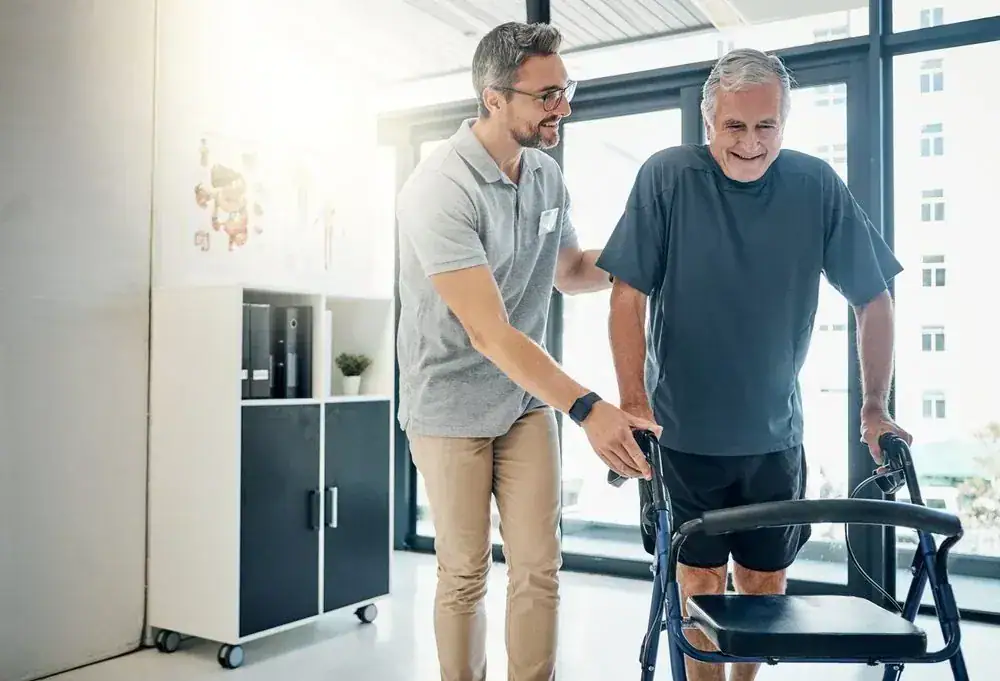
Your therapist will start where you are right now—not where you used to be. If you’re using a walker, they’ll work with that. If you’re nervous about certain movements, they’ll build up to them gradually. The program is designed to meet you at your current level and improve from there. Falling multiple times doesn’t mean you’re beyond help. It means you need a plan that actually addresses what’s happening in your body and your environment.
Yes. In fact, most people who need fall prevention therapy have other conditions—arthritis, neuropathy, previous stroke, Parkinson’s, vertigo, or joint replacements. Your therapist will design your program around those conditions, not in spite of them.
If you have arthritis, your exercises will focus on movements that don’t aggravate your joints but still build strength. If you have neuropathy and can’t feel your feet well, your therapist will incorporate proprioceptive training to help your body compensate. If you’ve had a stroke, gait training and balance work will be adjusted to your specific limitations.
The goal is always the same—reduce fall risk and improve mobility—but the path to get there changes based on what your body can and can’t do. Your therapist isn’t working from a script. They’re working from your evaluation, your history, and your goals. That’s what makes in-home therapy effective for people with complex health backgrounds.
Other Services we provide in Russell Gardens