
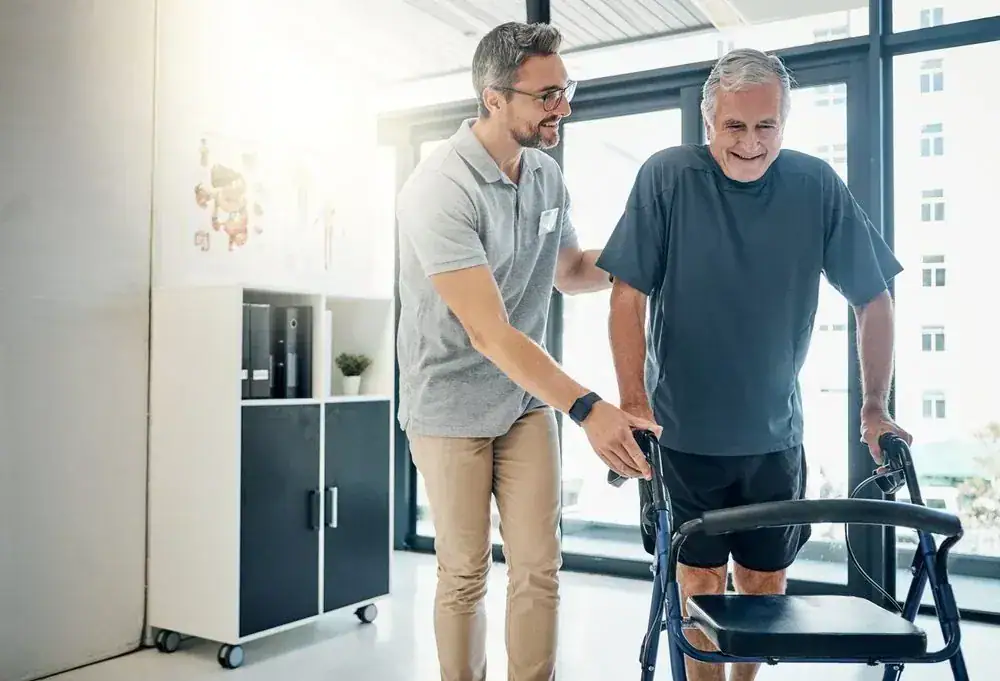
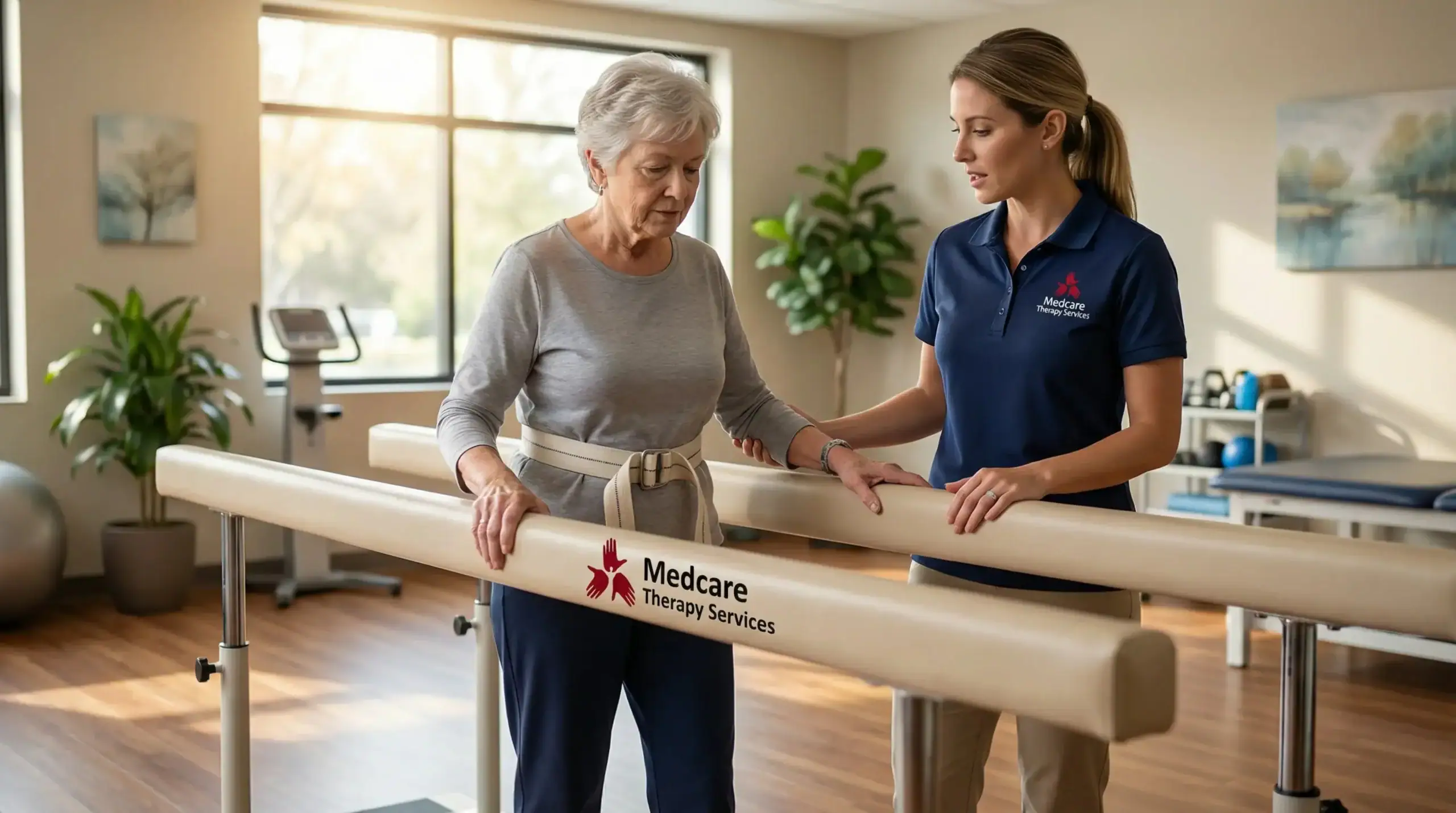
You’ve noticed it. The hesitation before stepping off a curb. The extra second it takes to get up from a chair. Maybe you’ve already fallen once, and now there’s that nagging fear every time you move.
Here’s what most people don’t realize: falling once doubles your chance of falling again. Not because you’re getting older or weaker necessarily, but because fear changes how you move. You start limiting what you do. Your muscles weaken. Your balance gets worse. It becomes a cycle.
Physical therapy for balance breaks that cycle. Studies show fall prevention interventions reduce your fall risk by 30% to 35%. That’s not a small number when you consider that one in four adults over 65 falls every year. The work we do focuses on rebuilding strength in the muscles that keep you stable, retraining your body’s balance responses, and giving you back the confidence to move through your day without that constant worry.
Medcare Therapy Services has been serving Ridge and the surrounding Long Island communities for years through our affiliated centers, including Physical Therapy Associates of Smithtown and Speonk. We’re not a corporate chain with rotating staff. You’ll work with licensed physical therapists who specialize in geriatric care and understand exactly what’s happening when balance starts to decline.
Long Island has one of the highest concentrations of older adults in New York State. Falls are the leading cause of injury deaths and hospitalizations for adults 65 and older here. We see it every day, which is why we’ve built our fall prevention programs around what actually works: personalized assessment, targeted exercises, and education you can use at home.
Your care stays local. Your records stay secure. And you get the kind of attention that only comes from a team that’s been part of this community long enough to understand what Ridge residents actually need.

First, we assess where you are right now. That means testing your balance, evaluating your gait, checking your strength, and talking through your history. Have you fallen before? Do you feel dizzy? Are there specific movements that make you nervous? This isn’t a generic screening. It’s a detailed look at your specific risk factors.
From there, we build a program that meets you where you are. If you’ve been limiting your activity out of fear, we start small and controlled. If you’re active but noticing balance issues, we target the specific weaknesses causing instability. Senior balance exercises might include strength training for your legs and core, balance drills that challenge your stability in safe ways, and gait training to improve how you walk.
You’ll also learn how environmental factors play into fall risk. About 30% to 50% of falls in older adults happen because of something in the environment—loose rugs, poor lighting, clutter. We teach you what to look for and how to modify your home so it’s working with you, not against you.
Most people come twice a week at first. Sessions typically last 45 minutes to an hour. And yes, Medicare and most insurance plans cover this work because preventing a fall is far less expensive than treating one. The average hospital stay for a fall injury costs over $34,000.

Ready to get started?
Every program includes a comprehensive fall risk assessment. We’re looking at strength, flexibility, balance, vision, medication side effects, and environmental hazards. You get a clear picture of what’s increasing your risk and what we’re going to do about it.
Your exercise program is built specifically for you. That might mean balance exercises for seniors that focus on weight shifting and stability. It might include resistance training to strengthen the muscles around your hips and ankles. It often involves coordination drills that retrain how your body responds when you start to lose balance. The goal isn’t just to make you stronger. It’s to make you more stable and more confident.
We also spend time on education. You’ll learn proper footwear choices, how to get up safely if you do fall, and how to arrange your home to reduce trip hazards. For many Ridge residents, that means addressing common issues in older Long Island homes—narrow hallways, steep stairs, uneven outdoor walkways.
Here’s what makes this different from generic senior fitness classes: we’re treating a medical condition. Balance disorders and fall risk aren’t just part of aging. They’re treatable problems. And when you work with a licensed physical therapist, you’re getting someone who understands the biomechanics, the neurological components, and the psychological barriers that come with fear of falling.
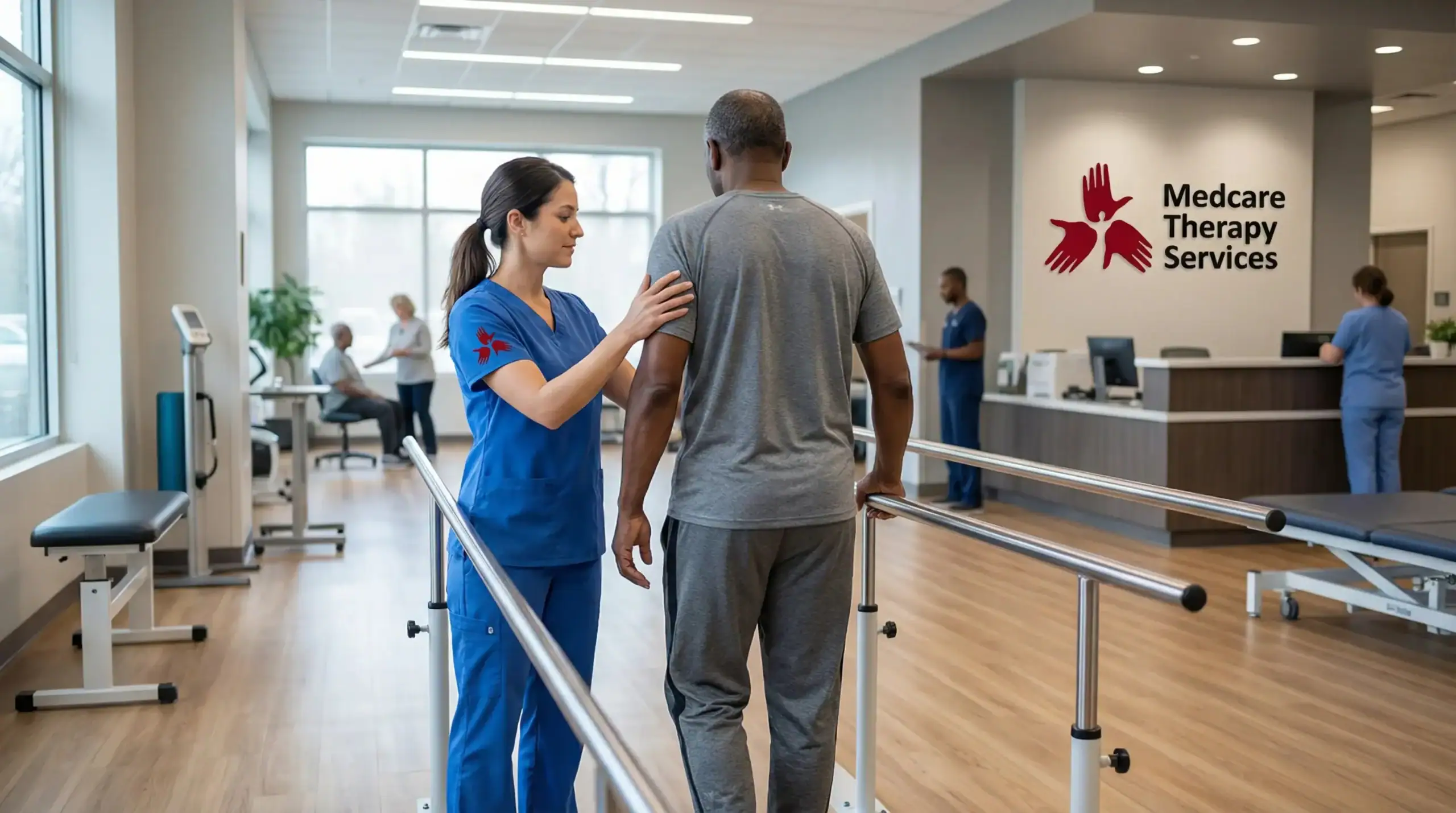
If you’ve fallen in the past year, you need an assessment. Falling once doubles your risk of falling again, and waiting to see if it happens again isn’t a strategy. Even if you caught yourself or didn’t get hurt, that fall tells you something about your balance or strength that needs attention.
But you don’t have to wait for a fall. If you’re feeling unsteady when you walk, if you’re holding onto furniture or walls more than you used to, if you’ve started avoiding certain activities because you’re worried about falling—those are all signs that your balance system needs work. Dizziness, numbness in your feet, or a recent change in medication can also affect your stability.
The reality is that fewer than half of older adults who fall actually tell their doctor. They’re embarrassed, or they think it’s just part of getting older. It’s not. Most falls are preventable, and the earlier you address balance issues, the easier they are to fix. If you’re in Ridge or anywhere on Long Island and you’re noticing these signs, call us. The assessment itself will tell you whether therapy makes sense.
It depends entirely on what your assessment shows. Some people need basic weight-shifting exercises—standing on one foot, transferring weight from side to side, practicing controlled movements. Others are ready for more dynamic work like walking on uneven surfaces, turning quickly, or reaching in different directions while maintaining balance.
A lot of the exercises challenge your body’s automatic balance responses. When you start to tip, your body should react instantly to catch you. But those responses can slow down or weaken over time. We retrain them through specific drills that put you slightly off balance in a controlled, safe environment. You might practice stepping in different directions, walking heel-to-toe, or standing with your eyes closed to challenge your vestibular system.
Strength training is also a big part of it. Your legs, hips, and core need to be strong enough to keep you stable. We use resistance bands, weights, and functional movements that mirror what you do in daily life—getting up from a chair, climbing stairs, reaching for something on a high shelf. The exercises grow with you. What feels challenging in week one becomes easier, and we adjust from there.
In most cases, yes. Medicare Part B covers physical therapy when it’s medically necessary, and fall prevention absolutely qualifies if you have risk factors or a history of falling. You’ll need a referral from your doctor, but that’s usually straightforward. Most physicians understand that preventing a fall is far more cost-effective than treating the injuries that come from one.
Private insurance plans typically cover physical therapy as well, though your copay and the number of approved sessions can vary depending on your specific plan. We verify your benefits before you start so there are no surprises. Some Medicare Advantage plans even cover additional preventive services beyond what traditional Medicare offers.
Here’s the important part: if cost is your main concern, consider what you’re preventing. The average hospitalization for a fall injury runs over $34,000. Even a minor fall that doesn’t require surgery can lead to emergency room visits, imaging, follow-up appointments, and potential complications. Investing in prevention now—especially when insurance covers most or all of it—makes financial sense on top of the obvious health benefits.
Most people start noticing improvements in stability and confidence within four to six weeks if they’re consistent with their sessions and home exercises. That doesn’t mean you’re done at six weeks—it means you’re seeing measurable progress. Full programs often run eight to twelve weeks depending on your starting point and goals.
The timeline depends on several factors. If you’re dealing with significant muscle weakness, it takes time to rebuild that strength. If fear of falling has kept you inactive for months or years, your body needs time to relearn movement patterns. If you’ve had a recent fall or injury, recovery adds to the timeline. But even in those cases, you should feel a difference fairly quickly in terms of how stable you feel during everyday activities.
Consistency matters more than anything else. Coming to therapy twice a week and doing your home exercises makes a massive difference compared to showing up once a week and skipping the homework. Think of it like this: we’re retraining your nervous system and rebuilding muscle. That doesn’t happen overnight, but it does happen if you put in the work. And once you’ve built that foundation, maintaining it takes far less effort than you’d think.
Yes, and honestly, that’s when it matters most. Multiple falls mean something specific is going wrong—whether it’s muscle weakness, a balance disorder, medication side effects, vision problems, or a combination of factors. Physical therapy helps identify what’s causing the falls and addresses those root issues directly.
After multiple falls, many people develop a strong fear of falling again. That fear is completely understandable, but it often makes things worse. You start moving less, which weakens your muscles further and decreases your balance. You might start using assistive devices incorrectly or relying on furniture to get around. Therapy breaks that cycle by rebuilding your physical capabilities in a controlled environment where you’re not going to get hurt.
We’ve worked with plenty of Ridge residents who came to us after two, three, or more falls. The common thread is that they all wished they’d started sooner. But starting now is still the right move. Research shows that fall prevention interventions can reduce your risk by 30% to 35% even after you’ve already fallen. Your history doesn’t define your future if you’re willing to do the work to change it.
Yes. Medcare Therapy Services and our affiliated centers serve Ridge and over 100 surrounding Long Island communities. That includes Smithtown, Speonk, Centereach, Farmingville, Patchogue, Brookhaven, Hauppauge, Commack, East Setauket, and dozens of other towns across Suffolk and Nassau Counties.
We have multiple locations to make access easier no matter where you live on Long Island. You’re not driving an hour each way for therapy. You’re coming to a local center where the staff understands the community and the specific challenges Long Island seniors face—whether that’s navigating older homes with stairs, dealing with icy walkways in winter, or managing the isolation that can come with living in more spread-out residential areas.
If you’re not sure whether we serve your specific town, just ask. Chances are we either have a location near you or can point you to one of our affiliated centers that does. The goal is to make fall prevention accessible, because the biggest barrier to getting help shouldn’t be how far you have to drive.
Other Services we provide in Ridge