
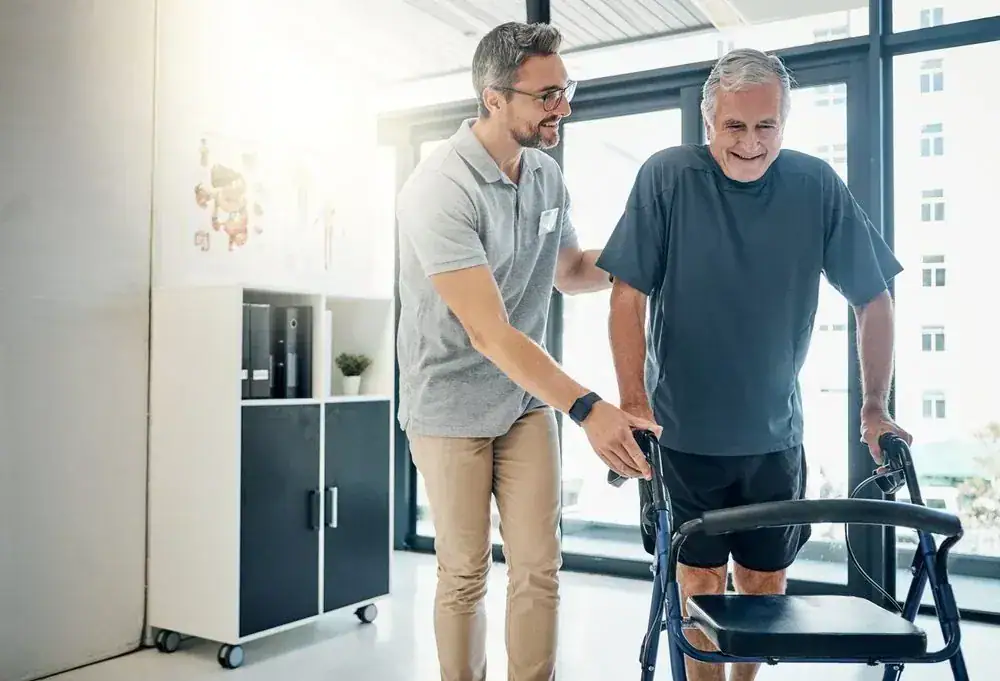
You stop second-guessing every step. Getting up from a chair doesn’t require a strategy session. Walking to the mailbox stops feeling like a risk.
That’s what happens when balance training actually works. Not motivation. Not willpower. Actual physical improvement in how your body moves and responds.
The research backs it up. Clinical fall prevention programs reduce fall risk by 30 to 35 percent. Balance and strength exercises specifically cut fall rates by about 24 percent. But here’s what matters more than statistics: you start trusting your body again.
You’re not avoiding activities because you’re worried. You’re not planning your day around what feels safe versus what you actually want to do. You’re moving through your home and your neighborhood with the kind of confidence you had before balance became something you had to think about.
That shift doesn’t happen from reading a pamphlet or watching a video. It happens through consistent, personalized physical therapy that addresses your specific weaknesses and builds real strength where you need it most.
We’ve been providing home-based physical therapy across Long Island for over a decade. That means we’ve worked with hundreds of seniors in Port Washington North, NY and surrounding Nassau County communities who were dealing with balance issues, previous falls, or just the growing fear that a fall was inevitable.
We’re licensed physical therapists who specialize in fall prevention. We come to your home because we know that’s where most falls happen, and that’s where you need to feel most confident. We accept Medicare and most commercial insurance, so cost doesn’t have to be the barrier that keeps you from getting help.
Port Washington North has one of the highest concentrations of older adults on Long Island. Over a third of residents here are 65 or older. That’s not just a statistic to us. It means we understand this community, the homes people live in, and the specific challenges that come with aging in this area.
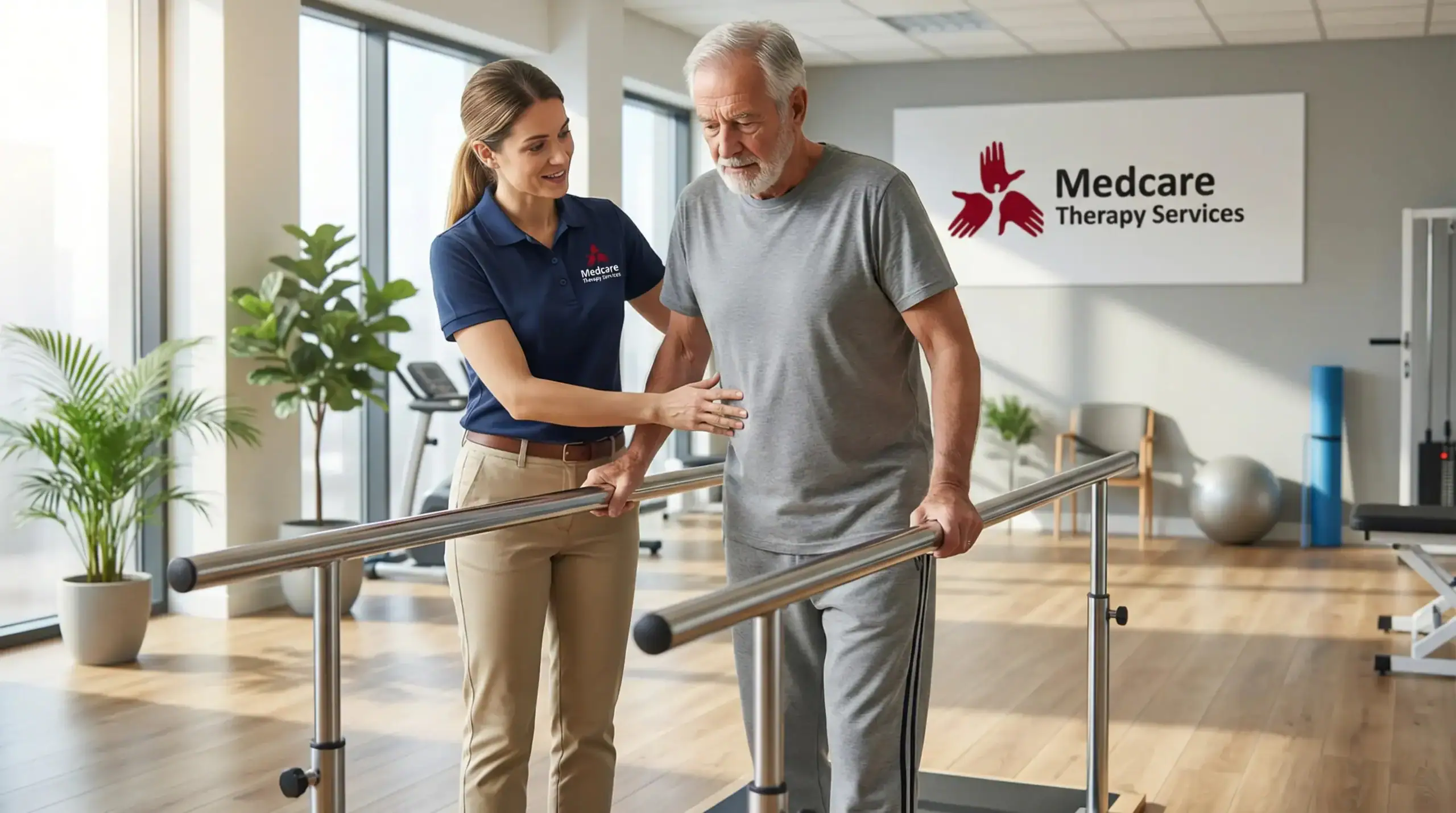
First, we do a complete fall risk assessment in your home. We’re looking at your strength, how you walk, your balance, your reflexes. We’re also looking at your actual environment—the rugs, the lighting, the bathroom setup, the stairs. We check your footwear. We review your medications because some of them affect balance more than people realize.
Then we build a personalized exercise program. This isn’t generic senior balance exercises you could find online. It’s based on what we found during your assessment. If your left leg is weaker, we address that. If you have trouble with side-to-side movement, we work on that specifically. If getting up from a low chair is hard, that becomes part of your training.
We use evidence-based programs like the Otago Exercise Program, which has been shown to reduce falls by 35 to 40 percent in older adults. But we adapt everything to your current ability level and your goals. Some people want to feel safer at home. Others want to keep gardening or playing with grandkids. Your program reflects what matters to you.
Sessions happen in your home, usually once or twice a week to start. We’re hands-on. We’re watching how you move, correcting form, progressing exercises as you get stronger. Between visits, you’ll have exercises to do on your own. Consistency is what creates change.

Ready to get started?
Balance training is the core. You’ll do exercises that challenge your stability in controlled ways—standing on one foot, weight shifting, reaching in different directions. These aren’t easy at first, but that’s the point. Your balance improves when you safely push past your current limits.
Strength building comes next. Your leg muscles lose 3 to 8 percent of their mass every decade after 30. That weakness directly increases fall risk. We focus on the muscles that matter most for balance—your quads, glutes, calves, and core. Stronger legs mean better stability.
Gait training helps you walk more safely. We analyze how you move and identify problems—maybe you’re shuffling, or favoring one side, or not picking your feet up enough. Small adjustments in how you walk can make a significant difference in fall risk.
We also do home safety assessments. In Nassau County, falls are the cause of 88 percent of injury hospitalizations for adults over 65. Many of those falls happen because of fixable hazards. We’ll point out the loose rug in your hallway, the poor lighting on your stairs, the clutter in your walking path. Sometimes the simplest changes have the biggest impact.
You’ll get education about fall risk factors you might not know about. Certain medications increase fall risk. Vitamin D deficiency affects balance. Vision problems matter more than most people think. We connect the dots between your overall health and your fall risk.
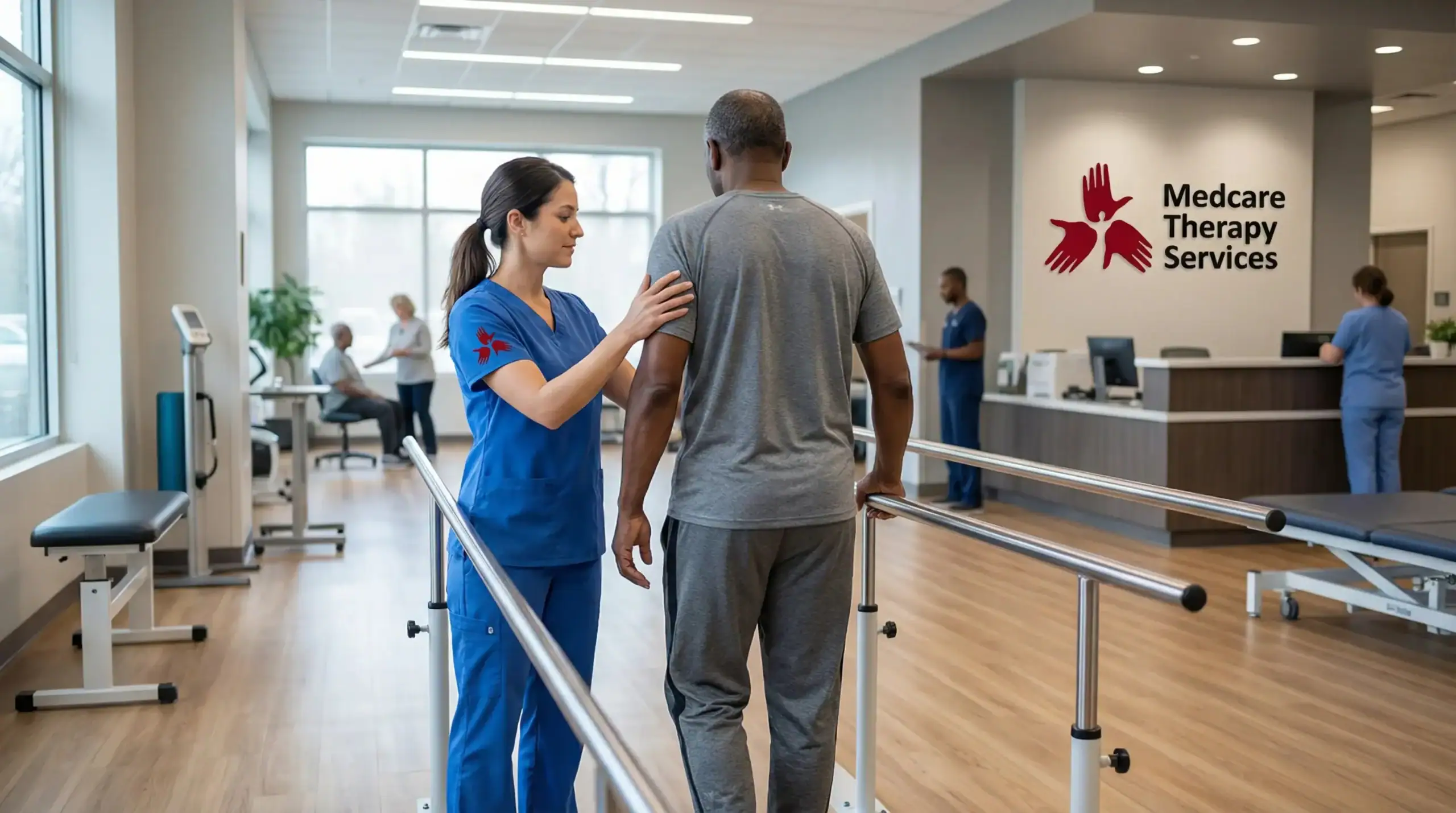
Most people notice some improvement within three to four weeks of consistent therapy. That might mean you feel steadier when you stand up, or you’re not grabbing for support as often when you walk.
Measurable improvement—the kind we can document with balance tests—usually shows up around the six to eight week mark if you’re doing your home exercises between our sessions. Research on balance training shows improvements ranging from 16 to 42 percent compared to baseline assessments.
But here’s the reality: this isn’t a quick fix. Real fall prevention requires building strength and retraining your body’s balance systems. That takes time. The people who see the best results are the ones who commit to the full program, not just a few sessions. We’re typically looking at two to three months of regular therapy to create lasting change.
Yes, Medicare Part B covers physical therapy for fall prevention when it’s medically necessary and prescribed by a doctor. Since we’re a Medicare-approved provider, we can bill directly for you.
Here’s what medically necessary means in this context: you have a balance problem, a history of falls, or a condition that increases your fall risk. Your doctor needs to document that physical therapy is appropriate for your situation. Most primary care physicians are very familiar with fall prevention referrals, especially in areas like Port Washington North where the senior population is significant.
Medicare does have some limitations. There are annual caps on therapy services, though exceptions exist for people who need extended treatment. You’ll have a copay for each session, typically 20 percent of the Medicare-approved amount after you’ve met your deductible. We handle all the billing and can tell you upfront what your expected costs will be based on your specific Medicare plan.
We see where you actually live. Your home is where most falls happen, so that’s where we need to assess your risk and train your balance. We can spot the hazards in your environment that you’ve stopped noticing—the step you’ve navigated for 20 years that’s now a trip risk, the bathroom layout that’s become dangerous, the lighting that’s no longer adequate.
There’s no transportation barrier. For many seniors in Port Washington North, getting to a clinic is hard. Maybe you don’t drive anymore. Maybe winter weather makes you nervous. Maybe the effort of getting ready and traveling wipes you out before therapy even starts. We eliminate all of that.
You also practice balance exercises in the environment where you need them most. Training your balance on the same floors, stairs, and surfaces you use every day makes the improvement more functional. You’re not learning to balance in a clinic gym and then hoping it transfers to your home. You’re building confidence in the actual space where you need it.
Absolutely. Fear of falling is actually a significant risk factor for future falls. When you’re afraid, you start limiting your activities. You move less. You avoid things that feel risky. That inactivity makes you weaker, which actually increases your fall risk. It’s a cycle that gets worse over time.
One in four adults over 65 falls each year. In Nassau County, where Port Washington North is located, fall rates are among the highest in New York State. If you’re feeling unsteady, if you’ve had close calls, if you’re grabbing walls or furniture more than you used to—those are signs that your balance is declining.
Starting therapy before you fall is smart. It’s easier to maintain and improve balance than to recover after an injury. A serious fall can mean hospitalization, surgery, rehab, and sometimes a permanent loss of independence. Prevention is always better than rehabilitation. If you’re worried enough to be reading this, you’re worried enough to get assessed.
Generic balance exercises aren’t personalized to your specific weaknesses. Online videos don’t know if your right ankle is weak, or if you have trouble with backward movement, or if your core strength is the real problem. We assess first, then design exercises that target exactly what you need.
We also progress your program correctly. Balance training needs to get harder as you improve, but not so hard that it’s unsafe. That’s a fine line. We’re there to make sure you’re challenged enough to improve but not at risk of falling during the exercise itself. We adjust based on how you’re doing week to week.
Form matters more than people realize. Doing a balance exercise wrong can be ineffective or even risky. We watch how you move and correct problems in real time. We make sure you’re engaging the right muscles, maintaining proper posture, and breathing correctly. Those details make the difference between exercises that work and exercises that waste your time.
Most people need active therapy for two to three months to see significant, lasting improvement. That’s typically 8 to 12 sessions, sometimes more depending on your starting point and how quickly you progress.
After that, many people transition to a maintenance program. You’ll have exercises to continue on your own, and we might check in monthly or quarterly to reassess and adjust your program. The goal is to get you independent with your exercises while knowing you have support if you need it.
Some people need ongoing therapy because of progressive conditions like Parkinson’s or neuropathy that continuously affect balance. In those cases, regular sessions help you maintain function rather than decline. We’re honest about what your situation requires. If you need long-term support, we’ll tell you. If you’re ready to manage on your own with periodic check-ins, we’ll tell you that too.
Other Services we provide in Port Washington North