
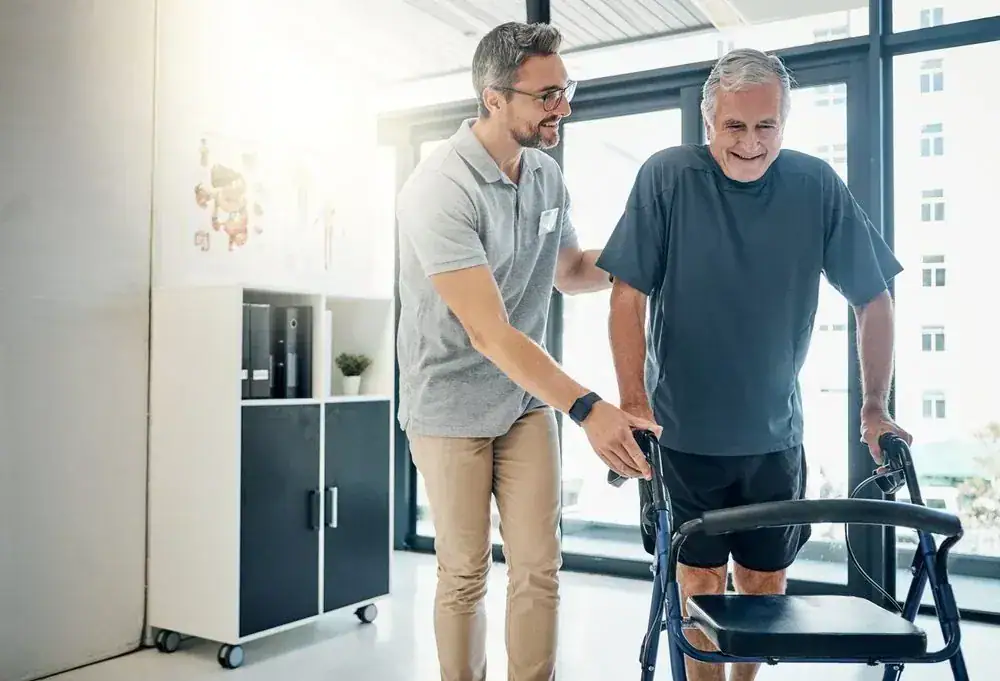
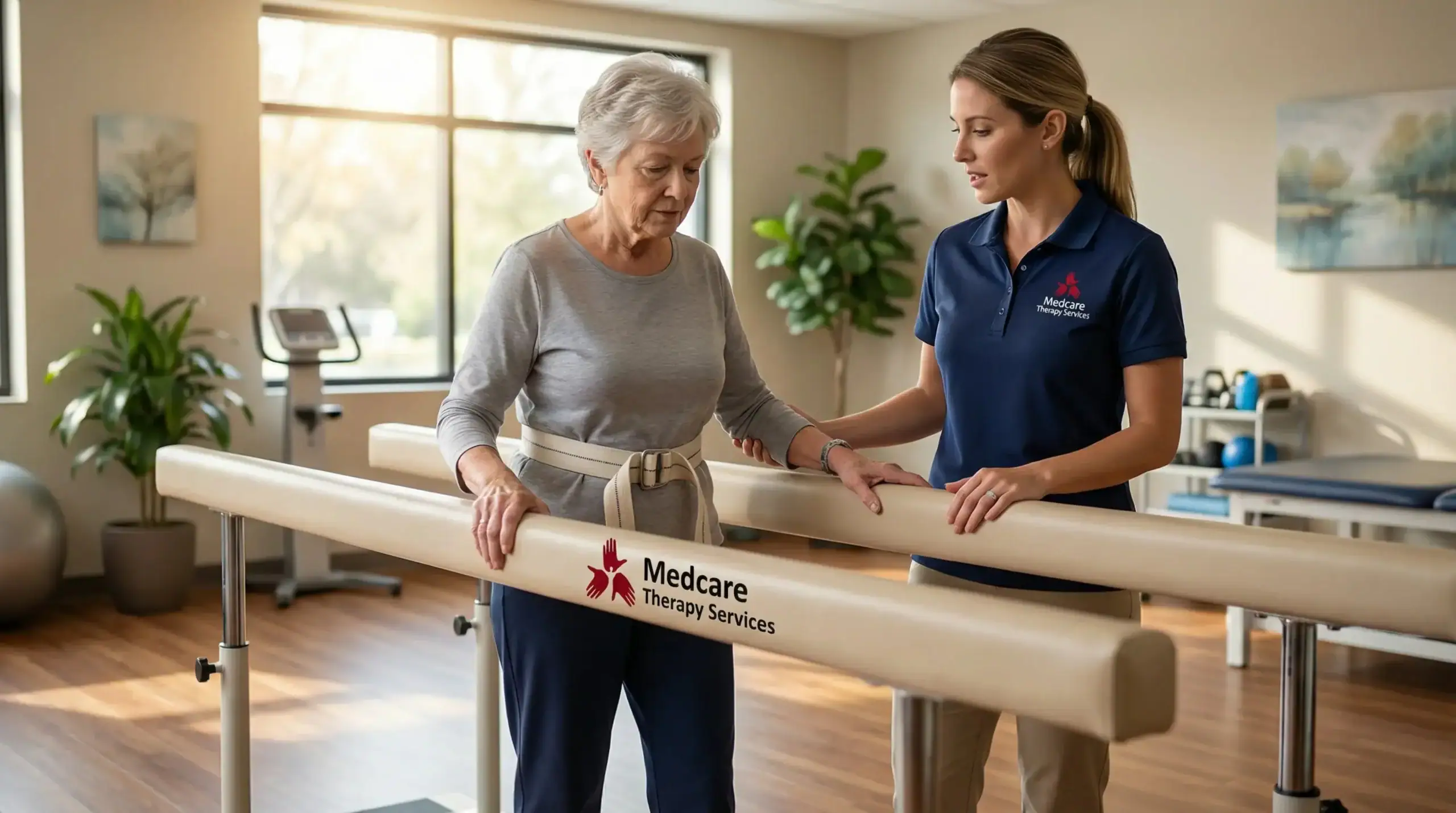
You stop planning your day around what might go wrong. The anxiety that keeps you from walking to the mailbox or reaching for something on a shelf starts to fade. You move through your home without that constant mental checklist of what to avoid.
That’s what happens when balance training actually works. Your legs get stronger. Your reflexes sharpen. The fear that’s been quietly running the show loses its grip.
In Nassau County, 88% of injury hospitalizations for adults over 65 come from falls. Most of those falls happen at home doing everyday things. But research shows the right balance exercises can cut your fall risk by up to 35%. That’s not a small number when you’re talking about staying out of the hospital and keeping your independence intact.
This isn’t about perfect balance. It’s about having enough strength and stability to catch yourself when you stumble, to move through your day without second-guessing every step, and to keep doing the things that matter to you.
We’ve been treating Long Island residents for years across multiple locations, including right here in Plainview. We’re not a corporate chain with rotating staff. Our physical therapists know this area, we know the challenges Long Island seniors face, and we specialize in vestibular and balance disorders.
We work with patients from Bethpage to Hicksville, Syosset to Jericho. Many come to us after a fall. Some come because they’ve noticed changes in their balance and want to address it before something happens. Either way, you’re working with certified specialists who understand that your goal isn’t just to avoid falling—it’s to keep living your life.
Our team coordinates with your other doctors, accepts most insurance plans, and keeps communication straightforward. No runaround. No surprises.

First visit is an evaluation. We look at your balance, your strength, your gait, your medical history, and any medications that might be affecting your stability. This takes about an hour. You’re not doing anything dangerous—we have support systems in place while we assess where you’re at.
From there, we build a plan specific to you. That might include the Otago Exercise Program, which is one of the most researched fall prevention protocols out there. It combines strength training, balance exercises, and walking practice. Or it might involve vestibular therapy if dizziness is part of the picture. Every plan is different because every person’s risk factors are different.
Sessions typically run twice a week to start. You’ll work on exercises that mimic real-life movements—standing up from a chair, walking on different surfaces, reaching and turning. We also give you exercises to do at home because consistency is what makes this work.
As you get stronger, we increase the challenge. The goal is to get you to a point where you can maintain your balance on your own and know what to do if you feel unsteady. Most people see measurable improvement within a few weeks, but the timeline depends on where you’re starting from.

Ready to get started?
You get a full fall risk assessment that looks at strength, balance, vision, medication side effects, and home safety factors. This isn’t a generic screening. It’s a detailed evaluation by a licensed physical therapist who specializes in balance disorders.
Your treatment plan includes one-on-one sessions with a therapist, not a tech or an aide. You’ll work on progressive strength exercises targeting your legs and core, balance training using specialized equipment, gait training to improve how you walk, and functional exercises that prepare you for real-world situations.
For Plainview and Nassau County residents, this matters more than you might think. Long Island ranks among the top counties in New York for fall-related injuries in older adults. The combination of aging housing stock, icy winters, and a population that’s determined to stay active creates a perfect storm. But the right training makes a massive difference.
We also coordinate with your primary care doctor and any specialists you’re seeing. If your medications are contributing to dizziness or balance issues, we’ll flag that. If you need a home safety evaluation, we’ll arrange it. This isn’t just about what happens in our clinic—it’s about reducing your risk everywhere you go.

If you’ve fallen in the past year, you need it. Falling once doubles your chance of falling again, and the second fall is usually worse than the first.
But you don’t have to wait for a fall. If you’re avoiding activities because you’re worried about losing your balance, that’s a sign. If you’ve noticed you’re holding onto furniture more when you walk around your house, that’s a sign. If you feel unsteady when you turn your head or stand up quickly, that’s a sign.
Here’s a simple test: stand on one foot for 10 seconds. If you can’t do it, research shows you’re at higher risk. That doesn’t mean you’re definitely going to fall, but it means your balance isn’t where it should be. A physical therapist can assess your specific risk factors and tell you whether therapy makes sense for your situation. Most people who come in for an evaluation wish they’d done it sooner.
Regular physical therapy treats an injury after it happens. Fall prevention is about stopping the injury before it occurs. The approach is completely different.
We use evidence-based programs like the Otago Exercise Protocol, which has decades of research showing it reduces falls by 35% in older adults. Our therapists are trained in vestibular rehabilitation, which means we can address dizziness and inner ear issues that contribute to balance problems. We also use specialized equipment like overhead support systems and railed gait trainers so you can practice challenging movements safely.
The exercises themselves are designed to mimic real life. You’re not just lifting weights. You’re practicing getting up from a low chair, walking while turning your head, stepping over obstacles, and catching your balance when you’re thrown off center. These are the exact situations where falls happen, and we train your body to handle them. It’s specific, it’s progressive, and it’s built around the goal of keeping you independent at home.
Most people notice a difference within three to four weeks. You’ll feel steadier on your feet, you’ll have more confidence moving around, and you’ll start doing things you’ve been avoiding.
But here’s the reality: building strength and retraining your balance takes time. A typical program runs eight to twelve weeks with two sessions per week. Some people need less, some need more. It depends on your starting point, your medical history, and how consistent you are with home exercises.
The research is clear that the benefits stick around as long as you keep up with the exercises. That’s why we teach you a maintenance routine you can do on your own after you’re discharged. Think of it like brushing your teeth—you don’t stop just because your teeth are clean. You keep going because you want them to stay that way. Balance works the same way. The time investment up front pays off in years of safer, more confident movement.
Yes, in most cases. Medicare Part B covers physical therapy for balance and gait training when it’s medically necessary. Most commercial insurance plans cover it too, though your copay and deductible will depend on your specific plan.
Here’s what matters: you need a referral or prescription from your doctor. If you’ve had a fall, if you have a condition like Parkinson’s or neuropathy that affects balance, or if your doctor documents that you’re at risk, insurance will typically cover it. We verify your benefits before you start so there are no surprises.
If you don’t have insurance or your plan doesn’t cover it, we’ll talk through your options. But for most Plainview and Nassau County residents on Medicare or standard insurance plans, fall prevention therapy is a covered service. The key is getting your doctor involved early and making sure the documentation supports the medical need. We handle most of that process, but it helps to know what to expect going in.
Absolutely. In fact, that’s one of the most important times to start. After a hip fracture or major fall, your risk of falling again skyrockets. Your muscles have weakened from the injury and recovery period, your confidence is shaken, and your movement patterns have changed.
Physical therapy after a fall focuses on rebuilding strength, retraining your gait, and addressing whatever caused the fall in the first place. Maybe it was a balance issue. Maybe it was weakness in your legs. Maybe it was a medication side effect or a vision problem. We figure out what happened and work on fixing it so it doesn’t happen again.
The goal isn’t just to get you back to where you were before the fall. It’s to get you stronger and more stable than you were, because clearly something wasn’t working. We see people every week who’ve been through a fall and come out the other side more confident and capable than they’ve been in years. It takes work, but it’s absolutely possible. The worst thing you can do after a fall is nothing.
That’s the smartest time to start. Waiting until you’ve already fallen is like waiting until you have a cavity to start brushing your teeth. Prevention works better than damage control.
If you’re over 60, your risk of falling goes up every year. Muscle strength declines, reflexes slow down, vision changes, and medications pile up. All of those things chip away at your balance whether you notice it or not. A proactive fall prevention program addresses those changes before they become a problem.
We’ll assess where you’re at, identify any weak spots, and build a program that keeps you strong and stable as you age. You might only need a few weeks of therapy to learn the right exercises, and then you can maintain on your own. Or you might come in periodically for a tune-up. Either way, you’re taking control of your risk instead of waiting for something bad to happen. For Long Island seniors who want to stay active and independent, that’s the move.
Other Services we provide in Plainview