
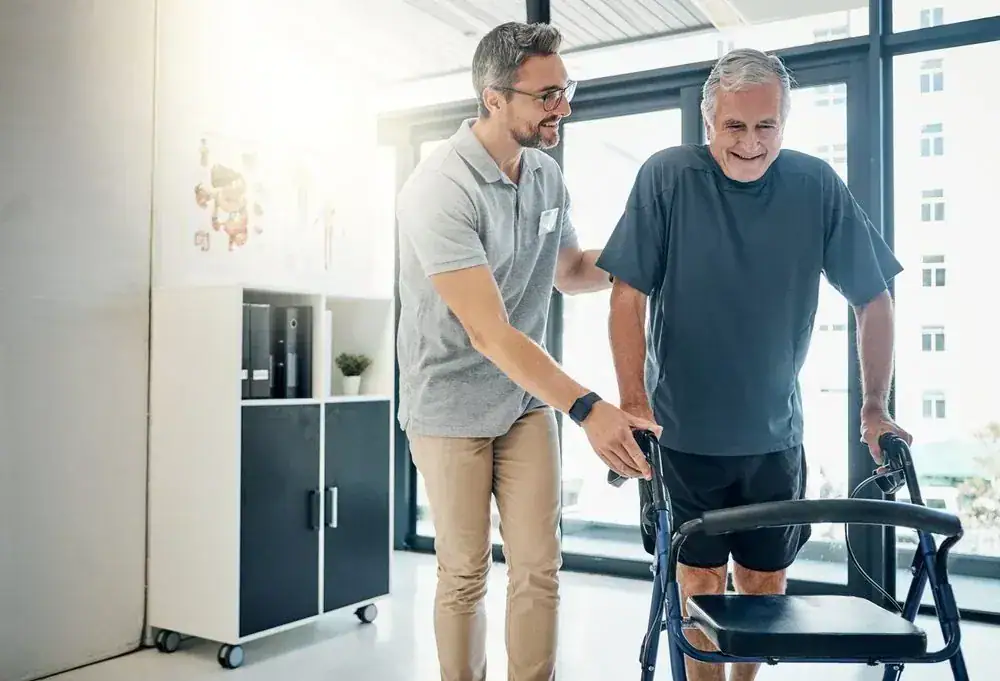
You stop second-guessing every step. You walk to the mailbox without that knot in your stomach. You reach for something on a high shelf without calculating the risk first.
That’s what happens when your balance improves and your legs get stronger. You’re not just preventing falls—you’re getting back to normal life. Going to the store alone. Walking on uneven ground. Standing up from a chair without bracing yourself.
The stats back this up. Balance training through physical therapy reduces fall risk by 30% to 35%. For older adults who’ve already fallen once, targeted exercises cut the chance of falling again by nearly half. But the real outcome isn’t a percentage—it’s being able to move through your day without fear dictating what you can and can’t do.
Most people in Old Field and across Suffolk County wait until after a fall to get help. By then, confidence is already shaken. The better move is addressing balance and strength before a fall happens, or right after, so you don’t lose more ground.
We’ve been providing in-home physical therapy across Long Island for over a decade. That includes Old Field, Setauket, Stony Brook, and dozens of other North Shore communities where getting to a clinic isn’t always easy.
Our therapists are licensed, Medicare-certified, and trained specifically in fall prevention protocols. We come to your home, assess your specific risk factors, and build a plan around your limitations—not a generic program pulled from a binder.
We work with people who’ve already fallen and people who haven’t but know their balance isn’t what it used to be. Both groups get the same level of attention. And because we accept Medicare and most commercial insurance, cost usually isn’t the barrier—transportation and access are. That’s why we come to you.

First, we verify your insurance and schedule an in-home evaluation. A licensed physical therapist comes to your house in Old Field and spends about an hour assessing your strength, balance, gait, and home environment. They’re looking at how you move, where you’re unstable, and what in your space might be a tripping hazard.
From there, they build a personalized exercise program. This isn’t a one-size-fits-all handout. It’s based on your current ability, your health conditions, and your goals. Some people need strength work. Others need balance retraining. Most need both.
Sessions happen in your home, usually two to three times a week to start. Your therapist guides you through exercises, tracks your progress, and adjusts the program as you improve. They also educate you on fall risks you might not have considered—medication side effects, footwear, lighting, rugs.
The goal is to get you strong and stable enough that you don’t need us anymore. Most people see measurable improvement in six to eight weeks. Some take longer. But the process is straightforward: assess, treat, progress, discharge.

Ready to get started?
You get a licensed physical therapist in your home, working one-on-one with you. No shared appointments. No waiting rooms. Just focused time on your balance, strength, and mobility.
The exercises vary depending on your needs, but most programs include some version of the Otago protocol—a research-backed series of 17 strength and balance exercises proven to reduce falls by 35% to 40% in older adults. Your therapist modifies these based on what you can handle and progresses you as you improve.
You also get education. Your therapist will walk through your home and point out fall risks: loose rugs, poor lighting, clutter in walkways, unstable furniture. They’ll recommend modifications and sometimes coordinate with occupational therapists if you need grab bars, shower seats, or other adaptive equipment.
For people in Old Field and the surrounding North Shore, this matters because many homes here are older, with stairs, uneven thresholds, and layouts that weren’t designed with aging in mind. We know what to look for and how to make your space safer without turning it into a hospital room.
Medicare covers this when it’s medically necessary. Most people qualify after a fall, a hospitalization, or if their doctor documents balance issues or high fall risk. We handle the paperwork.

If you’ve fallen in the past year, you need it. Falling once doubles your chance of falling again, and most people don’t tell their doctor because they’re afraid of losing independence. But ignoring it doesn’t make the risk go away.
Even if you haven’t fallen, there are signs. You feel unsteady when you stand up. You grab onto furniture or walls more than you used to. You avoid walking on grass or uneven surfaces because you don’t trust your balance. You’ve had a few close calls where you caught yourself just in time.
Those are all red flags. Your body is telling you something’s off. Physical therapy can address the underlying issues—weak legs, poor balance reflexes, reduced flexibility—before they lead to a fall. Most people wait too long. The earlier you start, the easier it is to make progress.
Yes, if it’s medically necessary. That usually means you’ve had a recent fall, a hospitalization, or your doctor has documented balance problems or high fall risk. Medicare covers home health physical therapy when leaving your home is difficult due to your condition.
The key is medical necessity. Your doctor needs to order the therapy and document why you need it at home instead of in a clinic. For most older adults in Old Field dealing with mobility issues, that’s not hard to establish.
We verify your coverage before we start. If Medicare won’t cover it, we’ll tell you upfront. Most commercial insurance plans also cover home-based PT, though the specifics vary. The point is, you’re not guessing about cost—we handle the insurance piece so you know what you’re paying, if anything, before the first visit.
Balance exercises target the specific systems that prevent falls—your vestibular system, proprioception, and postural control. Regular exercise might make you stronger or improve your cardio, but it doesn’t necessarily train your body to react when you start to tip over.
Senior balance exercises focus on things like standing on one leg, weight shifting, tandem walking, and controlled movements that challenge your stability. They’re designed to retrain your reflexes so your body automatically corrects itself when you lose balance. That’s what prevents falls in real life—not just being strong, but being able to catch yourself.
We also adjust these exercises to your current level. If you can’t stand on one leg, you start with supported exercises and progress from there. If you have arthritis or other conditions, we modify movements so you’re not making anything worse. It’s not about pushing through pain—it’s about building stability safely.
Most people notice a difference in six to eight weeks if they’re consistent with therapy. That doesn’t mean you’re done in two months—it means you start feeling steadier, more confident, and less worried about falling.
The timeline depends on where you’re starting from. If you’re generally healthy but just need some balance work, you might progress faster. If you’re recovering from a fall or dealing with multiple health issues, it takes longer. Your therapist will give you a realistic estimate after the initial evaluation.
What matters more than speed is consistency. Doing your exercises between sessions makes a huge difference. The people who improve fastest are the ones who treat this like a priority, not something they get around to when they have time. Your therapist will give you a home program to do on your own, and sticking with it accelerates your progress.
No. It’s harder, and it takes longer, but it’s not too late. Multiple falls usually mean there are several contributing factors—weakness, balance issues, medication side effects, vision problems, home hazards. Physical therapy addresses the movement and strength piece, which is often the biggest factor.
The challenge after multiple falls is rebuilding confidence. A lot of people become so afraid of falling again that they stop moving, which makes everything worse. Your muscles get weaker, your balance gets worse, and the cycle continues. Therapy breaks that cycle by giving you controlled, safe ways to move and rebuild strength.
We also coordinate with your doctor to look at other factors—medications that cause dizziness, vision issues, blood pressure problems. Fall prevention isn’t just exercise. It’s a full picture. But the physical therapy component is critical, and it works even for people who’ve fallen multiple times.
You can start before a fall, and honestly, that’s the better time. Prevention is easier than recovery. If you’re noticing balance issues, feeling unsteady, or you’ve had close calls, that’s enough reason to get evaluated.
A lot of people in Old Field and across Long Island wait until after a fall because they don’t realize therapy is an option beforehand. But if your doctor documents balance problems or high fall risk, Medicare will often cover it. Even if insurance doesn’t cover preventive therapy, paying out of pocket for a few sessions to learn the right exercises can save you from a fall that lands you in the hospital.
The earlier you address balance and strength, the easier it is to maintain independence. Once you fall and lose confidence, it’s a steeper climb. We work with both groups—people recovering from falls and people trying to prevent them. Both are valid reasons to call.
Other Services we provide in Old Field