
You stop second-guessing every step. The bathroom at night doesn’t feel like a risk. Getting the mail, reaching for something on a shelf, walking on uneven pavement—all of it becomes less of a calculated decision and more of just living.
That shift matters because falls aren’t just about the injury. They’re about what happens after: the hospital stay, the loss of confidence, the worry that you can’t stay in your own home anymore. Research shows that fall prevention programs can cut your risk by 30% to 35%, and most of that comes down to targeted exercises that rebuild strength, improve balance, and retrain how you move.
This isn’t about bubble-wrapping your life. It’s about giving your body what it needs to handle the things you do every day—without the fear that one misstep changes everything.
We’ve been serving Oakdale and the surrounding Suffolk County communities for years. We’re not a corporate chain. We’re a locally operated group of therapy centers that actually know the area—and the people in it.
Long Island seniors face higher fall rates than almost anywhere else in New York. In Nassau County alone, 88% of injury hospitalizations for adults over 65 are fall-related. That’s not a statistic we ignore. It’s why we built our fall prevention program the way we did: assessment-driven, exercise-based, and focused on keeping you functional in your actual environment.
We handle our own digital presence, verify our own locations, and manage patient data with the kind of care you’d expect from people who’ve been doing this long enough to know what matters.

First, we assess where your fall risk actually is. That means looking at your strength, balance, gait, medical history, and what your day-to-day movement looks like. We’re not guessing. We’re measuring.
From there, we build a treatment plan that’s specific to what you need. Maybe it’s lower body strengthening. Maybe it’s balance retraining or gait work. Maybe it’s learning how to use an assistive device the right way. Most people need a combination.
The exercises start where you are—not where someone thinks you should be. As you get stronger and steadier, we progress the difficulty. You’re not doing the same thing for 12 weeks. You’re building capacity in a way that actually transfers to real life: getting up from a chair, walking outside, moving around your kitchen.
We also talk through your home setup. Small changes—lighting, rugs, bathroom grab bars—make a bigger difference than most people realize. You’ll leave each session knowing what to work on and why it matters.

Ready to get started?
You get a full fall risk assessment that looks at strength, flexibility, balance, walking pattern, and your personal history. That assessment shapes everything else.
Your treatment plan typically includes progressive balance exercises, lower body strengthening, gait training, and coordination work. These aren’t generic senior exercises. They’re based on what your evaluation shows and what your goals are. If you’ve already fallen, we address that. If you’re just noticing more unsteadiness, we work from there.
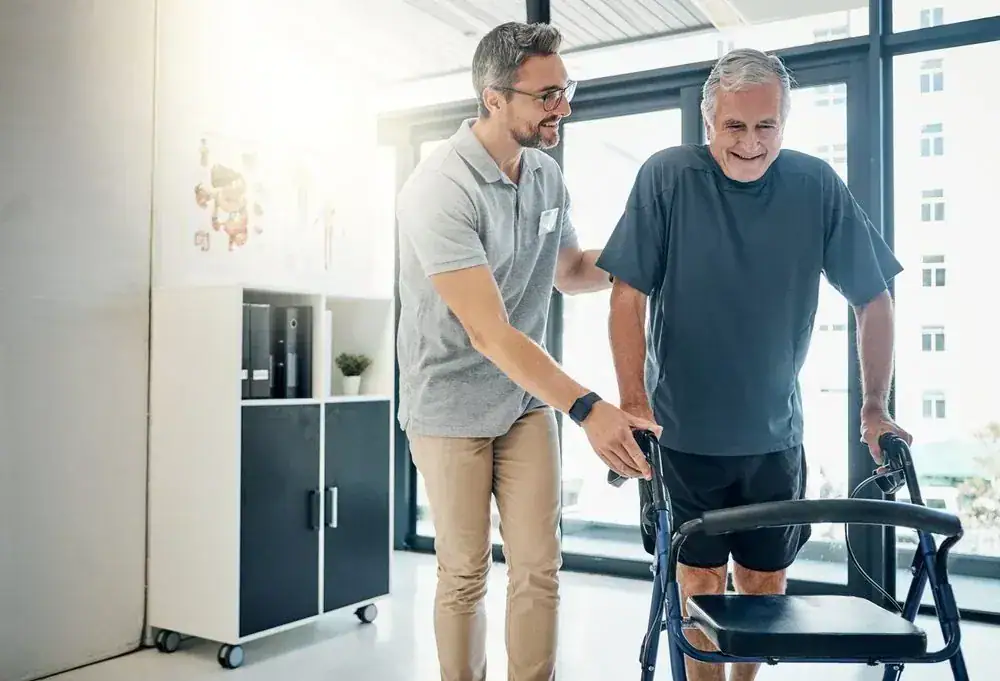
We also cover home safety education—what to look for, what to change, and how to move through your space more safely. If you use a cane or walker, we make sure you’re using it correctly. A lot of people aren’t.
Most fall prevention therapy is covered by Medicare, especially if you’re dealing with balance or walking issues. We’ll walk you through what your plan covers during your first visit. Long Island has one of the highest senior populations in New York, and the need for this kind of care isn’t going away. The earlier you address balance issues, the more options you have.

If you’ve fallen in the past year, you need it. If you’ve had a close call or felt unsteady enough to catch yourself, you probably need it. If you’re avoiding certain activities because you’re worried about losing your balance, that’s another sign.
A lot of people wait until after a fall to get help, and by then they’re dealing with an injury, a hospital stay, and a much harder recovery. The whole point of fall prevention is to intervene before that happens. You don’t need to have fallen to benefit from balance training.
During your first visit, we’ll do a fall risk assessment that measures your current balance, strength, and gait. That gives us a baseline and shows you exactly where the gaps are. From there, you’ll know whether therapy makes sense—and what it would actually address.
Most fall prevention programs focus on three areas: strength, balance, and gait. Strength work usually targets your legs and core—the muscles that keep you upright and help you recover if you start to lose your balance. Think squats, step-ups, and resistance exercises that get progressively harder as you improve.
Balance exercises might include standing on one leg, weight shifting, or working on an uneven surface. The goal is to challenge your balance in a controlled way so your body learns how to adjust when things aren’t perfectly stable. Gait training focuses on how you walk: your stride length, your speed, how you turn, and how you handle obstacles or changes in terrain.
Everything is tailored to where you’re starting from. If you can’t stand on one leg for more than a second, we’re not starting there. We build up. The exercises are designed to transfer to real life—so when you’re walking through your house or stepping off a curb, your body knows what to do.
Yes, in most cases. Medicare Part B covers physical therapy when it’s medically necessary, and fall prevention typically qualifies—especially if you’ve had a fall, you’re experiencing balance issues, or your doctor has noted a risk. Medicare Advantage plans also cover physical therapy, though the specifics can vary by plan.
You’ll usually need a referral or prescription from your doctor, but that’s a quick step. Once you’re approved, Medicare covers a significant portion of the cost. There may be a copay depending on your plan, and we’ll go over that with you during scheduling.
If you’re not sure what your plan covers, call the number on the back of your card or ask us to verify your benefits before your first visit. We handle Medicare patients every day, so we know how to navigate the process. The important thing is not to skip therapy because you’re worried about cost—most people are covered.
It depends on where you’re starting and what your goals are. Some people see improvement in 4 to 6 weeks. Others need 8 to 12 weeks to build enough strength and balance to feel confident again. If you’ve had a fall or a major decline in mobility, it might take longer.
The frequency matters too. Most fall prevention programs involve 1 to 2 sessions per week, plus home exercises. The home work is just as important as what happens in the clinic. If you’re consistent with both, you’ll progress faster.
We reassess your balance and strength every few weeks so you can see where you’re improving and what still needs work. Therapy isn’t open-ended. Once you hit your goals and your fall risk is down, you’re done. Some people continue with a maintenance program or periodic check-ins, but that’s optional. The goal is to get you stable and keep you that way.
It’s not just precaution. Studies show that fall prevention interventions—especially exercise-based programs—reduce fall risk by 30% to 35%. That’s a significant drop, and it’s backed by decades of research. The reason it works is because most falls aren’t random. They happen because of specific deficits: weak legs, poor balance, slow reaction time, or an unsteady gait.
Physical therapy addresses those deficits directly. You’re not just being told to “be careful.” You’re rebuilding the physical capacity that keeps you upright when something goes wrong—a wet floor, an uneven sidewalk, a moment of dizziness. Your body learns how to recover instead of going down.
The earlier you start, the better it works. If you’re already dealing with multiple falls or severe weakness, therapy is harder and takes longer. But even then, it’s effective. The alternative—doing nothing and hoping it doesn’t happen—doesn’t reduce your risk at all. Therapy does.
Look for a program that starts with an actual assessment, not a generic exercise list. You need to know where your specific risks are—whether it’s strength, balance, gait, or a combination. A good program tailors the treatment to what your evaluation shows, not what works for most people.
You also want a program that progresses over time. If you’re doing the same exercises at week 8 that you did at week 1, you’re not building capacity. The exercises should get harder as you get stronger. That’s how you create real change.
Location matters too, especially on Long Island. You’re more likely to stick with therapy if it’s close to home and the staff understands the local population. We serve Oakdale and dozens of other Suffolk and Nassau County communities, so we’re familiar with the challenges Long Island seniors face—including the fact that fall rates here are higher than most of New York. Finally, make sure the program includes education about home safety and how to reduce environmental risks. Exercise alone isn’t enough if your house is set up to trip you.
Other Services we provide in Oakdale