
You’re tired of planning your entire day around whether you’ll feel steady enough. Avoiding stairs. Skipping the grocery store. Saying no to playing with your grandkids because you’re afraid of what might happen.
Fall prevention isn’t about bubble-wrapping your life. It’s about rebuilding the strength, coordination, and confidence that let you do what you want without constantly calculating risk.
When your balance improves, you stop bracing for impact every time you stand up. You walk into rooms without scanning for something to grab. You get back to gardening, walking the dog, and moving through your home like you used to.
That’s what physical therapy for balance does. It identifies why you’re unsteady—whether it’s weak muscles, poor coordination, vestibular issues, or a combination—and gives you a plan to fix it. You’ll work through exercises designed specifically for your body, your risks, and your goals.
We’ve spent over two decades helping people in North Wantagh, NY regain their balance, strength, and independence. We’re part of the HSS Rehabilitation National Network, affiliated with the top-ranked orthopedic hospital in the world.
We don’t hand you a generic exercise sheet and send you on your way. You get one-on-one sessions with professionals who assess your specific fall risks, build a program around your needs, and adjust as you progress.
We’ve worked with thousands of patients who were afraid to move. Many came in after a fall or surgery. Others just noticed they weren’t as steady as they used to be. All of them needed someone who understood what they were dealing with and knew how to help them get stronger without putting them at risk.

Your first visit is a full evaluation. We look at your balance, gait, strength, coordination, and any medical history that might be contributing to your fall risk. If you’ve had a previous fall or injury, we factor that in too.
From there, your therapist builds a program specific to you. That might include balance exercises for seniors, strength training for your legs and core, vestibular rehabilitation if dizziness is part of the problem, or gait training to improve how you walk.
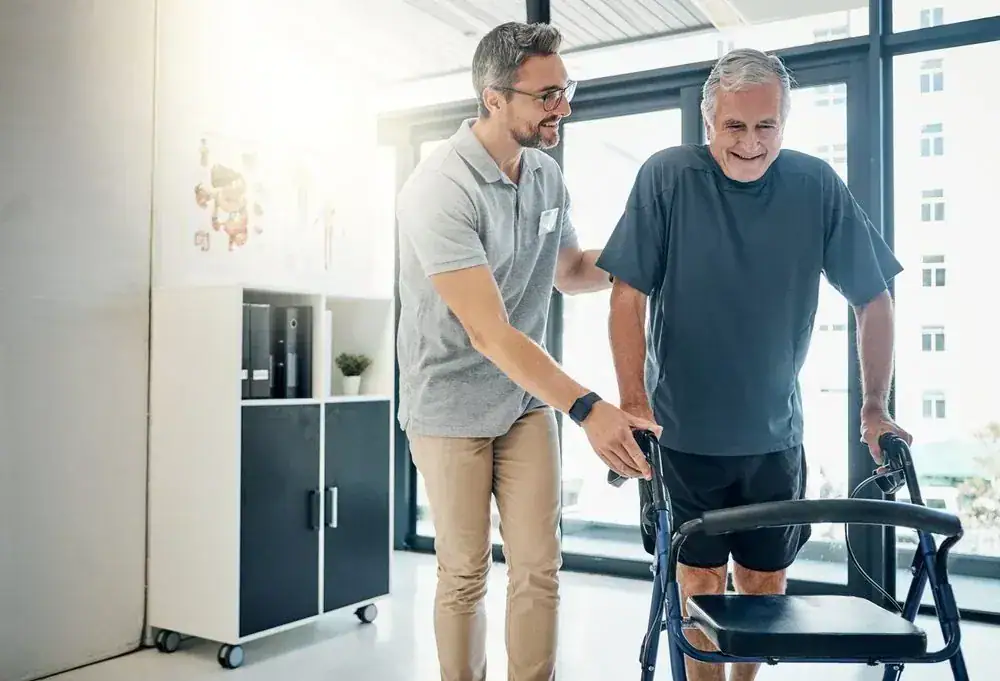
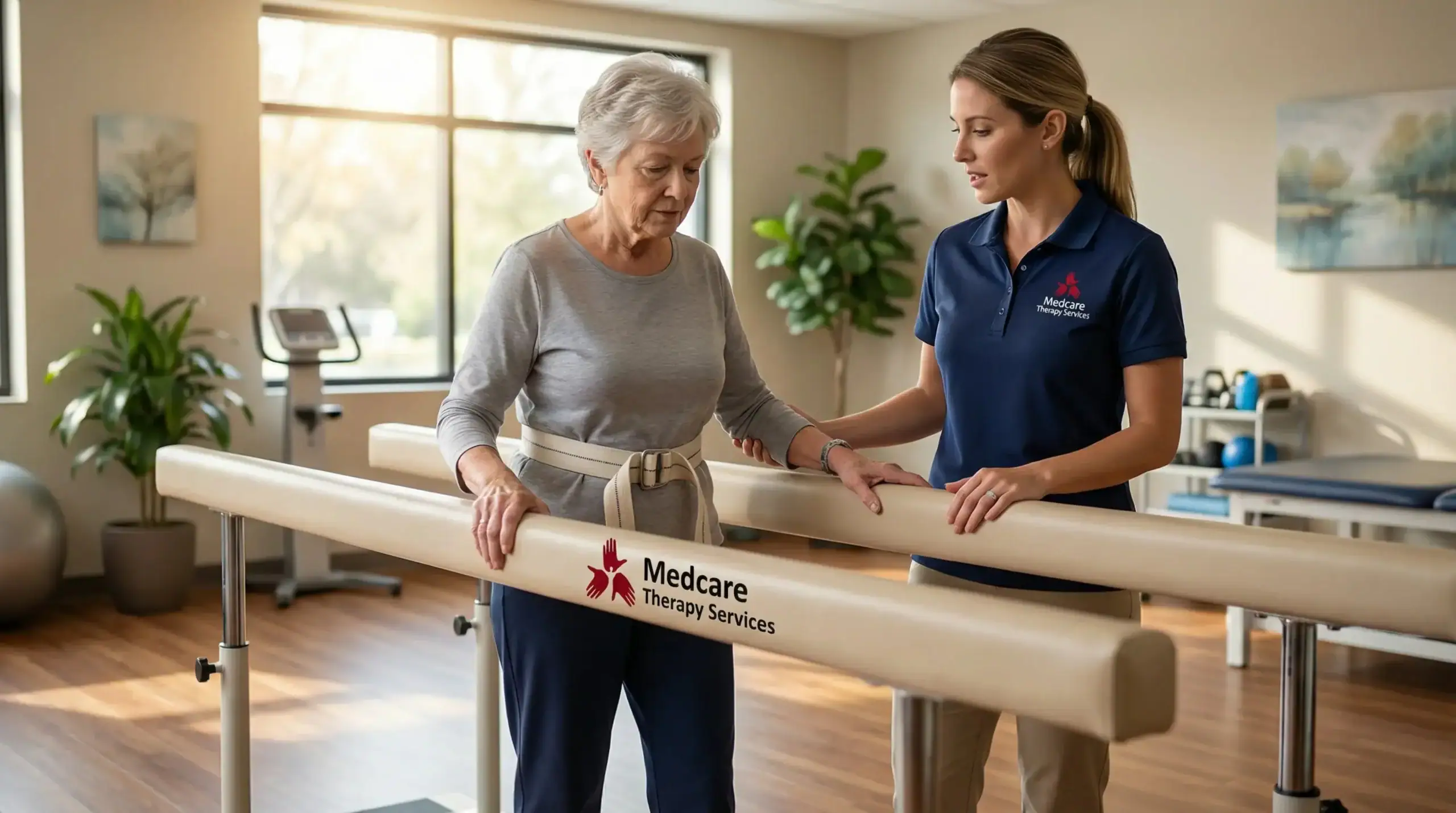
Each session is one-on-one. Your therapist works directly with you, watches how you move, corrects your form, and adjusts exercises as you get stronger. You’re not left alone to figure it out.
As you progress, exercises get more challenging. The goal isn’t just to prevent falls—it’s to make you strong and stable enough that you stop thinking about falling in the first place. You’ll also learn how to move safely at home, what risks to watch for, and how to keep improving after therapy ends.

Ready to get started?
You’ll get a comprehensive fall risk assessment that identifies weak areas—whether that’s muscle strength, joint stability, reaction time, or balance control. From there, your therapist designs a program that targets those specific issues.
Senior balance exercises might include standing exercises, weight shifts, coordination drills, and functional movements that mimic what you do at home. If you have osteoporosis or joint pain, exercises are modified to keep you safe while still building strength.
For patients dealing with dizziness or vertigo, vestibular rehabilitation helps retrain your inner ear and brain to work together. This is especially common in North Wantagh, NY, where we see a lot of older adults dealing with balance issues tied to vestibular dysfunction.
You’ll also get education on fall prevention in the elderly—things like proper footwear, home safety modifications, and how to get up safely if you do fall. The goal is to give you tools that work outside the clinic, not just during your appointments.

Most people start noticing a difference within three to four weeks, but that depends on your starting point and how consistently you attend therapy. If you’re coming in two to three times per week and doing your home exercises, you’ll likely feel steadier and more confident by the end of the first month.
Significant improvement—where you’re moving without fear and handling daily tasks with ease—usually takes eight to twelve weeks. That’s enough time to rebuild strength, retrain your balance system, and develop new movement patterns that stick.
Some people need longer, especially if they’re recovering from a fall or surgery. Others improve faster if they’re catching balance issues early. Your therapist will give you a realistic timeline based on your evaluation and adjust the plan as you progress.
That fear is completely normal, and it’s one of the main reasons people come in. After a fall, your brain goes into protective mode. You start moving more cautiously, which actually makes you weaker and less stable over time.
Fall prevention therapy addresses both the physical and mental side of recovery. You’ll work on rebuilding strength and balance in a controlled environment where your therapist is right there to support you. As you get stronger, your confidence comes back.
We also teach you how to fall safely if it does happen again, which sounds counterintuitive but actually reduces anxiety. Knowing you can catch yourself or get up without injury takes away some of that constant fear. The goal is to get you moving freely again, not living in a state of hypervigilance.
In most cases, yes. New York requires a physician’s referral for physical therapy, so you’ll need to see your doctor first. They’ll evaluate your fall risk, review any underlying conditions, and write a prescription for therapy.
If you’ve recently had a fall, surgery, or hospitalization, your doctor will likely refer you automatically. If you haven’t fallen yet but you’re noticing balance issues, bring it up during your next appointment. Most physicians are happy to write a referral for preventive care, especially if you’re over 65 or have conditions like osteoporosis.
Once you have the referral, you can call us directly to schedule your evaluation. We’ll handle the insurance verification and let you know what your coverage looks like before your first visit.
Most insurance plans, including Medicare, cover physical therapy for fall prevention as long as you have a physician’s referral and meet medical necessity criteria. That usually means you’ve had a fall, you’re at high risk for falling, or you have a condition that affects your balance.
Medicare Part B typically covers 80% of the cost after you meet your deductible. If you have a supplemental plan, that often covers the remaining 20%. Private insurance varies, but most plans include physical therapy benefits with a copay or coinsurance.
We verify your insurance before your first visit so you know exactly what to expect. If you have questions about coverage or costs, our front desk team can walk you through your benefits and help you understand your out-of-pocket responsibility.
Physical therapy doesn’t just manage symptoms—it directly addresses the reasons you’re at risk for falling in the first place. Whether that’s weak leg muscles, poor coordination, slow reaction time, or vestibular dysfunction, therapy targets the root cause.
Research consistently shows that balance training and strength exercises reduce fall risk by 30% to 40% in older adults. That’s not a small number. It means fewer injuries, fewer hospital visits, and a much lower chance of losing independence.
The key is consistency. If you show up, do the work, and follow through with home exercises, you’ll see real improvement. This isn’t about hoping you don’t fall—it’s about making your body strong and stable enough that falling becomes far less likely.
You get one-on-one time with a licensed physical therapist every single session. You’re not in a group class or working with an aide while the therapist bounces between patients. Your therapist is focused on you, watching how you move, adjusting exercises in real time, and making sure you’re progressing safely.
We’ve been doing this in North Wantagh, NY since 1998, and we’re affiliated with the HSS Rehabilitation National Network—the gold standard in orthopedic and rehabilitation care. That means our therapists have access to advanced training, evidence-based protocols, and a level of clinical expertise you won’t find everywhere.
We also take the time to educate you. You’ll leave therapy understanding why you were at risk, what’s changed, and how to keep yourself safe moving forward. This isn’t a quick fix—it’s a long-term solution that gives you control over your balance and your life.
Other Services we provide in North Wantagh