
You stop planning your day around avoiding stairs. You don’t grab onto furniture every time you stand up. You can walk to the mailbox without that nagging worry in the back of your mind.
That’s what better balance actually looks like. Not some vague promise about “regaining independence”—but real, everyday confidence that lets you move through your home and your neighborhood without second-guessing every step.
Physical therapy for balance works because it targets the specific weaknesses causing your instability. Whether it’s muscle weakness in your legs, inner ear issues affecting your equilibrium, or simply years of inactivity that’s made you unsteady, the right exercises rebuild what’s been lost. You’ll work on strength, coordination, and reaction time—the things that actually prevent falls before they happen.
Most people notice a difference within the first few weeks. You’ll feel steadier getting out of bed. Turning your head won’t throw you off. And that constant fear? It starts to fade because your body remembers how to catch itself again.
We have multiple locations across Nassau County, and we’ve worked with hundreds of older adults who came in after a fall—or before one happened. Our therapists are licensed, experienced, and we don’t waste your time with cookie-cutter programs.
North Lynbrook has a large senior population, and we see the same patterns repeatedly. Uneven sidewalks on Peninsula Boulevard. Homes with narrow staircases. Winter ice that makes even a short walk risky. We build your therapy around your actual environment, not some textbook scenario.
You’ll work one-on-one with a therapist who tracks your progress and adjusts your program as you improve. No rotating staff. No guessing whether the person working with you today knows what happened last week. Just consistent, focused care that gets you results.

Your first appointment is an assessment. We’ll test your balance, check your strength, ask about any falls you’ve had, and figure out what’s causing the problem. This isn’t a quick chat—it’s a full evaluation that usually takes about an hour.
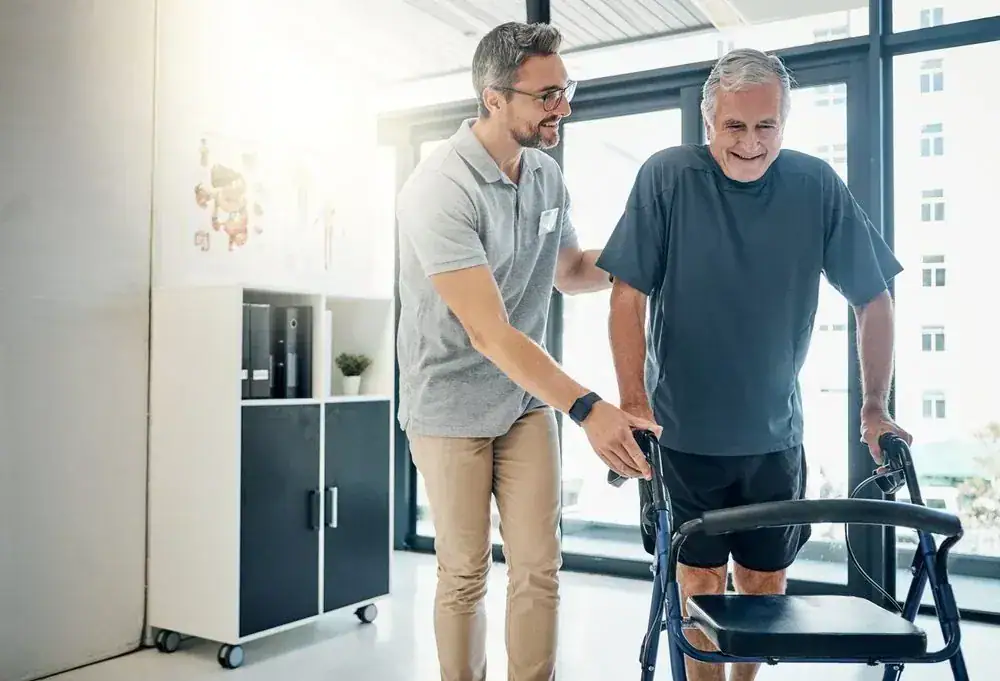
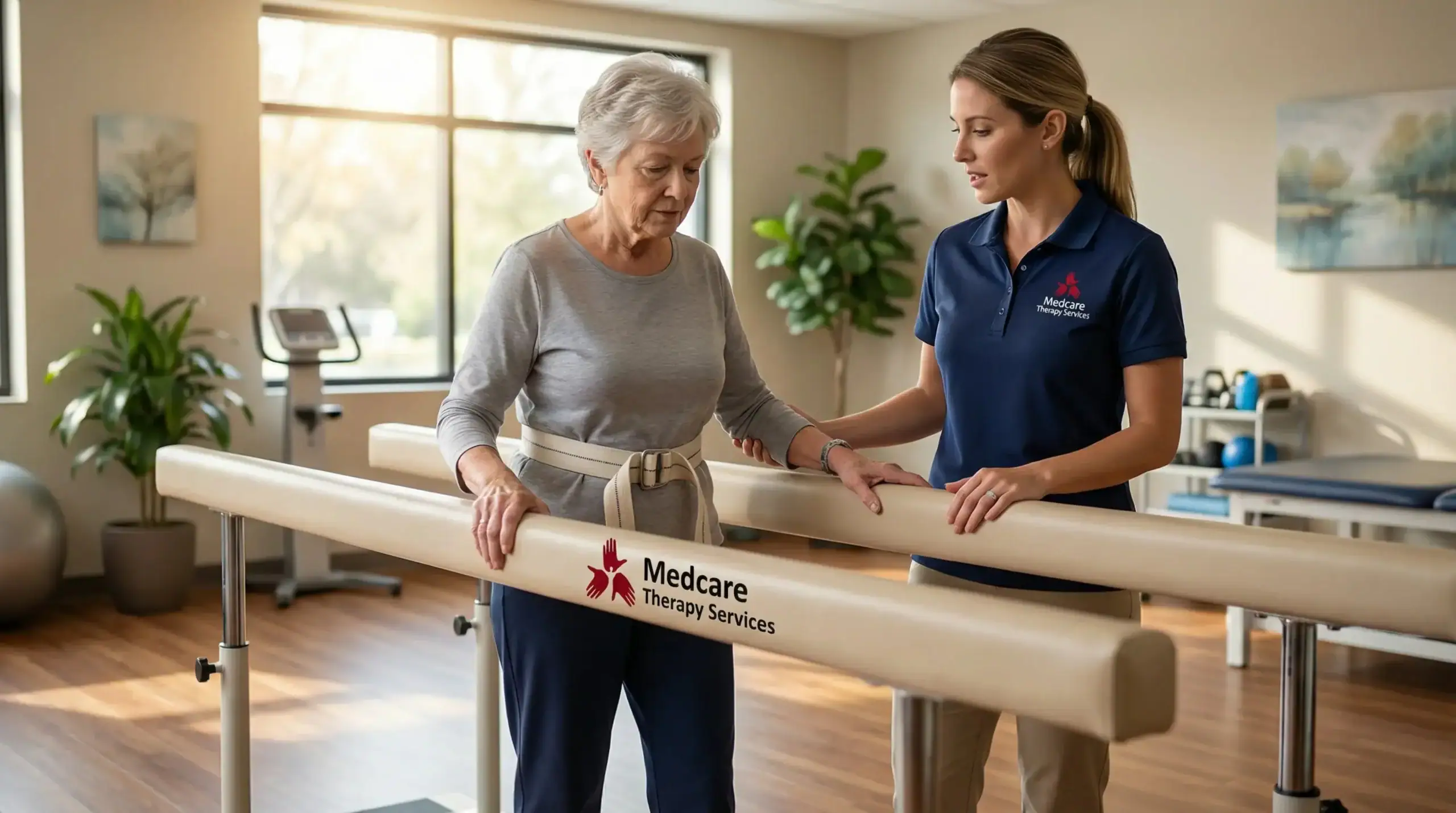
From there, we build your program. You’ll come in two or three times a week, depending on what you need. Each session is one-on-one with your therapist, and you’ll work on exercises designed specifically for your weak points. Some are strength-based. Some focus on coordination. Others help retrain your vestibular system if dizziness is part of the issue.
We also talk about your home setup. Are your rugs secured? Is your lighting good enough? Do you have grab bars where you need them? Fall prevention isn’t just about what happens in our clinic—it’s about making sure your environment supports you, too.
Most patients see measurable improvement in six to eight weeks. You’ll do some exercises at home between visits, but nothing complicated. Just consistent work that builds on itself until you’re moving the way you used to—or better.

Ready to get started?
Every session includes hands-on work with your therapist. You’re not handed a sheet of exercises and left alone. You’ll do balance drills, strength training for your legs and core, and functional movements that mimic real-world activities—like stepping over obstacles or recovering if you start to trip.
If dizziness is part of your issue, we’ll include vestibular rehabilitation. That’s specialized therapy for inner ear problems that cause vertigo or disorientation. It’s not something every clinic offers, but it’s critical if your balance issues stem from your vestibular system.
We also measure your progress. You’ll repeat certain tests every few weeks so you can see how much steadier you’ve gotten. It’s not subjective—we track real improvements in your balance, strength, and reaction time.
Nassau County has one of the highest concentrations of older adults in New York, and North Lynbrook reflects that. Many of our patients are in their 70s and 80s, and they’re dealing with the same concerns you are. We’ve seen what works for this population, and we’ve built our programs around those results.

If you’ve fallen in the past year, you need it. Even if you didn’t get hurt, even if you caught yourself—that fall is a warning sign that something’s off with your balance, strength, or coordination.
But you don’t have to wait for a fall. If you feel unsteady when you walk, if you’re grabbing onto walls or furniture more than you used to, if you avoid certain activities because you’re worried about falling—those are all reasons to get assessed. A lot of people brush this off as “just getting older,” but that’s not accurate. Balance problems are treatable, and the earlier you address them, the easier they are to fix.
We also recommend therapy if you’ve had a health event that affects your mobility. A stroke, a hip replacement, even a long hospital stay—all of these can weaken your balance and increase your fall risk. Physical therapy helps you rebuild that stability before it becomes a bigger problem.
Home exercises are helpful if you already know what’s wrong and how to fix it. But most people don’t. You might think your balance problem is just weak legs, when it’s actually an inner ear issue. Or you might focus on strength training when the real problem is poor coordination or slow reaction time.
Physical therapy starts with a proper assessment. We figure out exactly what’s causing your instability, and then we build a program that targets those specific issues. You’re also working with someone who can correct your form, adjust the difficulty as you improve, and catch problems before they turn into injuries.
The other advantage is equipment. We have tools and technology that let us challenge your balance in controlled ways you can’t replicate at home. Foam pads, balance boards, visual tracking exercises—these all help retrain your body’s balance systems more effectively than standing on one foot in your living room.
Most patients see significant improvement in six to eight weeks if they’re coming in two to three times per week. That doesn’t mean you’re “cured” at that point—it means you’ve built enough strength and stability that you’re noticeably steadier and more confident.
Some people need longer, especially if they’re recovering from a fall or dealing with multiple health issues. Others improve faster if they’re catching the problem early. It depends on your starting point and how consistently you’re doing your home exercises between sessions.
We’ll give you a clearer timeline after your initial assessment. But the key thing to understand is that this isn’t a quick fix. You’re retraining your body’s balance systems, and that takes time. The good news is that the improvements stick. Once you’ve rebuilt that strength and coordination, you’re not starting from scratch if you take a break from therapy.
Most insurance plans cover physical therapy if it’s medically necessary, and fall prevention usually qualifies—especially if you’ve already fallen or if your doctor has documented balance problems. Medicare typically covers it as well, though you may have a copay depending on your plan.
We’ll verify your coverage before you start so you know what to expect. Some plans require a referral from your primary care doctor, while others let you come in directly. If you’re using out-of-network benefits, many patients get 60 to 80 percent reimbursement, and you can also use HSA or FSA funds if you have them.
The cost shouldn’t be the reason you avoid getting help. Falls are expensive—hospital visits, surgeries, rehab stays. Preventing one fall more than pays for a few months of therapy. We’ll work with you to figure out the most affordable way to get the care you need.
That usually means the exercises weren’t targeting the right problem. Balance issues have different causes, and generic exercises don’t address all of them. If your instability is coming from vestibular dysfunction, leg exercises won’t fix it. If it’s a coordination issue, strength training alone won’t help.
The other possibility is that the exercises weren’t progressed correctly. Balance training has to get harder as you improve, or you plateau. A lot of people do the same beginner exercises for months and wonder why nothing changes. We adjust your program every few weeks to keep challenging your system.
It’s also possible you weren’t doing the exercises often enough or with proper form. Small mistakes in positioning or movement can make a big difference in whether an exercise actually works. That’s why supervised therapy gets better results—we’re there to make sure you’re doing it right and pushing hard enough to see progress.
Yes, but you need to start as soon as possible. Multiple falls mean your balance system is significantly compromised, and every fall increases your risk of serious injury. The good news is that even people who’ve fallen repeatedly can rebuild their stability with the right program.
We’ll start with a thorough assessment to understand why you’re falling. Is it muscle weakness? Poor vision? Medication side effects? Inner ear problems? Often it’s a combination of factors, and we’ll address all of them. Your therapy will be more intensive than someone who’s just starting to feel unsteady, but the principles are the same—rebuild strength, retrain coordination, and eliminate environmental risks.
You might also benefit from assistive devices while you’re rebuilding your balance. A cane or walker isn’t a failure—it’s a tool that keeps you safe while your body gets stronger. We’ll help you figure out what you need and when you can safely transition away from it. The goal is to get you moving independently again, but we’re not going to rush that process and put you at risk.
Other Services we provide in North Lynbrook