
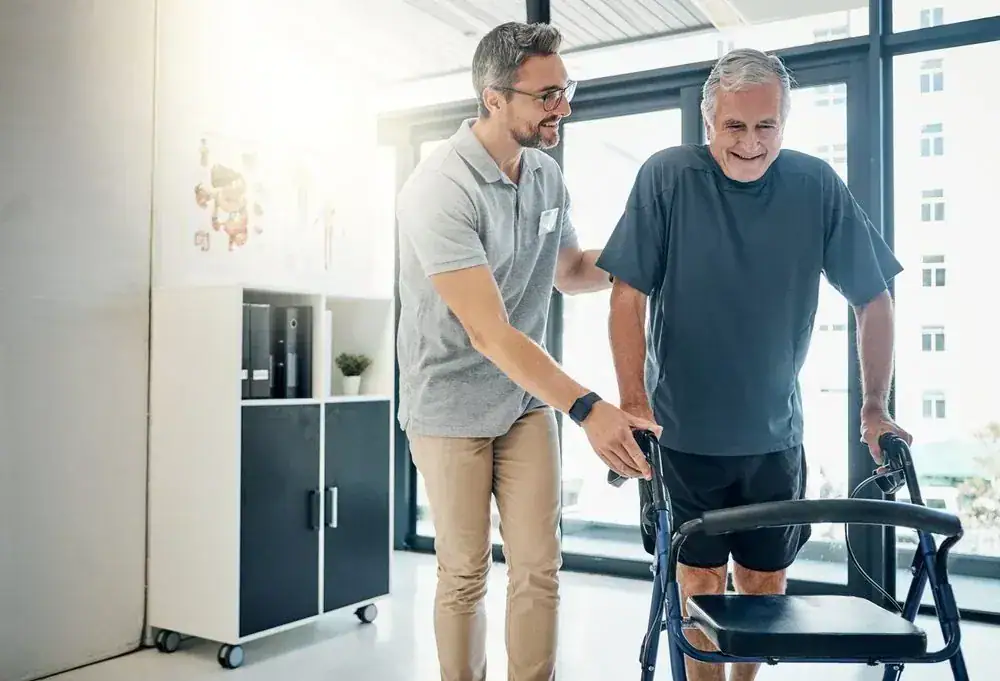
You stop planning your day around what might go wrong. The bathroom at night doesn’t feel like a risk. Getting the mail becomes automatic again, not something you have to think through.
That shift happens when your legs get stronger, your balance steadies, and your body remembers how to catch itself. Physical therapy for balance isn’t about preventing every stumble. It’s about building the strength and coordination that let you recover when things feel off.
Most people who fall once will fall again within six months. But seniors who complete structured balance exercises cut their fall risk by 30% to 35%. That’s not luck. It’s your nervous system relearning how to respond, your muscles rebuilding the stability you’ve lost, and your confidence coming back because you can feel the difference.
You’re not trying to move like you did at 40. You’re training your body to handle the home you live in now, the stairs you actually climb, and the movements that matter in your daily routine.
We’ve been treating patients across Long Island for years, including right here in Nesconset and throughout Suffolk County. We work with older adults who’ve had a fall, who feel unsteady, or who just want to stay ahead of the problem before it starts.
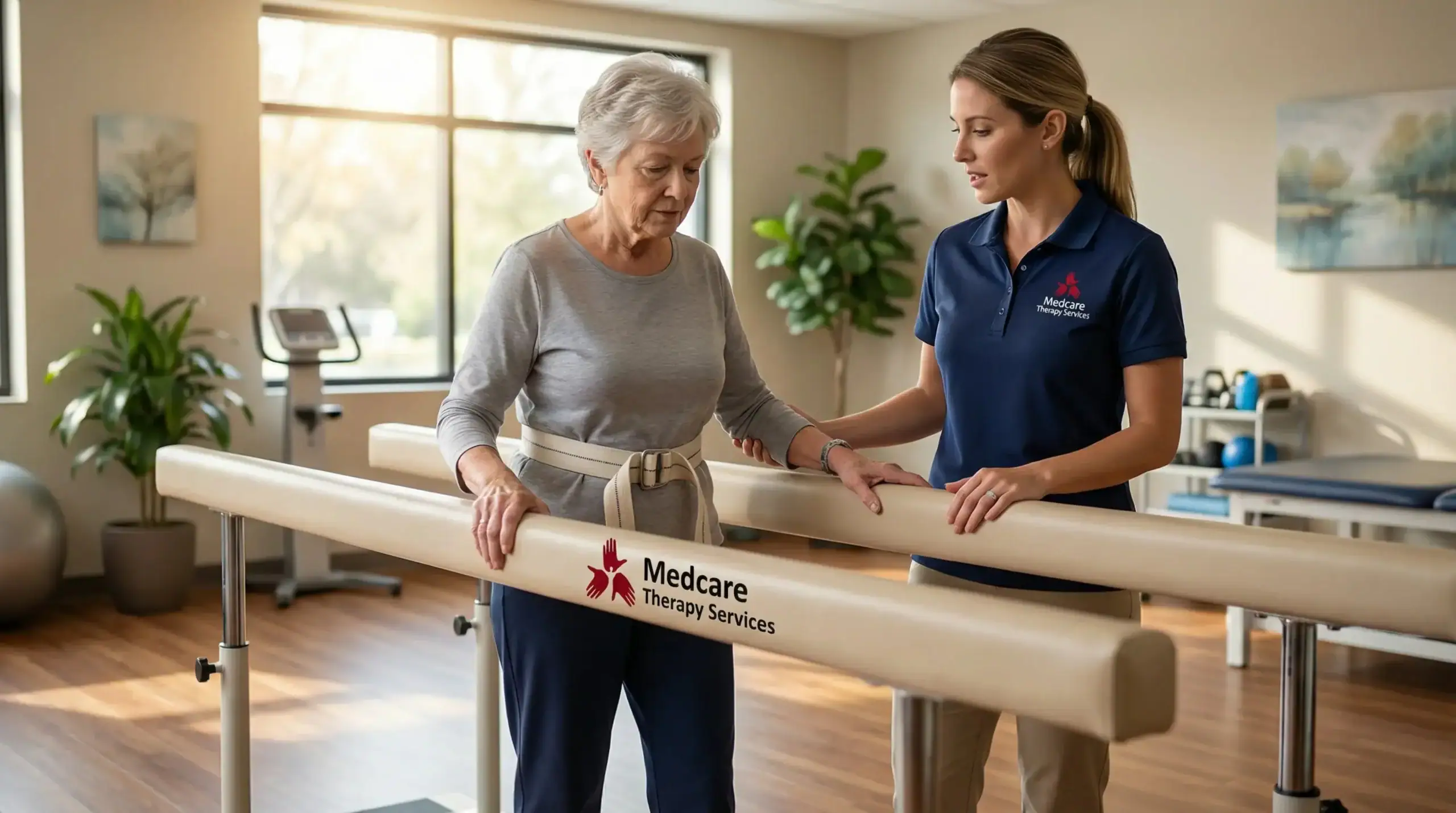
Our physical therapists are trained in geriatric care and evidence-based fall prevention programs. We don’t hand you a generic exercise sheet. We assess your gait, your balance, your home setup, your medications, and your actual risk factors. Then we build a plan around what your body needs and what your life requires.
Long Island’s aging population is growing fast. More than 25% of Suffolk County residents will be over 60 by 2025. That means more people dealing with balance issues, more falls, and more families trying to figure out how to help. We’re here because this community needs accessible, reliable care that doesn’t require a trip into the city or a six-week wait for an appointment.

You start with an evaluation. We test your balance, watch how you walk, check your strength, and talk through your history. Have you fallen before? Do you feel dizzy? Are you avoiding certain movements? That information tells us where the risk is.
From there, we design a program. It might include strength training for your legs and core, balance exercises that challenge your stability in controlled ways, and gait training to improve how you move. If you’re a good fit for something like the Otago Exercise Program, we’ll walk you through it. That’s 17 specific exercises proven to reduce falls in older adults who’ve recently fallen or feel unsteady.
We also look at your home. Are there loose rugs? Poor lighting? Clutter in walkways? Sometimes the fastest win is removing a hazard you walk past every day. We’ll give you recommendations, and if you need it, we can coordinate with family or caregivers to make changes.
Most patients come in once or twice a week. Some prefer home visits. Either way, the program is yours. You’re not working toward someone else’s standard. You’re working toward feeling stable enough to do what you want without second-guessing every step.

Ready to get started?
Every plan starts with a full fall risk assessment. We measure your balance, strength, flexibility, and reaction time. We review your medications because taking four or more puts you at higher risk. We talk about your daily routine so we understand what movements matter most to you.
Your exercise program will focus on the areas that need it. That usually means lower body strengthening, core stability, and balance training that progresses as you improve. We use evidence-based approaches that have been tested on thousands of older adults. These aren’t random exercises. They’re movements that have been shown to reduce falls and improve function.
You’ll also get education. How to get up if you do fall. How to move safely in your home. What shoes help versus hurt. How to talk to your doctor about medications that might be affecting your balance. A lot of falls happen because of small things that add up. We help you see those things and fix them.
If you’re recovering from a fall, we work with you on rebuilding strength and confidence. If you haven’t fallen yet but you’re worried, we focus on prevention. Either way, the goal is the same: keep you moving independently for as long as possible. In Suffolk County, fall-related hospitalizations are climbing. But the research is clear. Most falls can be prevented when you address the right factors early.
You’re at higher risk if you’ve already fallen once, even if you didn’t get hurt. Falling once doubles your chance of falling again. That’s the biggest red flag.
Other signs include feeling unsteady when you walk, needing to hold onto furniture or walls to move around your home, avoiding stairs or certain rooms because they feel unsafe, or noticing that you’re slower or more cautious than you used to be. If you take four or more medications, that alone increases your risk. Certain drugs affect balance, blood pressure, or alertness in ways that make falls more likely.
Age matters too, but not the way most people think. It’s not that turning 65 automatically makes you fragile. It’s that muscle loss, joint stiffness, vision changes, and slower reflexes all add up over time. If you’re in your 70s or 80s and you haven’t done any strength or balance training in years, your body isn’t as quick to catch you when something shifts. We can assess your risk in about 30 minutes using standardized tests. If you’re on the fence, get evaluated. It’s better to know.
The exercises that work are the ones that challenge your balance in a controlled way and build strength in your legs and core. That means movements like standing on one foot, heel-to-toe walking, sit-to-stand repetitions, and step-ups. These aren’t complicated, but they’re specific.
One of the most researched programs is the Otago Exercise Program. It includes 17 exercises that target strength and balance, plus a walking plan. Studies show it reduces falls by about 35% in older adults who’ve fallen recently or feel unsteady. The key is that it’s progressive. You start where you are, and the difficulty increases as you get stronger.
We also use exercises that mimic real-life situations. Reaching for something on a high shelf. Turning your head while walking. Stepping over an obstacle. Your body needs to practice those movements so it knows how to react when they happen unexpectedly. Balance isn’t just about standing still. It’s about controlling your body when things shift. The exercises we assign are designed to retrain that control. You won’t see results overnight, but most people notice improvement within a few weeks if they’re consistent.
Yes. In fact, falling once is one of the strongest reasons to start therapy. After a fall, most people lose confidence. You start moving less, avoiding activities, second-guessing yourself. That fear leads to weaker muscles, worse balance, and a higher chance of falling again. It’s a cycle.
Physical therapy breaks that cycle. We help you rebuild the strength you lost while recovering, retrain your balance so your body responds faster, and work through the movements that feel scary until they don’t anymore. A lot of people think therapy is only for injuries, but it’s just as important for prevention after a fall.
We also figure out why you fell in the first place. Was it a trip hazard? A medication side effect? Weak legs? Dizziness? Once we know the cause, we can address it directly. If it was environmental, we help you make changes at home. If it was physical, we design exercises to fix the weakness or instability. The goal isn’t just to get you back to where you were before the fall. It’s to make sure it doesn’t happen again. Research shows that people who do fall prevention therapy after their first fall are significantly less likely to fall a second time.
Medicare Part B covers physical therapy when it’s medically necessary, and fall prevention usually qualifies if you’ve fallen, you’re at high risk, or your doctor refers you. That means most of the cost is covered after you meet your deductible and pay your 20% coinsurance.
The key is documentation. We need to show that you have a balance problem, a history of falls, or risk factors that justify treatment. If you’ve been to the ER for a fall or your doctor has noted balance issues in your chart, approval is usually straightforward. Some Medicare Advantage plans cover even more, including home assessments or wellness programs.
If you haven’t fallen yet but you’re concerned, talk to your doctor first. They can write a referral for a fall risk assessment, which is often covered as a preventive service. New York also has community programs through places like Stony Brook that offer free fall prevention classes, but those are group-based and not personalized. Physical therapy gives you one-on-one care that’s tailored to your specific risks and limitations. If cost is a concern, call our office. We can verify your benefits before you start and let you know exactly what you’ll owe.
Most people start noticing small changes within three to four weeks if they’re doing their exercises consistently. That might mean feeling steadier when you stand up, walking with more confidence, or not needing to grab onto things as much. Bigger improvements, like measurable strength gains or a significant drop in fall risk, usually take eight to twelve weeks.
The timeline depends on where you’re starting from. If you’re very deconditioned or you’ve had multiple falls, it takes longer. If you’re relatively active but just need some targeted work, you’ll progress faster. Consistency matters more than intensity. Doing your exercises three times a week will get you further than doing them once a week at a higher level.
We track your progress using the same tests we did at the start. Balance scores, walking speed, strength measurements. That way, you’re not guessing whether it’s working. You can see the data. Some people finish their program in six weeks. Others need three months. It’s not a race. The goal is to build stability that lasts, not to check a box. Once you’re stronger and more stable, we’ll give you a maintenance plan so you don’t lose what you’ve gained. Balance is something you have to keep working on, but the time commitment gets smaller once you’ve built a foundation.
First, don’t rush to get up. Take a second to assess whether you’re hurt. Can you move your arms and legs? Do you have pain anywhere? If you hit your head, feel dizzy, or think something might be broken, call for help. Don’t try to stand on your own if you’re not sure you can do it safely.
If you’re not injured, the safest way to get up is to roll onto your side, push yourself up onto your hands and knees, crawl to a sturdy chair or piece of furniture, and use it to pull yourself up slowly. Don’t try to stand straight up from the floor. That’s how people fall again. If you can’t get up, call someone. Keep your phone on you, or consider a medical alert device if you live alone.
After you’re up, sit down and rest. Even if you feel fine, your body just went through something. Once you’ve calmed down, think about what happened. Did you trip? Lose your balance? Feel lightheaded? Write it down if you can. That information is useful when you talk to your doctor or therapist. And don’t brush it off. Even if you didn’t get hurt, a fall is a warning sign. It means something isn’t working the way it should. Get evaluated. The sooner you address it, the better your chances of preventing the next one.
Other Services we provide in Nesconset