
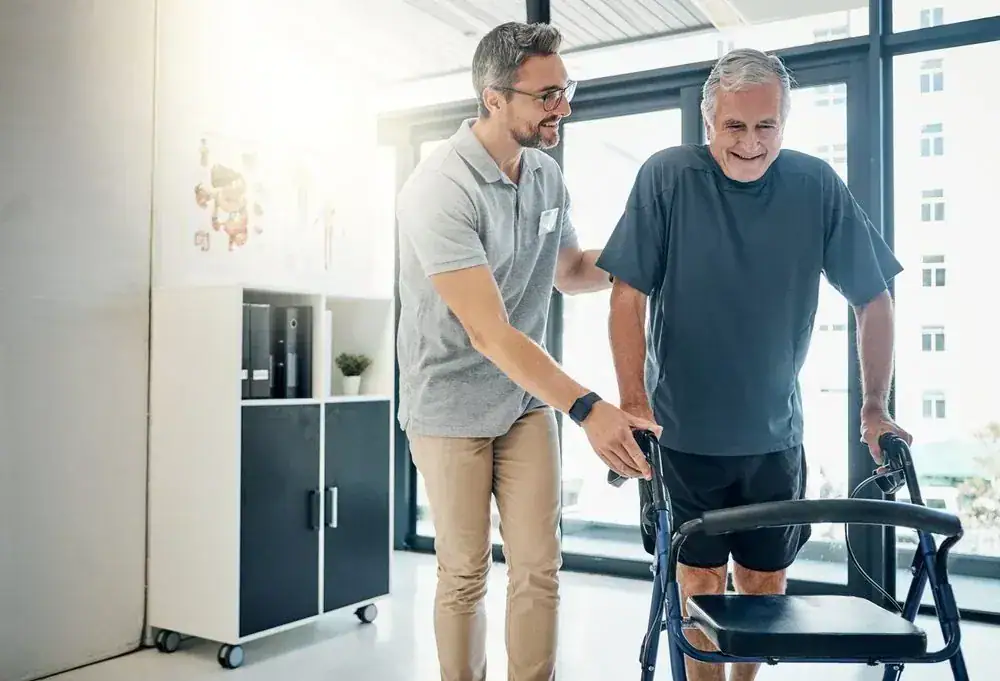
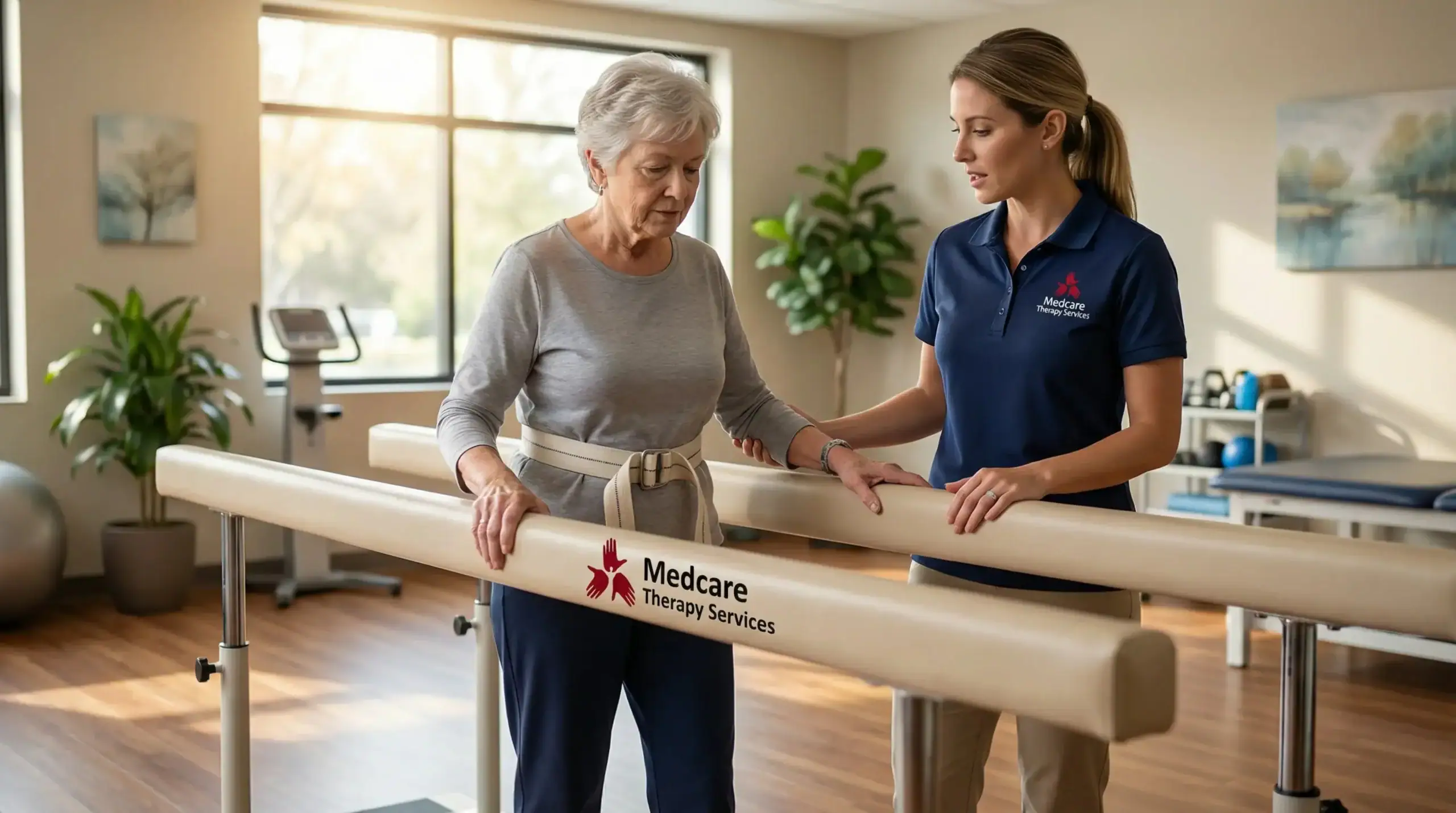
You start doing things again. Walking to the mailbox without second-guessing every step. Getting up in the middle of the night without turning on every light. Going to the store without someone hovering next to you.
That’s what happens when your balance improves and your confidence comes back. You’re not just preventing falls—you’re getting your independence back.
Our fall prevention programs focus on the things that actually matter: strengthening the muscles that keep you stable, improving your reaction time, and teaching you how to move safely in your own home. We work with adults in Muttontown who want to stay active, avoid hospitalizations, and keep living on their own terms. Every session is built around your specific risk factors, your health conditions, and your goals—not some generic senior exercise routine.
The difference shows up fast. Better balance. Stronger legs. Less fear when you move.
We’ve been helping Long Island residents stay safe and independent for years. We’re not new to this, and we’re not guessing.
Our physical therapists specialize in balance disorders, gait training, and elderly fall prevention. We understand how chronic conditions like Parkinson’s, arthritis, and medication side effects increase your fall risk—and we know how to address them. Every therapist on our team is trained in evidence-based fall prevention strategies that actually work.
We serve Muttontown and the surrounding North Shore communities with the same approach: personalized care, transparent communication, and real results. You’re not a number here. You’re someone who deserves to feel steady and secure in your own home.

First, we assess where you’re at. That means a complete fall risk evaluation—your balance, your gait, your strength, your medications, your home environment. We’re looking for the specific things that put you at risk, not just running through a checklist.
Then we build your plan. You’ll get a personalized program that includes balance exercises for seniors, strength training, gait work, and coordination drills. Everything is supervised, safe, and adjusted to your ability level. If something feels too hard or too easy, we change it.
You’ll come in for regular sessions where we work through your exercises together. We watch how you move, correct your form, and gradually increase the challenge as you get stronger. Between visits, you’ll have simple exercises to do at home—nothing complicated, just effective movements that reinforce what we’re working on.
Over time, you’ll notice the difference. Stairs feel easier. You catch yourself faster if you stumble. You stop thinking about falling every time you stand up. That’s the goal: getting you back to moving freely without fear.

Ready to get started?
You get a full fall risk assessment that looks at everything—balance, strength, medications, vision, home hazards. We identify what’s putting you at risk so we can address it directly.
Your program includes one-on-one physical therapy sessions with exercises designed specifically for fall prevention. That means balancing exercises, strength work for your legs and core, gait training, and reaction drills. Every movement has a purpose.
We also provide education on home safety modifications. Most falls happen at home, and small changes—removing tripping hazards, improving lighting, installing grab bars—can make a huge difference. We’ll walk you through what to look for and what to change.
For Muttontown residents, this matters even more. Many homes here have stairs, uneven outdoor terrain, and layouts that can create fall risks if you’re not careful. We take that into account when we’re building your plan. You’ll also get guidance on managing medications that affect balance, along with strategies for staying active safely as you age. The goal isn’t just to prevent one fall—it’s to keep you independent for years.
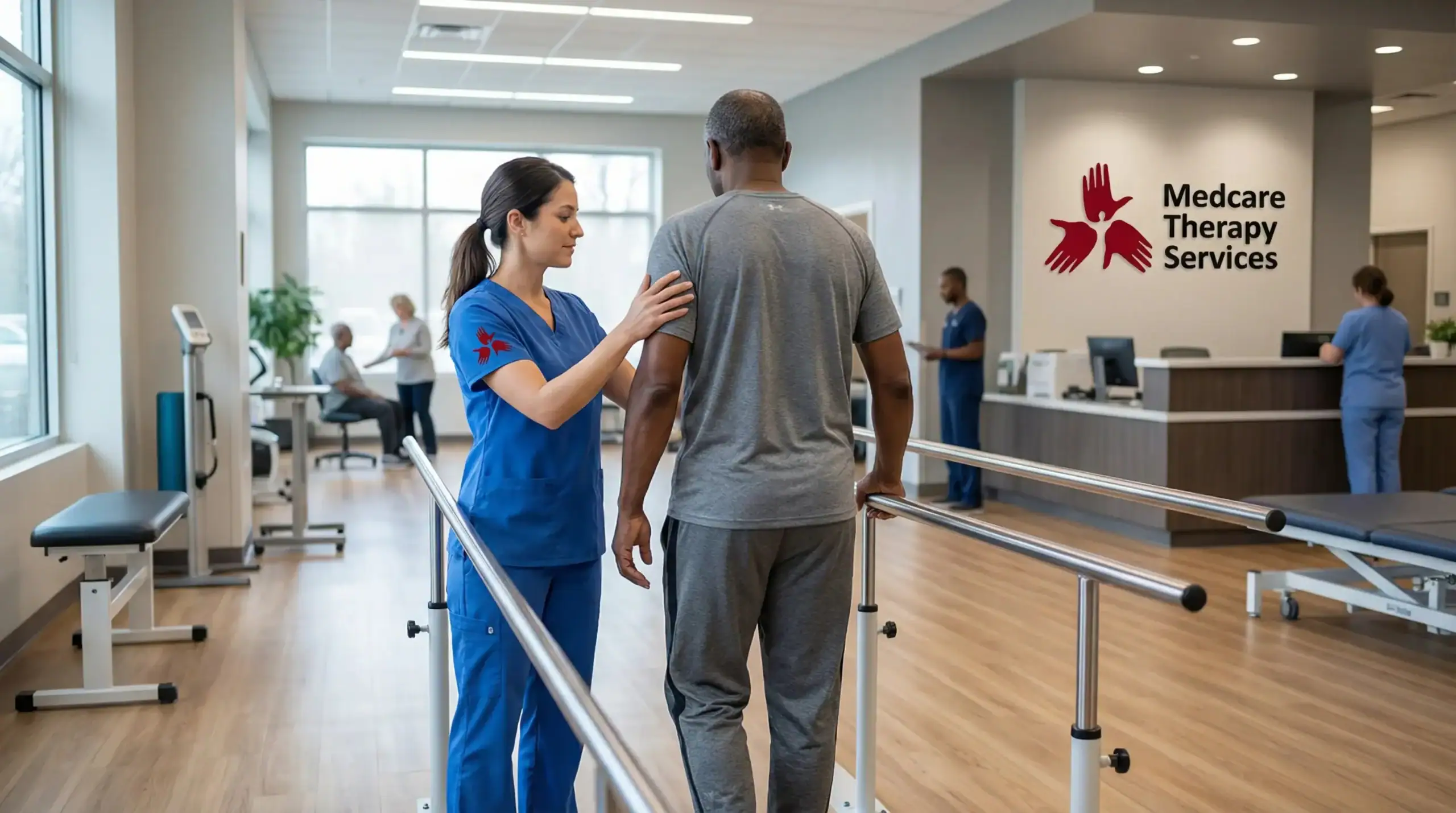
If you’ve fallen in the past year, you’re at higher risk. Even if you didn’t get hurt, one fall makes another more likely.
Other signs: you feel unsteady when you walk, you grab onto furniture or walls for support, you avoid certain activities because you’re afraid of falling, or you take four or more medications. Chronic conditions like Parkinson’s, arthritis, or diabetes also increase your risk. So does muscle weakness, poor balance, or vision problems.
The truth is, one in three adults over 65 falls each year. But most people don’t tell their doctor, and they don’t get help until after they’re injured. If any of this sounds familiar, you should get a fall risk assessment. It’s straightforward, and it tells you exactly where you stand and what needs to change.
Physical therapy is targeted. You’re not just moving—you’re working on the specific systems that keep you upright and stable.
We assess your balance, strength, gait, and coordination, then design exercises that address your weak points. If your reaction time is slow, we work on that. If your legs are weak, we strengthen them. If your gait is unsteady, we retrain it. Everything is supervised by a licensed therapist who knows how to progress you safely.
Regular exercise is great, but it’s not the same as a structured fall prevention program. We’re using evidence-based techniques proven to reduce fall risk by up to 30%. You also get education on home safety, medication management, and how to move safely in real-world situations—not just in a gym. That’s what makes it effective.
Most insurance plans, including Medicare, cover physical therapy for fall prevention if it’s medically necessary. That usually means you’ve fallen recently, you have a balance disorder, or your doctor has identified you as high-risk.
We’ll verify your benefits before you start so you know exactly what’s covered. Some plans require a referral from your physician, others don’t. Copays and deductibles vary depending on your plan.
What matters is this: the cost of prevention is a fraction of what a fall costs. The average fall-related ER visit runs nearly $9,000, and that doesn’t include rehab, lost independence, or long-term care. If your insurance covers even part of your therapy, it’s worth it. And if it doesn’t, we’ll talk through your options so you can make an informed decision.
You’ll start noticing improvements within a few weeks—better stability, more confidence, stronger legs. But real, lasting change takes time.
Most programs run 8 to 12 weeks, with sessions two to three times per week. That’s enough time to build strength, retrain your balance, and develop new movement patterns that stick. Some people need more time depending on their condition and goals.
The key is consistency. You can’t do two sessions and expect to be fall-proof. Balance and strength take repetition to improve, especially if you’ve been inactive or dealing with chronic conditions. But if you show up and do the work, the results are real. You’ll move better, feel steadier, and have the tools to stay safe long after the program ends.
Yes. In fact, that’s one of the best times to start.
If you’ve fallen once, your risk of falling again doubles. But physical therapy can break that cycle. We identify what caused the fall—whether it was weak legs, poor balance, a medication issue, or something in your environment—and we address it.
You’ll work on rebuilding strength and stability in a safe, controlled setting. We’ll also help you regain confidence, which is huge. A lot of people become afraid to move after a fall, and that fear leads to inactivity, which makes you weaker and more likely to fall again. We help you move past that.
Even if your fall was months ago, it’s not too late. The goal is to make sure it doesn’t happen again—and to give you the strength and skills to stay independent.
Look for a program run by licensed physical therapists with experience in balance and fall prevention. You want someone who understands gait disorders, vestibular issues, and how chronic conditions affect stability—not just a general fitness instructor.
The program should include a full fall risk assessment, personalized exercises, and one-on-one supervision. Group classes can be helpful, but individualized care is more effective because it’s built around your specific risks and limitations.
You also want a program that includes education—home safety tips, medication reviews, and strategies for preventing falls in daily life. And make sure the facility is local and accessible. If it’s hard to get to or doesn’t feel safe, you won’t stick with it. At our Muttontown location, we check all those boxes. You’ll work with experienced therapists in a secure environment, and everything is designed around keeping you safe and independent.
Other Services we provide in Muttontown