
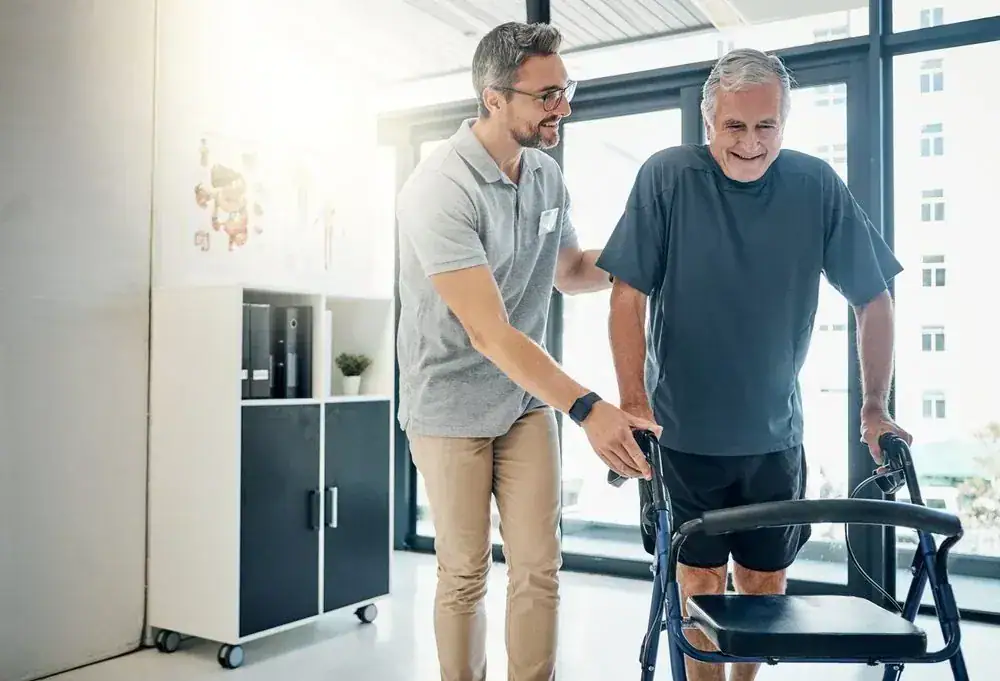
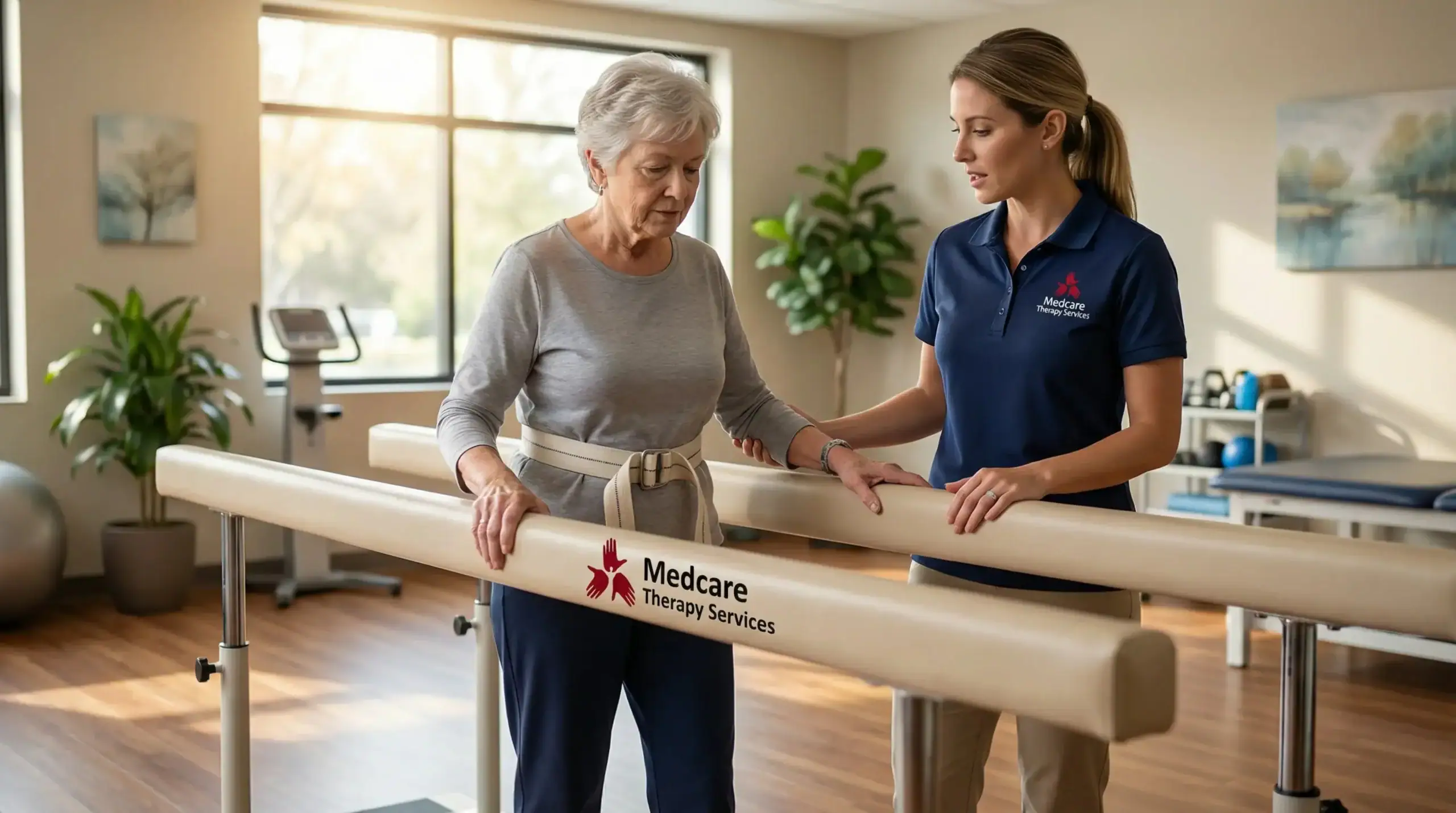
You’ve already changed how you move around your house. Maybe you hold the counter longer when you walk through the kitchen. Maybe you avoid the stairs when you’re home alone. That hesitation? It’s not just caution—it’s your body telling you something’s off.
Here’s what most people don’t realize: balance doesn’t just decline with age. It responds to training. Research on nearly 8,000 older adults found that balance and functional exercises reduce falls by 24%. Not by luck—by retraining how your body stabilizes itself when you reach for something, turn around, or step off a curb.
The outcome isn’t just fewer falls. It’s walking to your mailbox without second-guessing yourself. It’s getting out of a chair without bracing for impact. It’s your kids stopping their constant check-ins because you sound like yourself again.
That’s what physical therapy for balance actually does. It rebuilds the confidence your body lost—and gives you the strength to back it up.
We’ve been delivering home-based physical therapy across Long Island for over a decade. That includes Munsey Park and the surrounding Nassau County communities where transportation to a clinic isn’t always easy—and shouldn’t be required.
Our therapists are trained in Otago fall prevention protocols, which means your program isn’t generic. It’s built around your specific risk factors, your home layout, and the activities you actually need to do every day. We work with Medicare, so cost isn’t the barrier it could be.
Nassau County has over 300,000 residents age 60 and older. A lot of them are dealing with the same balance issues you are. The difference is whether you address it now—or after a fall that changes everything.

Your first session starts with an assessment. We’re looking at how you stand, how you shift your weight, how you recover when you’re off-balance. We also ask about any falls you’ve had—or close calls. That tells us where the gaps are.
From there, we build a program. It usually includes strength work for your legs and core, balance exercises that challenge your stability in controlled ways, and functional movements like standing from a chair or stepping over objects. Sessions run 20 to 45 minutes, typically three times a week for 11 to 12 weeks.
Everything happens in your home. That’s not just convenient—it’s strategic. We can see the actual spaces where you’re at risk. The bathroom threshold that’s uneven. The rug that slides. The lighting that’s too dim. We address those too.
Most people start noticing improvements in how they feel within a few weeks. Measurable improvements—like better walking speed or standing balance—usually show up around the six-week mark. And those gains stick. Research shows benefits last at least three months after you finish the program.

Ready to get started?
Your program isn’t a handout with generic exercises. It’s a custom plan designed by a licensed physical therapist who evaluates your specific fall risk factors. That includes muscle strength, joint flexibility, reaction time, and how your body responds when your balance is challenged.
You’ll work on strength training to rebuild the muscles that keep you stable. You’ll practice balance exercises that retrain your body’s automatic responses—the ones that kick in when you trip or stumble. And you’ll do functional movements that mirror real life: getting in and out of a car, reaching for something on a shelf, walking on uneven ground.
Here’s what matters for Munsey Park residents: Nassau County has the highest median income on Long Island at over $95,000 per year, but that doesn’t prevent falls. What prevents falls is addressing them before they happen. Every 11 seconds, an older adult is treated in an emergency room for a fall. Every 20 minutes, someone dies from one.
We also address the psychological side. Fear of falling is real, and it makes you move less—which makes you weaker and more likely to fall. Balance training reduces that fear by an average of 8 points on clinical scales, and it improves your confidence in your body’s ability to catch itself.
Yes. Medicare Part B covers outpatient physical therapy when it’s medically necessary, and fall prevention qualifies if you’ve had a fall or your doctor identifies you as high-risk. You’ll need a referral or prescription from your physician, but once that’s in place, Medicare typically covers the sessions.
There’s usually a copay—20% of the Medicare-approved amount after you’ve met your deductible. But compare that to the cost of a fall-related injury. In 2022, healthcare spending for nonfatal falls among older adults hit $80 billion. A broken hip alone can cost $40,000 or more when you factor in surgery, rehab, and lost independence.
We handle the Medicare paperwork and verification. You don’t need to figure out the billing codes or call the insurance company. If you’re eligible, we’ll let you know up front what your responsibility is.
Most people notice they feel steadier within two to three weeks. That’s usually when the fear starts to ease up—you’re not bracing yourself as much, and you’re moving a little more freely. Measurable improvements in balance and strength typically show up around six weeks.
The research is clear on this: balance training programs that run 11 to 12 weeks show improvements between 16% and 42% compared to baseline assessments. That’s not a small change. It’s the difference between needing to hold onto something when you stand up and being able to stand without thinking about it.
The key is consistency. Three sessions per week, 20 to 45 minutes each, gives you 90 to 120 minutes of balance training per week. That’s the threshold where your body starts to adapt. And those adaptations last—benefits are maintained for at least three months after you finish the program, often longer if you keep up with the exercises.
It’s not too late. But it is urgent. Falling once doubles your chances of falling again. That’s not meant to scare you—it’s just the reality of how balance works. Once your body’s stability system fails, it’s more likely to fail again unless you retrain it.
Here’s the good news: fall prevention interventions can reduce your risk of another fall by 30% to 35%. Balance training programs specifically reduce fall injuries by 37% and broken bones by over 60%. Those aren’t marginal improvements. They’re the difference between recovering from a fall and ending up in a nursing home.
The reason it works is because we address what caused the first fall. Was it weak legs? Poor reaction time? Vision issues? Medication side effects? We identify the specific factors and build a program around them. If you’ve fallen, you’re exactly the person who needs this.
Yes, and that fear is one of the main things we address. Fear of falling is a psychological barrier that reduces your activity—which makes you weaker, which makes falls more likely. It’s a cycle that accelerates physical decline faster than age alone.
Balance training significantly reduces fear of falling. Studies show an average reduction of 8 points on fear-of-falling scales, along with measurable improvements in dynamic balance. That happens because you’re practicing controlled challenges in a safe environment. Your body relearns that it can handle instability without collapsing.
We also use cognitive behavioral approaches when needed. If the fear is severe—if you’re avoiding leaving the house or you’ve stopped doing activities you used to enjoy—we can integrate strategies that address the mental side alongside the physical training. The goal isn’t just to make you stronger. It’s to make you confident enough to use that strength.
Two reasons: access and relevance. If getting to a clinic is hard—if you don’t drive, or if the trip itself feels risky—you’re less likely to go consistently. And consistency is what makes balance training work. Home-based therapy removes that barrier completely.
But it’s not just about convenience. Training in your home means we’re working in the actual environment where you’re at risk. We can see the stairs you use every day, the bathroom where you shower, the kitchen where you cook. We can identify hazards you’ve stopped noticing—loose rugs, poor lighting, uneven thresholds—and address them on the spot.
Clinic-based therapy is useful, but it’s generic. You’re practicing balance on equipment in a controlled space. Home-based therapy is specific. You’re practicing the exact movements you need to do in the exact places you need to do them. That’s why the outcomes are better—and why people stick with it.
If you’re asking the question, you probably already know. But here are the signs: you’ve had a fall or a near-miss in the past year. You feel unsteady when you stand up or walk. You avoid certain activities because you’re worried about losing your balance. You hold onto furniture or walls more than you used to.
There are also clinical risk factors. Muscle weakness in your legs. Difficulty standing from a chair without using your arms. Trouble walking heel-to-toe in a straight line. Vision problems or medications that affect balance—things like blood pressure drugs, sedatives, or antidepressants.
One in four adults over 65 falls every year. That’s not a small percentage. And falls are the leading cause of injury in that age group. If you’re in Nassau County, you’re part of a population of 300,000 older adults—many of whom are dealing with the same risks. The difference is whether you address it now or wait until after a fall forces the issue.
Other Services we provide in Munsey Park