

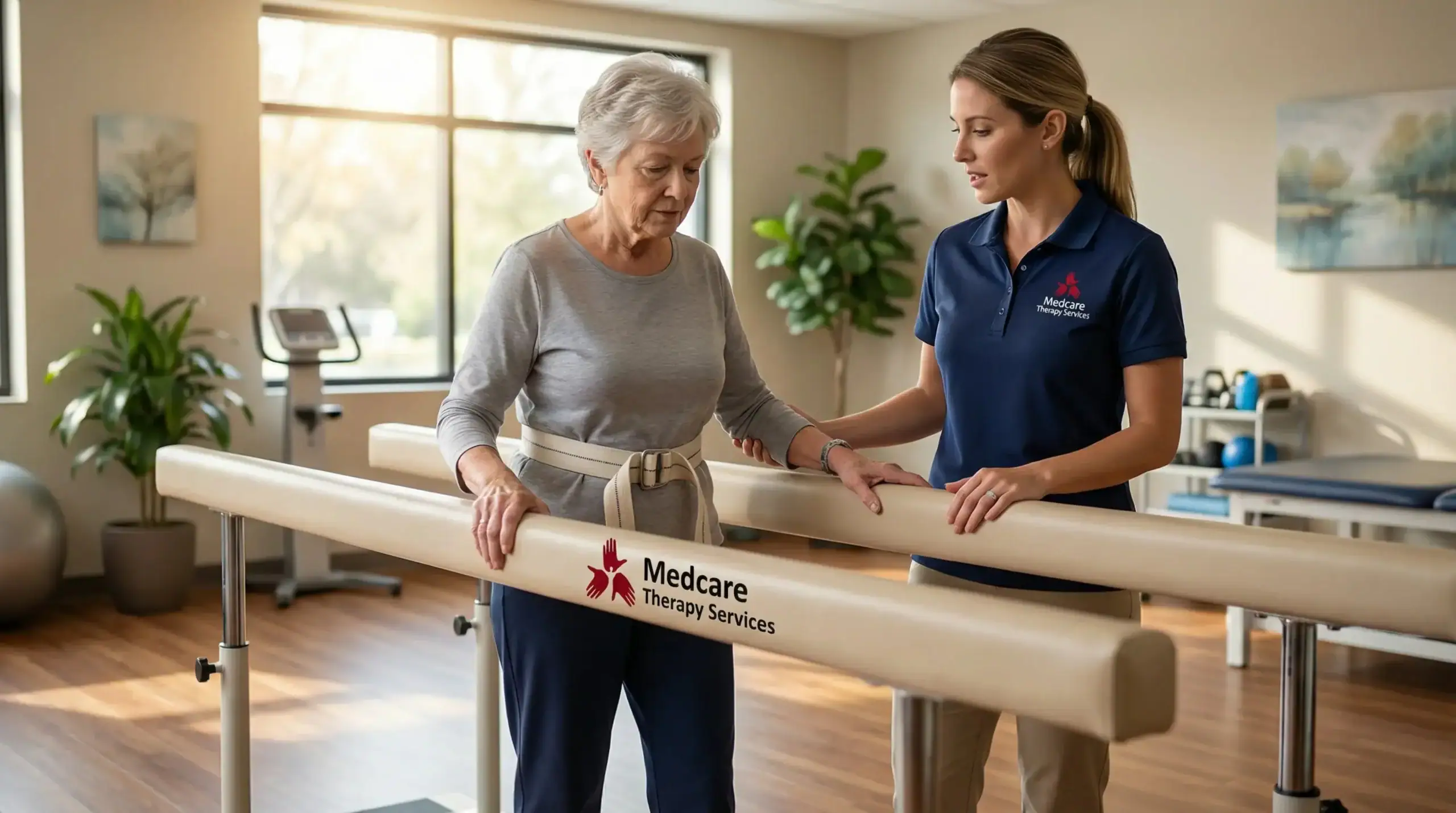
You stop second-guessing every step. Getting the mail doesn’t feel risky. Walking to the bathroom at night doesn’t require a mental pep talk.
That’s what happens when your balance improves through targeted physical therapy. Research shows balance training can cut fall risk by up to 50%. But the real outcome isn’t a statistic—it’s confidence. It’s moving through your day without that constant background fear.
In Mount Sinai and across Nassau County, falls account for 88% of injury hospitalizations for adults over 65. Most of those falls happen at home. Most are preventable. And most people who fall once will fall again—unless something changes.
Balance exercises for seniors aren’t about becoming an athlete. They’re about strengthening the systems that keep you upright: your legs, your core, your reaction time, your spatial awareness. When those systems work better, you move better. And when you move better, you stay independent longer.
We’ve been providing home-based physical therapy across Long Island for over 14 years. We’re licensed, Medicare-certified, and we accept nearly all commercial insurance plans.
Our therapists specialize in elderly fall prevention. That means we understand the difference between general exercise and the specific interventions that actually reduce fall risk. We also understand that getting to a clinic isn’t always realistic—which is why we come to you.
Mount Sinai has one of the highest concentrations of older adults on Long Island. More than 25% of residents here are over 65. That’s not a problem—it’s a community we’re built to serve. We treat every patient like family because in a town this size, reputation matters. And in this field, results matter even more.

First, we schedule an in-home evaluation. One of our licensed physical therapists comes to your house and assesses your current balance, strength, gait, and fall risk. We’ll also look at your environment—lighting, rugs, furniture layout—because falls don’t happen in a vacuum.
Then we build a personalized treatment plan. This isn’t a generic handout. It’s a program based on your specific weaknesses, your goals, and what’s realistic for your daily routine. Some people need strength training. Others need gait work or vestibular therapy. Most need a combination.
Sessions happen in your home, usually two to three times per week depending on your plan. Your therapist guides you through exercises, tracks your progress, and adjusts the program as you improve. We’ll also teach you techniques you can practice between visits.
The goal isn’t endless therapy. It’s getting you strong and stable enough to maintain your progress independently. Most patients see measurable improvement within a few weeks. But the timeline depends on where you’re starting and how consistently you work the plan.

Ready to get started?
You get a full fall risk assessment that measures balance, strength, flexibility, and walking patterns. Your therapist will test your ability to recover from a stumble, how quickly you react to changes in terrain, and whether medications or other health factors are affecting your stability.
From there, you’ll receive a customized exercise plan that might include strength training for your legs and core, balance exercises that challenge your stability in controlled ways, and gait training to improve how you walk. If needed, we’ll also recommend adaptive equipment or home modifications—things like grab bars, better lighting, or removing tripping hazards.
Long Island has some of the highest fall rates in New York State. In Mount Sinai specifically, the combination of older housing stock and an aging population creates real risk. Many homes here were built decades ago and weren’t designed with aging in place in mind. Our therapists understand that context. We know what to look for and how to address it.
Everything we do is covered by Medicare and most insurance plans. You’re not paying out of pocket for something that’s already a covered benefit. You’re just using it the right way—before a fall happens, not after.

If you’ve fallen in the past year, you need it. Falling once doubles your chance of falling again. That’s not scare tactics—it’s data from Mount Sinai Hospital’s own geriatrics program, ranked number one in the nation.
But you don’t have to wait for a fall. If you feel unsteady when you walk, if you grab onto furniture or walls for support, if you’ve started avoiding stairs or limiting activities because you’re worried about balance—those are signs. So is taking multiple medications, especially anything that causes dizziness or drowsiness.
Here’s the thing most people don’t realize: fewer than half of older adults who fall actually tell their doctor. They’re worried about losing independence or being forced into a nursing home. But avoiding the conversation doesn’t reduce the risk. It just means the next fall catches you unprepared. A physical therapist can assess your risk objectively and give you a clear answer about whether intervention makes sense.
Balance training targets the specific systems that prevent falls. That includes strengthening your legs and core, but it also means challenging your proprioception—your body’s sense of where it is in space. Regular exercise might keep you generally fit. Balance exercises keep you upright when something unexpected happens.
A good program includes exercises that simulate real-world challenges. Standing on one foot. Walking heel-to-toe. Shifting your weight in different directions. Recovering from a stumble. These aren’t movements you’d do at a gym, but they’re exactly what your body needs to do when you trip on a rug or miss a step.
Research analyzing nearly 8,000 older adults found that balance and functional exercises reduce fall rates by 24%. But the exercises have to be specific, progressive, and practiced consistently. A physical therapist prescribes the right exercises based on your evaluation, then adjusts them as you improve. That’s different from following a YouTube video or a generic senior fitness class.
Medicare Part B covers outpatient physical therapy when it’s medically necessary and prescribed by a doctor. Fall prevention and balance training qualify. There’s no catch, but there are some basics you should know.
You’ll have a copay or coinsurance depending on your specific plan. For most people, that’s 20% of the Medicare-approved amount after you’ve met your deductible. If you have a Medicare Advantage plan or a supplemental plan, your out-of-pocket cost might be lower or even zero.
You don’t need a referral to start physical therapy in New York, but Medicare does require that a doctor certify your plan of care. We handle that coordination. You’re not navigating paperwork alone. And because we’re Medicare-certified and accept nearly all commercial insurance, we deal with billing directly. You’re not submitting claims or waiting for reimbursement.
We bring everything to you. That’s the whole model. Our therapists come to your home in Mount Sinai with the equipment and expertise needed to evaluate your balance and run your sessions.
This matters for a few reasons. First, transportation is a real barrier. If getting to a clinic requires arranging rides or navigating parking, you’re less likely to stick with the program. Second, your home is where most falls happen. Your therapist needs to see your actual environment—your floors, your lighting, your furniture layout—to give you relevant advice.
Third, some people qualify for home health because they have difficulty leaving the house safely. If that’s you, home-based therapy isn’t just more convenient—it’s the appropriate level of care. We’ve been doing home visits across Long Island since 2010. It’s not a compromise. It’s how we deliver better outcomes.
Most people notice improvement within three to four weeks if they’re consistent with their sessions and home exercises. That might mean feeling steadier on your feet, walking with more confidence, or moving through your house without grabbing onto things.
Measurable changes—like improved balance test scores or increased strength—usually show up around the same timeline. But the timeline depends on where you’re starting. If you’re recovering from a fall or dealing with multiple health issues, progress might take longer. If you’re relatively healthy but just noticing some decline, you might improve faster.
The key is consistency. Balance training works, but it’s not a one-time fix. Your therapist will eventually transition you to a maintenance program you can do on your own. That’s the goal—not keeping you in therapy forever, but giving you the tools to stay stable long-term. Research shows that regular balance exercise can reduce fall risk by up to 50%, but only if you keep doing it.
It’s not too late. It’s actually the most important time to start. Falling once doubles your risk of falling again, but that’s exactly why intervention works. You now have a clear reason to address the underlying issues—and Medicare will cover it.
After a fall, one of our physical therapists will assess what went wrong. Was it a strength issue? A balance problem? A medication side effect? An environmental hazard? Often it’s a combination. Once you know the cause, you can fix it. That might mean strengthening weak legs, improving your gait, adjusting your medications with your doctor, or removing tripping hazards from your home.
The other thing that happens after a fall is fear. You start limiting your activity because you’re worried about falling again. But that inactivity makes you weaker, which actually increases your fall risk. It’s a cycle. Physical therapy breaks that cycle by rebuilding your strength and your confidence at the same time. You’re not just recovering from the last fall—you’re preventing the next one.
Other Services we provide in Mount Sinai