
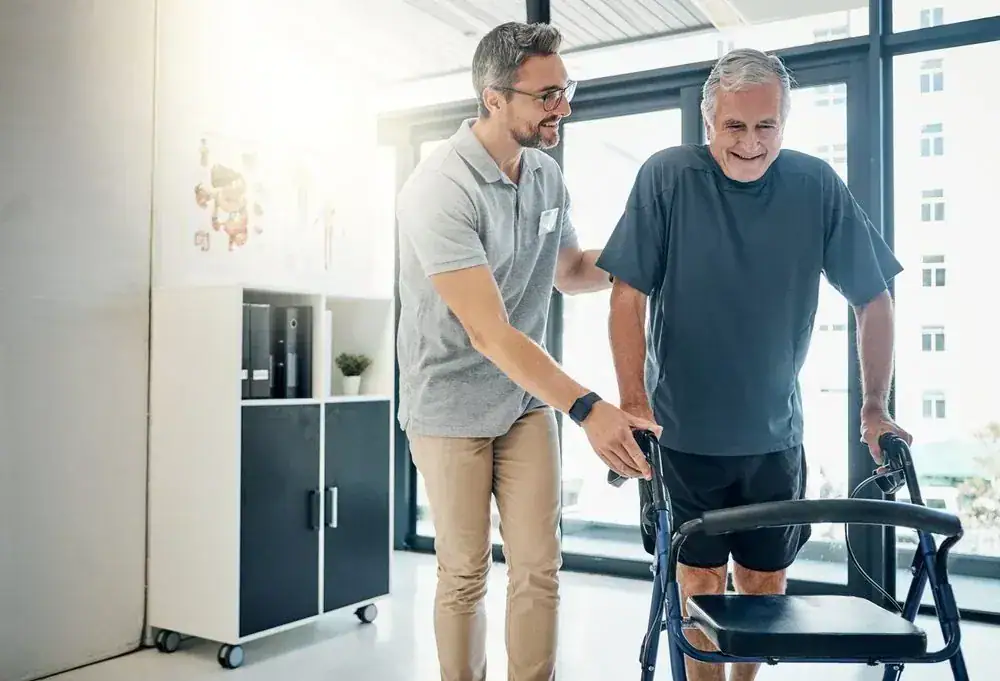
You’re thinking about your footing more than you used to. Maybe you’ve already fallen once, or you’ve watched someone close to you go through it. Either way, that hesitation is real, and it’s limiting what you do.
Balance training isn’t about becoming an athlete. It’s about walking to your mailbox without gripping the railing. Getting out of a chair without bracing yourself. Moving through your own home like you own it.
Research shows that consistent balance exercises for seniors can reduce fall risk by up to 50%. That’s not a small number. That’s the difference between staying in your home and losing your independence. The work is simple: targeted strength training, coordination drills, and movement patterns that rebuild the stability you’ve lost. You don’t need a gym. You need a plan that actually fits your body and your life.
We’ve been providing in-home physical therapy across Long Island for over 14 years. We’re Medicare-certified, locally based, and we treat patients in Massapequa Park the same way we’d treat our own family.
You’re not getting a one-size-fits-all program. You’re getting a licensed therapist who comes to your home, evaluates your specific risk factors, and builds a plan around your mobility, your space, and your goals. Nassau County ranks fourth in New York State for fall-related incidents among seniors. We know this area, and we know what works here.
Our team manages multiple therapy centers across the region, and we’ve built our reputation on being accessible, transparent, and effective. No runaround. No surprises.

First, we schedule an in-home assessment. A licensed physical or occupational therapist comes to you and evaluates your balance, strength, gait, range of motion, and coordination. We also look at your home environment—lighting, rugs, furniture layout—anything that could increase your risk.
From there, we build a personalized treatment plan. That might include senior balance exercises, strength training for your legs and core, or specific drills to improve your reaction time and posture. Everything is designed around what your body can do right now, not what it used to do.
Sessions happen in your home, on your schedule. Most patients see us one to three times per week depending on their needs and insurance coverage. We track your progress, adjust the program as you improve, and keep your doctor in the loop. You’re not guessing whether it’s working—you’ll feel the difference in how you move, and we’ll measure it.

Ready to get started?
Each session includes hands-on therapy focused on improving your stability and strength. We work on balance exercises that challenge your coordination without putting you at risk. We incorporate strength training for your lower body and core—the muscle groups that keep you upright. And we teach you how to move safely through the activities you do every day.
In Massapequa Park and across Nassau County, 88% of injury hospitalizations for adults over 65 are caused by falls. Most of those falls happen at home. That’s why we also assess your living space and recommend modifications that reduce risk—better lighting, grab bars, removing tripping hazards.
You’ll also get education on how to manage fear of falling, which affects up to 73% of people who’ve fallen before. That fear leads to less activity, which leads to weaker muscles, which leads to more falls. We break that cycle by rebuilding your confidence alongside your physical strength. And because we accept Medicare and most commercial insurance, cost doesn’t have to be a barrier.

Most patients start noticing improvements in balance and confidence within the first four to six weeks of consistent therapy. That doesn’t mean you’re done in six weeks—it means you’re beginning to feel steadier, and the exercises are starting to work.
Fall prevention isn’t a quick fix. It’s a process of rebuilding strength, coordination, and movement patterns that may have weakened over months or years. Research shows that fall prevention interventions reduce risk by 30% to 35% when done correctly and consistently. The timeline depends on your starting point, your goals, and how often you’re able to do the work between sessions.
What matters most is that you stick with it. Skipping sessions or only doing exercises when the therapist is there won’t get you the results you want. But if you show up and put in the effort, you’ll see measurable progress—and you’ll feel it in how you move.
You can find balance exercises online, but you can’t diagnose your own fall risk or know which exercises are safe for your specific situation. A licensed therapist evaluates your strength, gait, coordination, vision, and medical history before recommending anything. That assessment is what makes the program effective.
If you’ve already fallen, or if you have conditions like neuropathy, arthritis, or vertigo, doing the wrong exercises can actually increase your risk. A therapist knows how to modify movements based on your limitations and progress you safely. They also catch compensations you don’t notice—like favoring one leg or losing your balance in a specific direction.
The other piece is accountability. Most people start exercises on their own and stop after a few weeks. A therapist keeps you on track, adjusts your plan as you improve, and makes sure you’re doing the movements correctly. That consistency is what reduces fall risk by up to 50%, not just knowing what exercises exist.
Yes, Medicare Part B covers physical and occupational therapy for fall prevention if it’s deemed medically necessary. That usually means you’ve fallen recently, you’re at high risk of falling, or your doctor has referred you for balance and mobility issues.
You’ll need a physician’s order for therapy, and the therapist will document your fall risk and treatment plan to justify coverage. Medicare typically covers up to a certain dollar amount per year for outpatient therapy, though that cap can be exceeded if the therapy is medically necessary and properly documented. Most patients also have a copay, which varies depending on your specific plan.
We accept Medicare and nearly all commercial insurance plans, and we handle the billing and documentation on our end. If you’re not sure about your coverage, we can verify your benefits before your first session so there are no surprises. The goal is to make this accessible, not complicated.
In-home therapy removes the barriers that keep people from getting care. If you have trouble driving, if you don’t have reliable transportation, or if leaving your house feels risky because of your balance issues, coming to a clinic isn’t realistic. We bring the therapy to you.
There’s also a practical advantage: we see exactly where you live and move every day. We can assess the layout of your home, identify tripping hazards, and teach you how to navigate your specific environment safely. That’s something you can’t replicate in a clinic setting.
For many seniors, the effort and anxiety of getting to appointments becomes a reason to skip therapy altogether. In-home care eliminates that friction. You get the same quality of treatment, the same licensed professionals, and the same evidence-based programs—just in a setting that’s more comfortable, more convenient, and more relevant to your daily life.
That fear is completely normal, and it’s one of the biggest obstacles we help people work through. After a fall, your brain goes into protection mode. You start avoiding activities, moving less, and second-guessing every step. That caution feels like it’s keeping you safe, but it’s actually making you weaker and more likely to fall again.
Fall prevention therapy addresses both the physical and psychological sides of that fear. We rebuild your strength and balance so you have a real reason to feel more confident. But we also use gradual exposure—starting with low-risk movements and slowly increasing the challenge as your ability improves. You’re not thrown into anything that feels unsafe.
Some patients benefit from cognitive-behavioral approaches that help reframe negative thought patterns around falling. We work with you to set realistic goals, celebrate progress, and prove to yourself that you’re more capable than you think. Falling once doesn’t mean it has to happen again. With the right support, you can move past the fear and get back to living without constant worry.
That depends on your goals, your progress, and your baseline when you start. Some patients need a few weeks of intensive therapy to regain stability after a fall. Others benefit from several months of ongoing work to address chronic balance issues or underlying conditions.
Most people see significant improvement within eight to twelve weeks of consistent therapy. At that point, you may transition to a maintenance program where you continue exercises on your own with periodic check-ins. Or you may continue with less frequent sessions to keep progressing toward higher-level goals.
The goal isn’t to keep you in therapy forever. It’s to get you strong enough and confident enough to maintain your independence. Your therapist will reassess your progress regularly and adjust the plan based on what you need. When you’re ready to manage on your own, we’ll make sure you have the tools and knowledge to keep up the work. But we’re also here if you need a refresher or if your needs change down the road.
Other Services we provide in Massapequa Park