

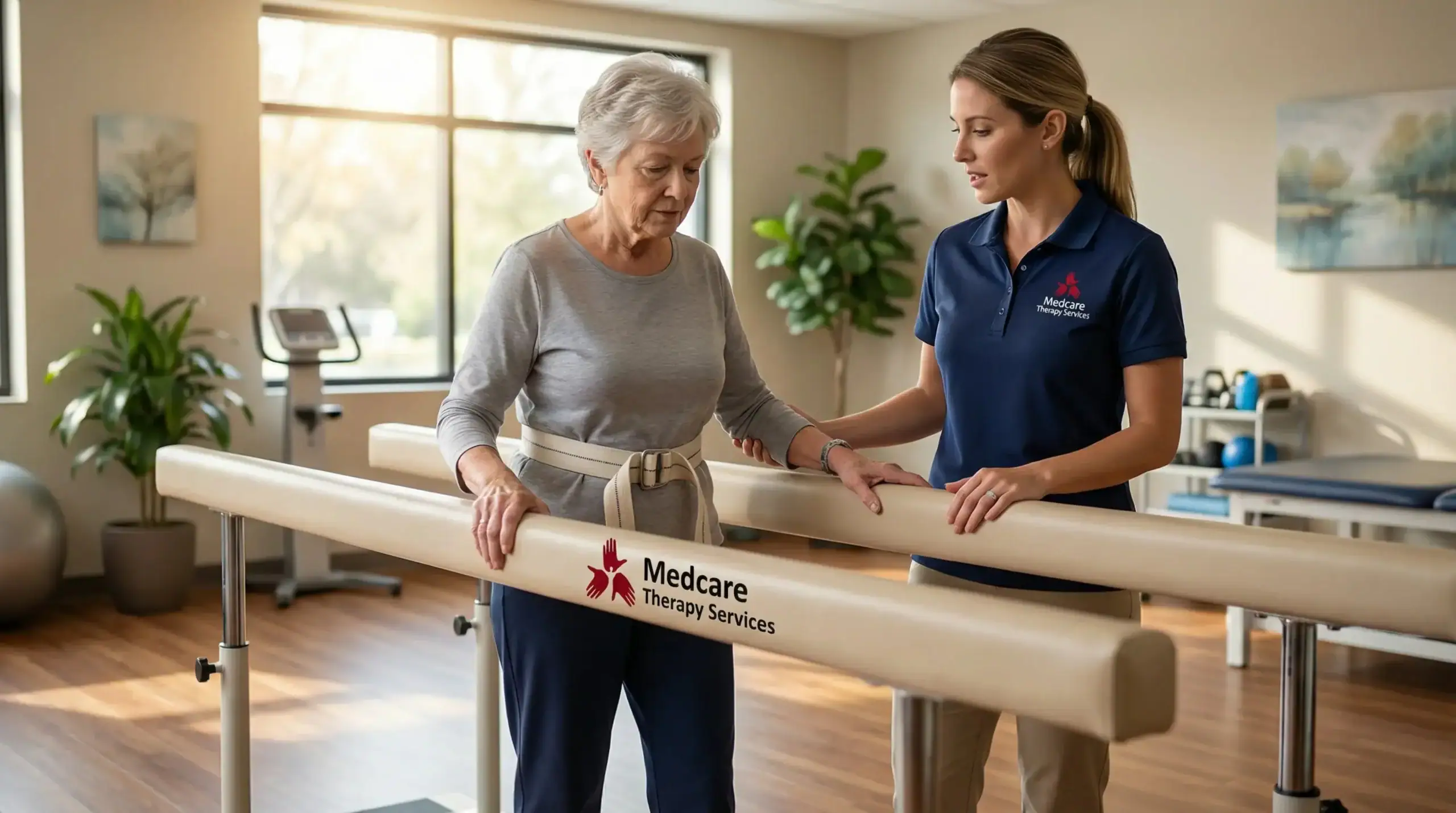
You stop planning your day around what’s safe and start doing what you actually want to do. The fear that’s been sitting in the back of your mind every time you walk to the bathroom at night? It fades. Your kids stop calling twice a day to check on you.
Balance training isn’t about becoming an athlete. It’s about walking to your mailbox without second-guessing every step. It’s about getting out of a chair without bracing yourself. Research shows that regular balance exercises for seniors can cut fall risk in half—but the real outcome is simpler than that.
You get your confidence back. You stay in your home. You stop feeling like your body is working against you. That’s what physical therapy for balance actually does when it’s done right—it gives you back the parts of your life that fear has been quietly taking away.
We’ve been providing in-home physical therapy across Long Island for over a decade. We specialize in treating people who have difficulty leaving their home—which means we understand that getting to a clinic isn’t always realistic, especially when balance is already an issue.
Manorville has one of the higher median ages on Long Island, and the community here values independence. We get that. Our therapists come to you, assess your specific risks in your actual environment, and build a plan that fits your home and your routine.
We accept Medicare and most commercial insurance. Our team is licensed, experienced, and part of a network that includes Physical Therapy Associates of Smithtown and Speonk Physical Therapy. We’re not new to this, and we’re not going anywhere.

First, we schedule an in-home evaluation. A licensed physical therapist comes to your house in Manorville and walks through your space with you. They’re looking at how you move, where the risks are, and what’s already working. This isn’t a generic checklist—it’s specific to you and your home.
From there, we build a treatment plan. It usually includes balance exercises, strength training, and gait work. Sessions happen in your living room, kitchen, or wherever makes sense. We’re training your body in the environment where you actually live, which is the whole point.
Most people see us one to three times a week, depending on what Medicare or your insurance covers and what your therapist recommends. You’ll get exercises to do between visits. Progress gets tracked. Adjustments get made. The goal is always the same: reduce your fall risk and get you moving with confidence again.

Ready to get started?
You get a full fall risk assessment that looks at strength, balance, gait, vision, medication side effects, and home hazards. Your therapist will test how you move through your daily routine and identify what’s putting you at risk. This isn’t a one-size-fits-all program.
Treatment includes targeted balance exercises that retrain the connection between your brain and your body. We work on core strength, leg stability, and reaction time. You’ll practice movements that mimic real life—standing from a chair, reaching for something on a shelf, walking on uneven surfaces.
In Manorville, where many homes are single-family properties with stairs, yards, and varying layouts, we tailor everything to your specific setup. If you’ve got steps at your front door, we’ll work on that. If your bathroom has a tricky threshold, we’ll address it. The therapy happens where the risk is. And because we accept Medicare and most insurance, cost doesn’t have to be the barrier that keeps you from getting help.

If you’ve fallen in the past year, you need it. Falling once doubles your chance of falling again, and every fall increases the risk of serious injury. But you don’t have to wait until you’ve already hit the ground.
Other signs include feeling unsteady when you walk, grabbing onto furniture or walls for support, avoiding certain activities because you’re worried about falling, or noticing that your balance isn’t what it used to be. If you’re over 65 and any of this sounds familiar, an evaluation makes sense. Even if you haven’t fallen yet, a physical therapist can identify risks you didn’t know were there—medication side effects, muscle weakness, vision issues—and address them before they become a problem.
Yes. Medicare Part B covers outpatient physical therapy, including fall prevention services, as long as it’s provided by a licensed therapist and deemed medically necessary. That means if your doctor refers you or if a therapist evaluates you and determines you’re at risk, Medicare will typically cover it.
There are some limits—Medicare has annual caps and may require periodic re-evaluations to continue coverage—but most people qualify without issue. We handle the billing and work directly with Medicare, so you’re not stuck figuring it out on your own. If you have a Medicare Advantage plan or supplemental insurance, coverage may vary slightly, but we accept nearly all commercial plans. The easiest way to know what you’ll pay is to call us and let us verify your benefits before we start.
You’re training in the place where you actually need to be safe. A clinic has flat floors, grab bars, and bright lighting. Your home has the stairs you use every day, the rug that slides, the dim hallway you walk through at night. Those are the real risks.
In-home therapy also removes the transportation barrier. If you’re already unsteady or you don’t drive anymore, getting to a clinic becomes its own problem. We come to you, so you’re not adding stress or risk just to get help. And frankly, people tend to stick with therapy longer when it’s convenient. You’re more likely to do the exercises, follow through on the plan, and actually see results when the therapist is meeting you where you are—literally.
Most people see improvement within four to eight weeks, but it depends on your starting point and your goals. If you’re recovering from a fall or dealing with significant weakness, it might take longer. If you’re relatively strong but just need some balance retraining, you could see results faster.
Sessions typically happen one to three times per week. Each visit lasts about 45 minutes to an hour. Your therapist will also give you exercises to do on your own between sessions, which speeds up progress. The goal isn’t to keep you in therapy forever—it’s to get you stable, confident, and independent again. Once you hit that point, we’ll transition you to a maintenance plan you can manage on your own.
Balance training can reduce fall risk by up to 50%, according to research from the CDC and multiple clinical studies. It’s not a guarantee—nothing is—but it’s one of the most effective interventions we have. The exercises work by strengthening the muscles that keep you upright, improving your reaction time, and retraining your brain to adjust when you start to lose balance.
The key is consistency. Doing balance exercises once in a while won’t do much. Doing them two or three times a week for several weeks makes a measurable difference. Your gait improves. Your posture stabilizes. You start catching yourself before you fall instead of going all the way down. This isn’t theoretical—it’s been tested in adults over 80 and it still works. The earlier you start, the better, but it’s never too late to see improvement.
The therapist will ask about your health history, medications, past falls, and any concerns you have about your balance or mobility. Then they’ll watch you move—standing up from a chair, walking across the room, turning around, reaching for something. They’re looking at your gait, posture, strength, and how your body responds to different movements.
They’ll also walk through your home and point out hazards you might not have noticed—loose rugs, poor lighting, clutter in walkways, lack of grab bars. This isn’t about making you feel bad. It’s about identifying fixable risks. By the end of the first visit, you’ll have a clear picture of where you stand and what needs to happen next. From there, we build a plan and start working on it. Most people leave the first session feeling relieved because they finally understand what’s going on and what they can do about it.
Other Services we provide in Manorville