
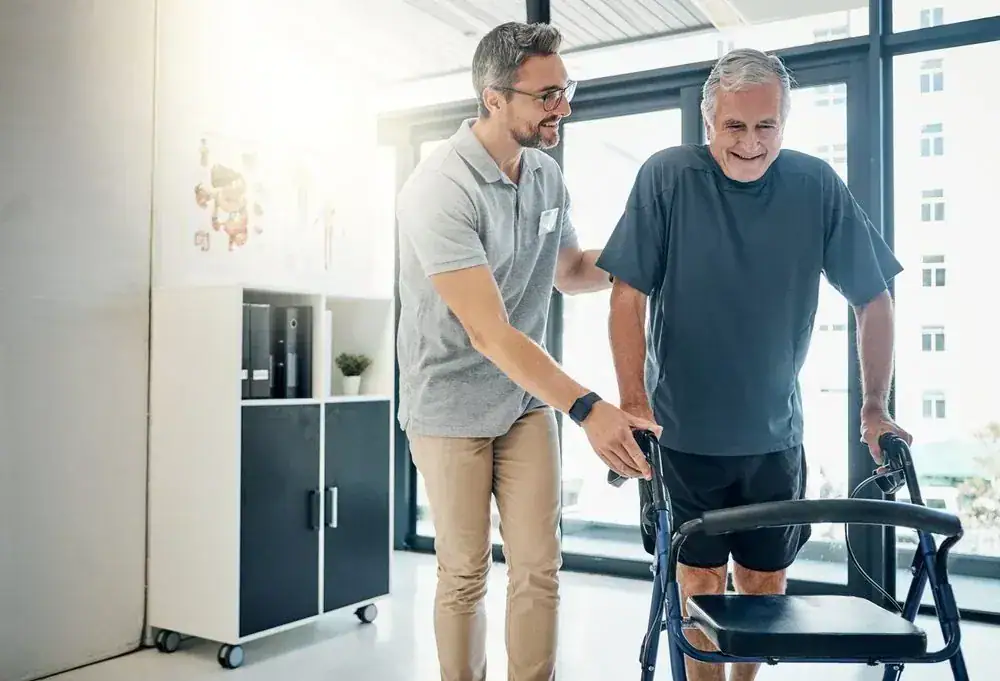
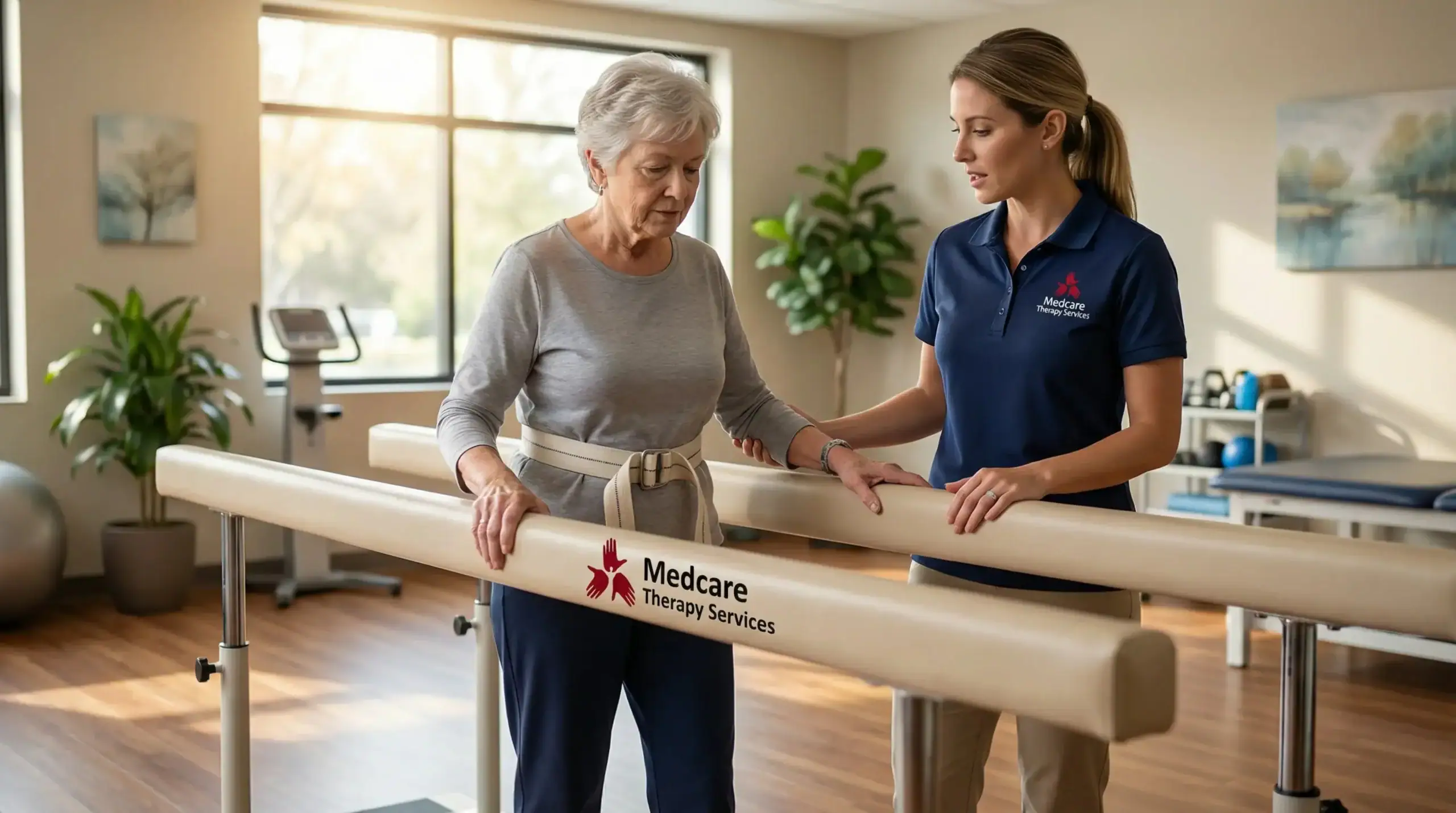
You move through your home without second-guessing every step. You don’t avoid stairs or skip social plans because you’re worried about falling. That’s what better balance gives you.
Physical therapy for balance isn’t about doing random exercises. It’s about targeting the specific weaknesses that make falls more likely—whether that’s leg strength, coordination, reaction time, or how your body responds when you lose your footing.
Most people start noticing real improvements within four to six weeks. You feel steadier getting out of bed, walking to the mailbox, or reaching for something on a shelf. The fear starts to fade because your body actually responds the way it should.
Falls aren’t inevitable. The right program reduces your risk by 30 to 40 percent, and that’s not a small number when you consider what’s at stake. You stay in your home longer. You keep doing the things that matter. You don’t become a statistic.
We’ve been helping older adults across Nassau and Suffolk County stay safe and independent for over a decade. Our physical therapists are trained in evidence-based fall prevention programs, including the Otago method, which has been proven to cut fall rates by up to 40 percent in older adults.
We work with Medicare and most insurance plans, so cost doesn’t have to be a barrier. If getting to an office is difficult, we offer in-home therapy throughout Manhasset and surrounding areas.
Manhasset has one of the highest concentrations of older adults on Long Island. That means we see a lot of people dealing with the same concerns you are—balance issues, fear of falling, difficulty with stairs, or recovering from a recent fall. You’re not alone in this, and you don’t have to figure it out on your own.

We start with a full fall risk assessment. That means looking at your strength, balance, gait, medical history, and any medications that might affect stability. We also talk about your home setup—lighting, rugs, bathroom safety, furniture placement—because most falls happen at home.
From there, we build a program specific to you. That usually includes balance exercises for seniors, strength training for your legs and core, and gait training to help you walk more confidently. If you’ve had a stroke, deal with arthritis, or have Parkinson’s, we adjust everything to match where you’re starting from.
You’ll typically come in one to three times per week, or we’ll visit you at home if that works better. Each session is about an hour. We also give you exercises to do between visits because consistency is what makes the difference.
Most people hit their stride around eight to twelve weeks in. That’s when the improvements feel automatic—you’re not thinking about balance anymore, you’re just moving better. And we don’t disappear after that. We make sure you have a maintenance plan so the progress sticks.

Ready to get started?
You get a licensed physical therapist who understands how aging affects balance and mobility. Every session is one-on-one, so you’re not splitting attention with other patients or following a generic routine.
Your program will likely include strengthening exercises that target your legs, hips, and core—the muscles that keep you upright. We also work on balance training using real-world scenarios, like standing on uneven surfaces or recovering when you’re thrown off balance. Gait training helps you walk with better posture and control, which directly lowers fall risk.
We also evaluate your home. In Manhasset, many homes have stairs, older layouts, and features that weren’t designed with aging in mind. We’ll point out specific hazards and give you practical fixes—better lighting, grab bars, removing tripping hazards, rearranging furniture. Small changes make a big difference.
If you’re recovering from a fall or dealing with conditions like osteoporosis, arthritis, or vertigo, we adjust everything accordingly. This isn’t one-size-fits-all. It’s built around your body, your home, and your goals. And because we accept Medicare and most insurance plans, the financial side is usually manageable.

Most people start noticing improvements within four to six weeks of consistent therapy. That’s when you feel steadier on your feet, more confident moving around your home, and less anxious about losing your balance.
The biggest gains usually happen between eight and twelve weeks. That’s when the strength and coordination work really kicks in, and your body starts responding automatically instead of you having to think through every movement.
But here’s the thing—consistency matters. If you’re coming to sessions and doing your home exercises, you’ll see progress. If you’re skipping weeks or not practicing between visits, it takes longer. We’re not talking about a quick fix. We’re talking about retraining your body to move safely, and that takes time.
Yes, Medicare Part B covers physical therapy for balance issues and fall prevention as long as it’s medically necessary and prescribed by your doctor. Most people dealing with balance problems, a history of falls, or conditions like Parkinson’s or stroke qualify without any issue.
You’ll need a referral from your physician, and your therapist will document your progress to show that the treatment is helping. Medicare typically covers a set number of sessions per year, but if you need more, your therapist can request an extension based on your improvement and ongoing needs.
If you have a Medicare Advantage plan, coverage works similarly, but the specifics can vary by plan. We handle the insurance side and let you know upfront what’s covered, so there are no surprises. Most of our patients in Manhasset pay little to nothing out of pocket for fall prevention therapy.
You’ll do exercises that mimic real-life situations where balance matters most. That includes standing on one leg, shifting your weight side to side, walking heel to toe, and practicing how to catch yourself when you start to fall.
We also use exercises that challenge your stability in controlled ways—standing on foam pads, turning your head while walking, or reaching for objects while standing. These aren’t random. They train your body to react quickly and correctly when something throws you off balance in daily life.
Strength work is part of it too. Weak legs and hips are one of the biggest fall risk factors, so we’ll have you doing squats, leg lifts, and step-ups tailored to your current ability. If you’re starting from a place where standing is hard, we modify everything. If you’re fairly active but want to stay that way, we push a little harder. It’s all based on where you are right now and where you want to be.
Yes. If getting to an office is difficult—whether that’s due to mobility issues, transportation challenges, or just the hassle of scheduling around appointments—we bring therapy to you.
In-home therapy has some real advantages for fall prevention. We see exactly where you’re moving every day, which means we can spot hazards you might not notice and give you specific fixes for your space. We also work with you in the environment that matters most, so the exercises and strategies translate immediately to your daily routine.
The process is the same as in-office therapy. You get a full assessment, a personalized program, and one-on-one sessions with a licensed therapist. We bring any equipment we need, and we make sure you have everything you need to continue exercising safely between visits. Medicare and most insurance plans cover in-home physical therapy the same way they cover office visits.
First, talk to your doctor if you haven’t already. A fall isn’t just bad luck—it’s usually a sign that something needs attention, whether that’s balance, strength, medication side effects, vision problems, or hazards in your home.
Once you’re cleared medically, physical therapy is one of the most effective ways to reduce your risk of falling again. We assess what contributed to your fall and build a program that addresses those specific issues. If weak legs were the problem, we focus on strength. If poor balance or slow reactions played a role, we work on coordination and response time.
The fear of falling again is real, and it often leads people to move less, which makes the problem worse. Our goal is to rebuild your confidence so you’re not avoiding activities or limiting your life because you’re scared. The research is clear—fall prevention therapy reduces your chance of falling again by 30 to 40 percent. That’s significant, and it’s worth the effort.
Fall prevention therapy is more specialized. It’s not just about recovering from an injury or surgery—it’s about identifying and fixing the specific factors that make you more likely to fall.
That means we’re looking at your balance, strength, gait, reaction time, and how your body responds when you’re off-balance. We’re also evaluating your home environment and daily habits, because falls don’t happen in a vacuum. They happen when you’re reaching for something, walking on an uneven surface, or getting up too quickly.
The exercises are different too. Instead of generic stretches or strengthening moves, you’re doing functional movements that train your body for real-world situations—stepping over obstacles, recovering from a stumble, walking on different surfaces, or moving your head while staying balanced. It’s practical, targeted, and designed specifically to keep you safe and independent. Regular PT might help you feel better. Fall prevention therapy helps you stay on your feet.
Other Services we provide in Manhasset