
You’re not imagining it—balance gets harder as you age. One in four adults over 65 falls each year, and the fear of falling again can be just as limiting as the fall itself. You start avoiding stairs, skipping walks, second-guessing every step.
That fear doesn’t just steal your confidence. It weakens your body, which makes falling more likely.
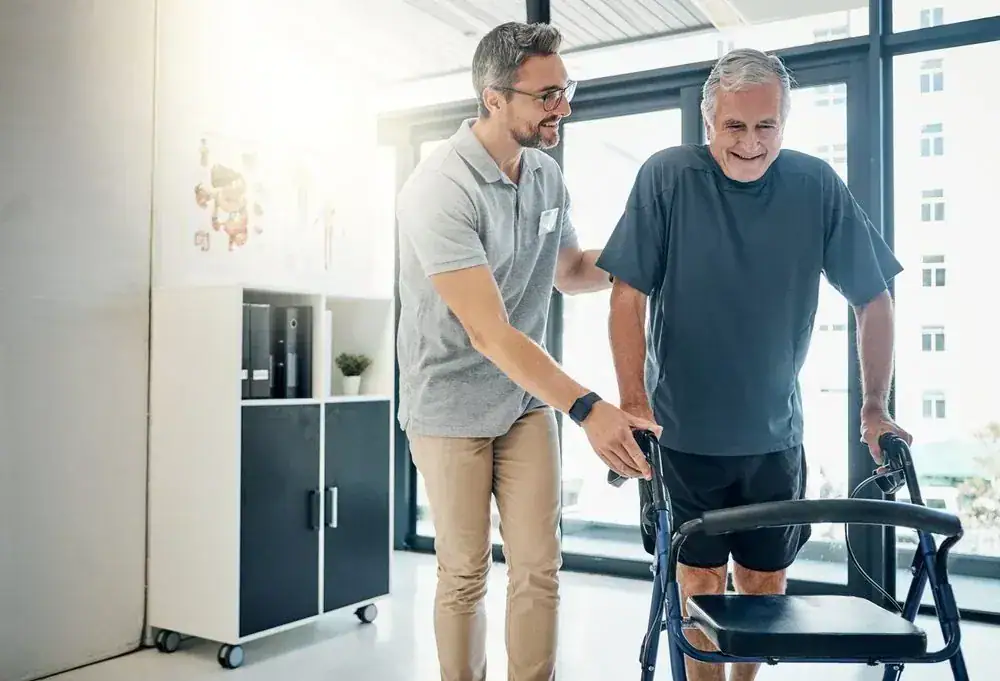
Physical therapy for balance changes that. With the right exercises, you can reduce your fall risk by half. You’ll strengthen the muscles that keep you upright, retrain your brain to react faster, and rebuild the confidence that lets you move through your day without hesitation. Most importantly, you do it at home—no commute, no waiting room, no stress about getting there. Just licensed therapists who come to you, assess your specific risks, and design a plan that fits your body and your goals.
We’ve been providing in-home physical and occupational therapy across Long Island for over a decade. We’re Medicare-certified, locally trusted, and built around one idea: you shouldn’t have to leave your house to get the care you need.
Lido Beach has one of the highest senior populations on Long Island—over 28% of residents are 65 or older. That means more people dealing with balance issues, mobility concerns, and the very real risk of falling. We’ve worked with hundreds of seniors right here in Nassau County who were tired of feeling unsteady and wanted to stay independent without moving into assisted living or relying on family for every errand.
We treat you like family because that’s how care should feel. No rushing, no scripts, no one-size-fits-all programs.

First, a licensed physical therapist comes to your home and does a full fall risk assessment. They’ll look at your medical history, test your current balance and strength, watch how you walk, and talk with you about what’s been hard lately—whether that’s getting out of the shower, going down stairs, or just feeling stable on your feet.
Then they build a plan. It’s not generic senior balance exercises pulled from a handout. It’s a program designed around your body, your home, and your goals. You’ll do strengthening exercises to support your legs and core, balance training that challenges your stability in safe, controlled ways, and gait work to improve how you walk and react when you’re caught off guard.
Sessions happen two to three times a week, usually for eight weeks. Everything is done in your home using minimal equipment. Your therapist tracks your progress, adjusts exercises as you improve, and teaches you what to keep doing long after therapy ends. And yes—if you’re eligible, Medicare typically covers 100% of the cost for home health physical therapy when it’s medically necessary.

Ready to get started?
You get a licensed physical therapist or assistant who specializes in elderly fall prevention. They’re trained to spot the specific deficits—weak hips, slow reflexes, poor posture—that increase your risk. Every session is one-on-one, in your home, on your schedule.
Your program includes strength training to build the muscles that keep you upright, balance exercises for seniors that challenge your stability in sitting, standing, and walking, and coordination drills that help your body respond faster when you start to lose your footing. You’ll also get education on how to make your home safer and what habits to change to lower your risk even further.
Here’s what matters for Lido Beach residents: Nassau County ranks fourth in New York State for fall-related incidents among seniors, and 88% of injury hospitalizations for adults over 65 here are due to falls. The cost of a fall isn’t just physical—it’s financial. The average inpatient visit for a fall injury costs over $18,000. Compare that to a few weeks of Medicare-covered therapy that actually prevents the fall from happening in the first place.
If you’ve fallen in the past year, you’re already at higher risk. But even if you haven’t, there are signs: feeling unsteady when you stand up, needing to hold onto furniture when you walk, avoiding certain activities because you’re afraid you’ll fall, or noticing your balance isn’t what it used to be.
Other risk factors include taking multiple medications, having vision problems, weak legs or hips, dizziness, or living alone. A physical therapist can do a formal fall risk assessment that measures your strength, balance, gait, and reaction time to give you a clear picture of where you stand.
The good news is that most fall risk factors are fixable. Weakness can be strengthened. Balance can be trained. Even fear of falling—which actually increases your risk—can be reduced with the right program.
Yes, if it’s medically necessary. Medicare Part B covers outpatient physical therapy, and Medicare Part A covers home health services when you’re homebound and under a doctor’s care plan. For home-based therapy, Medicare typically covers 100% of the cost if you meet the criteria, compared to 80% for outpatient clinic visits.
You’re considered homebound if leaving your home takes considerable effort—meaning you need a walker, cane, wheelchair, or help from another person. You don’t have to be bedridden. Many of our clients in Lido Beach qualify because they have mobility limitations, balance issues, or difficulty with stairs and transportation.
Your doctor will need to refer you and certify that you need skilled therapy. From there, we handle the rest—verification, scheduling, and coordination with Medicare. There’s no limit on how much Medicare will pay for medically necessary therapy in a calendar year, so if you need more than eight weeks, you can continue as long as you’re making progress.
It depends on your starting point, but most programs include a mix of strength work, static and dynamic balance drills, and functional movement training. Strength exercises target your legs, hips, and core—the muscles that keep you stable. Think seated leg lifts, standing heel raises, or resistance band work.
Balance exercises challenge your ability to stay upright in different positions. You might practice standing on one foot, shifting your weight side to side, or walking heel-to-toe in a straight line. As you improve, your therapist makes it harder—closing your eyes, standing on an uneven surface, or adding head turns while you balance.
Functional training mimics real life. Getting in and out of a chair without using your hands. Stepping over objects. Reaching for something on a high shelf without losing your balance. The goal is to make you stronger and steadier in the situations where falls actually happen—not just in a controlled exercise. Everything is done at your pace, in your home, with your therapist right there to keep you safe.
Most people notice a difference within three to four weeks. You’ll feel steadier on your feet, more confident moving around your house, and less worried about losing your balance. Measurable improvements—like walking speed, strength tests, and balance scores—usually show up around the same time.
The standard program runs eight weeks with sessions two to three times per week, but some people need more or less depending on their baseline and goals. Research shows that consistent balance training over eight weeks can reduce fall risk by 30% to 50%, and those benefits last as long as you keep up with the exercises.
Your therapist will track your progress at every visit and adjust your plan as you get stronger. The end goal isn’t just to finish therapy—it’s to give you the tools and confidence to keep yourself safe long after we’re gone. Many clients continue doing their exercises on their own and see continued improvement months later.
Absolutely. In fact, falling once makes you two to three times more likely to fall again, so starting therapy after a fall is one of the smartest things you can do. Even if you weren’t seriously injured, your body and your confidence both take a hit.
Physical therapy helps you rebuild strength in the areas that failed you during the fall, retrains your balance and reflexes so you’re less likely to go down again, and addresses the fear of falling that often develops afterward. That fear is real, and it’s dangerous—it leads people to move less, which makes them weaker and even more likely to fall.
We also help you figure out why you fell in the first place. Was it a trip hazard in your home? Medication side effects? Weak legs? Poor lighting? Once we know the cause, we can address it directly. Therapy after a fall isn’t about going back to where you were—it’s about making sure it doesn’t happen again.
All of our fall prevention therapy happens in your home. That’s the whole point. If you’re already unsteady or nervous about falling, the last thing you need is to navigate parking lots, waiting rooms, and unfamiliar spaces just to get care.
Home-based therapy is also more effective for fall prevention because we see your actual environment. We can spot the loose rug in your hallway, the poor lighting in your bathroom, or the stairs you avoid. We train you in the space where you actually live, using the furniture and layout you deal with every day.
You also get more personalized attention. It’s just you and your therapist—no shared equipment, no rotating between patients, no distractions. And for many people in Lido Beach, especially those living alone or without easy access to transportation, home therapy is the only realistic option. Medicare recognizes that, which is why home health services are often covered at a higher rate than outpatient clinic visits.
Other Services we provide in Lido Beach