
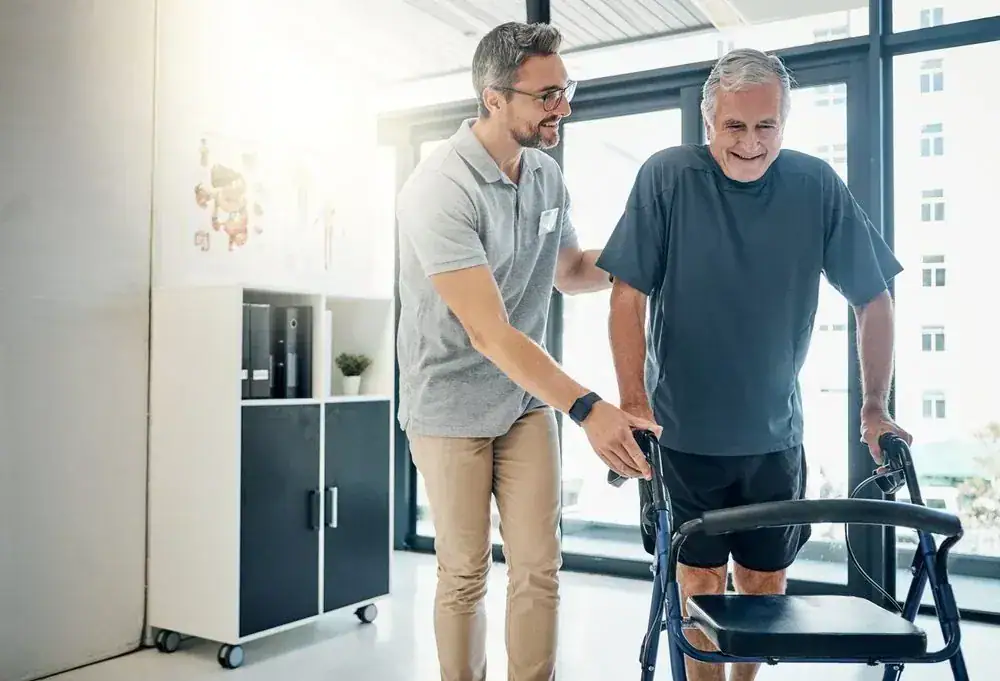
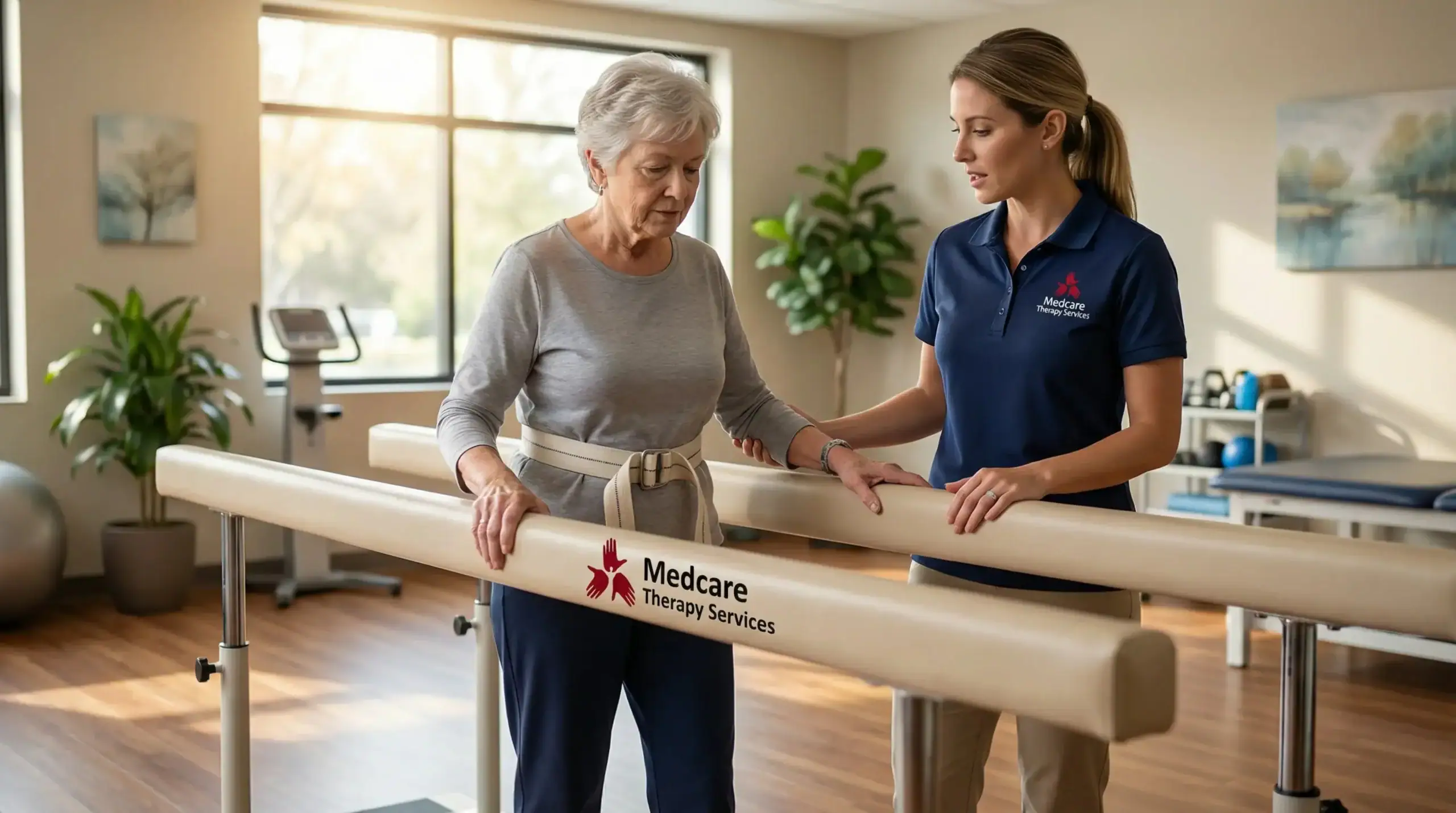
You stop second-guessing every step. Getting the mail, walking to the kitchen at night, reaching for something on a shelf—these everyday movements stop feeling like calculated risks.
Balance training isn’t about becoming an athlete. It’s about walking with confidence again. Research shows that regular balance exercises for seniors can cut fall risk in half, and the benefits go beyond physical stability. You move faster, feel steadier, and that constant background worry about falling starts to fade.
Here’s what actually happens: your muscles relearn how to respond quickly when you shift weight or step on uneven ground. Your brain gets better at processing where your body is in space. The exercises are specific, progressive, and designed around how you move in your actual home—not a gym. You’re training for real life, in the place where it matters most.
We’ve been providing in-home physical therapy across Nassau County for over 14 years. Every therapist on our team is licensed, Medicare-certified, and trained specifically in elderly fall prevention and balance rehabilitation.
Levittown’s senior population—nearly 8,540 residents aged 65 and older—faces the same challenge seen across Long Island: falls are the leading cause of injury hospitalizations for older adults in Nassau County, accounting for 88% of cases. That’s not a statistic you can ignore when you’re the one feeling unsteady.
We work with patients who find it difficult or impossible to get to a clinic. Transportation is a barrier. Winter weather is a barrier. Sharing a therapist’s attention with three other people in a busy facility is a barrier. In-home care removes all of that. You get one-on-one attention, in your own space, with the equipment and environment that actually matter to your daily safety.

It starts with a fall risk assessment in your home. A licensed physical therapist evaluates your strength, balance, gait, and the layout of your living space. They’re looking at how you move through doorways, navigate stairs, and handle transitions between rooms—the real-world scenarios where falls happen.
From there, you get a personalized treatment plan. This isn’t a generic sheet of exercises. It’s a program built around your specific weaknesses, your goals, and your home environment. Sessions typically run three or more days per week, 45 minutes or longer, because that’s the frequency research shows actually reduces fall risk.
You’ll work on strength, flexibility, and balance training using equipment we bring to your home. Your therapist will also recommend modifications—grab bars, lighting changes, clutter removal—that make your space safer. Medicare Part B and most Medicare Advantage plans cover these services when medically necessary, and we handle the billing and verification directly. You focus on getting stronger. We handle the rest.

Ready to get started?
You’re getting more than a few stretches and a handout. Each session includes targeted senior balance exercises designed to improve stability, reaction time, and confidence. These are evidence-based movements—weight shifts, single-leg stands, step training, coordinated arm and leg patterns—that directly address the physical changes that increase fall risk as you age.
Your therapist brings balance training tools and adaptive equipment as needed. You’ll also receive education on fall prevention techniques you can use every day: how to get up safely if you do fall, how to navigate your home more securely, and how to maintain the strength gains you’re building.
Nassau County sees some of the highest fall-related injury rates in New York State, and Levittown is no exception. The combination of an aging population and older housing stock—many homes built in the 1940s and 50s without modern safety features—creates real risk. In-home therapy addresses both sides: it strengthens your body and makes your environment safer. That’s a more complete approach than clinic-based care can offer.
Yes. Medicare Part B covers outpatient physical therapy when it’s medically necessary, and that includes in-home services for balance issues and fall prevention. Most Medicare Advantage plans offer the same coverage.
Here’s what that means in practice: if your doctor orders physical therapy for balance problems, gait instability, or a history of falls, Medicare will typically cover your sessions. You’ll have a copay or coinsurance depending on your specific plan, but the therapy itself is a covered benefit. We verify your coverage before starting and handle all billing directly with Medicare.
The key is medical necessity. If you’re experiencing balance problems, difficulty walking, fear of falling, or you’ve already had a fall, that’s usually enough to qualify. Your physician writes the referral, and we take it from there.
Most people notice improvements in confidence and steadiness within four to six weeks of consistent therapy. Physical changes—measurable gains in balance, strength, and walking speed—typically show up around the same timeline.
But here’s the reality: it depends on where you’re starting. If you’ve been sedentary for months or you’re recovering from an injury, it might take longer. If you’re relatively active but dealing with age-related balance decline, you might see progress faster. The research is clear that programs running three or more days per week, 45 minutes or longer per session, deliver the best outcomes.
What you’ll notice first is usually psychological. You’ll feel less anxious about walking to the bathroom at night or stepping off a curb. That confidence matters—it keeps you moving, and movement is what drives physical improvement. The strength and stability gains follow, but the mental shift often comes first.
You’re training in the environment where you actually need to be stable. Your home has the specific stairs, flooring, lighting, and layout that affect your balance every single day. A clinic can’t replicate that.
In-home therapy also means one-on-one attention for the full session. You’re not sharing your therapist with two or three other patients. That focused time allows for more detailed assessment, faster adjustments to your program, and better carryover of what you’re learning.
There’s also the practical side: no transportation, no exposure to illness in waiting rooms, no weather-related cancellations. For many seniors in Levittown, especially during winter, getting to a clinic is legitimately difficult. In-home care removes that barrier entirely. You get better care, more conveniently, in the place where fall prevention actually matters.
You’ll work on exercises that challenge your stability in controlled, progressive ways. That includes single-leg stands, weight shifting side to side and front to back, tandem walking (heel-to-toe), and coordinated movements that require you to move your arms and legs at the same time.
Your therapist will also incorporate strength training—squats, step-ups, resistance band work—because leg and core strength directly support balance. Flexibility exercises help with range of motion, which affects how well you can recover if you start to lose your balance.
The exercises are tailored to your current ability. If standing on one leg isn’t possible yet, you’ll start with supported variations and progress from there. The goal is always to challenge you just enough to create improvement without creating risk. Over time, the exercises get harder as you get stronger, and that progression is what leads to lasting fall prevention results.
Absolutely, and it’s especially important if you have. Falling once doubles your risk of falling again—not because you’re clumsier, but because the fall itself often signals underlying balance or strength problems that haven’t been addressed.
Physical therapy after a fall focuses on identifying why it happened. Was it a strength issue? A balance deficit? Poor reaction time? Environmental hazards in your home? Once your therapist pinpoints the cause, they build a program to address it directly.
There’s also a psychological component. Many people develop a fear of falling after their first fall, and that fear leads to reduced activity. You move less, which makes you weaker, which increases fall risk even more. It’s a cycle. Therapy breaks that cycle by rebuilding your physical capability and your confidence at the same time. You’re not just recovering from the fall—you’re preventing the next one.
You need a physician’s referral for physical therapy. If you’re already seeing a doctor for balance issues, falls, or mobility problems, ask them to write an order for in-home physical therapy. If you haven’t brought it up yet, do—especially if you’ve fallen, feel unsteady, or you’re avoiding activities because you’re worried about falling.
Once we receive the referral, we verify your Medicare or insurance coverage and schedule your initial evaluation. A licensed therapist comes to your home, assesses your balance and fall risk, and creates your treatment plan. From there, you’ll typically have sessions three times per week or more, depending on your needs and your doctor’s orders.
The whole process is straightforward. We’ve been doing this in Nassau County since 2010, and we handle the insurance coordination and scheduling logistics. Your job is to show up—which, in this case, just means being home. We take care of the rest and focus on getting you steadier, stronger, and safer.
Other Services we provide in Levittown