
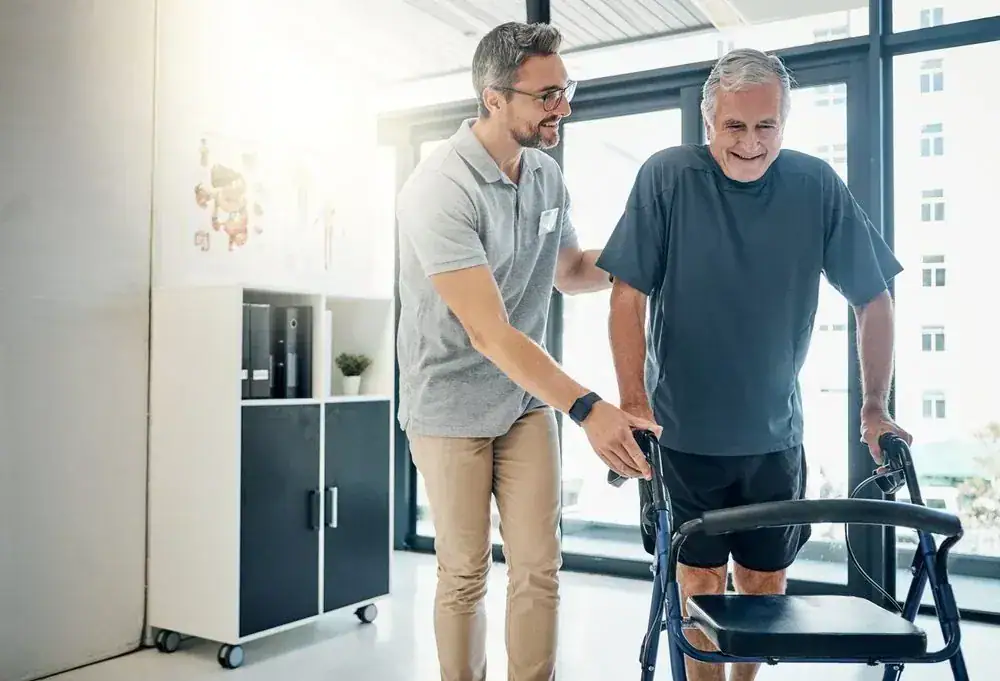
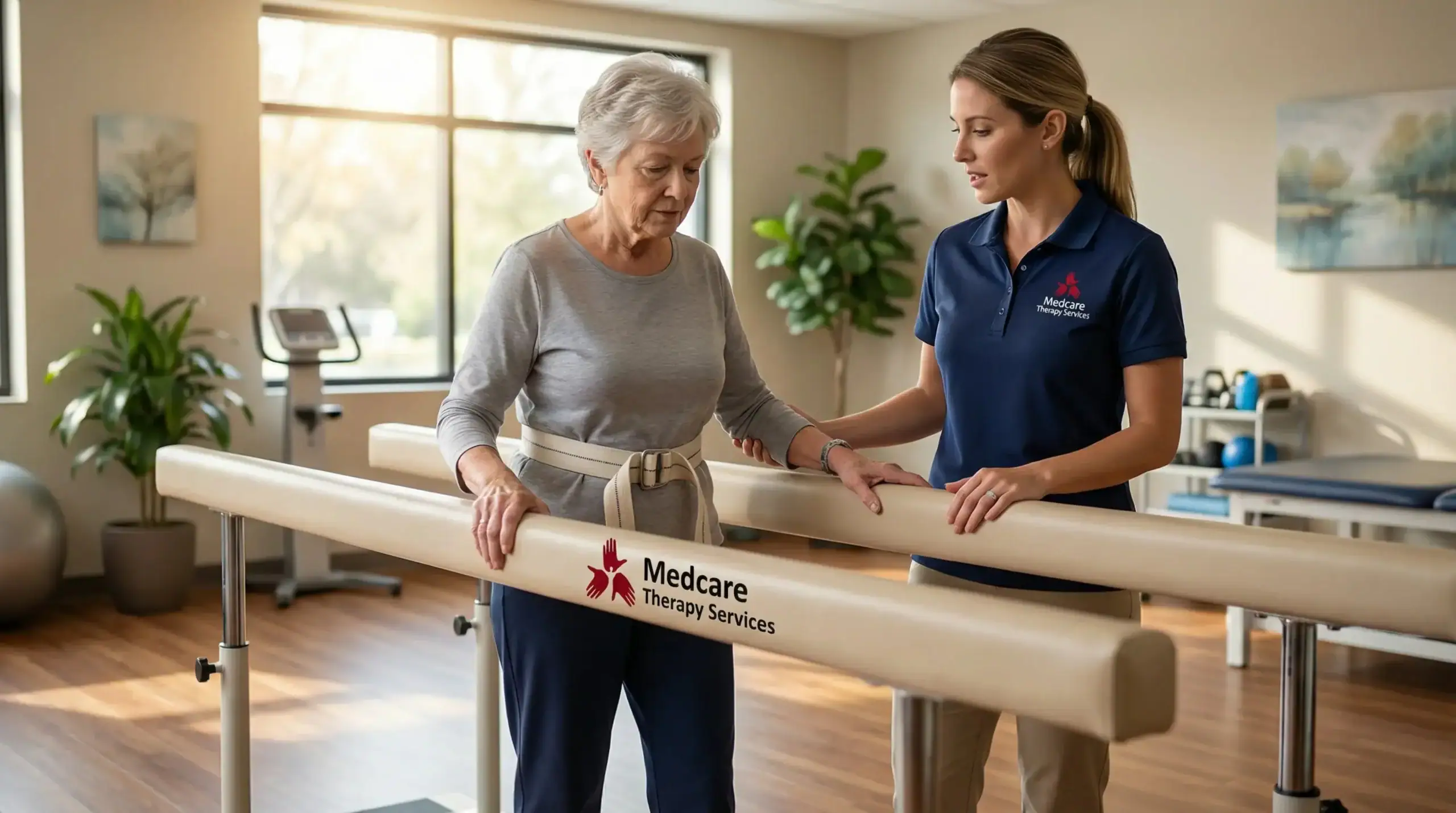
You stop planning your day around what’s safe and start doing what you actually want to do. That’s what happens when your balance improves and your confidence comes back.
Falls aren’t just painful. They change how you live. You avoid stairs, skip the grocery store, turn down invitations. The fear becomes as limiting as the fall itself.
Physical therapy for balance works because it addresses the actual problem. Weak muscles, poor coordination, slow reaction time. These aren’t inevitable parts of aging. They’re fixable with the right exercises and consistent work.
We come to your home in Laurel and build programs around your specific risks. Strength training for your legs and core. Balance exercises that retrain how your body responds. Gait work that makes walking feel natural again. You’re not doing generic senior exercises. You’re doing what your body needs to stay upright.
Most people see measurable improvement within weeks. Steadier on your feet. Less grabbing for walls. More willing to move around your own home without second-guessing every step.
We’ve been serving Long Island communities like Laurel for over a decade. We’re not new to this. We know the area, we know the risks, and we know what works.
Long Island has higher fall rates than the rest of New York State. Nassau and Suffolk counties rank 4th and 5th statewide for fall-related incidents. That’s not a coincidence. It’s a reality we address every day with evidence-based programs designed specifically for older adults.
Every therapist on our team is licensed, Medicare-certified, and trained in fall prevention protocols. We don’t send someone different every week. You work with the same professional who learns your home, your habits, and your goals. That consistency matters when you’re rebuilding strength and trust in your own movement.

First, we come to your home in Laurel and do a full evaluation. We’re looking at your balance, your strength, your gait, your medications, and your environment. We need to know what’s increasing your risk before we can reduce it.
Then we build your program. It’s not a printout of generic exercises. It’s a plan based on your evaluation, your goals, and what you’re physically capable of doing right now. If you’ve already fallen, we account for that. If you’re scared to move, we start there.
Sessions happen in your home, usually two to three times per week depending on what Medicare approves and what you need. You’ll do strengthening work, balance drills, and coordination exercises. We also walk through your home and point out hazards you might not notice—rugs, lighting, furniture placement.
Progress gets tracked. We’re measuring how long you can stand on one foot, how steady you are when you turn, how much strength you’re building. You’ll feel the difference before you see the numbers, but the numbers confirm it.
Most programs run eight to twelve weeks. Some people need more time, some need less. What matters is that you’re measurably stronger and more stable than when you started.

Ready to get started?
You get one-on-one sessions with a licensed physical therapist in your own home. No driving to a clinic, no waiting rooms, no sharing equipment with strangers. Everything happens where you live.
Your program includes targeted balance exercises, strength training for your legs and core, and gait training to improve how you walk. We also teach you how to get up if you do fall, because knowing you can recover reduces fear as much as preventing the fall itself.
We evaluate your home for fall risks. About 60% of fall-related hospitalizations happen at home, and most of those are preventable. We’ll point out loose rugs, poor lighting, unstable furniture, and other hazards that increase your risk every day.
You’ll also get education on how your medications affect your balance, what symptoms to report to your doctor, and how to stay active safely between sessions. Fall prevention isn’t just about exercises. It’s about understanding your body and your environment.
Medicare covers these services when they’re medically necessary, and we accept most commercial insurance plans. We handle the billing and verification so you can focus on getting stronger. Laurel residents have the same access to quality in-home therapy as anyone else on Long Island, and we make sure nothing gets in the way of that.

Most people see noticeable improvement in balance and strength within four to six weeks of consistent therapy. That doesn’t mean you’re completely fall-proof in a month, but you’ll feel steadier, move with more confidence, and react better when you lose your balance.
The research backs this up. Evidence-based fall prevention programs can reduce your fall risk by 30 to 35 percent when you stick with them. That’s a significant drop, especially if you’ve already fallen or you’re dealing with conditions like arthritis, Parkinson’s, or the lingering effects of a stroke.
What slows people down is inconsistency. If you skip sessions or don’t do the exercises between visits, progress stalls. Your therapist will give you homework—simple movements you can do safely on your own. Doing them matters. The people who improve fastest are the ones who treat this like the medical intervention it is, not optional activity.
You’ll do exercises that challenge your balance in controlled, safe ways. That might mean standing on one foot while holding a counter, walking heel-to-toe in a straight line, or shifting your weight side to side. These aren’t complicated, but they’re specific to what your body needs.
Strength work is just as important. You’ll do exercises that build up your legs, hips, and core—the muscles that keep you upright. Sit-to-stand repetitions, leg lifts, and resistance work with bands are common. Your therapist will adjust the difficulty as you get stronger.
You’ll also work on coordination and reaction time. That means exercises where you have to respond to a change—stepping over an object, turning quickly, reaching for something while standing. Real life doesn’t happen in slow motion, so your therapy shouldn’t either. Everything is progressed gradually so you’re challenged but never unsafe.
Yes, Medicare Part B covers outpatient physical therapy for fall prevention when it’s medically necessary. That usually means you’ve fallen recently, you’re at high risk of falling, or you have a condition that affects your balance and mobility.
Your doctor will need to refer you, and we’ll verify your coverage before starting. Medicare typically covers a set number of sessions per year, and there may be a copay depending on your specific plan. We handle all the billing and authorization paperwork so you don’t have to figure it out on your own.
If you have a Medicare Advantage plan or supplemental insurance, coverage can vary. We accept most commercial plans and will confirm your benefits during the intake process. The goal is to make sure cost isn’t the reason you skip therapy that could literally prevent a life-changing injury.
Your therapist sees the actual environment where you’re at risk. They’re not guessing what your bathroom looks like or how steep your front steps are. They’re standing in your home, watching you navigate the spaces where falls actually happen.
That means the program is more relevant. If you’re unsteady in your kitchen, we work on that. If getting out of your chair is hard, we address it. You’re not doing exercises that look good in a clinic but don’t translate to real life.
There’s also the practical side. If leaving your home is difficult—whether that’s due to mobility issues, transportation problems, or just anxiety about going out—in-home therapy removes that barrier. You’re more likely to stick with a program that comes to you. And consistency is what gets results. For Laurel residents who find it hard to travel, this isn’t just more convenient. It’s often the difference between getting help and going without.
If you’ve already fallen in the past year, your risk is high. That’s the clearest indicator. But there are other signs: you feel unsteady when you walk, you grab onto furniture or walls for support, you avoid certain activities because you’re afraid of falling, or you take four or more medications daily.
Certain medical conditions increase your risk significantly. Parkinson’s disease, stroke, arthritis, osteoporosis, and vision problems all affect your balance and coordination. So does muscle weakness, which is common if you’ve been less active or recovering from an illness.
Your home environment matters too. Poor lighting, loose rugs, clutter, uneven flooring, and stairs without railings all make falls more likely. During your evaluation, we assess both your physical risk factors and your home setup. You might be stronger than you think but living in a space that’s working against you. Or the opposite—your home is fine, but your body needs work. We figure out which it is and build your program accordingly.
Yes. In fact, people who’ve fallen before often see some of the most dramatic improvements because there’s clear room to build strength and balance. You’re not starting from zero—you’re starting from a place where your body has already shown you what needs fixing.
Programs like the Otago Exercise Program, which includes 17 specific strength and balance exercises, were designed for exactly this situation. They’re most effective for older adults who’ve fallen recently or feel unsteady on their feet. The exercises are progressive, meaning they start where you are and get harder as you improve.
What’s important is addressing why you fell, not just reacting to the fact that it happened. Was it muscle weakness? Poor balance? A medication side effect? A hazard in your home? We identify the cause and treat it directly. That’s how you go from someone who falls regularly to someone who moves confidently and independently again. It’s not about luck. It’s about targeted intervention that actually works.
Other Services we provide in Laurel