
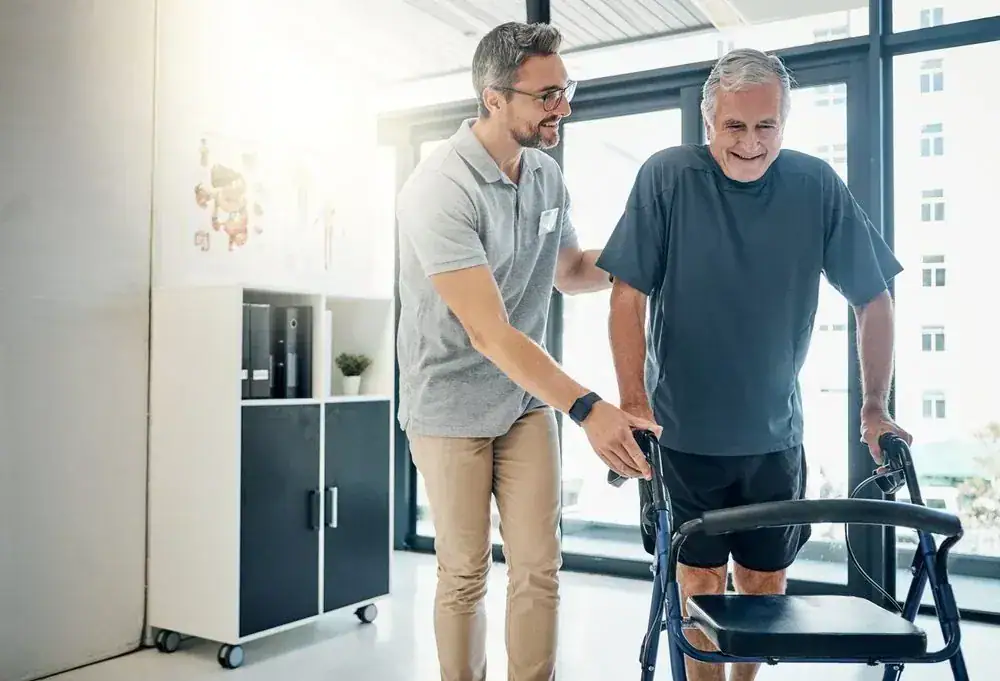
You walk with less hesitation. Getting up from a chair doesn’t require a mental pep talk. You move through your home without mapping out each step or gripping the wall.
That’s what happens when balance exercises for seniors are built specifically for your body, your home, and your actual daily routine. Not generic stretches from a handout. Not one-size-fits-all advice that doesn’t account for your kitchen layout or the fact that your bathroom has terrible lighting.
Most people who fall once will fall again. But physical therapy for balance changes that pattern. You rebuild the strength in your legs and core. You retrain how your body responds when you lose your footing. You learn to catch yourself before a stumble becomes a hospital visit.
The outcome isn’t just fewer falls. It’s fewer moments where you second-guess yourself. Fewer times your kids call to check in because they’re worried. Fewer reasons to avoid the activities that make your life feel like yours.
We’ve been serving Lake Grove and the surrounding Suffolk County communities for over 14 years. We’re Medicare-certified, which means your therapy is likely covered. We’re Otago fall prevention specialists, which means we’re trained in the specific protocols that actually reduce fall risk.
But what matters more than credentials is this: we come to your home. We see the uneven threshold between your bedroom and hallway. We notice the rug that slides. We assess your balance where it actually matters—not in a clinic with flat floors and bright lighting.
Lake Grove has one of the higher senior populations on Long Island, and we’ve worked with hundreds of residents who want to age in place safely. We treat you like family because that’s how small practices survive—by doing right by people who trust us enough to let us into their homes.

First, we assess your fall risk. That means testing your balance, gait, strength, and reaction time. We also walk through your home and identify hazards—loose rugs, poor lighting, furniture placement, bathroom setup. This isn’t a clipboard checklist. It’s a real conversation about where you feel unsteady and what scares you.
Next, we build your program. Senior balance exercises that match your current ability and your specific risks. If you’ve already fallen, we address what caused it. If you haven’t but you’re afraid you will, we work on prevention. Exercises happen in your home, using your furniture, your stairs, your actual environment.
Then we show up. Usually twice a week to start. We guide you through strengthening and balance training. We adjust as you improve. We also teach your family what to watch for and how to help without hovering.
Over time, you get stronger. Your balance improves. You move with more confidence. And when the program ends, you have a routine you can maintain on your own. We don’t disappear—we just step back and let you take over.

Ready to get started?
You get a full fall risk assessment that covers balance, strength, gait, vision, medication review, and home safety. We test how you move in real scenarios—standing from a chair, walking on carpet, turning quickly, reaching for something on a shelf.
You also get a personalized exercise plan. These aren’t balancing exercises pulled from a generic senior fitness guide. They’re based on your specific risks and abilities. If your ankles are weak, we strengthen them. If your reaction time is slow, we work on that. If you’re afraid of falling backward, we train that exact movement pattern.
In Lake Grove, many of our clients live in single-family homes with stairs, basements, and yards. We account for that. We train you on your stairs. We assess your outdoor walkways. We make recommendations for lighting, handrails, and grab bars that actually make sense for your space.
And yes, this is covered by Medicare for eligible patients. You’re not paying out of pocket for something your doctor recommends and your insurance already covers.

If you’ve fallen in the past year, you need it. Falling once doubles your chance of falling again, and the second fall is usually worse than the first.
But you don’t have to wait for a fall. If you feel unsteady when you walk, if you grab onto furniture or walls for support, if you avoid certain activities because you’re afraid of losing your balance—those are signs. If you’ve had a recent hospital stay or surgery that left you weaker, that’s another reason.
Your doctor can refer you. So can a family member who’s noticed you’re moving differently. And if you’re over 65 and you’ve noticed any change in your balance or strength, it’s worth getting assessed. The earlier you start, the easier it is to prevent a fall instead of recovering from one.
We’re trained specifically in fall prevention protocols, including the Otago Exercise Program, which is one of the most researched and effective fall prevention methods available. That’s not standard physical therapy. It’s specialized.
We also come to your home, which means we’re assessing and treating you in the environment where you actually live. A clinic can’t replicate your bathroom layout, your lighting, your rugs, or your stairs. We see the real risks and train you in the real space.
And we focus on function, not just strength. You’re not doing exercises for the sake of exercises. You’re training to get out of bed safely, walk to the mailbox confidently, and move through your day without fear. Every movement we teach has a direct connection to something you do every day.
Yes, if you’re eligible and your doctor refers you. Medicare Part B covers outpatient physical therapy, which includes fall prevention programs when they’re medically necessary.
You’ll need a referral or prescription from your physician. Once we have that, we handle the billing and work directly with Medicare. Most patients pay little to nothing out of pocket, depending on their plan and whether they’ve met their deductible.
We’ve been Medicare-certified since 2010, so we know the process. We’ll walk you through what’s covered, what your responsibility is, and how many sessions are typically approved. No surprises. No hidden costs. Just clear information so you can make a decision without worrying about the bill.
Most programs run between 6 and 12 weeks, depending on your starting point and your goals. If you’re recovering from a fall or surgery, it might take longer. If you’re relatively strong but need balance training, it might be shorter.
We typically start with two sessions per week. Each session is about 45 minutes to an hour. As you improve, we may reduce frequency and shift toward a maintenance plan you can do on your own.
The goal isn’t to keep you in therapy forever. It’s to get you strong and confident enough to manage your own safety. We teach you what to do, we make sure you can do it correctly, and then we step back. You’ll know when you’re ready because you’ll feel the difference in how you move.
It’s not too late. Even if you’ve fallen multiple times, fall prevention therapy can reduce your risk going forward. We’ve worked with clients who’ve had serious falls and were afraid to move. They got stronger. They rebuilt confidence. They stayed home.
The key is addressing why you’re falling. Is it muscle weakness? Poor balance? Medication side effects? Vision problems? Environmental hazards? Usually it’s a combination. We figure out what’s contributing and we address each factor.
You might need more time than someone who hasn’t fallen yet. You might need more support. But the alternative—doing nothing—means the falls will keep happening. And each one increases your risk of a hospital stay, a fracture, or losing your independence entirely. So no, it’s not too late. It’s just more urgent.
No. Prevention is just as important as recovery. If you’re noticing changes in your balance, strength, or confidence, that’s the right time to start—before a fall happens.
A lot of people wait until after they’ve fallen to get help. But by then, you’re dealing with injuries, fear, and a longer recovery. It’s much easier to prevent a fall than to bounce back from one, especially if you’re over 70.
We work with people who’ve never fallen but are worried. We work with people whose doctors recommended therapy after noticing gait or balance issues. We work with people whose families are concerned. You don’t need to wait for something bad to happen. You just need to recognize that your body isn’t moving the way it used to—and that’s enough.
Other Services we provide in Lake Grove