
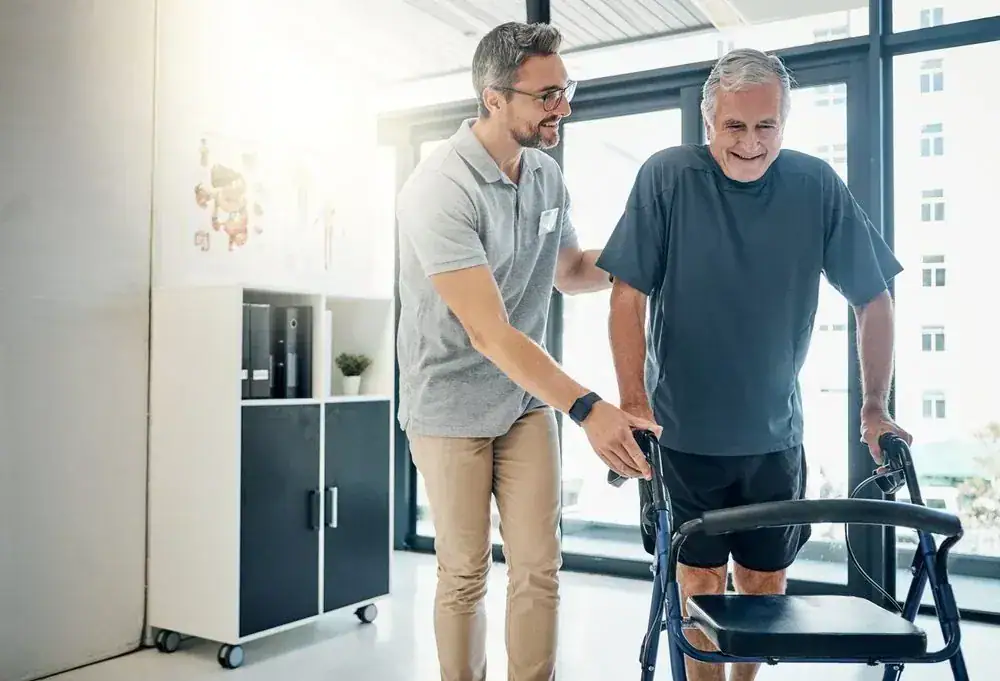
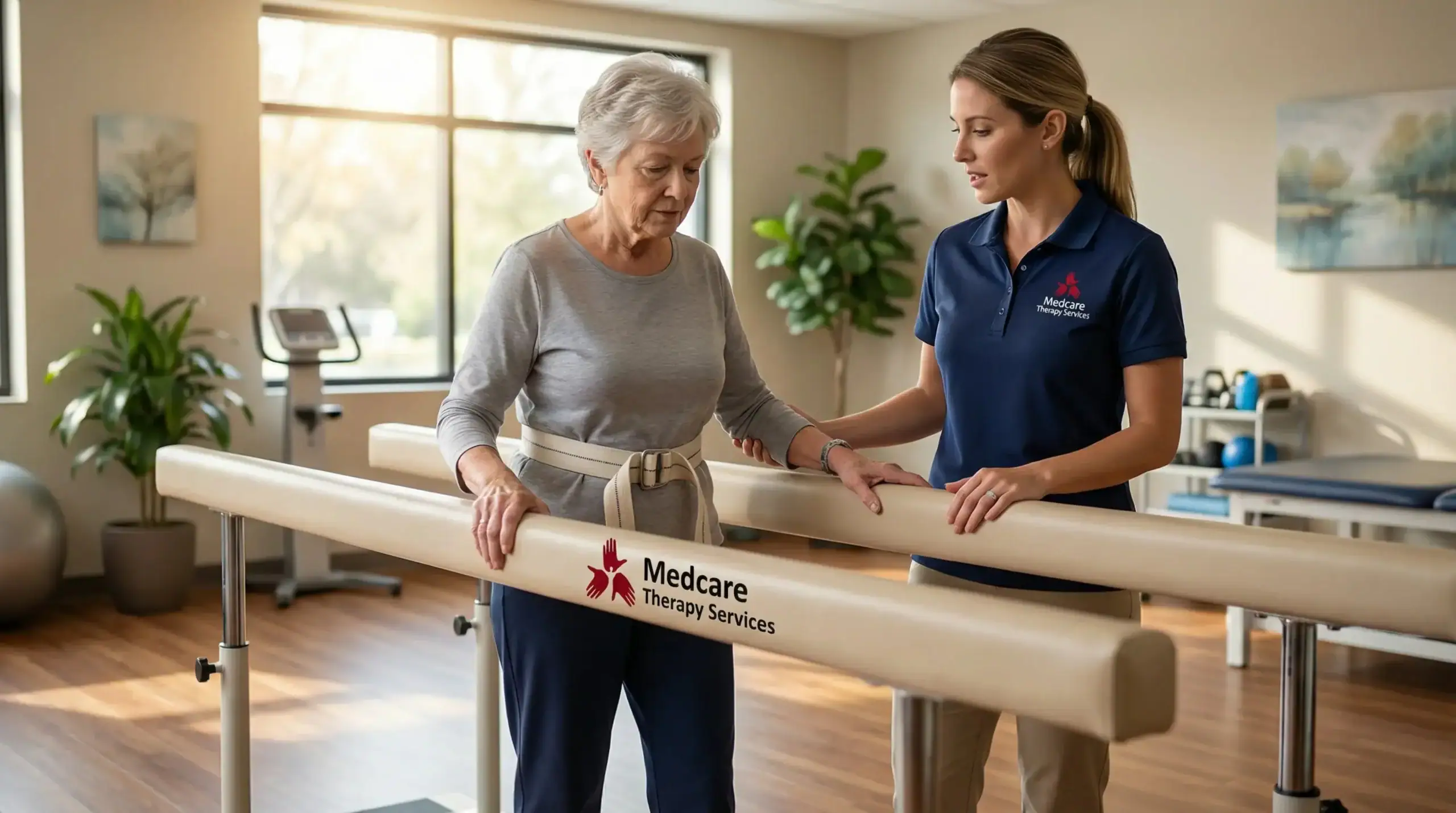
You stop second-guessing every step. Getting up from a chair doesn’t require a strategy. Walking to the mailbox or moving around your kitchen feels normal again, not risky.
That’s what happens when you work with a licensed therapist who understands how balance actually works. Not just generic exercises you could find online, but a program built around your specific weaknesses—whether that’s leg strength, coordination, or confidence after a close call.
Here’s what matters: nearly one-third of adults over 65 fall each year, and most of those falls happen at home. In Nassau County alone, 88% of injury hospitalizations for older adults are fall-related. You’re not overreacting by wanting to address this. You’re being smart.
Physical therapy for balance isn’t about making you feel old. It’s about keeping you from becoming less capable than you actually are. Strength training and balance exercises can reduce your fall risk by 30 to 50 percent. That’s not a small number when a single fall can mean a hospital stay, rehab, or losing the ability to live independently.
We’ve been providing home-based physical therapy across Long Island for over a decade. We’re Medicare-certified, locally operated, and our therapists are licensed professionals who treat patients in Huntington, Dix Hills, Commack, Northport, and throughout Nassau and Suffolk Counties.
We’re not a corporate chain. We don’t rotate therapists every visit or hand you a sheet of exercises and disappear. You get consistent care from someone who knows your name, your home layout, and what you’re actually dealing with.
Long Island has some of the highest fall rates in New York State. Nassau and Suffolk rank 4th and 5th statewide for fall prevalence. That’s not a coincidence—it’s a reality shaped by an aging population, multi-level homes, and the desire to stay independent as long as possible. We built our fall prevention program specifically for that reality.

First, your doctor refers you for home physical therapy. Medicare covers it when it’s medically necessary, which fall risk absolutely qualifies as. No need to drive anywhere or navigate a clinic waiting room.
A licensed therapist comes to your home and does a full assessment. They’re looking at your strength, balance, gait, how you move between rooms, and whether your environment is creating unnecessary risk. This isn’t a checklist—it’s a conversation about what’s hard, what’s scary, and what’s changed.
From there, you get a personalized plan. That might include strength exercises to stabilize your legs and core, balance training to improve your reaction time, and gait work to make your steps more controlled. Everything happens in your space, using your furniture, your stairs, your actual daily environment.
Sessions typically happen two to three times per week. You’ll also get exercises to do between visits, because consistency is what creates results. Your therapist adjusts the plan as you improve, and they’re checking in on how you’re feeling—not just physically, but mentally. Fear of falling is real, and it makes everything worse. We address that too.

Ready to get started?
You get one-on-one sessions with a licensed physical therapist in your home. That includes gait and balance training, therapeutic exercises for leg strength and coordination, and mobility work that’s specific to how you move through your day.
Your therapist will also evaluate your home for fall hazards—loose rugs, poor lighting, furniture placement, bathroom setup. Small changes here make a big difference, and most people don’t realize what’s creating risk until someone with experience points it out.
Medicare covers this when your doctor orders it, and we accept most commercial insurance as well. There’s no need to worry about whether this is “worth it” financially. If you qualify medically, coverage handles it.
Here’s the local context: Huntington’s population skews older than the national average, with nearly 20% of residents over 65. That number is growing. More importantly, 60% of fall-related hospitalizations happen at home, and 95% of those hospital bills get paid by Medicare or Medicaid. The system is built to prevent falls, not just treat them after they happen. This is exactly the kind of care you should be using.

Yes. Medicare Part B covers home physical therapy when it’s medically necessary and ordered by your doctor. Fall risk qualifies, especially if you’ve had a fall, feel unsteady, or have conditions that affect balance like arthritis, neuropathy, or stroke recovery.
You’ll need a physician’s referral, and the therapy has to be provided by a Medicare-certified agency—which we are. There’s no requirement that you be homebound in the traditional sense, but the service is designed for people who have difficulty leaving home or would benefit more from therapy in their own environment.
Your out-of-pocket cost depends on your specific plan, but Medicare typically covers 80% after you’ve met your deductible. We handle the billing and can walk you through what to expect before we start. Most people are surprised by how accessible this actually is.
It depends entirely on what your assessment shows. If your legs are weak, you’ll do strengthening exercises like sit-to-stand repetitions, heel raises, or step-ups using your stairs. If your balance is the bigger issue, you’ll work on weight shifting, standing on one foot, or controlled movements that challenge your stability.
Gait training is common too—that’s where we work on how you walk, how you turn, and how you recover if you start to lose your balance. A lot of falls happen during transitions: standing up, turning around, stepping over something. We rehearse those moments until they feel automatic again.
Everything is tailored. If you have a walker, we’ll incorporate it. If you’re nervous about certain movements, we’ll build up slowly. The goal isn’t to make you do hard exercises for the sake of it. The goal is to make your daily life feel safer and less effortful.
Most people see meaningful improvement in six to eight weeks, but the timeline depends on where you’re starting and what you’re working on. If you’ve had a recent fall and lost a lot of confidence, it might take longer to rebuild that than to rebuild strength.
Sessions are usually two to three times per week, around 45 minutes to an hour each. You’ll also have exercises to do on your own between visits. The more consistent you are, the faster you’ll notice changes—better stability, less hesitation, more control when you move.
Your therapist will reassess you regularly and adjust the plan as you improve. Some people continue with a maintenance program after the initial phase, especially if they have chronic conditions that affect balance. Others graduate and just keep up with their exercises independently. It’s based on what you need, not a fixed schedule.
It’s not too late. In fact, having a fall is one of the strongest indicators that you need this kind of therapy. After a fall, people tend to move less, which makes them weaker, which increases fall risk even more. It’s a cycle, and physical therapy is designed to break it.
We’ll start with where you are right now. If you’re still recovering physically, we’ll work on rebuilding strength and mobility. If the bigger issue is fear—which is completely normal—we’ll work on that too. Confidence comes back when you prove to yourself that you can move safely again.
The research is clear: people who’ve fallen before are at higher risk of falling again, but structured exercise programs reduce that risk significantly. You’re not stuck with the trajectory you’re on. You can change it, and the sooner you start, the better your outcome will be.
Not at all. A lot of our patients haven’t fallen yet—they just feel unsteady, or they’ve had a close call, or their doctor noticed something during an exam. That’s actually the ideal time to start, before a fall happens and causes real damage.
If you’re avoiding certain activities because you don’t trust your balance, that’s a sign. If you’re holding onto walls or furniture more than you used to, that’s a sign. If you’ve started thinking about how you’ll catch yourself before you even move, that’s a sign.
You don’t need to wait for proof that something’s wrong. Feeling off-balance is enough. We’d much rather work with you before a fall than after one, and Medicare agrees—that’s why prevention is covered. You’re not being overly cautious. You’re being proactive, and that’s exactly the right move.
Because most falls happen at home. If we’re training you in a clinic with flat floors, bright lighting, and grab bars everywhere, we’re not preparing you for your actual environment. Your home has stairs, rugs, dim hallways, and tight corners. That’s where you need to be steady.
Home therapy also removes the barrier of transportation. If getting to appointments is stressful or physically difficult, you’re less likely to stay consistent. We come to you, so that’s not an issue.
There’s also something valuable about having a therapist see how you actually live. They’ll notice things you’ve stopped noticing—a rug that slides, a step you’ve learned to avoid, a chair that’s too low. Those observations lead to changes that make your home safer, and that’s something you can’t replicate in a clinic setting. It’s more personalized, more practical, and for a lot of people, more effective.
Other Services we provide in Huntington