

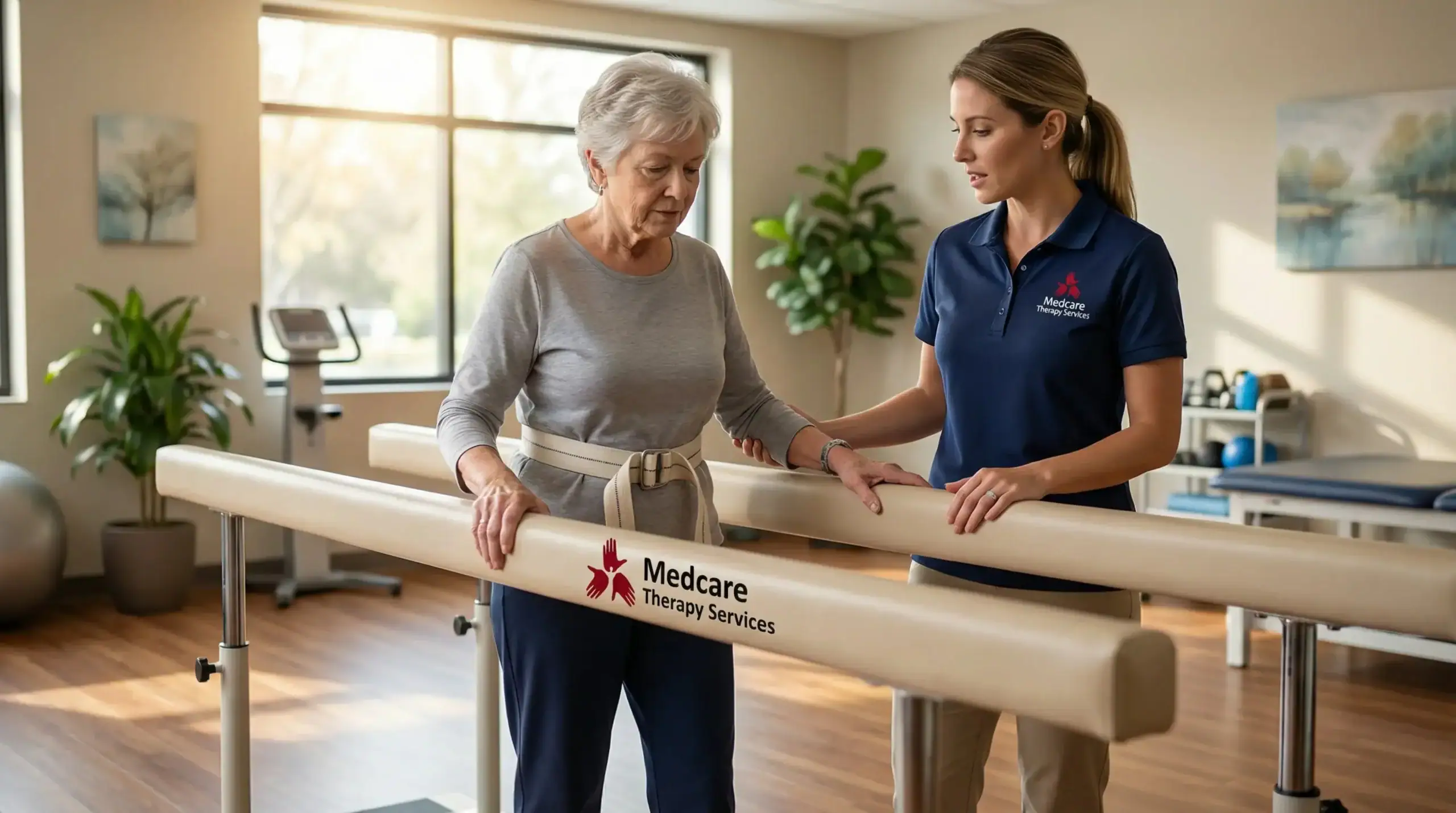
You stop planning your day around what feels safe. You walk to the mailbox without that tight feeling in your chest. You visit your grandkids without worrying whether their house has enough places to grab onto.
That’s what happens when your balance improves and your confidence comes back. You’re not just preventing falls—you’re getting back to the life you had before fear started making decisions for you.
In Suffolk County, fall-related hospitalizations happen at a rate nearly 30% higher than the rest of New York State. That’s over 280 hospitalizations per 10,000 adults over 65. Most of those falls happen at home, in familiar spaces, doing everyday things. The difference between staying independent and ending up in the ER often comes down to whether you addressed the problem before it became an emergency.
Physical therapy for balance isn’t about bubble-wrapping your life. It’s about training your body to catch itself, building the strength to move without second-guessing every step, and learning which risks are real and which ones are just fear talking.
We’ve been treating patients across Long Island for years, including right here in Holbrook and throughout Suffolk County. Our physical therapists are licensed professionals who specialize in geriatric care and balance rehabilitation—not generalists trying to do everything.
We work with your doctor, your insurance, and your family to create a plan that actually fits your life. Our Google Business Profiles are verified, our patient data is HIPAA-compliant, and our locations are managed with the kind of attention to detail that matters when you’re trusting someone with your health.
You’re not walking into a clinic that treats you like a number. You’re working with people who understand that falling once changes everything—and that preventing the next one is about more than just exercises.

You start with a fall risk assessment. We look at your balance, your gait, your strength, and your history. If you’ve fallen before, we want to know what happened. If you haven’t but you’re scared you will, we want to know why.
From there, we build a treatment plan based on what your body actually needs. That might mean balance exercises for seniors that retrain your reflexes. It might mean strength work to stabilize your hips and core. It might mean gait training so you’re not shuffling or overcompensating.
Sessions are typically scheduled two to three times per week to start, depending on your risk level and insurance coverage. Each session is supervised by a licensed physical therapist who adjusts your program as you improve. You’re not handed a printout and told to figure it out at home.
We also talk about your environment. What’s in your house that’s a hazard? What shoes are you wearing? Are you on medications that affect your balance? Fall prevention isn’t just about what happens in our clinic—it’s about what happens when you leave.

Ready to get started?
You get a full fall risk evaluation that measures your balance, strength, flexibility, and reaction time. This isn’t a questionnaire—it’s a physical assessment that shows us where your risks are.
You get a personalized exercise program designed around your specific needs. Some people need more lower body strength. Some need better proprioception. Some need to work on how they recover when they start to lose balance. Your program is built for you, not copied from a template.
You also get education and support for your family. We teach caregivers how to help without hovering, and we give you strategies to make your home safer without turning it into a hospital room. In Holbrook and across Long Island, many of our patients are still living independently—and our goal is to keep it that way.
We handle insurance coordination, including Medicare coverage for fall prevention therapy. Most patients qualify for covered services, and we’ll walk you through what’s available before you start. You shouldn’t have to choose between your safety and your budget.

If you’ve fallen in the last year, you need it. If you’ve caught yourself from falling multiple times, you need it. If you’re avoiding activities because you’re afraid you’ll fall, you need it.
Here’s the thing: fear of falling is a risk factor for falling. When you start moving less because you’re scared, your balance gets worse, your muscles get weaker, and your risk goes up. It becomes a cycle.
You’re not overreacting if you’re noticing changes in how you move or how confident you feel. Most people wait too long to get help, not too soon. In Suffolk County, thousands of seniors end up hospitalized every year because they didn’t address the problem until after a fall sent them to the ER. You don’t have to be one of them.
You can’t assess your own fall risk accurately, and you can’t design a program around problems you don’t know you have. A physical therapist can see compensations you’ve developed, weaknesses you’re not aware of, and risks you wouldn’t think to address.
Balance exercises you find online are generic. They’re not wrong, but they’re not specific to you. If your problem is hip weakness and you’re doing ankle exercises, you’re wasting time. If you have a vestibular issue and you’re doing the wrong kind of balance work, you could actually make things worse.
We also progress your program as you improve. What’s challenging today won’t be challenging in three weeks, and if you’re not advancing, you’re not getting stronger. A therapist adjusts your plan in real time based on how your body responds. That’s not something you can do on your own, especially if you don’t know what to look for.
Medicare Part B covers physical therapy for fall prevention if it’s medically necessary and prescribed by your doctor. Most patients qualify, especially if you’ve had a fall, you’re at high risk, or you have a condition that affects balance like neuropathy, Parkinson’s, or stroke history.
Private insurance plans vary, but many cover fall prevention under their physical therapy benefits. We verify your coverage before you start so there are no surprises. If you have a copay or coinsurance, we’ll tell you what to expect upfront.
The cost of prevention is a fraction of what a fall costs. Hip fractures alone can run upwards of $19,000 in hospital bills, and that doesn’t include rehab, lost independence, or the long-term complications. Even if you’re paying out of pocket, you’re investing in staying out of the hospital. We’ll work with you to make it manageable.
Most patients start noticing improvements in balance and confidence within four to six weeks if they’re consistent with their sessions. Strength takes a little longer—usually eight to twelve weeks to see significant changes.
That said, everyone’s different. If you’re recovering from a fall or you’ve been deconditioned for a while, it might take longer. If you’re catching the problem early and you’re in relatively good shape, you might progress faster.
The goal isn’t to keep you in therapy forever. It’s to get you strong enough and confident enough that you can maintain your progress on your own. We’ll teach you what to do at home, and we’ll give you a plan to keep going after you’re discharged. Some people come back periodically for a tune-up, and that’s fine. But you’re not locked into endless appointments.
Then fall prevention therapy is even more important, because your risk of falling again is higher now. After a fall, especially one that caused an injury, your body compensates. You start moving differently to protect the injured area, and those compensations throw off your balance.
We work with post-fall patients all the time. Part of your program will focus on recovering from the injury itself—rebuilding strength, restoring range of motion, reducing pain. The other part focuses on preventing the next fall by addressing what caused the first one.
If you fractured a hip, broke a wrist, or ended up hospitalized, your doctor has probably already referred you to physical therapy. If they haven’t, ask. The sooner you start, the better your recovery will be and the lower your risk of falling again. In Holbrook, we see patients at all stages of recovery, and we adjust our approach based on where you’re starting from.
Yes, and those conditions are often part of why you’re at risk in the first place. Arthritis affects your joints and your gait. Diabetes can cause neuropathy, which affects your sensation and balance. Osteoporosis makes a fall more dangerous because your bones are fragile.
We design your program around your conditions, not in spite of them. If you have arthritis, we’re not going to prescribe exercises that inflame your joints. If you have neuropathy, we’ll incorporate exercises that improve proprioception and teach your body to compensate for reduced sensation.
Your conditions don’t disqualify you from fall prevention therapy—they make it more necessary. The patients who benefit most are often the ones with multiple risk factors, because that’s where the danger is highest. We coordinate with your other providers to make sure everything we’re doing supports your overall health plan, not just your balance.
Other Services we provide in Holbrook