
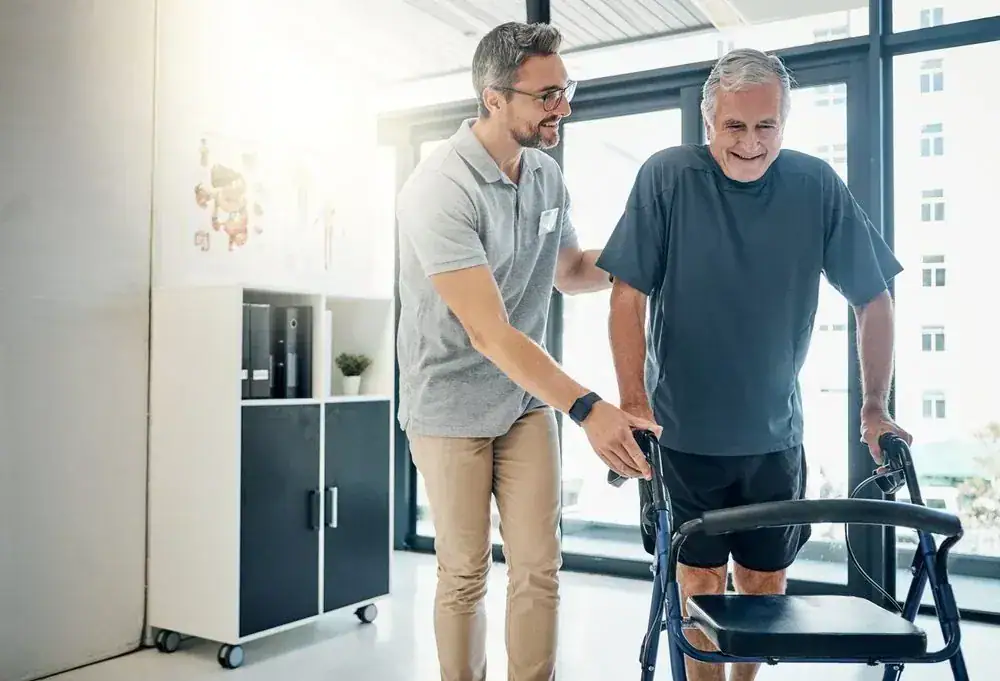
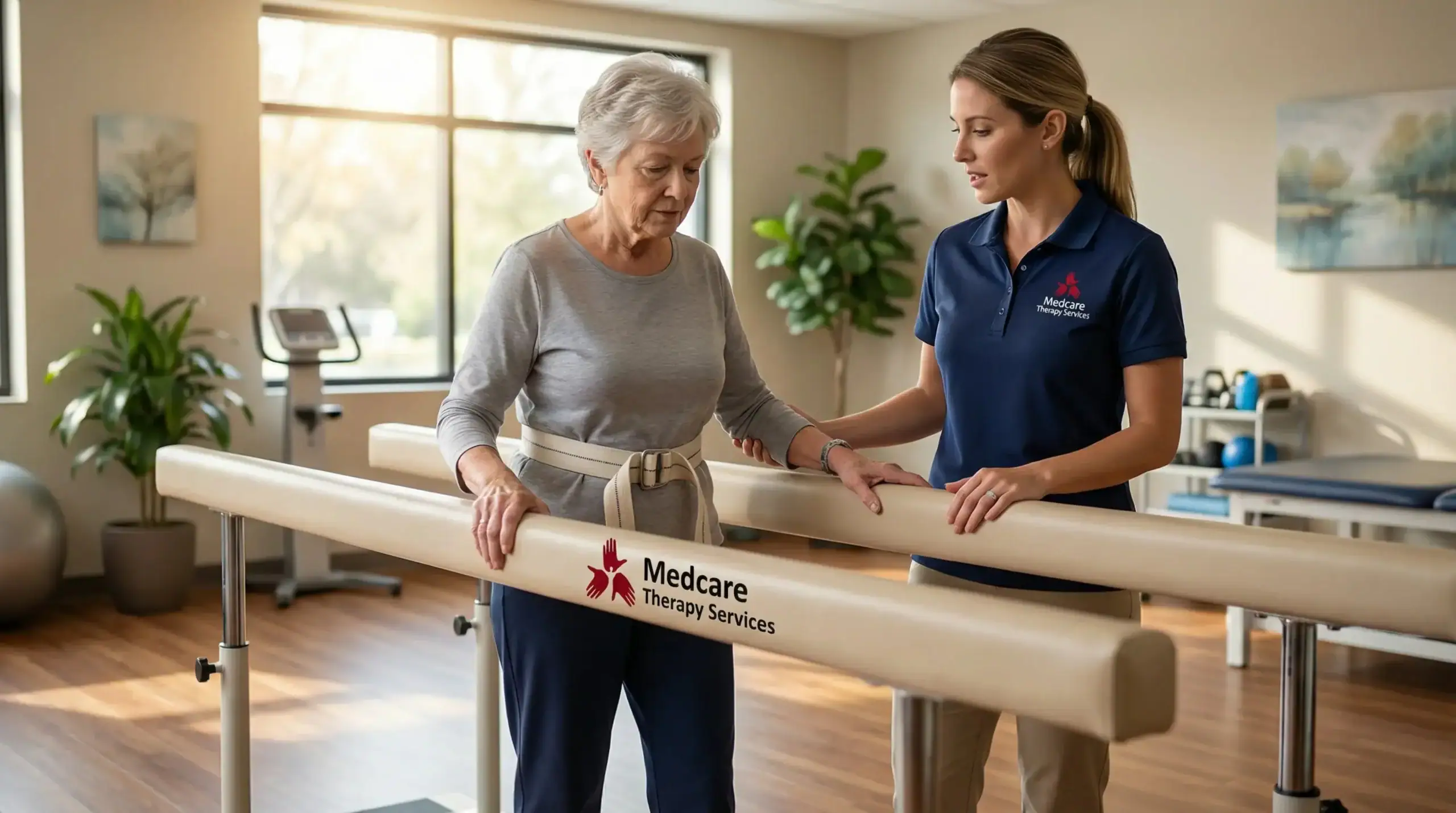
You shouldn’t have to think twice before getting up from your chair or walking to the bathroom at night. That hesitation, that split-second fear before you move—it chips away at your independence faster than any actual fall could.
Balance exercises for seniors aren’t about becoming an athlete. They’re about rebuilding the stability you’ve lost so gradually you didn’t notice until it was gone. We work on the specific movements that matter in your daily life: standing from a seated position, turning to reach something, walking on uneven surfaces, navigating stairs.
The goal is simple. You regain confidence in your body. You stop planning your day around avoiding certain movements. You get back to doing things without asking for help or worrying about what might happen.
Most people who come to us haven’t fallen yet—they’ve just noticed they’re not as steady as they used to be. That’s actually the best time to start. Elderly fall prevention works best before a fall happens, not after.
Medcare Therapy Services has been helping Hicksville residents stay active and independent since our doors opened. Our team includes board-certified geriatric specialists with advanced training in fall prevention and balance disorders—not just general physical therapists who occasionally see older adults.
We know the local challenges. Homes in Hicksville weren’t built with aging in place in mind. Stairs, narrow hallways, older bathrooms—these are the real environments you’re navigating every day. Our programs account for that.
You’ll work one-on-one with the same therapist throughout your care. No rotating staff, no assembly-line treatment. We accept Medicare and most major insurance plans, and our Hicksville location has no stairs at the entrance—wheelchair accessible from the parking lot to the treatment area.
Nassau County is home to over 200,000 older adults, and nearly 26% of them report experiencing a fall in the past year. You’re not alone in this, and you don’t have to figure it out by yourself.
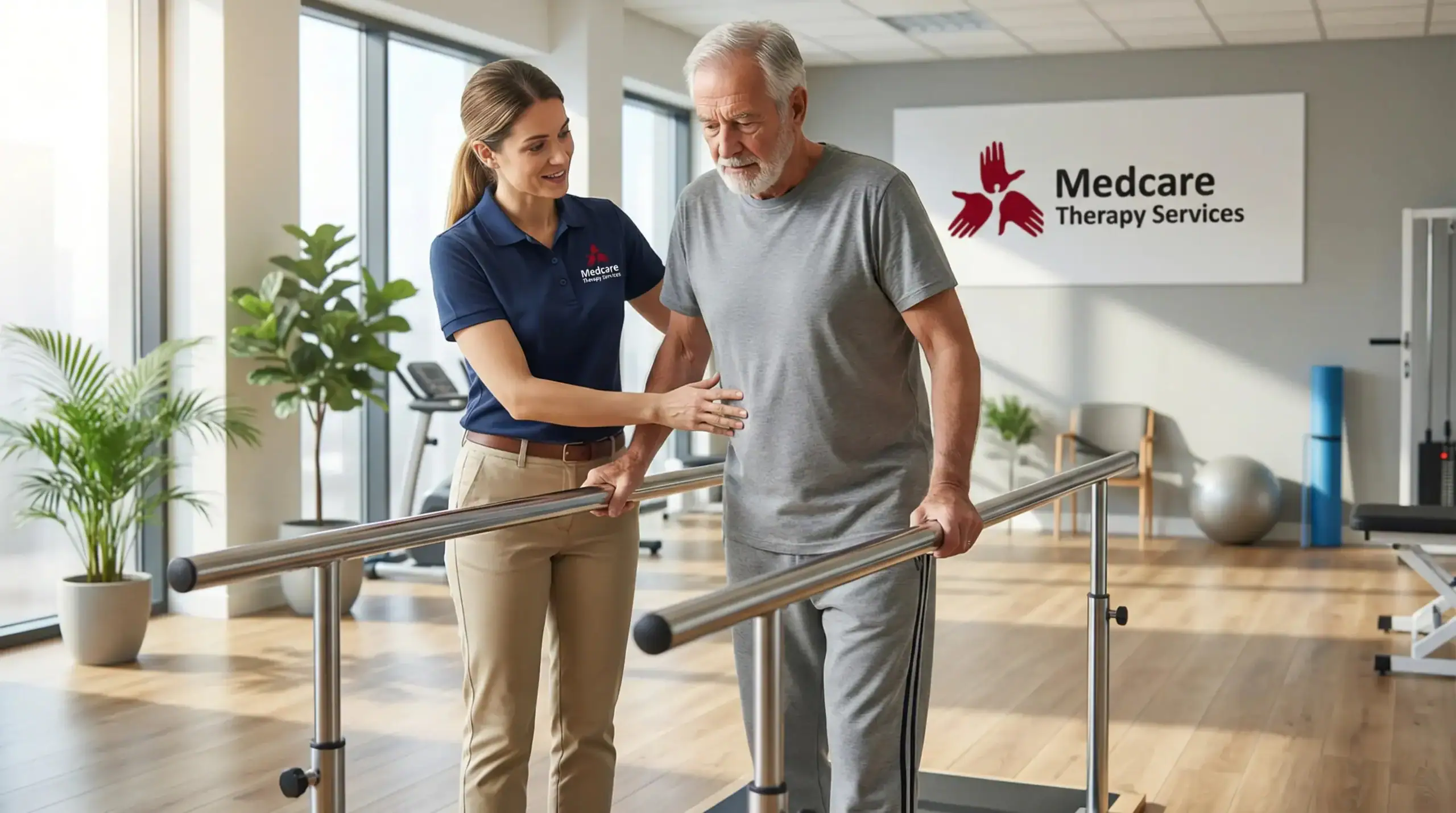
Your first appointment is a fall risk assessment. We evaluate your balance, gait, strength, flexibility, and coordination. We also talk about your home setup, your daily routine, and any near-falls or balance issues you’ve noticed. This isn’t a generic screening—it’s specific to you.
Based on what we find, we build a treatment plan. That usually includes balance training, strength exercises targeting your legs and core, gait training to improve how you walk, and sometimes vestibular therapy if dizziness is part of the picture. Everything is hands-on and personalized.
Sessions typically run twice a week for six to eight weeks, though some people need more or less depending on their starting point. You’ll do exercises here and at home. We’ll also walk through practical changes you can make to reduce hazards in your house—lighting, rugs, bathroom setup.
Progress isn’t always linear, but most people notice improvements within the first few weeks. Better balance. Less fear. More confidence moving around. The goal is to get you to a place where you’re not thinking about falling anymore—you’re just living.

Ready to get started?
You’ll receive a comprehensive fall risk assessment that measures your balance, strength, mobility, and coordination. This isn’t a questionnaire—it’s a physical evaluation that identifies exactly where your vulnerabilities are.
Your treatment plan includes balancing exercises designed specifically for older adults. These aren’t generic stretches. They’re evidence-based movements that target the muscle groups and reflexes that prevent falls. You’ll also work on strength training for your legs, hips, and core—the areas that keep you upright and stable.
Gait training is a major component. How you walk matters. We analyze your stride, your posture, your foot placement, and we correct the patterns that increase fall risk. If dizziness or vertigo is contributing to your instability, we incorporate vestibular therapy to address inner ear and balance system issues.
We also provide a home safety evaluation and recommendations. Small changes—better lighting, removing tripping hazards, installing grab bars—make a significant difference. In Nassau County, more than half of fall-related hospitalizations among seniors happen at home. We help you make your space safer without turning it into a hospital room.
You’ll have access to flexible scheduling, including early morning and evening appointments. If getting to our Hicksville location becomes difficult, we offer telehealth options so you can continue your exercises from home with remote guidance.
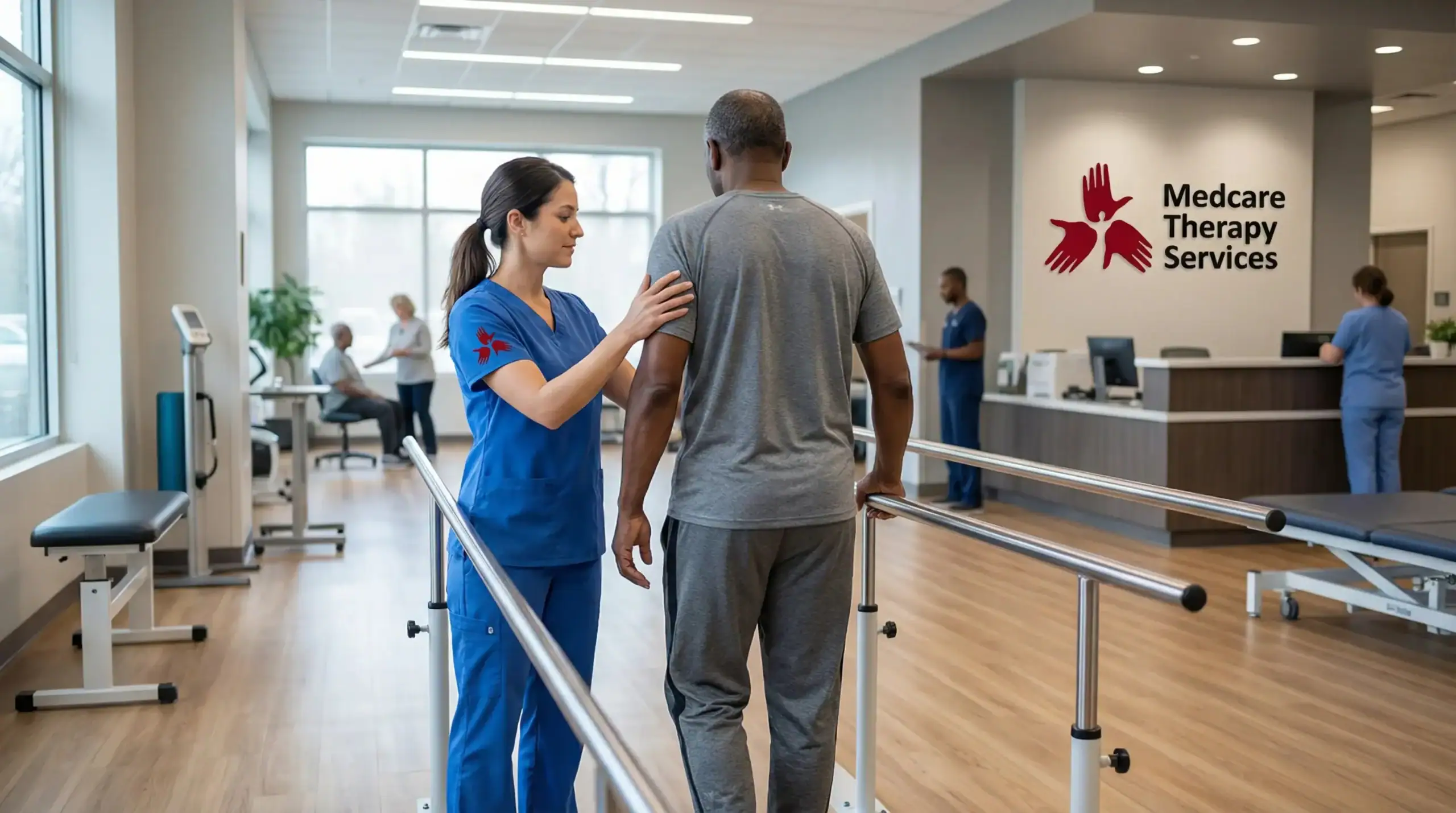
If you’ve noticed any change in your balance, stability, or confidence when moving, you’re not overreacting. Most people who come in haven’t fallen yet—they’ve just noticed they’re holding onto furniture more, avoiding certain movements, or feeling unsteady on their feet.
Other signs include difficulty getting up from a chair without using your arms, trouble walking on uneven surfaces, dizziness when you turn your head quickly, or a fear of falling that’s started to limit what you do. Even one near-fall is worth addressing.
The best time to start fall prevention is before a fall happens. Once you’ve fallen, you’re dealing with injuries, recovery, and often a much longer road back to independence. Prevention is faster, less painful, and far more effective than rehabilitation after the fact.
Generic balance exercises you find online aren’t tailored to your specific limitations, and they don’t progress as you improve. Physical therapy for balance starts with an assessment that identifies exactly where your deficits are—whether that’s strength, coordination, gait abnormalities, or vestibular issues.
We design a program that targets your specific risk factors. If your problem is weak hip muscles, we focus there. If it’s a gait issue, we retrain how you walk. If dizziness is the culprit, we address your vestibular system. You can’t get that level of customization from a YouTube video.
We also monitor your progress and adjust your exercises as you improve. What’s challenging in week one should feel easier by week four, and we’ll advance you to the next level. Doing the same basic exercises at home without progression won’t give you the results you need to actually reduce fall risk.
Plus, we catch compensations and improper form that can make things worse. You might think you’re doing an exercise correctly, but small adjustments in posture or movement can make the difference between effective training and wasted effort.
Most people notice some improvement within two to three weeks. That might be feeling steadier when you stand up, walking with more confidence, or just not thinking about your balance as much during daily activities.
Significant, measurable improvement typically takes six to eight weeks of consistent therapy. That’s when strength gains, coordination improvements, and new movement patterns really start to stick. Some people need longer depending on their starting point and any underlying conditions.
The key is consistency. Coming twice a week and doing your home exercises makes a huge difference. If you skip sessions or don’t practice between appointments, progress slows down considerably.
After you complete the initial program, many people continue with a maintenance plan—either periodic check-ins or a home exercise routine we design for them. Balance and strength require ongoing attention, especially as you age. The good news is that once you’ve built a foundation, maintaining it takes far less effort than building it from scratch.
Medicare Part B covers physical therapy for fall prevention when it’s medically necessary and prescribed by your doctor. That usually means you’ve had a fall, you’re at high risk for falling, or you have a condition that affects your balance or mobility.
We accept Medicare and most major insurance plans, including BlueCross BlueShield and Cigna. Coverage varies depending on your specific plan, deductible, and whether you’ve met your out-of-pocket maximum for the year.
Before your first appointment, we verify your benefits and let you know what your financial responsibility will be. No surprises. If you have a Medicare Advantage plan, coverage can be different from original Medicare, so we check that specifically.
If you don’t have insurance or your plan doesn’t cover the full program, we can discuss payment options. The cost of therapy is significantly less than the cost of a fall-related emergency room visit, hospitalization, or hip fracture surgery—both financially and physically.
It’s not too late. If you’ve already fallen, physical therapy becomes even more important because your risk of falling again is significantly higher. After one fall, your chances of falling a second time increase substantially—partly due to physical factors and partly due to the fear and hesitation that develops.
We start with rehabilitation to address any lingering effects from your fall—whether that’s reduced mobility, weakness, pain, or loss of confidence. Then we transition into fall prevention work to reduce the likelihood of it happening again.
Many people develop a fear of falling after their first fall, which leads to reduced activity. You move less, which makes you weaker, which increases fall risk. It’s a cycle we need to break. Our program rebuilds your physical capabilities and your confidence at the same time.
The statistics are clear: falls among older adults are increasing, but they’re preventable. In 2023, over 41,000 older adults died from falls, and 3.5 million were treated in emergency departments. You don’t have to become part of those statistics. Starting therapy after a fall can prevent the next one.
Yes. Most of our patients have multiple health conditions, and we design programs that account for those limitations. Arthritis, diabetes, neuropathy, osteoporosis, heart conditions—these are common among older adults, and they all affect balance and fall risk in different ways.
If you have arthritis, we modify exercises to avoid aggravating your joints while still building the strength and stability you need. If you have peripheral neuropathy from diabetes, which reduces sensation in your feet, we incorporate specific balance strategies that compensate for that sensory loss.
Our team includes board-certified geriatric specialists who are trained to work with complex medical histories. We coordinate with your physician and other healthcare providers to make sure your therapy plan fits within your overall care.
Having other health conditions doesn’t disqualify you from fall prevention therapy—it makes it more important. Your risk factors are higher, and a fall could have more serious consequences. We meet you where you are and build a program that’s safe, effective, and realistic for your situation.
Other Services we provide in Hicksville