
You stop second-guessing every step. Walking to the mailbox, getting up from a chair, reaching for something on a shelf—these everyday moments stop feeling risky.
That’s what happens when balance exercises for seniors are done right. Your legs get stronger. Your coordination sharpens. You react faster when you lose your footing, and more often than not, you don’t lose it at all.
Falls aren’t just about broken bones. They change how you live. One fall leads to fear. Fear leads to less movement. Less movement makes the next fall more likely. Physical therapy for balance breaks that cycle before it starts—or stops it if it’s already begun. Across Nassau County, where 88% of injury hospitalizations for adults over 65 come from falls, this kind of intervention isn’t optional. It’s essential.
We’ve been serving Long Island families through our locations in Smithtown, Speonk, and surrounding communities. Every therapist on our team is licensed, trained in elderly fall prevention, and focused on one thing: helping you move through your day without fear.
You’re not getting a generic program. You’re getting an assessment that looks at your strength, your gait, your home environment, and your health history. Then you’re getting a plan that addresses what’s actually putting you at risk—not what worked for someone else.
Nassau and Suffolk Counties rank 4th and 5th in New York State for fall prevalence. That means if you live in Hewlett Neck or nearby areas like Woodmere, Lawrence, or Cedarhurst, your risk is statistically higher than most of the state. We know this community, and our therapy reflects it.

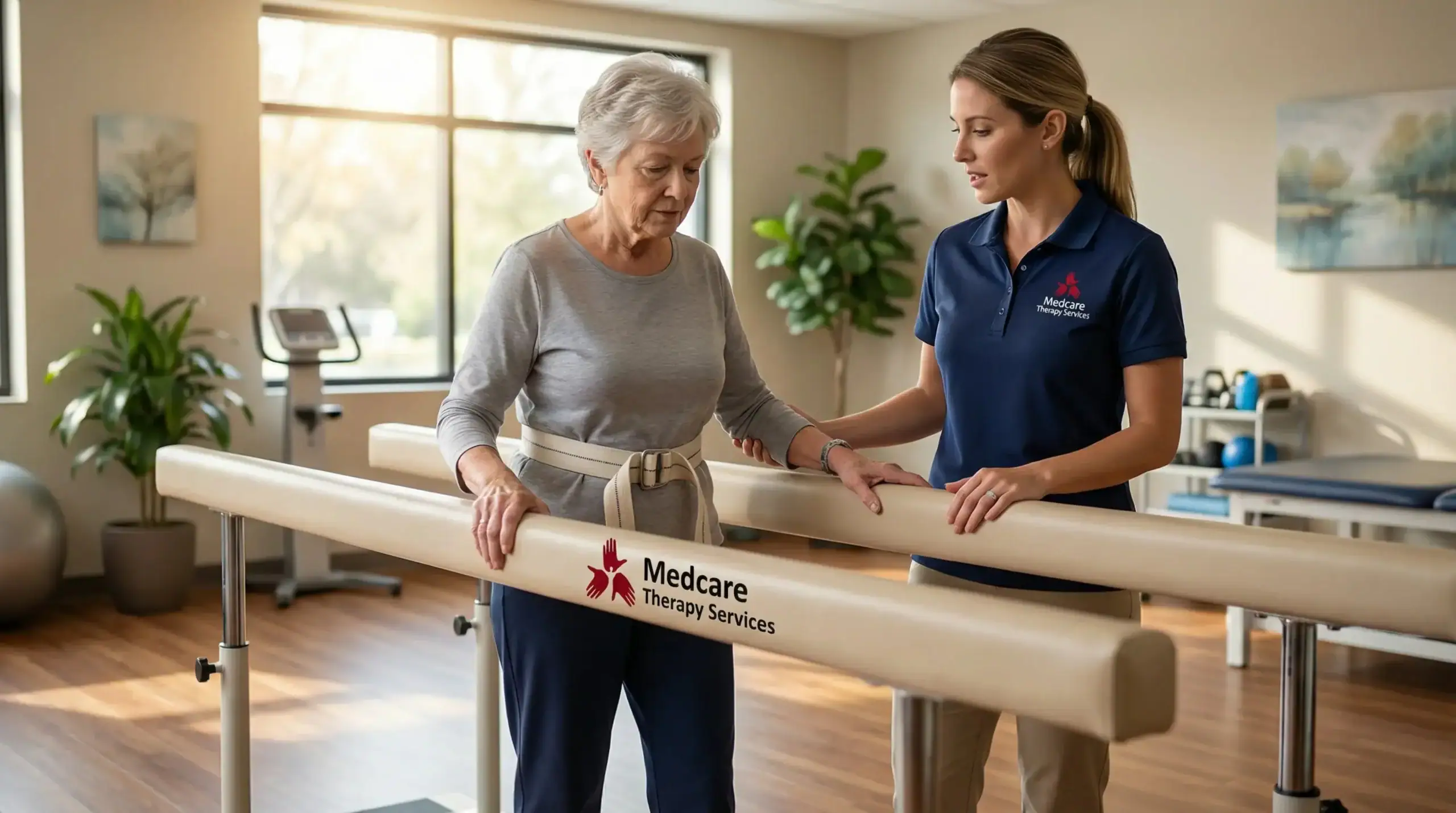
First, you’ll sit down with a physical therapist who reviews your medical history and asks about any falls or close calls you’ve had. Then comes the assessment—strength tests, balance challenges, gait analysis, and a look at how you move in different situations.
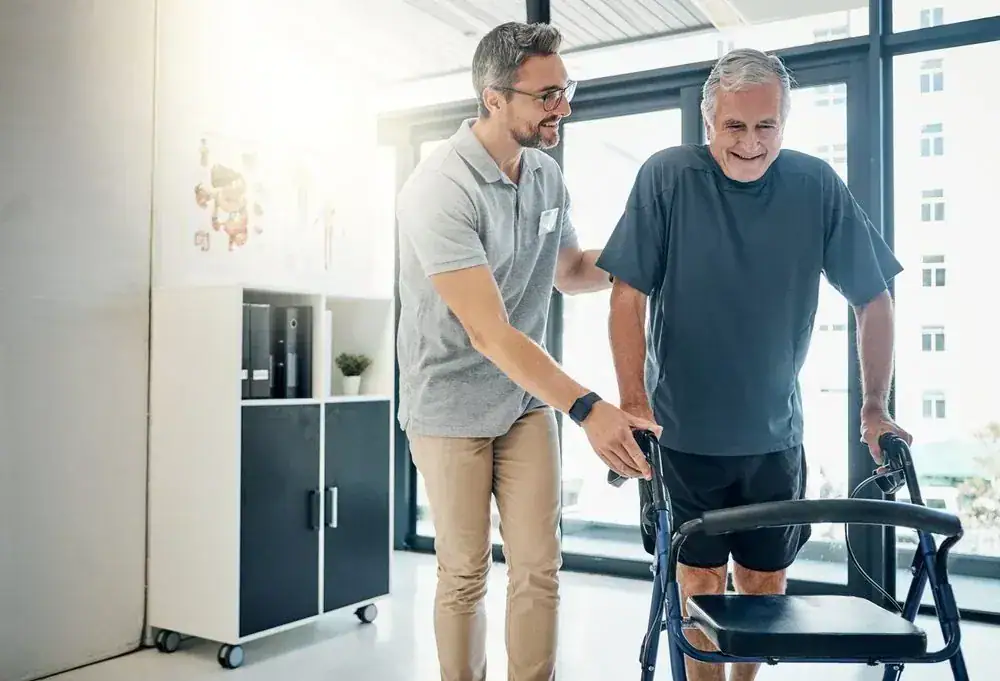
From there, your therapist builds a program. That usually means senior balance exercises to improve stability, strength training to support your legs and core, and gait training to correct how you walk. If you use a cane or walker, you’ll learn how to use it correctly. If your home has hazards—loose rugs, poor lighting, cluttered walkways—you’ll get recommendations on what to change.
Most people go through 8 to 20 sessions depending on their needs. Each session runs 60 to 90 minutes. You’ll also get exercises to do at home between visits because consistency is what makes the difference. Medicare and most Medicare Advantage plans cover this kind of therapy when it’s medically necessary, so cost usually isn’t a barrier.

Ready to get started?
You’ll get a full fall risk assessment that measures your current balance, strength, flexibility, and walking pattern. Your therapist will also evaluate your home for environmental risks and suggest modifications that make sense for your space and budget.
Treatment includes targeted balance exercises, strength training for your lower body and core, and specialized gait work to improve how you walk. If you’ve fallen before, you’ll also learn fall recovery techniques—how to fall safely and how to get back up without injury.
In Hewlett Neck and across Nassau County, falls are the leading cause of senior injuries by a wide margin. They outnumber car accidents, burns, and every other injury type combined for adults over 65. The good news? Research shows that structured fall prevention programs reduce fall risk by 30 to 35%. That’s not a small number. That’s the difference between living independently and needing help with daily tasks. Our approach combines evidence-based interventions with local insight, so you’re getting what actually works for people in your situation.

If you’ve fallen in the past year, you’re at higher risk. If you’ve had a close call—a stumble, a grab for the counter, a moment where you almost went down—that counts too.
Other signs include feeling unsteady when you walk, needing to hold onto furniture or walls to move around your home, avoiding stairs, or noticing that your legs feel weaker than they used to. Some people don’t realize they’re at risk until they take a fall risk assessment, which measures balance, strength, and gait in ways that aren’t obvious during daily life.
In Nassau County, where fall-related injuries make up 88% of hospitalizations for seniors, the assumption should be that risk exists until proven otherwise. A physical therapist can give you a clear answer in one session.
Yes, if it’s medically necessary. Medicare Part B covers physical therapy for balance and mobility issues, especially if you’ve already fallen or your doctor identifies you as high-risk.
You’ll need a referral or prescription from your physician, and your therapist will work with Medicare to confirm coverage before you start. Most people pay little to nothing out of pocket once they’ve met their deductible, and Medicare Advantage plans often have similar coverage with different copay structures.
We handle the billing and verification process, so you’re not left guessing what’s covered. If you’re unsure about your specific plan, call ahead and ask. We’ll walk you through it before your first appointment.
Balance exercises for seniors are designed around fall prevention, not general fitness. They target the specific muscle groups and neurological pathways that keep you upright when your center of gravity shifts.
That means exercises that challenge your stability in controlled ways—standing on one leg, walking heel to toe, shifting your weight side to side, or practicing getting up from a chair without using your hands. These aren’t about building muscle mass or cardio endurance. They’re about training your body to react when you trip, lean too far, or step on an uneven surface.
Your therapist will also adjust exercises based on your current ability. If you’re already unsteady, you’ll start with supported movements and progress as your balance improves. The goal is to push you just enough to see gains without putting you at risk during the session itself.
Most people complete a program in 8 to 20 sessions, depending on their starting point and goals. Each session lasts 60 to 90 minutes, and you’ll typically go two or three times per week.
If you’re recovering from a fall or dealing with significant balance issues, you might be on the longer end of that range. If you’re doing this proactively and your baseline strength is good, you might see results faster.
The timeline also depends on how well you stick to the home exercise plan. Therapy sessions build the foundation, but the work you do between visits is what locks in the progress. Your therapist will reassess you regularly and adjust the plan as you improve, so you’re not doing more sessions than necessary.
Yes. We offer in-home therapy for patients who have difficulty traveling or prefer to work on balance in their own environment.
There’s actually an advantage to in-home therapy for fall prevention—your therapist can assess the exact spaces where you’re most at risk. They’ll see the layout of your bathroom, the lighting in your hallways, the rugs in your living room, and the stairs you use every day. That makes the recommendations more practical and the training more relevant.
Some people start in-home and transition to clinic-based therapy as their mobility improves. Others stay in-home for the full program. Either way, the exercises and outcomes are the same. Medicare covers in-home physical therapy under the same guidelines as clinic visits, so location doesn’t change your benefits.
You’ll have a set of exercises to continue on your own, plus a clear understanding of what puts you at risk and how to avoid it. Many people transition into a maintenance routine—doing their balance exercises a few times a week to keep their progress.
Some patients also join ongoing wellness or fitness programs designed for seniors, which we offer at certain locations. These aren’t therapy sessions, but they give you a structured way to stay active and keep your balance sharp.
If your condition changes—if you have surgery, experience a health event, or notice your balance declining again—you can return for another round of therapy. Fall prevention isn’t a one-time fix. It’s an ongoing part of managing your health as you age, and your therapist will make sure you know how to maintain what you’ve built.
Other Services we provide in Hewlett Neck