
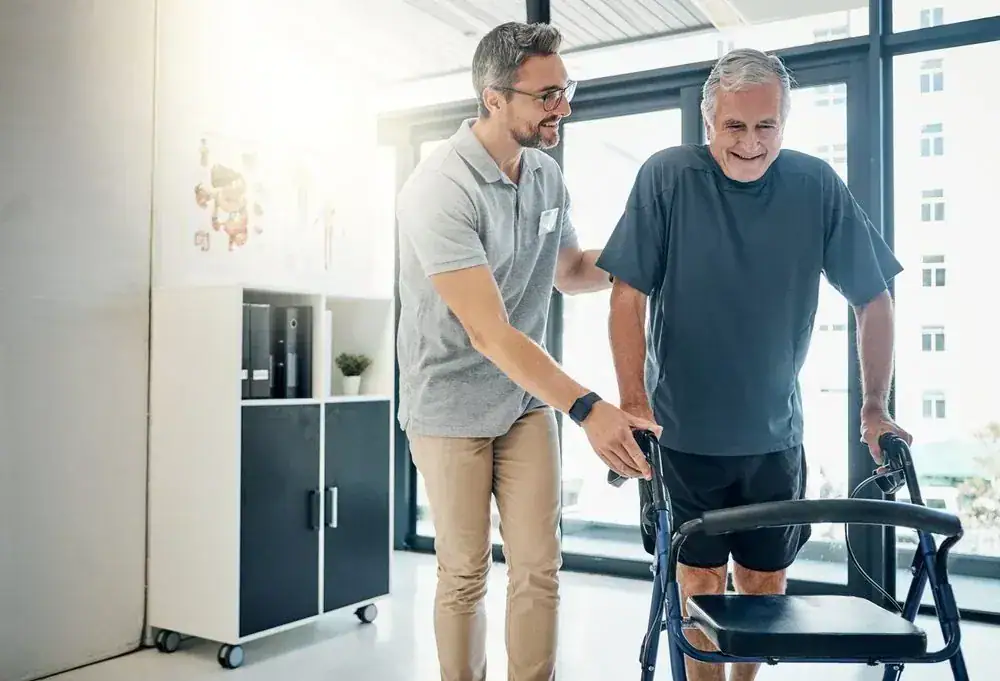
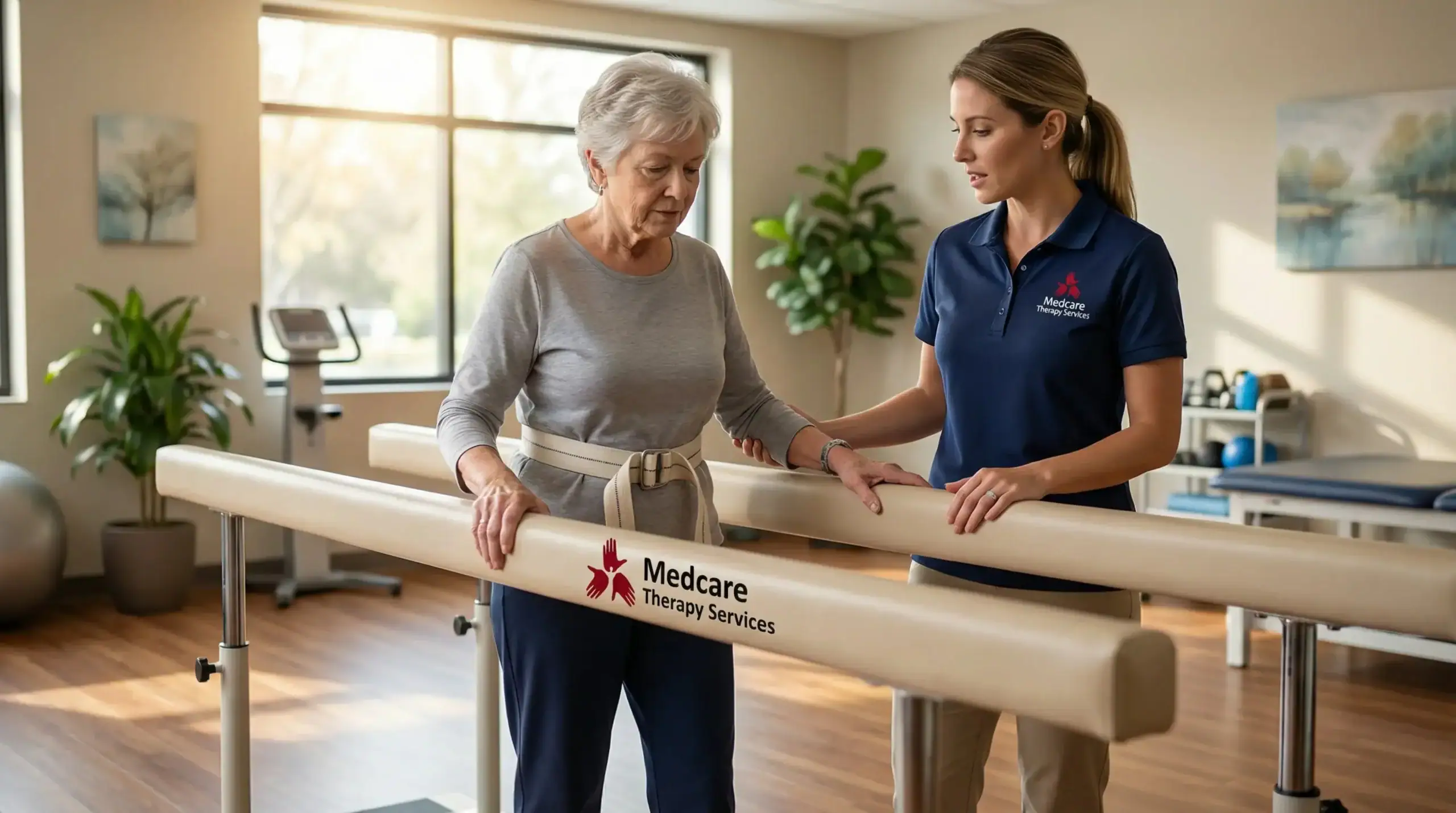
You stop planning your day around what feels safe. You walk to the mailbox without that knot in your stomach. You get up at night without gripping the wall.
That’s what balance training actually does. It rebuilds the strength, coordination, and confidence that falling once—or the fear of falling—takes away. In Nassau County, 88% of injury hospitalizations for adults over 65 are fall-related. You’re not overreacting by wanting to prevent it.
Our fall prevention program focuses on gait training, strengthening, and real-world movement patterns that matter in your daily routine. You’ll work with a licensed therapist in your own home, where the floors, furniture, and lighting are exactly what you navigate every day. That’s where balance exercises for seniors actually make a difference—not in a clinic that doesn’t look like your life.
We’ve been providing in-home physical therapy across Long Island for over a decade. We’re not new to this. We’re not experimenting with fall prevention—we use the Otago program, which is one of the most researched and effective elderly fall prevention protocols available.
We come to your home in Herricks and surrounding Nassau County communities. You don’t need to arrange rides, sit in waiting rooms, or worry about getting to appointments. We show up, assess your specific fall risks, and build a plan that fits your mobility level, your health conditions, and your home environment.
We’re a Medicare provider. We manage your care with the same attention we’d want for our own family. And we’ve built our reputation here by doing exactly that—treating people like people, not case files.

First, we come to your home and do a full fall risk assessment. We look at your balance, your gait, your strength, and how you move through your actual living space. We’re checking for things like uneven weight distribution, reduced ankle mobility, weak hip stabilizers—the stuff that doesn’t show up until you’re already on the ground.
Then we build a program based on what we find. That usually means senior balance exercises, gait training, strengthening work, and functional movement drills. Sessions typically happen three times a week for 11 to 12 weeks, because that’s the timeframe research shows gets results—improved walking speed, better physical function, reduced fear of falling.
You’ll work with the same therapist each time. They’ll adjust your program as you get stronger. And if you need occupational therapy to address things like bathroom safety or kitchen modifications, we can bring that in too. Everything’s coordinated under one team, and it all happens in your home.

Ready to get started?
You get a personalized care plan built around your fall risk factors, not a generic handout. That includes one-on-one sessions with a licensed physical therapist who specializes in balance and mobility for older adults.
We focus on exercises that improve postural stability, strengthen your legs and core, and retrain your gait cycle so you’re not shuffling or favoring one side. We also work on reaction time and coordination, because falls don’t usually happen when you’re standing still—they happen when you’re turning, reaching, or reacting to something unexpected.
In Herricks and across Nassau County, we see a lot of clients who’ve already fallen once. Falling once doubles your chance of falling again, and adults over 75 who fall are nearly five times more likely to end up in long-term care. We’re here to stop that cycle. Our program is covered by Medicare, so cost shouldn’t be the barrier. And because we come to you, transportation isn’t either. You stay in your own space, work at your own pace, and get the kind of attention that actually moves the needle.

If you’ve fallen in the past year, you need it. If you’re afraid of falling and that fear is limiting what you do, you need it. If you’ve noticed your balance isn’t what it used to be—maybe you’re holding onto counters more, or you feel unsteady on uneven ground—you’d benefit from an assessment at minimum.
A lot of people wait until after a fall to get help, but that’s reactive. The point of fall prevention is to address the risk before you’re recovering from a broken hip. In Nassau County, the statistics are clear: falls are the leading cause of injury hospitalization for seniors. One in four older adults falls every year. If you’re in that age range and you’re noticing changes in your mobility or confidence, that’s enough reason to call.
We’ll come to your home, do a full evaluation, and tell you honestly whether therapy makes sense. No pressure, no sales pitch. Just a professional assessment of where you’re at and what would help.
Your home is where you’re going to fall—if you fall. That’s where the rugs, stairs, lighting, and furniture are. That’s where you get up in the middle of the night to use the bathroom. A clinic can improve your strength and balance in a controlled environment, but it doesn’t teach you how to navigate your actual space.
When we work with you at home, we’re training you in the environment that matters. We see how you move through your kitchen, how you handle your front steps, whether your bathroom setup is creating risk. We can adjust your program based on real obstacles, not hypothetical ones.
There’s also the practical side. You don’t need to arrange transportation. You don’t need to get yourself to appointments when you’re already worried about mobility. We come to you, and that removes a massive barrier for a lot of people in Herricks and the surrounding areas. It’s more convenient, more personalized, and frankly, more effective.
Medicare covers outpatient physical therapy for fall prevention when it’s medically necessary and prescribed by your doctor. There’s no catch, but there is a process. You’ll need a referral or prescription, and we’ll handle the rest—verification, billing, coordination with your physician.
Most of our clients in Herricks are on Medicare, and most of them have coverage for these services. There may be a copay depending on your plan, but the therapy itself is a covered benefit. We’ll walk you through what your specific plan covers before we start, so there are no surprises.
The bigger issue we see isn’t coverage—it’s that people don’t know this service exists or don’t think they qualify. If your doctor agrees that you’re at risk for falls or you’ve already fallen, you likely qualify. And even if you’re not sure, we can check your eligibility and give you a straight answer.
Research shows that 11 to 12 weeks of balance training, done three times per week, produces measurable improvements in balance, walking speed, and fall-related confidence. That’s the standard we follow, and it’s based on the Otago fall prevention program—one of the most studied and validated approaches out there.
You’ll likely notice small changes earlier than that. Maybe you feel steadier after a few weeks, or you’re moving with less hesitation. But the real functional gains—the kind that reduce your actual fall risk—take consistency over time. That’s why we structure programs the way we do.
Some people need more time depending on their baseline strength and mobility. Some need less. Your therapist will track your progress and adjust the timeline based on how you’re responding. The goal isn’t to hit an arbitrary number of sessions—it’s to get you to a point where you feel confident and your risk is genuinely lower.
It’s not too late—it’s actually more urgent. Falling once doubles your chances of falling again, and every fall increases the risk of serious injury, hospitalization, or loss of independence. The fact that you’ve already fallen means your body is telling you something needs to change.
We work with people after falls all the time. Sometimes they’re recovering from a fracture or surgery. Sometimes they’re just shaken and want to make sure it doesn’t happen again. Either way, the program is the same: we assess what contributed to the fall, address those specific risk factors, and rebuild your strength and balance so your body can catch you next time.
A lot of people don’t tell their doctor when they fall. Fewer than half do, according to the research. But that silence doesn’t make you safer. If you’ve fallen, or if you’ve had a few close calls, that’s exactly when fall prevention therapy makes the most difference. We’re here to help you regain what you lost and prevent what comes next.
No. We work with anyone who wants to reduce their fall risk, whether that’s someone recovering from a stroke or someone who just noticed they’re not as steady as they used to be. You don’t need to wait until the problem is severe.
Some of our clients in Herricks come to us because they’re proactive. They’re in their 60s or early 70s, they’re still active, and they want to stay that way. They’ve seen what happens to friends or family members who fell, and they’d rather prevent it than recover from it. That’s smart, not paranoid.
Other clients come to us after a fall, a surgery, or a diagnosis that affects their mobility—Parkinson’s, neuropathy, arthritis. We treat both ends of that spectrum. The program adjusts based on where you’re starting from. If you’re wondering whether you’d benefit, the answer is probably yes. And if you’re not sure, we’ll come do an assessment and give you an honest recommendation.
Other Services we provide in Herricks