

You’re not imagining it. That hesitation before stepping off a curb, the extra second you need to stand up, the way you reach for walls more often—these aren’t just signs of getting older. They’re your body telling you something’s changed.
And here’s what matters: falling once doubles your chance of falling again. That’s not meant to scare you. It’s meant to show you why acting now makes sense.
When you work with a physical therapist who understands fall prevention, you’re not just doing generic exercises. You’re addressing the specific reasons your balance has shifted—whether that’s muscle weakness, medication side effects, vision changes, or something else entirely. The goal isn’t to turn back time. It’s to give you back the confidence to move through your day without second-guessing every step.
Most people who start a fall prevention program see real improvements within 12 weeks. Faster walking. Better stability. Less fear. More freedom to do what you want without constantly worrying about what could happen.
We’ve been helping people across Long Island maintain their independence for years. Our Hauppauge location serves seniors throughout Suffolk County who want to stay active, stay home, and stay in control of their lives.
Every therapist on our team is licensed and trained specifically in geriatric care and fall prevention. We don’t hand you a printout of exercises and send you on your way. We assess your individual risk factors, build a plan around your goals, and adjust as you progress.
Hauppauge has one of the most active senior populations on Long Island. People here aren’t looking to slow down—they’re looking to keep up with grandkids, travel, garden, and live fully. We get that. And we know what it takes to help you do it safely.

Your first visit is an assessment. We look at your balance, strength, gait, medication list, and any past falls or close calls. This isn’t a pass-fail test. It’s a conversation about where you are now and where you want to be.
From there, we build a personalized program. That might include balance exercises for seniors, strength training for your legs and core, gait training to improve how you walk, and strategies to reduce specific risks in your daily routine. Sessions typically run twice a week for 12 weeks, but that depends on your needs and goals.
You’ll also get guidance on home safety. Small changes—better lighting, removing tripping hazards, grab bars in key spots—can make a huge difference. We’ll talk through what makes sense for your space.
Most insurance plans, including Medicare, cover fall prevention therapy when it’s medically necessary. We’ll help you understand your coverage before you start so there are no surprises.

Ready to get started?
Every program starts with a full fall risk assessment. We measure your balance, test your strength, evaluate how you walk, and review any medications that might increase fall risk. This gives us a baseline and helps us track your progress.
Your therapy sessions focus on the exercises and activities proven to reduce falls. Balance training strengthens the systems your body uses to stay upright. Strength exercises target the muscles that matter most—your legs, hips, and core. Gait training helps you walk more confidently and efficiently.
In Hauppauge and across Long Island, many falls happen at home. That’s why we also provide home safety evaluations and recommendations. We’ll talk about lighting, flooring, bathroom safety, and other factors that could put you at risk. You don’t have to make every change we suggest, but you’ll know what to prioritize.
You’ll leave each session with exercises you can do at home. The more you practice between visits, the faster you’ll see results. And we’re always available if you have questions or concerns along the way.

If you’ve fallen in the past year, you need fall prevention therapy. Full stop. Falling once doubles your risk of falling again, and the consequences get more serious each time.
But you don’t have to wait for a fall to start. If you feel unsteady on your feet, if you’ve had any close calls, if you’re avoiding activities because you’re worried about falling—those are all signs that working with a physical therapist makes sense. Taking four or more medications also puts you at higher risk, even if you feel fine right now.
A lot of people wait until after a fall to get help. By then, they’re dealing with an injury, a hospital stay, maybe even a loss of independence. Starting before that happens gives you a much better chance of avoiding it altogether.
The exercises depend on your current ability and your specific risk factors. We meet you where you are. If you’re already fairly active, we might have you doing single-leg stands, heel-to-toe walking, or exercises on unstable surfaces. If you’re less steady, we’ll start with seated exercises or standing activities with support.
Balance training isn’t just about standing on one foot. It’s about challenging the systems your body uses to stay upright—your vision, your inner ear, your muscles, and your brain’s ability to coordinate all of that. We also incorporate strength exercises because weak legs and hips are one of the biggest fall risk factors.
Most programs include at least 45 minutes of balance work three times a week. Some of that happens in our clinic. Some of it you’ll do at home. The key is consistency. Your body needs regular practice to build strength and improve coordination.
Yes, Medicare covers fall prevention therapy when it’s medically necessary. If you’ve fallen in the past year, if you have a condition that affects your balance, or if your doctor refers you for therapy, you’re likely covered.
Medicare Part B typically covers physical therapy with a copay after you’ve met your deductible. The exact amount depends on your specific plan. We’ll verify your coverage before you start so you know what to expect.
Most major insurance plans also cover fall prevention therapy. We work with a wide range of insurers and can help you understand your benefits. If cost is a concern, talk to us. There are often options we can explore to make therapy accessible.
Most people see significant improvement in 12 weeks. That’s the timeframe research supports for reducing fall risk and building lasting strength and balance. You’ll typically come in twice a week for supervised therapy, plus do exercises at home on your off days.
Some people need more time. Some need less. It depends on your starting point, your goals, and how consistently you practice between sessions. We track your progress throughout and adjust the plan as needed.
The real question isn’t how long therapy takes—it’s how long the results last. If you keep up with the exercises after you finish formal therapy, the benefits stick around. We’ll give you a maintenance plan you can follow on your own to stay strong and steady long-term.
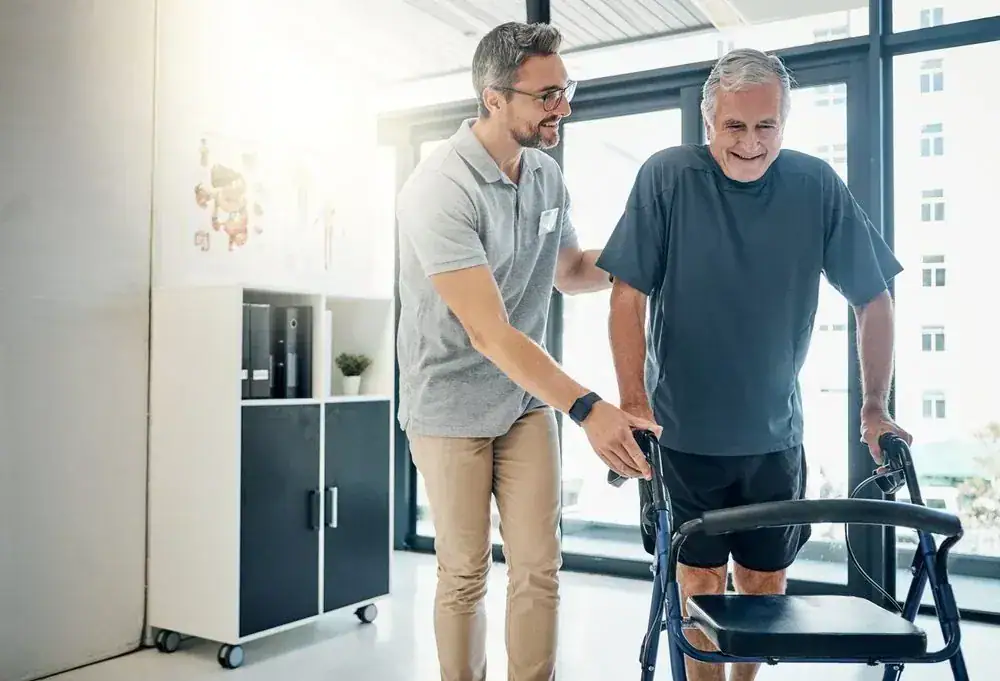
Using a walker or cane doesn’t disqualify you from fall prevention therapy. In fact, it’s often a sign that therapy could help. We work with people at all levels of mobility, and we’ll build a program around your current abilities.
If you’re using an assistive device, we’ll make sure you’re using it correctly. A lot of people don’t realize their walker is set at the wrong height or that their cane technique is actually increasing their fall risk. Small adjustments can make a big difference in how stable you feel.
We’ll also work on strengthening the muscles you need to move more confidently, whether you continue using your device or eventually feel steady enough to go without it. The goal is always to help you move as safely and independently as possible.
Yes. Even if you’ve fallen multiple times, physical therapy can reduce your risk going forward. The fact that you’ve fallen before means your risk is higher—but it also means you have the most to gain from a structured prevention program.
We’ve worked with plenty of people who thought their balance issues were just something they had to live with. After 12 weeks of targeted therapy, most of them are moving more confidently, falling less often, and doing activities they’d given up on. Research backs this up: regular balance and strength training can cut fall risk in half.
The key is starting now. Every fall increases your chance of another one, and the injuries tend to get worse over time. Working with a licensed physical therapist gives you the best shot at breaking that cycle and staying independent in your own home.
Other Services we provide in Hauppauge