
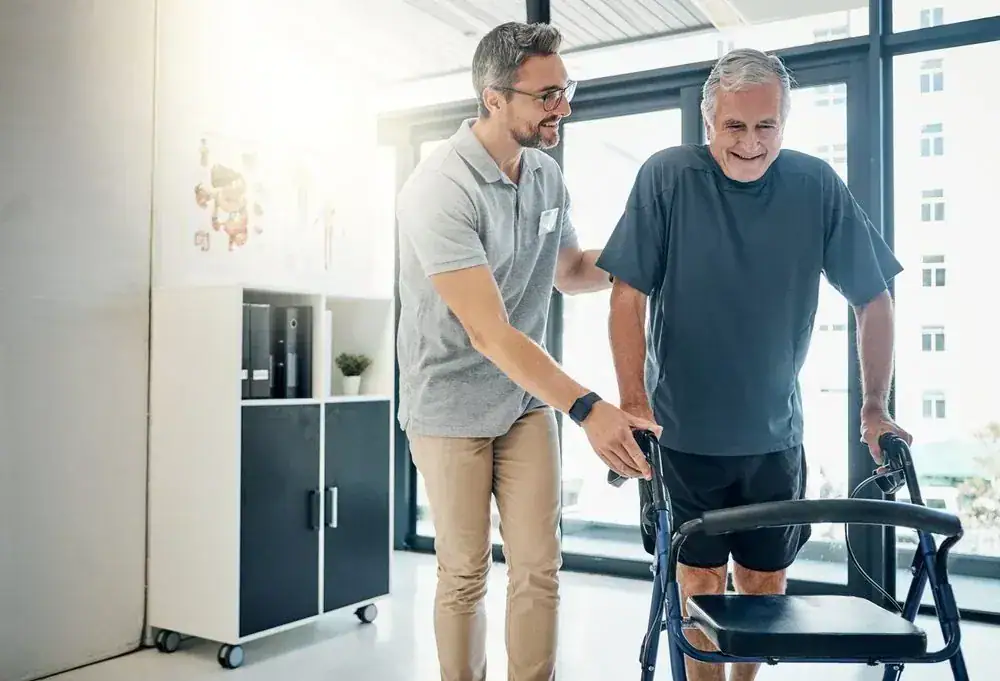
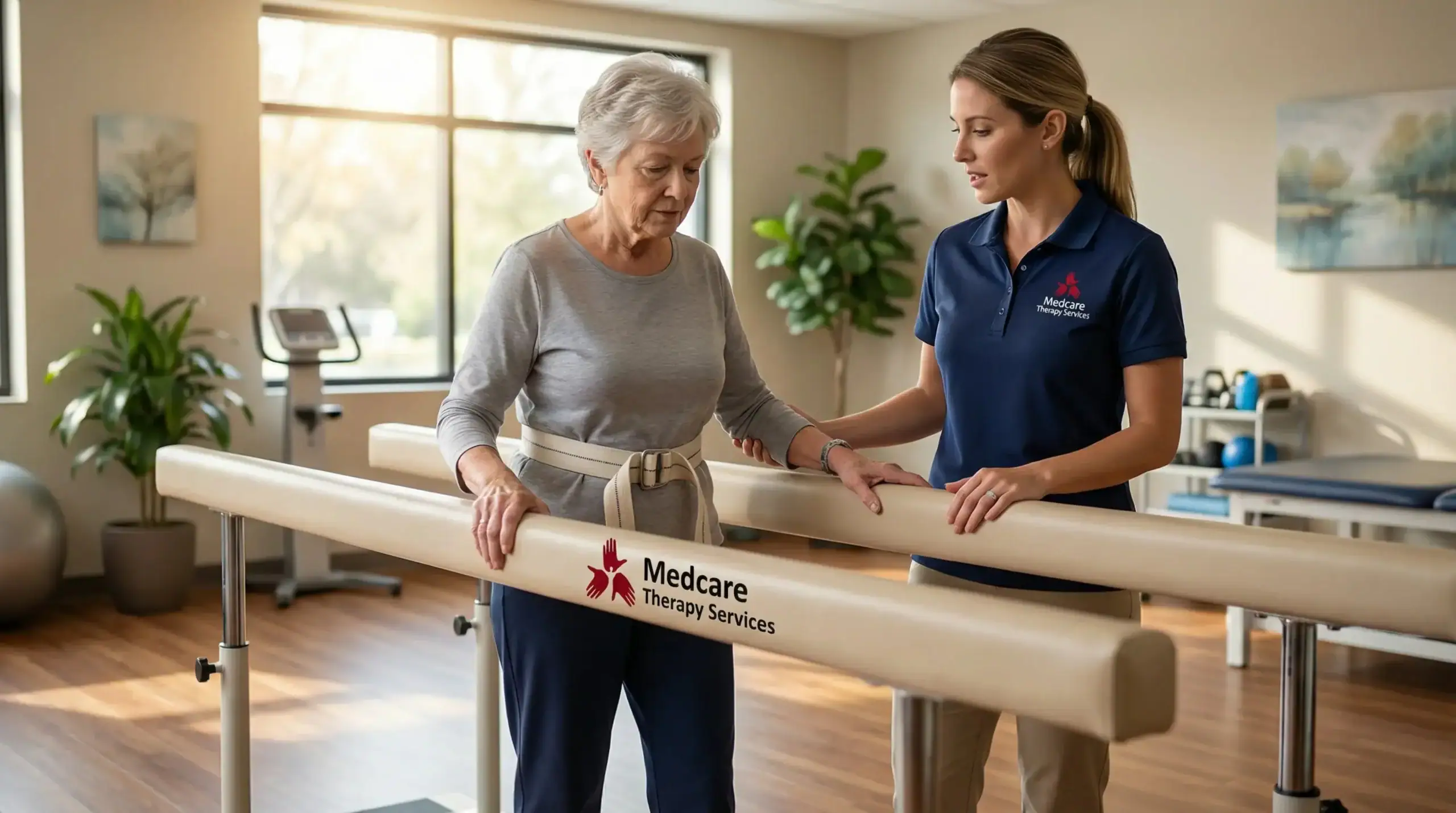
You’ve probably already felt it. That split-second hesitation before stepping off a curb. The extra hand you need on the railing. The activities you’ve quietly stopped doing because you’re not sure your balance will hold.
That fear isn’t in your head. One in four older adults falls every year, and Nassau County ranks fourth in New York State for fall-related incidents. But here’s what matters more: balance training can cut your fall risk in half when it’s done right.
Physical therapy for balance isn’t about learning to be more careful. It’s about retraining your body to respond faster, strengthening the muscles that keep you upright, and rebuilding the confidence that lets you move through your day without second-guessing every step. You work on real movements—standing from a chair, reaching for something on a shelf, walking on uneven ground—so the improvements show up exactly where you need them.
Most people notice changes within weeks. Better stability. Less wobbling. More control when you turn or bend. The kind of progress that lets you get back to the things you’ve been avoiding.
We’ve been providing in-home physical therapy across Long Island for over 14 years. We’re licensed, Medicare-certified, and we accept nearly all commercial insurance plans.
What sets us apart isn’t just experience. It’s how we work. Every session happens in your home, which means no transportation stress, no waiting rooms, and no trying to replicate your daily environment in a clinic. Your therapist sees exactly where you move, where the risks are, and what needs to change.
Harbor Hills and the surrounding Long Island communities have some of the highest concentrations of older adults in New York. We built our practice around that reality. You’re not getting a one-size-fits-all program. You’re getting an assessment that identifies your specific fall risks, a treatment plan designed around your home and your routine, and a therapist who shows up consistently to make sure it’s working.

First, we do a fall risk assessment in your home. Your therapist evaluates your strength, balance, gait, and the environment where you actually live. They’re looking at how you move through doorways, navigate stairs, get in and out of chairs—the real stuff that matters in daily life.
From there, you get a personalized treatment plan. That might include balance exercises that activate your core and retrain your brain-body connection. Gait training to improve how you walk and distribute your weight. Strength work targeting the muscles that keep you stable. Every exercise is specific to what your body needs and what your goals are.
Sessions happen on a schedule that works for you, typically two to three times per week for several weeks. Your therapist tracks your progress, adjusts the program as you improve, and teaches you techniques you can practice between visits. The goal isn’t dependence on therapy. It’s giving you the tools to stay strong and stable long after treatment ends.
Medicare covers these services when they’re medically necessary, and we handle the billing directly. You focus on getting better. We handle the paperwork.

Ready to get started?
Your program starts with a comprehensive evaluation that goes beyond a standard physical. We’re measuring your balance under different conditions, testing your reaction time, checking your strength in key muscle groups, and assessing how you walk. We also look at your home setup—lighting, rugs, furniture placement, bathroom safety—because falls don’t happen in a vacuum.
Treatment typically includes targeted balance exercises proven to reduce fall risk. These aren’t generic stretches. They’re evidence-based movements designed to challenge your stability in controlled ways so your body learns to recover when you’re off-balance. You’ll also work on strengthening exercises for your legs, hips, and core, which are critical for maintaining stability as you age.
Gait training is a major component. Many falls happen because of how someone walks—stride length, foot placement, weight distribution. We retrain those patterns to make walking safer and more efficient. You’ll also get education on fall prevention strategies, home modifications, and how to get up safely if a fall does happen.
This matters in Harbor Hills and across Long Island because our aging population is growing faster than almost anywhere in the state. Suffolk County alone added over 113,000 older adults in the last decade. Access to quality fall prevention isn’t a luxury here—it’s essential. And because Long Island has limited public transportation, staying mobile and independent at home isn’t just about comfort. It’s about maintaining your quality of life.

Most people start noticing changes within three to four weeks of consistent therapy. You might feel steadier when standing, more confident on stairs, or less reliant on holding onto furniture when you walk. Measurable improvements in balance and strength typically show up around the six-week mark.
That said, the timeline depends on where you’re starting from. If you’ve had a recent fall or you’re dealing with significant muscle weakness, it might take longer to build up the strength and coordination you need. If you’re relatively active but just noticing some instability, you could see faster progress.
The research backs this up. Balance training programs that run 12 weeks with at least three sessions per week show the strongest results—up to a 50% reduction in fall risk. We usually recommend a similar timeline, though your therapist will adjust based on how you’re responding. The key is consistency. Skipping sessions or not practicing between visits will slow things down.
Yes, Medicare Part B covers home-based physical therapy when it’s medically necessary and prescribed by your doctor. Fall prevention qualifies if you have a documented fall risk—whether that’s a history of falls, balance problems, muscle weakness, or gait issues.
You’ll need a referral from your physician, and your therapist will complete an initial evaluation to establish the treatment plan. Medicare typically covers up to 80% of the approved amount after you’ve met your deductible. You’re responsible for the remaining 20%, though supplemental insurance often covers that portion.
We accept Medicare and handle the billing process directly, so you’re not navigating claims on your own. If you have a Medicare Advantage plan, coverage works similarly, but the specifics can vary by plan. We verify your benefits before starting treatment so there are no surprises. Most of our patients in Harbor Hills and across Nassau and Suffolk counties are on Medicare, so this is something we manage every day.
The biggest advantage is that we’re treating you in the environment where you actually live. A clinic can simulate certain movements, but it can’t replicate your kitchen layout, your bathroom setup, or the specific challenges in your home that increase fall risk.
When your therapist works with you at home, they see the real obstacles. The rug that slides. The lighting that’s too dim. The step you have to navigate every time you do laundry. They can address those issues directly and teach you how to move safely in your actual space, not a generic therapy gym.
There’s also the transportation factor. Long Island isn’t easy to navigate if you don’t drive, and many older adults in Harbor Hills and surrounding areas struggle with getting to appointments. Home therapy eliminates that barrier entirely. You’re not stressing about rides, parking, or whether you’ll have the energy to do therapy after the trip there and back. Your therapist comes to you, and that consistency makes a real difference in outcomes.
Your therapist will spend about an hour evaluating your balance, strength, mobility, and home environment. They’ll ask about your fall history, any near-misses, medications that might affect balance, and activities you’ve stopped doing because of fear or instability.
The physical assessment includes tests like standing on one leg, walking heel-to-toe, sitting down and standing up from a chair, and reaching in different directions while maintaining your balance. These aren’t pass-fail tests. They’re measurements that help your therapist understand where your risks are and what needs the most attention.
You’ll also walk through your home together. Your therapist will look at flooring, lighting, stairs, bathroom safety, and furniture arrangement. They’ll point out specific hazards and recommend modifications—some simple, some more involved—that can reduce your fall risk immediately. By the end of the session, you’ll have a clear picture of where you stand and a treatment plan that addresses your specific needs. No guessing. No generic advice. Just a roadmap based on your situation.
Yes, and this is actually one of the most important times to start. A previous fall is the strongest predictor of falling again, but that’s not because you’re destined to keep falling. It’s because the factors that caused the first fall—weak muscles, poor balance, slow reaction time—are still there unless you address them.
Balance exercises work by retraining your neuromuscular system. When you practice controlled movements that challenge your stability, your brain gets better at sending fast, accurate signals to your muscles. Your body learns to correct itself before you lose your balance completely. That’s the difference between a stumble you recover from and a fall that lands you in the hospital.
The data is clear. Structured balance training reduces fall risk by up to 50%, even in people who’ve already fallen. The key is doing the right exercises with proper progression. Too easy, and you’re not challenging your system enough to create change. Too hard, and you risk another fall during therapy. A licensed physical therapist knows how to find that balance and adjust as you improve. That’s why supervised programs consistently outperform generic “balance exercises for seniors” you might find online.
Most fall prevention programs involve two to three sessions per week, especially in the first few weeks when you’re building strength and learning new movement patterns. Each session typically lasts 45 minutes to an hour, depending on your endurance and what you’re working on that day.
As you progress, the frequency might decrease. Some patients move to once-weekly sessions for maintenance, while others transition to a home exercise program they can do independently with periodic check-ins. Your therapist will adjust the schedule based on how quickly you’re improving and how confident you feel managing exercises on your own.
The research suggests that balance training works best when done at least three days per week for a minimum of 45 minutes per session. That doesn’t all have to be with a therapist, though. Part of the program involves teaching you exercises you can practice safely between visits. The combination of supervised therapy and independent practice gives you the repetition you need to see real, lasting improvement. Your therapist will make sure you know exactly what to do, how to do it safely, and when to progress to harder variations.
Other Services we provide in Harbor Hills