

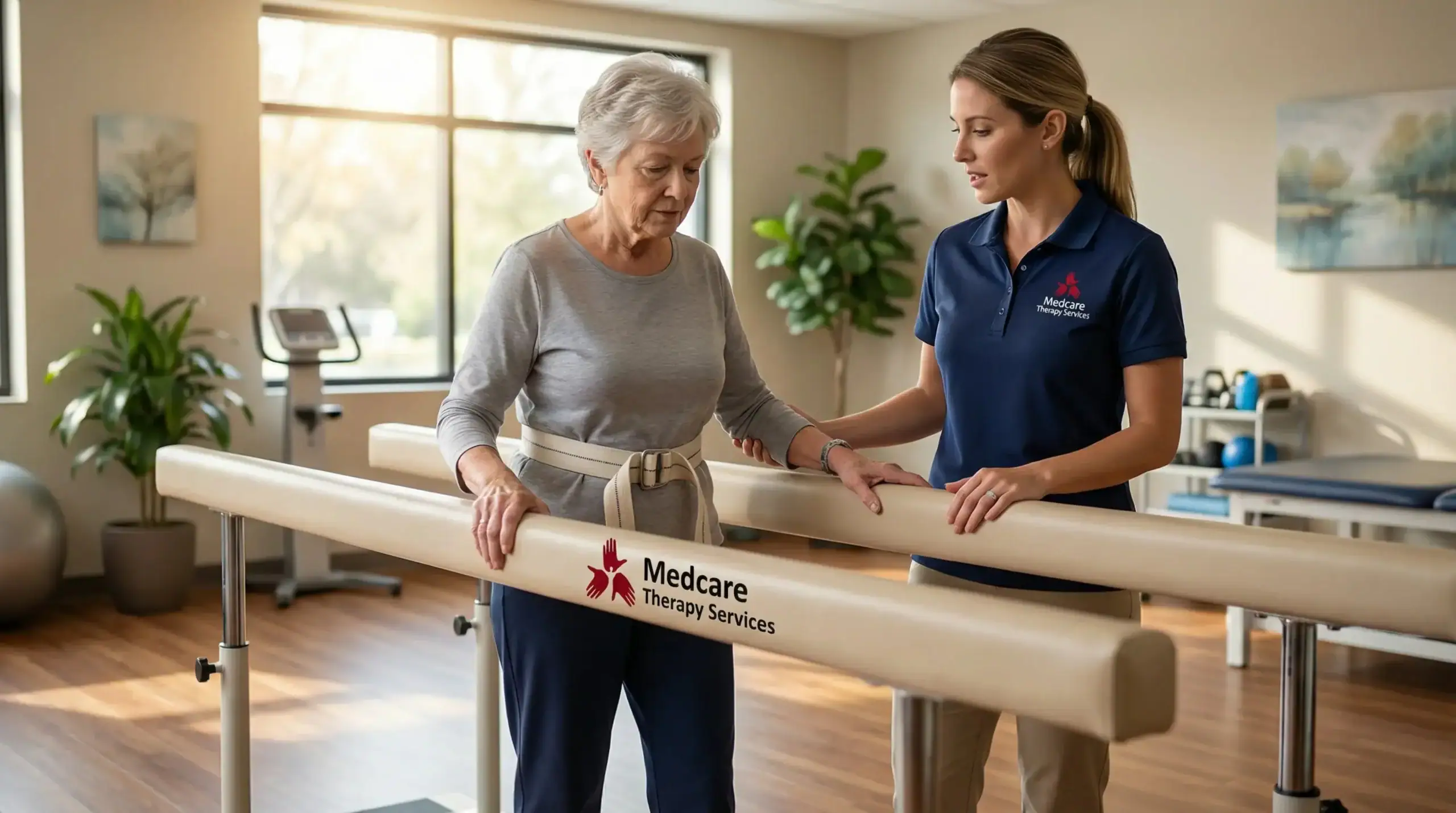
You’re not imagining it. Getting around feels harder than it used to. Maybe you’ve already had a close call, or you’re just noticing that stairs, uneven sidewalks, or even getting out of bed requires more thought than it should.
Here’s what matters: Nassau County ranks 4th in New York State for fall-related injuries in adults over 65. That’s not a coincidence. It’s a reflection of an aging population that isn’t getting the preventive care they need before a fall happens.
Balance exercises for seniors aren’t about becoming an athlete. They’re about being able to walk to your mailbox, get dressed without holding onto furniture, or move through your day without that constant background worry. Our fall prevention programs are built around the Otago protocol—a research-backed system that’s been shown to reduce falls by up to 37% and cut the risk of fractures by more than 60%. We bring that training into your home in Greenport West, so you don’t have to figure out transportation or sit in a waiting room.
Medcare Therapy Services has been serving Long Island for over a decade. We’re licensed, Medicare-approved, and we specialize in treating people who can’t easily get to a clinic—or shouldn’t have to.
Our therapists come to you. They assess your home environment, your current strength and balance, and any health conditions that increase your fall risk. Then they build a program that fits your life, not a generic template.
We’re also part of a network that includes Physical Therapy Associates of Smithtown and Speonk Physical Therapy—both established practices with deep roots in the community. That means you’re working with a team that understands Long Island seniors, not a rotating door of contractors.

First, we schedule an in-home evaluation. A licensed physical or occupational therapist comes to your house in Greenport West and walks through a full assessment. That includes checking your strength, balance, gait, vision-related challenges, and any environmental hazards in your home—loose rugs, poor lighting, furniture placement.
From there, we design a personalized fall prevention plan. If you’re a good fit for the Otago program, that typically means strength and balance training three times a week for 20 to 45 minutes per session. Research shows that 90 to 120 minutes of targeted balance work per week, sustained over 11 to 12 weeks, leads to measurable improvements in stability and confidence.
You’ll work on static balance—like standing on one foot. Dynamic balance—moving while maintaining control. And reactive balance—catching yourself if you start to lose stability. We also incorporate strength training for your legs, hips, and core, which directly impacts your ability to stay upright and recover if you stumble. Everything is done at your pace, in your space, with your goals in mind.

Ready to get started?
This isn’t a one-size-fits-all program. You get a full evaluation, a custom treatment plan, and ongoing adjustments based on how you’re progressing. Sessions happen in your home, so there’s no need to arrange rides or worry about getting to an appointment when you’re already unsteady.
We focus on the exercises that matter most for fall prevention in the elderly: balance training, strength work, gait retraining, and functional movement. That means practicing the actual movements you do every day—getting in and out of a chair, walking on different surfaces, reaching for something on a shelf.
And because we’re Medicare-approved, most of our services are covered. You’re not paying out of pocket for something that should be considered essential care. Long Island has one of the highest concentrations of seniors in New York, and Greenport West is no exception. The median age here is over 53, and for women, it’s nearly 70. That means fall prevention isn’t a luxury—it’s a baseline need that too many people are going without until it’s too late.

If you’ve fallen in the past year, you’re automatically considered high risk. But even if you haven’t, there are warning signs: feeling unsteady when you walk, needing to hold onto furniture or walls to move around, avoiding stairs or certain activities because you’re not confident in your balance, or taking longer to get up from a seated position.
Age alone increases risk. After 65, about one in four adults falls each year. But the bigger issue is that many of those falls are preventable with the right intervention. Muscle weakness, vision changes, medication side effects, and even fear of falling can all contribute. A physical therapist trained in fall prevention can assess all of these factors during an in-home evaluation and give you a clear picture of where you stand.
The Otago Exercise Program is a specific, evidence-based fall prevention protocol developed in New Zealand and validated through decades of research. It’s not general physical therapy—it’s a structured program designed exclusively to reduce fall risk in older adults.
The program focuses on progressive balance and strength exercises that you do at home, typically three times per week for 30 minutes, over the course of several months. What sets it apart is the customization and the data behind it. Studies show it can reduce falls by 35% and injuries from falls by nearly 50%. It’s also designed to be done at home with minimal equipment, which makes it practical for people in Greenport West who may have mobility or transportation challenges.
Our therapists are trained in the Otago protocol and adapt it to your specific needs, limitations, and goals. You’re not just doing random exercises—you’re following a system that’s been proven to work.
Medicare Part B covers outpatient physical therapy and occupational therapy when it’s medically necessary and prescribed by a doctor. Fall prevention absolutely qualifies, especially if you’ve had a fall, you’re at high risk, or you have a condition that affects your balance or mobility.
There’s no catch, but there are requirements. You need a referral from your physician, and the therapy has to be provided by a Medicare-approved provider—which we are. You’ll typically have a copay or coinsurance depending on your plan, but the bulk of the cost is covered. We handle the billing and work directly with Medicare, so you’re not stuck navigating paperwork on your own.
If you’re unsure whether your specific situation qualifies, we can walk you through that during your first call. But in most cases, if you’re over 65 and you’re experiencing balance issues or fall risk, you’re covered.
Most people start noticing changes within four to six weeks if they’re consistent with their exercises. That might mean feeling steadier when you walk, being able to stand on one foot for a few seconds longer, or just having more confidence moving around your house.
The research on balance training shows that meaningful improvements—the kind that actually reduce fall risk—typically happen over 11 to 12 weeks of regular training. That’s about three months of focused work, three sessions per week. It’s not instant, but it’s also not years. And the gains you make tend to stick as long as you keep up with some level of maintenance.
The key is consistency. Balance is a skill, and like any skill, it improves with practice. Our therapists will track your progress and adjust your program as you get stronger and more stable. The goal isn’t perfection—it’s functional improvement that lets you live your life without constant fear.
It’s not too late—it’s actually the most important time to start. If you’ve already fallen, your risk of falling again is significantly higher. But that also means you have the most to gain from a structured fall prevention program.
After a fall, many people become more cautious, which sounds smart but often backfires. You start moving less, avoiding certain activities, and that leads to weaker muscles and worse balance. It becomes a cycle. Physical therapy for balance breaks that cycle by rebuilding your strength and confidence in a controlled, safe way.
We also look at why you fell in the first place. Was it a trip hazard in your home? A medication side effect? Weakness in a specific muscle group? Once we identify the cause, we can address it directly. The goal is to get you back to doing the things you were doing before the fall—and to make sure it doesn’t happen again.
You can find balance exercises online, and some of them are helpful. But here’s the problem: without a professional assessment, you don’t know which exercises you actually need, whether you’re doing them correctly, or if you’re progressing at the right pace.
In-home therapy also lets us evaluate your environment. We can spot fall hazards you might not notice—a rug that slides, a poorly lit hallway, a bathroom without grab bars. Those environmental factors contribute to a huge percentage of falls, and they’re easy to miss if you’re not trained to look for them.
And honestly, accountability matters. When a therapist is coming to your home in Greenport West on a set schedule, you’re far more likely to stick with the program. That consistency is what leads to real results. You’re not just getting exercises—you’re getting a plan, supervision, feedback, and support. That’s the difference between trying something and actually preventing a fall.
Other Services we provide in Greenport West