
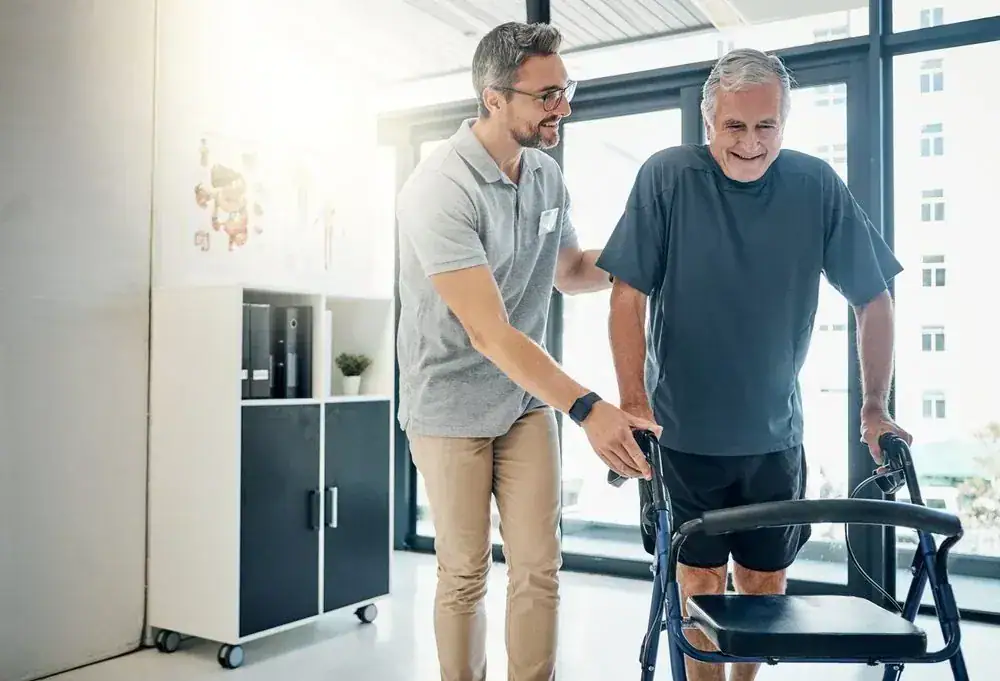

You stop planning your day around what feels safe. The bathroom at night doesn’t feel like a risk anymore. Getting the mail, walking to the car, standing up from a chair—these stop being calculations.
That’s what happens when your balance improves. Not just stronger legs or better posture, but actual freedom to move through your home without that constant background hum of worry.
Most people don’t realize how much fear takes over after a fall. You start avoiding stairs. You hold onto walls even when you don’t need to. You turn down invitations because you’re not sure about the terrain. Physical therapy for balance addresses the root cause—not just the symptoms. We work on strength, coordination, reaction time, and the specific deficits that put you at risk in the first place. You’re not just doing generic exercises. You’re retraining the systems that keep you upright.
We’ve been treating patients across Long Island for years, and fall prevention is one of the most common reasons people walk through our doors in Garden City Park. We’re not a corporate chain that rotates therapists every few months. Our team knows this community—the homes, the sidewalks, the daily routines that matter to you.
We also know what doesn’t work. Cookie-cutter programs. One-size-fits-all exercises. Sending you home with a printout and hoping for the best. Our approach is built around your specific fall risk factors, your medical history, and your actual goals. We accept most insurances, and you don’t need a referral to start.
If you’ve been putting this off because you’re not sure it’ll help, or because you don’t want to admit you need it—we get it. But waiting doesn’t make the problem smaller.

First, we assess where you actually are. Not where you think you should be—where you are right now. That means testing your balance, your gait, your strength, your reaction time, and any environmental or medical factors that increase your risk. If you’re on four or more medications, that’s a red flag. If you’ve already fallen once, your risk of falling again doubles. We need to know what we’re working with.
From there, we build a plan that’s specific to you. That might include strengthening exercises, balance drills, vestibular rehab if your inner ear is involved, or gait training if your walking pattern is off. We also talk about your home—lighting, rugs, bathroom setup, footwear. Sixty percent of fall-related hospitalizations happen at home, and most of those are preventable.
You’ll come in for sessions based on what your insurance covers and what your schedule allows. Some people see progress in a few weeks. Others need a couple months. But the goal is always the same: you should feel more stable, more confident, and less afraid of your own body. We’re not trying to turn you into an athlete. We’re trying to give you your life back.

Ready to get started?
You get a full fall risk assessment that looks at balance, strength, flexibility, vision, medications, and environmental hazards. This isn’t a questionnaire—it’s a functional evaluation that shows us exactly where the gaps are. From there, you get a personalized treatment plan that might include strength training, balance exercises for seniors like tai chi or Pilates-based movements, gait retraining, and vestibular therapy if dizziness or vertigo is part of the picture.
We also provide education. That means teaching you how to get up if you do fall, how to arrange your home to reduce risk, and what warning signs to watch for. In Garden City Park and across Nassau County, we see a lot of older homes with stairs, narrow hallways, and older bathroom layouts. Small changes—grab bars, better lighting, removing throw rugs—make a massive difference.
You’ll work with a licensed physical therapist who specializes in geriatric care and fall prevention. Sessions are one-on-one, and we adjust the plan as you improve. If something isn’t working, we change it. If you’re progressing faster than expected, we push a little harder. The program is built around you, not the other way around.

If you’ve fallen in the last year, you need it. Falling once doubles your chance of falling again, and every fall increases your risk of serious injury like a hip fracture or head trauma. But you don’t have to wait until you’ve already hit the ground.
If you’re afraid of falling, if you’ve had a few close calls, if you feel unsteady when you walk or stand up, or if you’re avoiding activities because you don’t trust your balance—those are all signs that something’s off. A lot of people brush it off as “just getting older,” but that’s not accurate. Yes, balance and strength decline with age, but that decline is preventable and often reversible with the right intervention.
Other red flags: taking four or more medications, having conditions like diabetes or heart disease that affect circulation and nerve function, experiencing dizziness or vertigo, or living in a home with stairs and poor lighting. If any of that sounds familiar, you’re a candidate for fall prevention therapy. The earlier you start, the better your outcomes.
Home exercises are helpful if you already know what you’re doing and you don’t have any underlying issues. But most people don’t know what they’re doing, and most people do have underlying issues. That’s the difference.
Physical therapy for balance starts with a real assessment. We figure out why you’re unsteady—is it muscle weakness, poor proprioception, vestibular dysfunction, medication side effects, vision problems, or a combination? Once we know the cause, we can address it directly. You’re not just doing random balance exercises for seniors you found online. You’re doing targeted interventions that fix the actual problem.
We also progress the exercises safely. A lot of people hurt themselves trying to do too much too soon, or they do exercises incorrectly and reinforce bad movement patterns. We make sure you’re doing the right things, at the right intensity, in the right order. And if something isn’t working, we adjust. You can’t do that on your own.
It depends on where you’re starting and what we’re treating. Some people feel more stable after a few sessions. Others need two or three months of consistent work to see significant improvement. There’s no universal timeline, but most patients notice a difference within the first month.
What matters more than speed is consistency. If you come in once a week and do your home exercises, you’ll progress faster than someone who comes twice a week but doesn’t practice at home. This isn’t passive treatment—you have to participate. But the work pays off.
We track your progress with objective measures: balance tests, gait analysis, strength assessments. You’re not guessing whether it’s working. We can show you the data. And once you hit your goals, we give you a maintenance plan so you don’t lose what you’ve gained. Falls are preventable, but prevention requires ongoing effort. We set you up to succeed long-term, not just during your therapy sessions.
Most insurance plans cover physical therapy for fall prevention, especially if you’ve already fallen or if your doctor documents that you’re at high risk. Medicare typically covers it. Many commercial plans do too. But every policy is different, so we verify your benefits before you start.
You usually don’t need a referral to see us, but some plans require one. We’ll let you know upfront what your coverage looks like, what your copay or deductible might be, and how many sessions your plan allows. We don’t surprise you with bills halfway through treatment.
If cost is a concern, talk to us. We can work with you on scheduling and session frequency to stay within your budget and your insurance limits. The goal is to get you the care you need without creating financial stress. And honestly, the cost of a few therapy sessions is a fraction of what you’d pay for an ER visit, surgery, or long-term rehab after a serious fall. Prevention is almost always cheaper than treatment.
Yes. Using a walker or cane doesn’t mean you’re beyond help—it means you’ve adapted to a problem, but the problem is still there. We can often improve your strength and balance enough that you need the assistive device less, or you use it more effectively and safely.
A lot of people use walkers or canes incorrectly. They lean too heavily on them, they don’t adjust the height properly, or they use them as a crutch instead of a tool. We teach you how to use your device the right way, and we work on the underlying deficits so you’re not as dependent on it. In some cases, people graduate from a walker to a cane, or from a cane to nothing at all.
Even if you’ll always need an assistive device, therapy still helps. You’ll move more confidently, you’ll have better posture, and you’ll reduce your risk of falling even with the device. And we’ll make sure your home setup supports safe movement—grab bars in the right places, clear pathways, proper lighting. It’s all part of the plan.
First, we figure out why. Was it a new hazard? A medication change? A moment of dizziness? Or did you try something you weren’t ready for yet? Falls during therapy aren’t common, but they happen, and when they do, we treat them as data. We adjust your plan, address the gap, and keep moving forward.
We also teach you how to fall safely and how to get up afterward. That might sound strange, but it’s one of the most practical things we do. If you know how to protect your head and how to get off the floor without panicking, a fall is far less likely to result in serious injury or a long wait for help.
The goal is to reduce your fall risk as much as possible, but we’re also realistic. Life happens. What we can control is how prepared you are, how strong you are, and how quickly you recover if something goes wrong. That’s what elderly fall prevention is really about—not eliminating every risk, but giving you the tools to handle whatever comes up.
Other Services we provide in Garden City Park