
You stop planning your day around what might go wrong. The bathroom at night doesn’t feel like a risk anymore. You reach for things on shelves without that split-second calculation about whether it’s worth it.
That’s what happens when your balance improves through targeted physical therapy. Not motivational speeches or general fitness advice, but exercises designed specifically for the coordination, strength, and proprioception issues that increase fall risk in adults over 65.
Falls aren’t inevitable. One in three adults over 65 falls each year, but research shows the right exercise program cuts that risk in half. You work with a licensed therapist who evaluates your specific risk factors—weak ankles, poor vision compensation, medication side effects, previous injuries—and builds a program around what your body actually needs. Most patients see measurable improvement in balance testing within weeks, and that improvement shows up in daily life even faster.
We’ve provided in-home physical therapy across Long Island since 2010. Every therapist on our team is licensed, Medicare-certified, and trained specifically in fall prevention and geriatric care.
You’re not traveling to an office when balance is already a concern. Your therapist comes to your home in Fort Salonga, evaluates your actual living environment, and designs treatment around the spaces where you move every day. That means exercises that prepare you for your stairs, your bathroom layout, your kitchen setup.
Fort Salonga and the surrounding North Shore communities have a significant population of older adults living independently. Our goal is keeping it that way. You get personalized care that treats you like family, not a number, with the clinical expertise to actually reduce your fall risk.

You call and talk to someone who understands Medicare coverage and can verify your eligibility right away. Most fall prevention therapy is covered when prescribed by your doctor, and we handle that coordination.
Your first session is a comprehensive fall risk assessment. Your therapist evaluates your strength, balance, gait, vision, coordination, and home environment. They’re looking at how you actually move, where you’re compensating, and what specific factors put you at risk. This isn’t a generic senior fitness evaluation—it’s a clinical assessment that identifies your individual risk factors.
From there, you get a personalized treatment plan. Some patients need ankle strengthening. Others need vision compensation training or proprioception work. Many need gait training to correct movement patterns that developed after an injury or surgery. Your program is built around your specific needs, and it happens in your home on a schedule that works for you.
Sessions typically run twice a week initially, then taper as you build strength and confidence. You’re doing exercises between sessions—your therapist gives you a home program that takes 10-15 minutes daily. Progress is measured with the same clinical balance tests used in research studies, so you see objective improvement, not just subjective feelings.

Ready to get started?
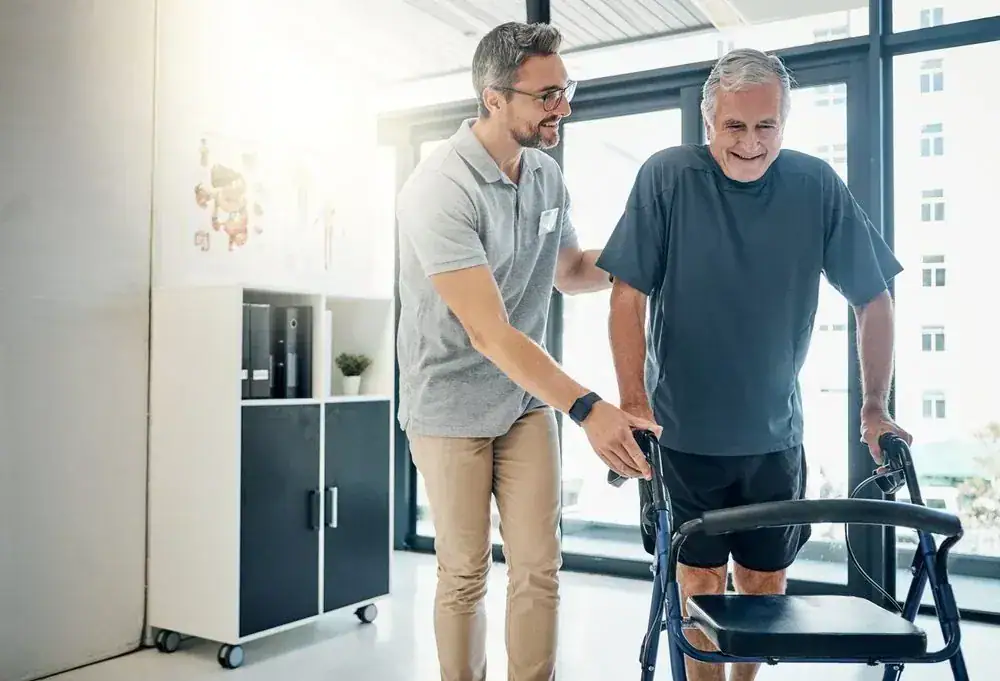
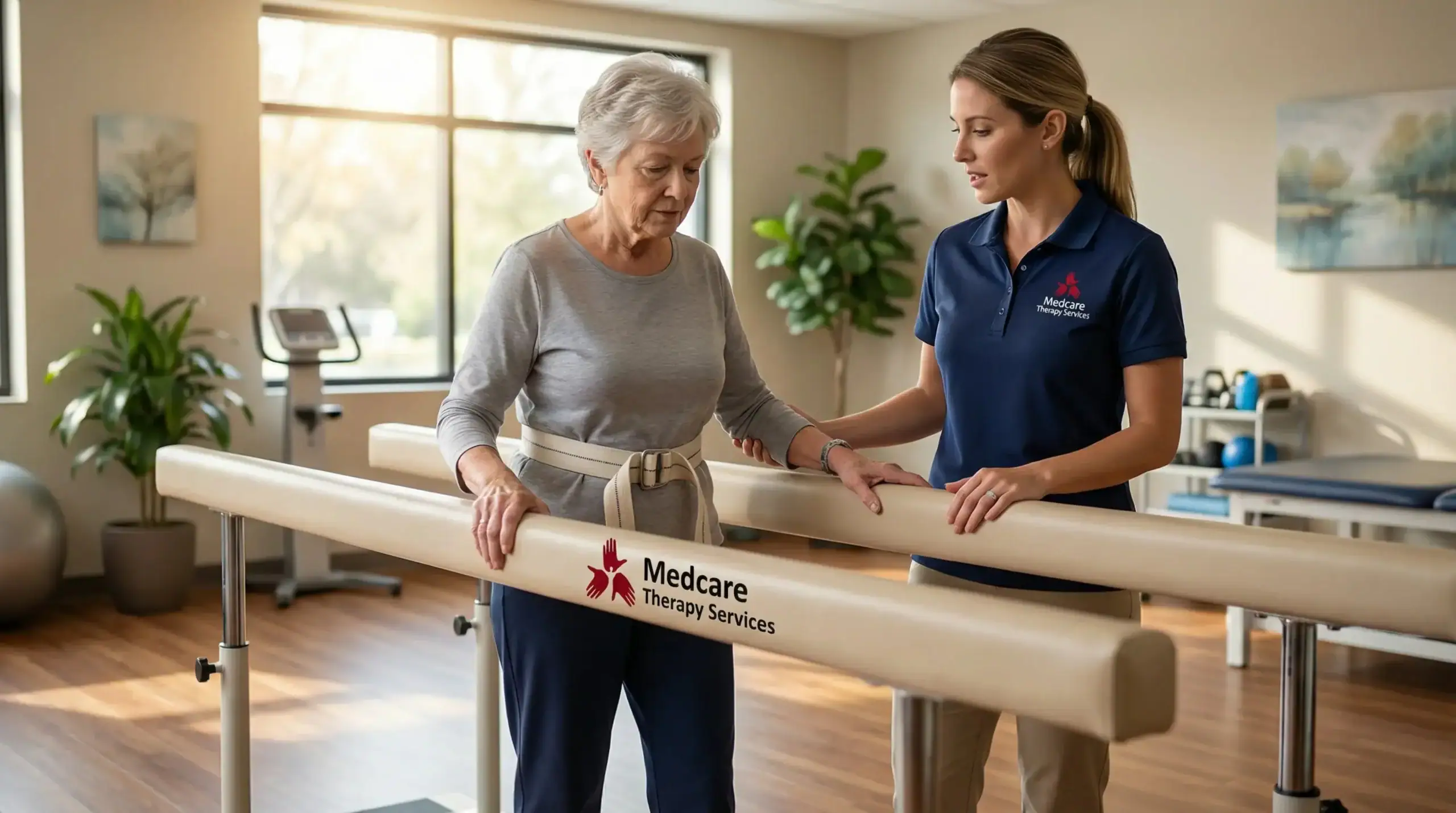
You get one-on-one sessions with a licensed physical therapist in your Fort Salonga home. Every visit includes hands-on treatment, guided exercises, progress tracking, and home program updates. Your therapist brings any equipment needed—balance tools, resistance bands, measurement devices.
The program addresses multiple fall risk factors simultaneously. Strength training focuses on the legs and core muscles that keep you upright. Balance exercises challenge your stability in controlled ways that build confidence. Gait training corrects walking patterns that increase fall risk. Proprioception work improves your body’s awareness of where it is in space, which often declines with age.
Your therapist also evaluates your home for fall hazards. Loose rugs, poor lighting, bathroom setup, furniture placement—small changes often make a significant difference. You get specific recommendations based on your home, not generic safety tips.
On Long Island, winter weather creates additional fall risks. Ice, snow, uneven sidewalks, and reduced outdoor activity all increase danger for older adults. Your therapy program accounts for seasonal factors and prepares you for the conditions you’ll actually face in Fort Salonga throughout the year.

Yes, Medicare Part B covers physical therapy for fall prevention when it’s medically necessary and prescribed by your doctor. You need a physician’s referral stating that you’re at risk for falls or have already experienced a fall. Most patients qualify if they have balance issues, a history of falling, or conditions that affect mobility.
Medicare covers up to a certain dollar amount per year for physical therapy, and fall prevention typically falls well within that cap. You’re responsible for your standard 20% copay after meeting your deductible. We verify your coverage before starting treatment, so you know exactly what you’ll pay.
If you have a Medicare Advantage plan, coverage works similarly but may have different copay structures. Our intake team confirms your specific plan details during scheduling. Supplemental insurance often covers the 20% copay, meaning many patients pay nothing out of pocket for therapy.
Most patients notice subjective improvement within two to three weeks. You feel steadier getting out of bed, more confident on stairs, less hesitant during daily activities. Objective improvement on clinical balance tests typically shows up within four to six weeks of consistent therapy.
The timeline depends on your starting point and how many risk factors you’re addressing. Someone recovering from a specific injury might progress faster than someone managing multiple chronic conditions. Consistency matters more than intensity—patients who do their home exercises between sessions improve significantly faster than those who only work during therapy visits.
Research shows balance measures improve between 16% and 42% compared to baseline with structured exercise programs. That’s not a small change. It’s the difference between needing assistance and moving independently. Your therapist tracks progress with standardized tests at regular intervals, so you see concrete evidence of improvement, not just anecdotal feelings.
You’re training in the environment where you actually live. Your therapist sees your stairs, your bathroom, your flooring, your lighting. They design exercises that prepare you for your specific home layout, not a generic clinical space. That transfer of skills happens immediately because you’re already in the right environment.
Transportation is eliminated as a barrier. If getting to appointments is difficult or risky because of mobility issues, you’re more likely to skip sessions or stop therapy early. In-home treatment removes that obstacle entirely. Your therapist comes to you on a consistent schedule, which means better adherence and better results.
For many Fort Salonga residents, especially those near the harbor or in areas with older homes, stairs and uneven surfaces are daily realities. Your therapist incorporates those specific challenges into treatment. You’re not doing generic balance exercises—you’re practicing the exact movements you need for your actual life. That specificity makes the therapy more effective and the results more immediate.
Falling once doubles your risk of falling again, which makes therapy more important, not less. Your body often compensates after a fall by moving more cautiously, which can actually increase fall risk by weakening muscles and reducing confidence. Physical therapy breaks that cycle.
Post-fall therapy focuses on two things: rebuilding the physical capabilities you lost during recovery, and addressing whatever caused the fall in the first place. If you fell because of weak ankles, your program strengthens ankles. If you fell because of poor lighting and slow reactions, your program works on reaction time and environmental modifications.
Many patients start therapy after a fall and wish they’d started earlier. The average hospital cost for a fall injury is over $34,000, and falls are the leading cause of injury-related death in adults over 65. Therapy after one fall is still prevention—you’re preventing the second fall, the serious injury, the loss of independence that often follows repeated falls.
Falling is not inevitable. It’s common, but it’s preventable. The research is clear: exercise programs that target balance and strength reduce fall risk by up to 50%. That’s a massive reduction, and it’s achievable for most older adults regardless of current fitness level.
Your balance declines with age because of specific, addressable factors. Muscle strength decreases. Proprioception—your body’s sense of where it is in space—gets less accurate. Vision changes. Medications affect coordination. Inner ear function declines. Each of these factors can be improved or compensated for with the right exercises and interventions.
Senior balance exercises work because they challenge your body’s balance systems in progressive ways. You start where you are—maybe holding onto a counter for support—and gradually increase difficulty as your strength and confidence improve. Your body adapts. Your muscles get stronger. Your balance improves. It’s not magic or motivation, it’s basic physiology applied correctly by someone who knows what they’re doing.
Fall prevention therapy specifically targets the multiple systems that keep you upright and stable. Regular physical therapy might focus on one area—a knee injury, back pain, post-surgical recovery. Fall prevention addresses strength, balance, coordination, gait, proprioception, and environmental factors simultaneously because falls usually result from multiple risk factors combining.
Your therapist uses specialized balance assessment tools and exercises designed for older adults. These aren’t the same protocols used for sports injuries or post-operative care. They’re evidence-based interventions proven to reduce fall risk in adults over 65. The exercises challenge your balance in safe, controlled ways that build real-world stability.
The program also includes education about fall risks you might not consider. Medication interactions, footwear choices, vision changes, home hazards—your therapist addresses all of it. You’re not just getting stronger, you’re getting smarter about the factors that put you at risk. That combination of physical improvement and practical knowledge is what actually prevents falls, not just one or the other.
Other Services we provide in Fort Salonga