
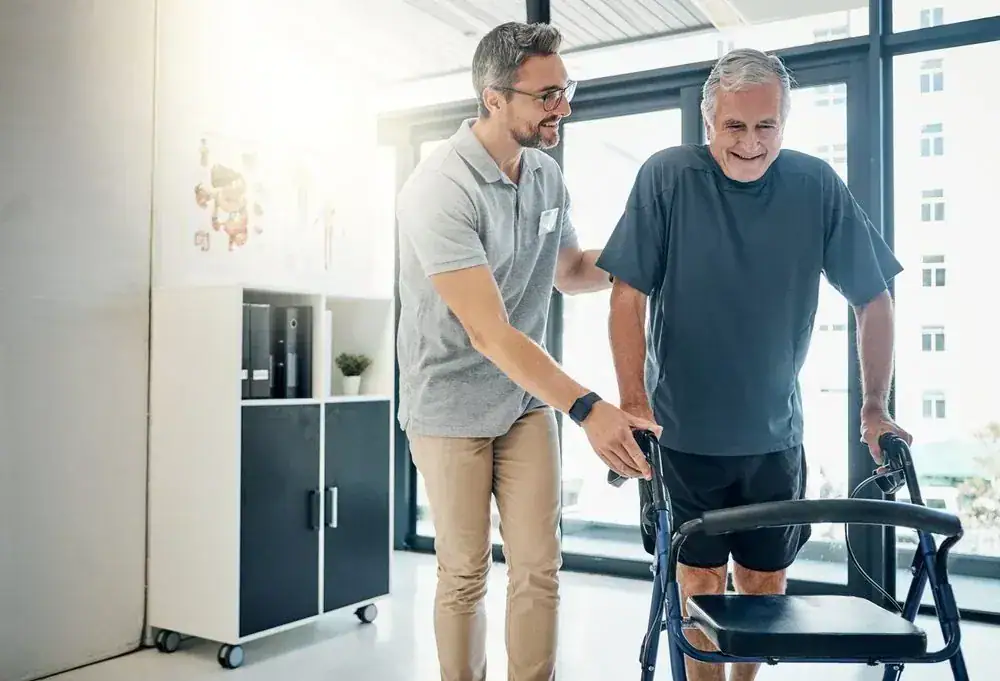
You stop second-guessing every step. Getting up from a chair doesn’t require a mental checklist. Walking to the mailbox or navigating your bathroom at night becomes automatic again, not something you plan around.
That’s what balance exercises for seniors are designed to do. Not just strengthen your legs, but retrain the systems that keep you upright—your inner ear, your vision, your reflexes, and the muscles that stabilize you before you even realize you’re off-center.
Across Nassau County, one in three older adults falls each year. Many don’t report it because they’re worried about losing independence. But here’s what the data shows: regular physical therapy for balance can cut your fall risk in half. Not by luck—by addressing the specific weaknesses that make falls more likely in the first place.
You’re not looking for a miracle. You’re looking for something that works. Balance training works because it’s based on how your body actually moves, not generic exercises pulled from a handout.
We’ve been helping older adults in Floral Park and surrounding Nassau County communities stay safe at home for years. We’re not a corporate chain. We’re local physical therapists who understand what it’s like to age in this area—the split-level homes, the uneven sidewalks, the winters that make every surface a potential hazard.
Our team creates fall prevention plans based on your specific risks. Maybe it’s medication side effects, maybe it’s arthritis in your knees, maybe it’s just that you haven’t moved as much lately. We figure out what’s actually putting you at risk, then build a program around that.
You’ll work with the same therapist throughout your care. Your progress gets tracked. Your program gets adjusted. And if we think your home setup is part of the problem, we’ll tell you exactly what needs to change.

First, we assess your fall risk. That means testing your balance, watching how you walk, checking your strength, and asking about any falls or close calls you’ve had. We also review your medications because some prescriptions increase fall risk without you realizing it.
Then we build your program. Most patients come in two to three times per week for four to six weeks. Each session includes balance exercises, strength training for your legs and core, and gait training to improve how you walk. We also work on reaction time—so if you do start to lose your balance, your body knows how to catch itself.
Between sessions, you’ll have exercises to do at home. Nothing complicated. These are movements you can do holding onto your kitchen counter or sitting in a sturdy chair. The goal is to make stability part of your daily routine, not just something you work on during appointments.
As you improve, we increase the challenge. Better balance isn’t about doing the same thing over and over. It’s about progressively training your body to handle more difficult situations—uneven surfaces, quick direction changes, distractions while you’re moving.

Ready to get started?
You get a full fall risk assessment that identifies your specific vulnerabilities. We test your balance using clinical measures that predict fall risk, evaluate your walking pattern, check your lower body strength, and review any medical conditions or medications that could be contributing factors.
Your treatment includes one-on-one sessions with a licensed physical therapist. Every visit is personalized. We’re not running a group class where everyone does the same routine. You’re getting balancing exercises designed for your body, your limitations, and your goals.
In Floral Park and across Long Island, many older adults fall at home. That’s why we also provide home safety recommendations. We’ll identify tripping hazards, suggest lighting improvements, and recommend assistive devices if they’d help. You don’t have to make every change we suggest, but you should know what’s putting you at risk.
You’ll also learn how to get up if you do fall. It sounds simple, but there’s a technique that protects your joints and conserves energy. Many people who fall stay on the floor for hours because they don’t know the safest way to get back up. We teach you that.
If you’ve fallen in the past year, you’re at higher risk. If you’ve had a close call where you caught yourself, that counts too. But even without a fall, certain signs point to increased risk.
Do you feel unsteady when you stand up? Do you hold onto furniture when you walk around your house? Have you started avoiding certain activities because you’re worried about losing your balance? Those are all red flags.
Medical factors matter too. Arthritis, diabetes, Parkinson’s, vision problems, and inner ear issues all affect balance. So do medications for blood pressure, sleep, anxiety, or depression. If you take four or more medications, your fall risk goes up significantly. A fall risk assessment gives you a clear answer instead of guessing.
You can definitely exercise on your own, but you might not know which exercises actually reduce fall risk. Not all movement helps with balance. Some exercises can even make things worse if they’re not appropriate for your current ability level.
A physical therapist identifies the specific reasons you’re unsteady. Maybe your ankles are weak. Maybe your hips aren’t stabilizing properly. Maybe your reaction time has slowed. We test for all of that, then target the exact problems.
We also progress your exercises safely. Balance training works when it challenges you just enough—not so easy that nothing changes, but not so hard that you risk falling during the exercise itself. That’s a fine line, and it’s easy to misjudge on your own. Plus, we catch compensation patterns. If you’re using the wrong muscles or moving incorrectly, we fix that before it becomes a habit.
Most patients notice a difference within two to three weeks. That doesn’t mean you’re done with therapy—it means you’re starting to feel more stable during everyday activities. Real, lasting improvement typically takes four to six weeks of consistent work.
The timeline depends on where you’re starting from. If you’ve been inactive for a while, your body needs time to rebuild strength and coordination. If you’re already fairly active but dealing with a specific issue like vertigo or neuropathy, progress might come faster.
Here’s what you should expect: early on, exercises that felt difficult start to feel manageable. You’ll notice you’re not grabbing onto things as much. You might catch yourself walking faster without thinking about it. Those are signs that your balance system is recalibrating. Stick with the full program, though. Stopping too early means you don’t get the full protective effect against future falls.
Most Medicare and private insurance plans cover physical therapy for balance and fall prevention, especially if you’ve had a fall or your doctor has documented balance problems. Medicare Part B typically covers therapy when it’s medically necessary, which fall prevention usually qualifies as.
You’ll likely have a copay or coinsurance depending on your specific plan. Some plans require a referral from your primary care doctor, while others allow direct access to physical therapy. We can verify your benefits before you start so there are no surprises.
If you haven’t fallen yet but you’re concerned about your balance, talk to your doctor. They can write a prescription for a fall risk assessment and preventive therapy. Insurance is more likely to cover it when there’s a documented medical reason, not just general wellness. We handle the paperwork and work with your insurance company to make sure you’re getting the coverage you’re entitled to.
It’s not too late. Actually, if you’ve already fallen, that makes fall prevention therapy even more important. Falling once doubles your chance of falling again. Your body starts compensating in ways that often make balance worse, not better.
After a fall, many people develop a fear of falling. That fear makes you move less, which weakens your muscles and worsens your balance. It’s a cycle. Physical therapy breaks that cycle by rebuilding your confidence along with your physical stability.
We’ve worked with patients who’ve fallen multiple times and thought they were headed for a nursing home. With the right program, they got back to living independently. The key is addressing all the factors—strength, balance, home safety, and fear. You don’t just need stronger legs. You need a complete system that makes falling less likely. That’s what elderly fall prevention therapy does.
Yes. While we’re based in Floral Park, we serve patients throughout Nassau County and Long Island. That includes nearby communities like Garden City, New Hyde Park, Elmont, Bellerose, Mineola, and dozens of other towns in the area.
We understand the local environment. The housing stock here—split-levels, older homes with stairs, narrow bathrooms—creates specific fall risks. We know what Long Island winters do to mobility. We know the demographic trends showing that Nassau County’s older adult population is growing faster than the state average.
If you’re not sure whether we cover your area, just ask. We have multiple locations and work with patients across a wide service area. What matters most is that you’re getting fall prevention care from therapists who understand the local challenges you’re facing every day.
Other Services we provide in Floral Park