

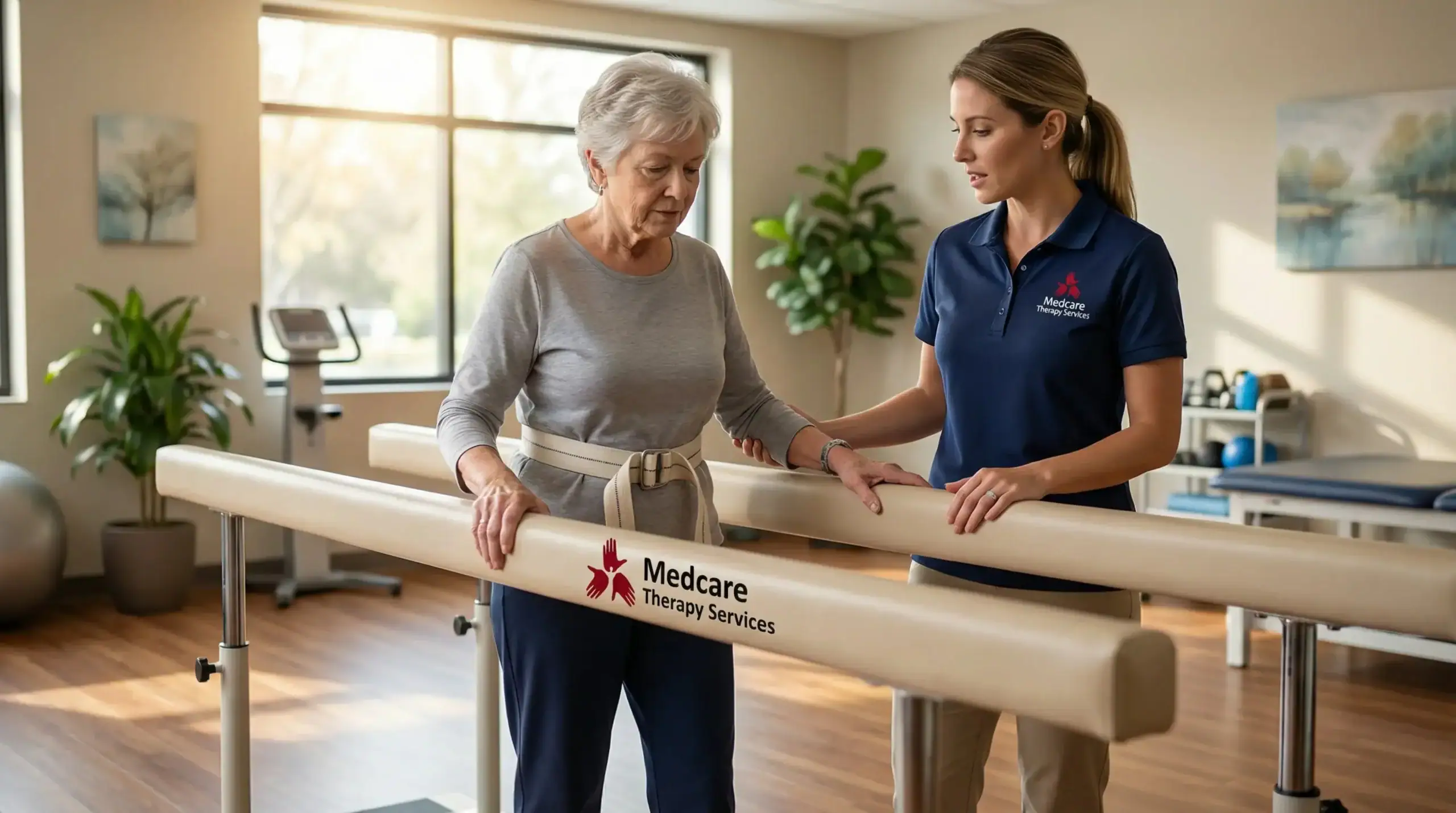
You’ve probably started thinking twice before walking to the beach or stepping off a curb. Maybe you’ve caught yourself reaching for walls more often, or you’ve already had a close call that shook you up.
That hesitation changes how you live. You skip activities you used to enjoy. You avoid going out alone. The fear becomes as limiting as the physical risk itself.
Here’s what most people don’t realize: falling isn’t just bad luck or part of getting older. It’s a predictable event with identifiable causes. Your balance, strength, gait, and reaction time all play a role. When you address those factors with the right exercises and guidance, you can cut your fall risk by 30% to 50%.
Physical therapy for balance isn’t about wrapping you in bubble wrap. It’s about retraining your body to respond faster, stabilize better, and move with the kind of confidence that lets you live normally again. You work on strength, coordination, and real-world movements that matter in your daily routine.
We’ve been serving Fire Island, NY and the surrounding Long Island communities for years. We’re not a corporate chain with rotating staff. You’ll see the same therapists, get personalized treatment plans, and work with people who understand what it’s like to live and age in this area.
Fire Island’s seasonal population and unique layout mean your mobility needs are different than someone living in a high-rise in Manhattan. We get that. We build programs around your actual environment and lifestyle, not a one-size-fits-all protocol.
We also take security and continuity seriously. Every location maintains verified profiles, controlled access, and transparent communication so you’re never left wondering who’s managing your care or where your information is going.

Your first visit starts with a fall risk assessment. We look at your balance, gait, strength, medication list, and any past falls or near-misses. This isn’t a quick screening. It’s a detailed evaluation that identifies your specific risk factors so we’re not guessing.
From there, we build a personalized program. That might include strengthening exercises to stabilize your core and legs, balance training that challenges your stability in safe and controlled ways, and gait retraining to improve how you walk and shift your weight. We also address the psychological side—if you’ve developed a fear of falling, we work through that with graded exercises that rebuild your confidence.
Sessions are hands-on. You’re not handed a sheet of exercises and sent home. Your therapist works directly with you, adjusts techniques in real time, and progresses your program as you improve. Most people come in one to two times per week, depending on their needs and goals.
You’ll also get a home exercise plan and practical advice for reducing hazards in your living space. The goal is to make you stronger and safer everywhere you go, not just in our clinic.

Ready to get started?
Every program includes a comprehensive fall risk assessment, one-on-one physical therapy sessions, and a customized exercise plan based on your specific needs. You’ll work on balance exercises for seniors that target stability, coordination, and reaction time. Strengthening work focuses on your legs, hips, and core—the areas that keep you upright and steady.
We also incorporate functional training. That means practicing the movements you actually do every day: getting up from a chair, stepping over thresholds, reaching for objects, turning your head while walking. These aren’t arbitrary drills. They’re the exact scenarios where falls happen, and we make sure your body knows how to handle them.
For Fire Island residents, this is especially relevant. With sandy paths, uneven boardwalks, and seasonal weather changes, your environment demands good balance and adaptability. New York State data shows that adults 60 and older make up a growing share of the population here, and fall-related hospitalizations cost an average of $34,294 per incident. Prevention isn’t just smart for your health—it’s a financial decision too.
You’ll also get education on medication side effects, vision checks, footwear recommendations, and home safety tips. We’re addressing every angle, not just the physical therapy piece.

If you’ve fallen in the past year, you’re at higher risk. But even if you haven’t, there are warning signs worth paying attention to.
Do you feel unsteady when you walk? Do you grab onto furniture or walls for support? Have you noticed your legs feel weaker, or you’re slower getting up from a chair? Those are red flags. So is taking four or more medications, having vision problems, or dealing with conditions like arthritis, diabetes, or neuropathy.
A lot of people brush off balance issues as normal aging. But one in four adults over 65 falls every year, and fewer than half ever mention it to their doctor. The truth is, most falls are preventable once you know what’s causing the instability. A fall risk assessment gives you a clear picture of where you stand and what needs attention. It’s not about scaring you. It’s about giving you the information to make a proactive choice before something happens.
The exercises depend on your assessment, but most programs include a mix of static balance, dynamic balance, and strength work.
Static balance might be standing on one leg or holding a position with your eyes closed. It sounds simple, but it trains your body to stabilize without visual cues. Dynamic balance involves moving while maintaining control—things like walking heel to toe, stepping over objects, or shifting your weight side to side. These mimic real-world situations where you need to react quickly.
Strength exercises focus on your lower body and core. Squats, leg lifts, step-ups, and planks all help build the muscle control that keeps you upright. We also use tools like balance boards, resistance bands, and foam pads to add challenge as you progress. Everything is scaled to your current ability. If you’re just starting out, we keep it simple and safe. As you get stronger, we increase the difficulty. The goal is always to push you just enough to improve without putting you at risk during the session itself.
Most people notice changes within four to six weeks if they’re consistent with therapy and home exercises. That might mean feeling steadier on your feet, moving with more confidence, or noticing that you’re not reaching for support as often.
Significant fall risk reduction usually takes eight to twelve weeks of regular work. That’s when the strength gains, balance improvements, and motor control start to compound. Your brain is literally rewiring how it coordinates movement, and that takes time.
Here’s the thing: improvement isn’t always dramatic or sudden. You might not wake up one day and feel like a different person. But you’ll start doing things you’d been avoiding. You’ll walk outside without that constant low-level anxiety. You’ll trust your body again in situations that used to make you nervous. That’s the real marker of progress. Consistency matters more than intensity. Showing up twice a week and doing your home program will get you further than sporadic effort, even if the exercises feel easy at first.
In most cases, yes—if it’s medically necessary and prescribed by a physician. Medicare Part B covers physical therapy for fall prevention when there’s a documented risk or history of falls. Many private insurance plans follow similar guidelines.
The key is having a referral or prescription from your doctor. If you’ve fallen recently, have a diagnosis like osteoporosis or neuropathy, or your physician has noted balance issues in your chart, that usually qualifies you. During your first visit, we’ll verify your coverage and let you know what your out-of-pocket costs will be.
Some people assume they need to wait until after a fall to get help, but that’s not true. Preventive therapy is covered when the risk is clear. If you’re unsure, call your insurance provider or ask us to check your benefits before you start. We handle this regularly and can walk you through what’s covered. Even if you have a copay or deductible, the cost of a few therapy sessions is a fraction of what a fall-related ER visit or hospitalization would run. The average hospital stay for a fall injury is over $34,000. Prevention is the better investment.
Yes. In fact, people who’ve already fallen often see some of the most meaningful improvements because the need is urgent and the baseline risk is high.
After a fall, many people develop a fear that makes them move less. That inactivity leads to weaker muscles, worse balance, and even higher fall risk. It’s a cycle. Physical therapy breaks that cycle by rebuilding strength and confidence at the same time.
We start where you are. If you’re nervous or deconditioned, we keep the exercises simple and controlled. As you get stronger and start trusting your body again, we progress the program. Studies show that even adults over 80 can improve balance and reduce fall risk with the right training. Your age or fall history doesn’t disqualify you. What matters is your willingness to show up and do the work. We’ve helped plenty of people who thought they were too far gone or too old to get better. They weren’t. And if you’re reading this and wondering if it’s too late for you, it’s probably not.
It depends on your insurance. Medicare and many private plans require a physician referral or prescription for physical therapy. Some plans allow direct access, meaning you can start therapy without seeing your doctor first.
If you’re not sure, we can help you figure it out. Call our office and we’ll check your specific plan’s requirements. Even if you do need a referral, it’s usually a quick process. Your primary care doctor can write one after a brief conversation about your balance concerns or fall history.
If you’d rather not wait, you can also schedule a fall risk screening. Some of our locations offer these as a starting point to identify whether therapy is appropriate. It’s a lower barrier to entry and gives you useful information either way. The bottom line: don’t let the referral question stop you from reaching out. We’ll walk you through whatever steps are needed to get you started. The harder part is usually admitting you need help in the first place. Once you make that call, the logistics are straightforward.
Other Services we provide in Fire Island