
You stop second-guessing every step. Getting up at night doesn’t feel like a calculated risk anymore. Walking to the mailbox or reaching for something on a shelf becomes automatic again, not something you plan around.
That shift happens when balance improves, strength builds back up, and the small hazards in your home get identified before they cause problems. Most people don’t realize how much energy goes into compensating for poor balance until they don’t have to anymore.
Falls aren’t just about the physical injury. They change how you live. You start avoiding activities, limiting trips outside, asking for help with things you used to handle on your own. The goal here is to reverse that—to rebuild the confidence and physical capability that lets you stay independent in your own home for as long as possible.
We’ve been serving Long Island communities like Eastport, Speonk, and surrounding Suffolk County areas for years. Our focus has always been straightforward: personalized care that actually addresses what’s causing the problem, not just surface-level symptoms.
Every treatment plan starts with a thorough assessment. From there, we build a program based on your specific risk factors—whether that’s medication side effects, vision changes, muscle weakness, or environmental hazards at home. You’re not following a generic protocol. You’re working through a plan designed for your situation.
We understand what’s at stake for older adults in this area. With Suffolk County seeing a significant portion of fall-related hospitalizations happen at home, our emphasis is on catching risks early and preventing that first fall—or making sure a previous fall doesn’t lead to another.
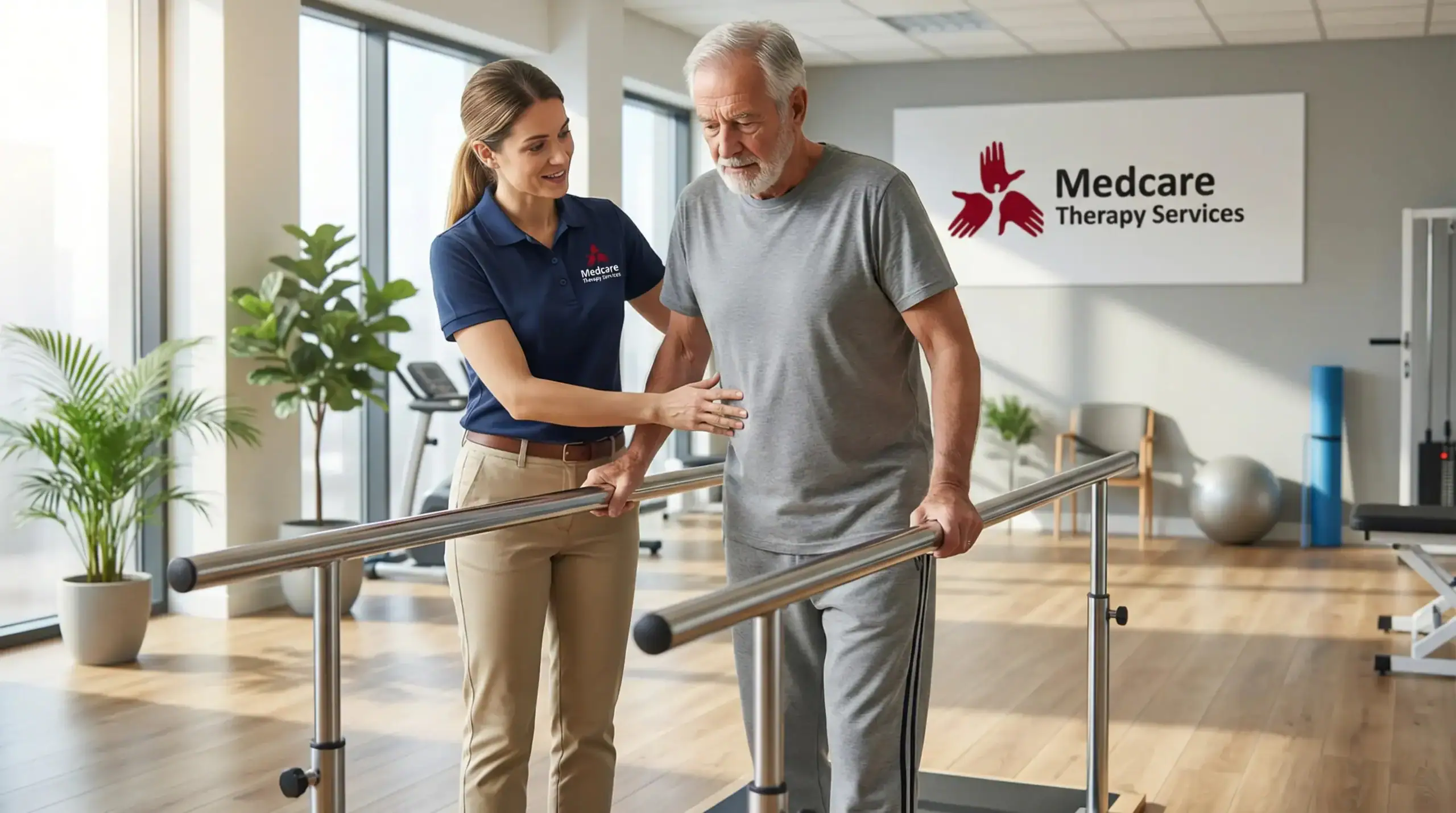
It starts with a fall risk assessment. This isn’t a quick questionnaire. It’s a detailed evaluation that looks at balance, gait, strength, medication effects, vision, and your home environment. The goal is to identify what’s actually increasing your risk—not guess.
From there, you’ll work through a structured program that typically includes balance exercises for seniors, strength training, and gait retraining. These aren’t complicated gym routines. They’re functional movements that translate directly to daily activities like standing from a chair, walking on uneven surfaces, or turning quickly without losing stability.
If needed, we’ll schedule a home safety evaluation. This involves walking through your living space to spot hazards—poor lighting, loose rugs, bathroom risks, clutter in walkways. Small changes here make a measurable difference. Many people don’t realize how much their environment contributes to fall risk until someone points it out.
We track progress throughout. You’ll see measurable improvements in balance, strength, and confidence. The timeline varies, but most people notice a difference within a few weeks of consistent work.

Ready to get started?
The program covers several key areas. Balance training uses evidence-based exercises that challenge your stability in controlled ways, gradually building your ability to recover when you feel unsteady. Strength work focuses on the legs and core—the muscle groups that matter most for preventing falls.
Gait training addresses how you walk. Small adjustments in stride length, foot placement, and posture can significantly reduce fall risk. You’ll also work on reaction time and coordination, which help you catch yourself if you do start to lose balance.
For Eastport and Long Island residents, home safety evaluations are particularly valuable. Older homes in this area often have features that increase fall risk—narrow staircases, outdated bathroom layouts, uneven flooring. The evaluation identifies these issues and provides practical solutions that don’t require major renovations.
Medication reviews are part of the process too. Certain medications commonly prescribed to older adults—blood pressure drugs, sleep aids, pain relievers—can increase fall risk through dizziness or drowsiness. If that’s a factor, we coordinate with your physician to address it.
If you’ve fallen in the past year, your risk of falling again is twice as high as someone who hasn’t. That’s the clearest indicator. But there are other signs that often get overlooked.
Do you feel unsteady when standing up or turning around? Do you grab onto furniture or walls when moving through your home? Have you started avoiding certain activities because you’re worried about balance? These are all red flags. Vision changes, new medications, or a recent illness can also increase risk, even if you haven’t fallen yet.
In Suffolk County, more than 60% of fall-related hospitalizations happen at home. Most of those falls were preventable. A professional assessment can measure your balance, strength, and gait to give you a clear picture of where you stand. It’s not about creating fear—it’s about catching problems early when they’re easiest to fix.
The difference is in the assessment and progression. Exercising at home is helpful, but without knowing which specific deficits are increasing your fall risk, you might be working on the wrong things—or doing exercises incorrectly in ways that don’t actually help.
We evaluate your balance, strength, coordination, and movement patterns to identify exactly what needs work. From there, exercises get tailored to address those specific issues. The progressions are controlled and adjusted based on your improvement, which is hard to do accurately on your own.
There’s also the safety factor. Many effective balance exercises challenge your stability, which means there’s a risk of falling during the exercise itself. In a supervised setting, that risk is managed. You’re pushed to improve without putting yourself in danger. Plus, if something isn’t working or causes pain, adjustments happen immediately rather than after you’ve spent weeks doing something that isn’t helping.
Most people notice changes within three to four weeks of consistent work. That doesn’t mean you’re done at that point—it means you start feeling steadier, more confident, and less reliant on support when moving around.
Meaningful improvements in strength and balance typically take eight to twelve weeks. That’s the timeframe research supports for evidence-based fall prevention programs. The timeline can vary based on your starting point, how often you’re working on exercises, and whether other health conditions are affecting progress.
The key is consistency. Two to three sessions per week, combined with home exercises, produces better results than sporadic effort. Some people see faster progress, especially if their fall risk is primarily due to muscle weakness or balance deficits that respond well to targeted training. Others take longer, particularly if multiple risk factors are involved. The important thing is that improvement is measurable and continues as long as you’re actively working on it.
In most cases, yes—if it’s medically necessary. Medicare Part B covers physical therapy for balance and fall prevention when it’s prescribed by a doctor and provided by a qualified therapist. There are some limitations on the number of visits per year, but those caps can be exceeded if the therapy is deemed medically necessary.
The key is documentation. Your doctor needs to establish that you’re at risk for falls and that physical therapy is an appropriate intervention. If you’ve already fallen, that makes the case stronger. If you haven’t but have clear risk factors—previous stroke, Parkinson’s disease, severe arthritis, significant balance problems—that usually qualifies as well.
Private insurance plans vary, but many follow similar guidelines to Medicare. It’s worth checking your specific plan’s coverage for outpatient physical therapy. We work with most major insurance providers and can help verify your benefits before you start. The cost of prevention is significantly lower than the cost of treating a fall injury, which is why most insurers cover these services when they’re truly needed.
The first visit is mostly assessment. You’ll go through a series of tests that measure balance, strength, flexibility, and how you walk. This might include standing on one leg, walking in a straight line, sitting down and standing up from a chair, and reaching in different directions while maintaining your balance.
We’ll also ask about your medical history, medications, previous falls, and any activities you’ve been avoiding due to balance concerns. If you’ve had vision changes, hearing loss, or recent hospitalizations, those details matter. The goal is to build a complete picture of what’s contributing to your fall risk.
From there, you’ll get a clear explanation of what the assessment revealed and what the treatment plan will involve. You might start some exercises during that first session, or we might focus on education—explaining why certain factors increase your risk and what the plan is to address them. Most people leave the first appointment with a better understanding of their fall risk and a realistic sense of what improvement will take. It’s not a quick fix, but it’s a clear path forward.
Yes, and it’s particularly important in that situation. Falling once doubles your chances of falling again. Multiple falls suggest that whatever caused the first fall hasn’t been addressed, and the risk is compounding.
The approach is the same—identify the specific factors increasing your risk and work to correct them. But there’s often more urgency because the pattern is already established. The fear of falling can become as much of a problem as the physical risk, leading to reduced activity, muscle loss, and even more instability. Breaking that cycle requires targeted intervention.
For people who’ve fallen multiple times, the program often includes more intensive balance training and a thorough home safety evaluation. Environmental factors play a bigger role than most people realize, and if your home has hazards that contributed to previous falls, those need to be addressed. The goal is to stop the pattern before it leads to a serious injury—hip fracture, head trauma, or a fall that results in hospitalization or long-term care placement. That’s preventable with the right intervention.
Other Services we provide in Eastport