

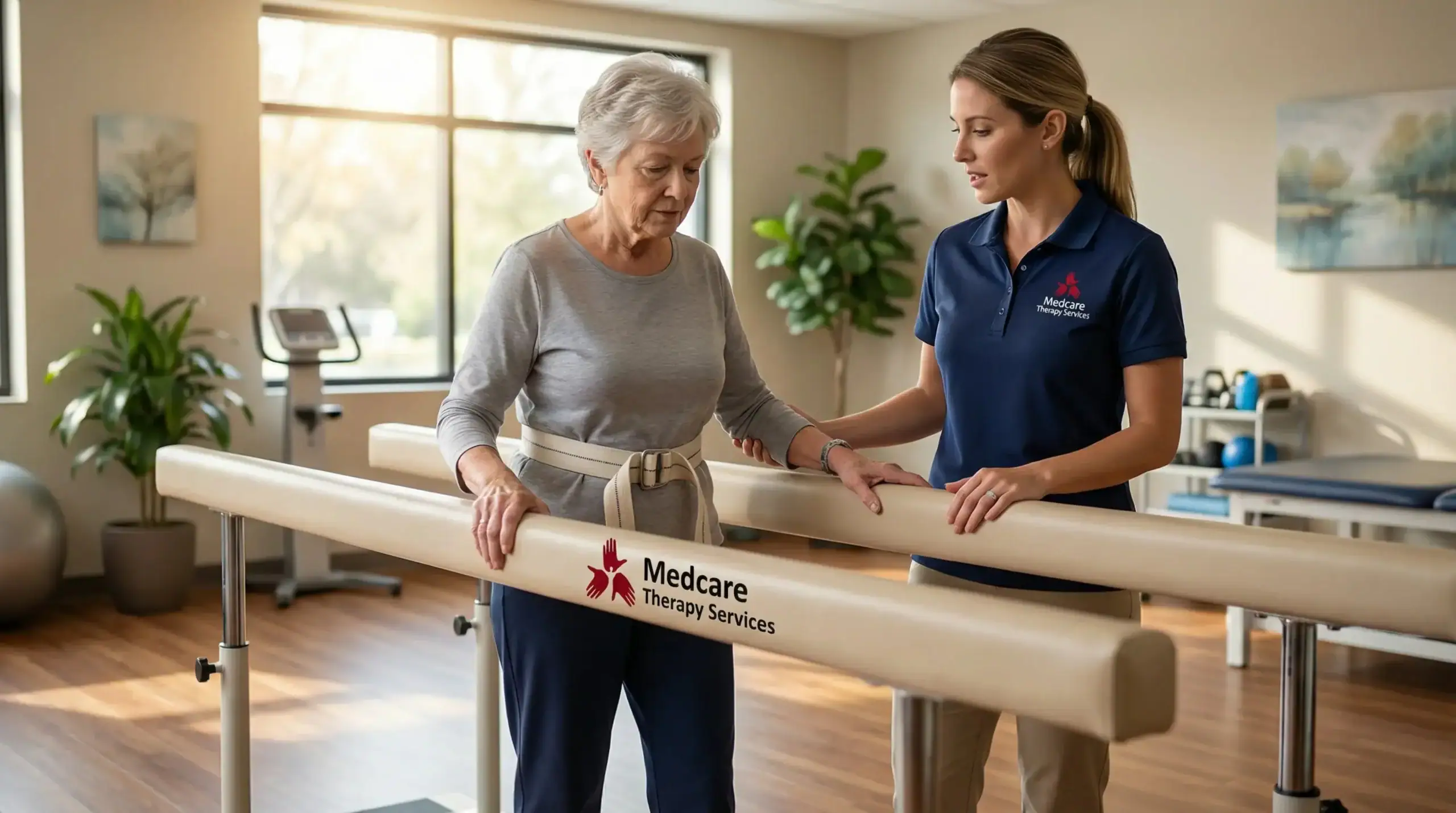
You’re limiting what you do because you’re worried about falling. Maybe you’ve already had a close call, or you’ve seen what happened to a neighbor. That fear changes everything—fewer trips outside, less time doing things you enjoy, more dependence on others.
Here’s what changes when you address it: you walk to the mailbox without second-guessing every step. You get up at night without holding your breath. You visit friends, go to the store, move through your day without that constant background worry.
Physical therapy for balance isn’t about becoming an athlete. It’s about strengthening the specific muscles that keep you stable, training your body to catch itself when you stumble, and rebuilding the confidence that fear has been stealing from you. Research shows balance exercise programs reduce fall rates by 23%, and targeted physical therapy decreases fall incidents by up to 37% in older adults. You don’t have to accept falling as inevitable.
We’ve been providing in-home physical therapy across Long Island for over a decade. We’re not a new operation trying to figure things out—we’re licensed professionals who’ve worked with hundreds of seniors in East Shoreham, Shoreham, Wading River, and throughout Suffolk County.
We accept Medicare and most commercial insurance plans, which matters because fall prevention therapy is often covered when prescribed by your doctor. Our therapists come to your home because we know that’s where you need to feel confident, and it’s where we can see the actual hazards and movement patterns that put you at risk.
Every therapist on our team is licensed, background-checked, and trained specifically in elderly fall prevention. We’re not here to rush through appointments or hand you a generic exercise sheet. We’re here because one in four seniors falls every year, and most of those falls happen at home—and we know how to change those odds.

First, we come to your home in East Shoreham for an evaluation. We watch how you move, test your balance and coordination, check your strength in key areas like your legs and core, and walk through your home looking for hazards you might not notice anymore. We’re assessing fall risk factors specific to you—not applying some one-size-fits-all checklist.
Then we build your personalized program. This typically includes balance exercises that challenge your stability in safe, progressive ways, strength training focused on the muscles that keep you upright, gait training to improve how you walk, and specific exercises that address any medical conditions affecting your mobility. We also recommend home modifications if we spot risks like loose rugs, poor lighting, or bathroom hazards.
You’ll usually see us one to three times per week, depending on your needs and what insurance covers. Most people start noticing improvements within four to six weeks—better stability, less fear, more confidence moving around. Maximum benefits typically show up after eight to twelve weeks of consistent work. We’re not just running you through exercises; we’re retraining your body’s systems that prevent falls and rebuilding the strength that time and inactivity have reduced.

Ready to get started?
You get a complete fall risk assessment using movement screens, balance tests, and gait analysis. We’re looking at how your body actually moves, where you’re compensating, and what’s putting you at risk. This isn’t a questionnaire—it’s a functional evaluation of your real-world stability.
Your treatment plan includes targeted balance exercises designed specifically for seniors, progressive strength training for your legs and core, coordination drills that improve reaction time, and training for the activities you actually need to do—getting in and out of the shower, navigating stairs, reaching for items on shelves. We also provide a home safety evaluation, because 60% of fall-related hospitalizations among older adults happen at home, often from hazards that are easy to fix once you know they’re there.
For East Shoreham residents, this matters more than you might think. Long Island’s aging population faces the same statistics as the rest of the country—more than 3 million older adults end up in emergency rooms each year due to fall injuries, and the average hospitalization costs over $34,000. But here’s the better statistic: fall prevention interventions reduce your risk by 30% to 35%. You’re not powerless here. The right exercises, the right modifications, and consistent work with a licensed therapist change the outcome.

Most people notice meaningful changes within four to six weeks of consistent therapy. That’s when you’ll typically feel more stable on your feet, have better confidence moving around your home, and notice that the fear of falling isn’t controlling your decisions as much.
The timeline depends on where you’re starting from. If you’re dealing with significant weakness or you’ve already had a fall that shook your confidence, it might take closer to eight weeks to feel substantially different. If you’re catching problems early and you’re relatively active, you might notice improvements in three to four weeks.
Maximum benefits usually show up after eight to twelve weeks of regular therapy. That’s when the strength gains, balance improvements, and movement retraining really solidify. But you’ll feel progress well before that—small wins like walking to the mailbox without worry, getting out of a chair more easily, or moving through your house without constantly thinking about where to grab for support.
Yes, Medicare Part B covers physical therapy for balance and fall prevention when it’s prescribed by your doctor and provided by a licensed therapist. You’ll typically pay 20% of the Medicare-approved amount after you’ve met your deductible, and we accept Medicare assignment, which means we accept Medicare’s approved amount as full payment.
Most Medicare Advantage plans also cover these services, though the copay structure might be different. If you have a supplemental insurance plan (Medigap), it often covers that 20% copay, which means you might pay nothing out of pocket.
We also accept nearly all commercial insurance plans. Coverage varies by plan, but physical therapy for fall risk is generally covered because insurance companies know it’s far cheaper to prevent a fall than to pay for a hip fracture hospitalization, which averages over $34,000. Before we start, we’ll verify your specific coverage so you know exactly what to expect. You shouldn’t have to guess about costs when you’re trying to stay safe in your own home.
We see how you actually move in your actual environment. That matters because most falls happen at home—more than 60% of fall-related hospitalizations among older adults occur in the home. We can spot the loose rug in your hallway, the awkward step into your bathroom, the poor lighting by your stairs, and the reach you’re making into your kitchen cabinet that throws you off balance.
In a clinic, we’d be guessing about those hazards. At your home, we’re addressing them directly and training you in the exact spaces where you need confidence. We also eliminate the transportation barrier, which is significant if you’re already worried about falling or if getting to appointments is difficult.
There’s also a comfort factor that affects results. You’re more relaxed in your own home, more willing to admit what you’re struggling with, and more likely to actually do the exercises between sessions because we’ve already set them up in your space. For many East Shoreham seniors, especially those who live alone or have limited mobility, in-home therapy isn’t just more convenient—it’s the difference between getting help and avoiding it because the logistics feel overwhelming.
It’s not too late, and honestly, having already fallen makes this even more important. People who’ve fallen once are two to three times more likely to fall again, but that’s not because you’re doomed—it’s because the factors that caused the first fall are still there, and now you’re probably moving more cautiously, which actually weakens you further.
After a fall, you need two things: rebuilding the physical strength and balance you’ve lost, and addressing the fear that’s now limiting your movement. Both are trainable. We work with people post-fall regularly, and the goal is to get you back to—or beyond—where you were before it happened.
The worst thing you can do is accept falling as inevitable and start limiting your life around that fear. Yes, one in four seniors falls each year, but that also means three in four don’t. Physical therapy after a fall reduces your risk of falling again by up to 37%. You’re not starting from zero—you’re correcting specific, fixable problems. We’ve worked with plenty of East Shoreham residents who came to us after a fall and are now more active and confident than they were before it happened.
Most fall prevention programs run eight to twelve weeks, with sessions one to three times per week depending on your risk level and insurance coverage. That’s typically enough time to build significant strength, retrain your balance systems, and establish exercise habits you can maintain on your own.
But here’s the reality: fall prevention isn’t a one-time fix. Once you’ve completed the initial program, you need to keep doing some version of the exercises to maintain what you’ve built. We’ll teach you a home program you can do independently, and many people check back in for a few sessions every six months or after any health change that affects mobility.
Some people need ongoing therapy if they’re dealing with progressive conditions like Parkinson’s or severe arthritis. Others graduate after twelve weeks and stay strong with the home program we’ve set up. It depends on your specific situation, your goals, and what your body needs. What matters is that you’re not locked into therapy forever, but you’re also not abandoned after a few weeks. We’ll be clear about what makes sense for you, and we’re here when you need us again.
Falling is not a normal part of aging, and anyone who tells you it is doesn’t know the research. Yes, your fall risk increases as you get older, but that’s because of specific, addressable factors—muscle weakness, balance deficits, medication side effects, home hazards, vision problems—not because your body has an expiration date.
The evidence is clear: balance exercise programs reduce fall rates by 23%. Targeted physical therapy decreases fall incidents by up to 37%. The Otago Exercise Program, which focuses on strength and balance training for older adults, reduces falls by 35% to 40% in frail seniors. These aren’t small improvements, and they’re not flukes. They’re the result of addressing the actual mechanisms that cause falls.
Here’s what we know about East Shoreham and Long Island seniors: you’re dealing with the same statistics as the rest of the country. More than 3 million older adults are treated in emergency departments each year for fall injuries. Nearly 30,000 die from falls annually. But falls are preventable in most cases, and therapy works. You can accept falling as inevitable, or you can spend eight weeks building the strength and balance that change the outcome. One option keeps you independent. The other one doesn’t.
Other Services we provide in East Shoreham