
That hesitation before you walk to the mailbox. The way you grip the counter when you stand up. The split-second fear every time you reach for something on a shelf.
You’re not imagining it. And you’re not alone. About one-third of adults over 65 fall at least once a year in East Norwich, NY and across Nassau County.
But here’s what most people don’t realize: falling isn’t inevitable. Your balance, strength, and confidence can improve at any age. Physical therapy for balance gives you a structured way to rebuild what’s been slipping away. You’ll move with less fear, fewer close calls, and more control over your own body.
The goal isn’t just avoiding a fall. It’s getting back to doing what you want without constantly calculating risk in your head.
We work with older adults across East Norwich, Oyster Bay, Glen Cove, and surrounding Nassau County communities. We’re not a corporate chain. We’re local physical therapists who understand what it’s like to age in place on Long Island.
Our team has treated hundreds of seniors dealing with balance issues, post-fall anxiety, and mobility decline. We know the homes in this area—the split-levels, the narrow staircases, the uneven driveways.
You’ll work with licensed therapists who take the time to assess your specific risks, your health history, and your actual daily routine. Everything we recommend is based on what works for your life, not a one-size-fits-all protocol.

First, you’ll come in for a fall risk assessment. We’ll evaluate your balance, strength, gait, and any medications that might be affecting your stability. This isn’t a generic screening—it’s a detailed look at why you’re unsteady and what’s contributing to it.
From there, we build a personalized exercise program. You’ll do senior balance exercises designed to strengthen your legs, improve your reaction time, and retrain your body to catch itself. These aren’t complicated gym routines. They’re functional movements that translate directly to walking, standing, and moving safely at home.
We also conduct a home safety evaluation if needed. Sometimes the issue isn’t just your body—it’s the environment. We’ll identify hazards like loose rugs, poor lighting, or bathroom layouts that increase your risk.
Throughout the program, we adjust based on your progress. Some people see improvements in a few weeks. Others need a longer timeline. Either way, you’re working with someone who’s tracking your results and making sure you’re actually getting stronger.

Ready to get started?
Your fall prevention program includes a full physical therapy evaluation, customized balance training, strength-building exercises, and gait analysis. You’ll also get a medication review to flag anything that might be making you lightheaded or dizzy—something that affects more than 63% of adults over 60 in our area.
If you’ve already had a fall, we’ll work on rebuilding your confidence. Fear of falling can actually increase your risk by making you less active. We help you regain trust in your own movement through controlled, progressive challenges.
For East Norwich residents, this matters because so many of you live in multi-level homes built decades ago. The layout that worked fine at 50 becomes a liability at 75. We help you adapt without having to move or remodel your entire house.
Most of our patients use Medicare or insurance to cover therapy. We’ll walk you through what’s covered and handle the paperwork so you’re not guessing about costs.
If you’ve fallen in the past year, you need an evaluation. If you feel unsteady when you walk, avoid certain activities because you’re worried about falling, or you’ve had any close calls, you should get assessed.
Other signs: you hold onto furniture when you move around the house, you’ve noticed your walking speed has slowed down, or you feel dizzy when you stand up. These aren’t just normal aging—they’re red flags that your fall risk is higher than it should be.
Even if you haven’t fallen yet, a professional assessment can catch issues before they become serious. We see people all the time who thought they were fine until we tested their balance and realized how much compensation they were doing without knowing it.
You’ll do exercises that mimic real-life movements. Things like standing on one leg while holding a counter, walking heel-to-toe in a straight line, or practicing how to step over objects safely. We also work on sit-to-stand transitions, which is where a lot of falls happen.
Some exercises challenge your vision and vestibular system—like turning your head while walking or standing with your eyes closed. These help retrain your body’s automatic balance responses.
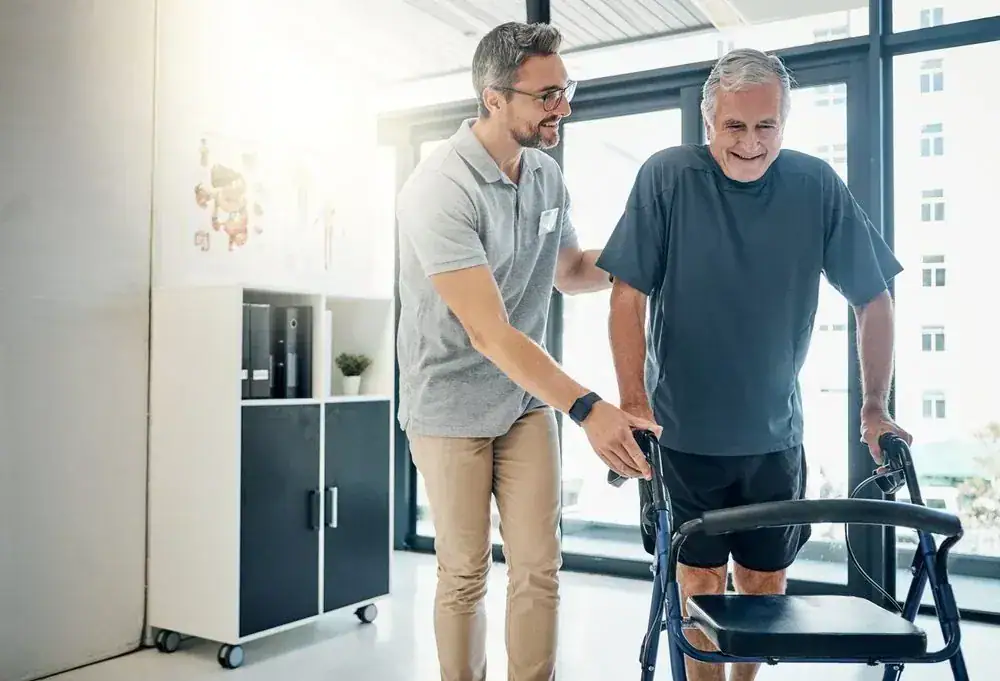
Everything is scaled to your current ability. If you’re using a walker, we start there. If you’re already pretty active, we’ll push you harder. The goal is always to make you stronger than you were last week, not to compare you to someone else.
Most people notice a difference within 4 to 6 weeks if they’re consistent with therapy. You might feel steadier on your feet, walk a bit faster, or feel less anxious about moving around your house.
That said, building real strength and reducing your fall risk long-term usually takes 8 to 12 weeks of regular therapy. Programs like “Stepping On” run for 7 weeks, and “A Matter of Balance” is 8 sessions—both are proven to work, but they require commitment.
The timeline also depends on your starting point. If you’ve been sedentary for years or you’re recovering from an injury, it might take longer. If you’re generally active but dealing with a specific balance issue, you could see faster results. Either way, we track your progress with objective measurements so you know exactly where you stand.
Medicare Part B typically covers physical therapy for fall prevention if it’s medically necessary and prescribed by your doctor. Most supplemental insurance plans and Medicare Advantage plans also cover it, though your copay and coverage limits will vary.
If you have private insurance, coverage depends on your specific plan. We recommend calling your insurance company before your first visit to confirm your benefits and understand any out-of-pocket costs.
We’ll handle the billing and work directly with your insurance company. You shouldn’t have to navigate that on your own. If there’s any issue with coverage, we’ll let you know upfront so there are no surprises.
Yes. A home safety evaluation is part of comprehensive fall prevention, and it’s one of the most effective ways to reduce your risk. We’ll walk through your home and identify hazards you might not even notice—loose rugs, poor lighting, clutter in walkways, missing grab bars, or slippery surfaces.
About 60% of fall-related hospitalizations happen at home, and most of those falls are preventable with simple modifications. Sometimes it’s as easy as moving a piece of furniture, adding a nightlight, or securing a rug with double-sided tape.
We’ll give you a written list of recommendations prioritized by risk level. You don’t have to do everything at once, but you’ll know what matters most. For East Norwich residents, we also understand the layout of older Long Island homes and can suggest modifications that don’t require major renovations.
That fear is real, and it’s actually one of the biggest risk factors for falling again. When you’re afraid, you move less. When you move less, you get weaker. When you get weaker, your risk goes up.
We work on rebuilding your confidence through controlled exposure. You’ll practice movements in a safe environment with support, gradually increasing difficulty as you get stronger. The goal is to retrain your brain to trust your body again.
We also address the physical factors that caused the first fall—whether it was weak legs, poor balance, a medication issue, or something in your home. You’re not just doing exercises and hoping for the best. You’re fixing the actual problem so it doesn’t happen again.
Other Services we provide in East Norwich