
You stop second-guessing every step. Getting up from a chair doesn’t require a mental checklist. Walking to the mailbox or reaching for something on a shelf feels normal again, not risky.
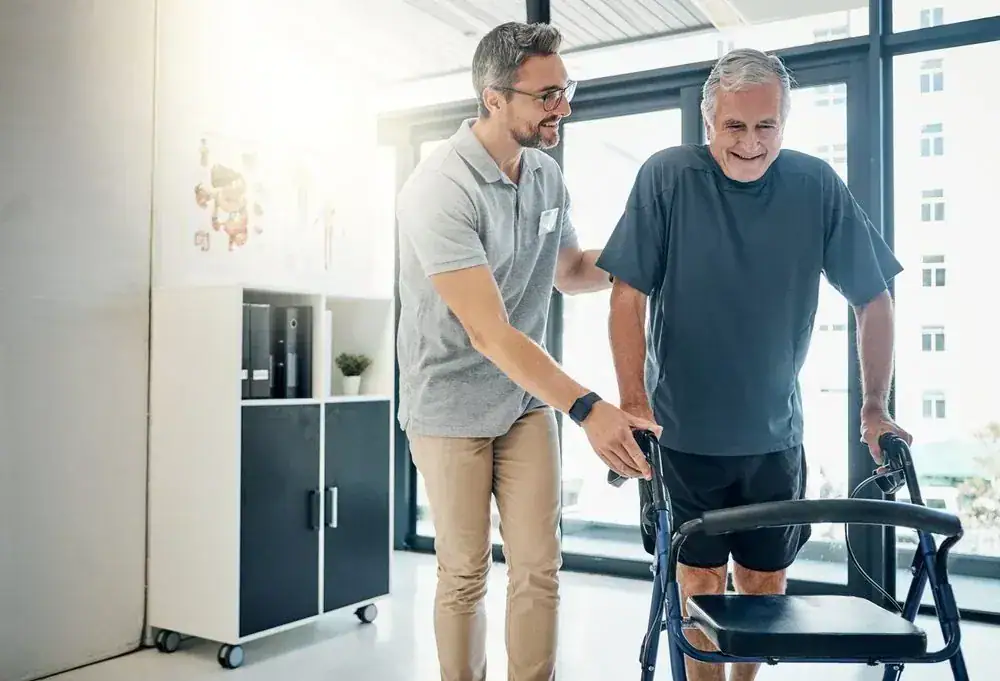
That shift happens when you work with a licensed physical therapist who understands elderly fall prevention—not through generic advice, but through exercises built specifically for your body, your home, and your goals. Balance exercises for seniors aren’t one-size-fits-all. They’re based on where you’re starting, what’s causing instability, and what you actually need to feel secure again.
In East Hampton, where one in three adults over 65 falls each year, improving your balance isn’t just about avoiding injury. It’s about maintaining the independence you’ve worked your whole life to protect. When your legs are stronger and your balance is sharper, you move through your day with less fear and more control.
That’s what physical therapy for balance delivers—real, measurable improvement in how your body responds when you need it most.
We’ve been providing in-home physical therapy across Long Island since 2010. Our licensed therapists specialize in fall prevention and balance training for seniors who find it difficult—or simply inconvenient—to leave home for care.
We treat patients in East Hampton and surrounding communities with the same level of attention and professionalism you’d expect in a clinic, but in the environment where it matters most: your home. That’s where falls actually happen. That’s where we assess your specific risks, your furniture layout, your daily routines.
You’re not just another appointment on a schedule. Every treatment plan is built around your mobility, your concerns, and your goals—and it’s covered by Medicare and most commercial insurance plans.

It starts with an in-home assessment. A licensed physical therapist comes to your house, evaluates your current balance and strength, and identifies specific fall risks in your environment. This isn’t a generic checklist—it’s a detailed look at how you move, where you struggle, and what’s contributing to instability.
From there, your therapist builds a personalized program. You’ll work on senior balance exercises that target your weak points—whether that’s leg strength, coordination, reaction time, or confidence during movement. Sessions happen in your home, on your schedule, using techniques proven to reduce fall risk by up to 50%.
You’ll also get practical guidance on making your space safer. Small changes—like lighting, furniture placement, or how you navigate certain rooms—can make a big difference. Your therapist will walk you through what helps and what doesn’t.
Progress is tracked at every visit. You’ll see measurable improvements in strength, stability, and how you feel moving through your day. And because it’s Medicare-covered, you’re not choosing between your safety and your budget.

Ready to get started?
Your program includes one-on-one sessions with a licensed physical therapist trained in evidence-based fall prevention methods. You’ll work through exercises designed to improve static and dynamic balance, strengthen your legs and core, and help your body react faster when you lose your footing.
Each session is tailored to where you are right now. If you’re recovering from a fall, we start slow and build gradually. If you’re dealing with chronic conditions like arthritis or neuropathy that affect your balance, we adjust the program to work with those limitations—not against them.
In East Hampton and across Long Island, fall-related hospitalizations have increased 13% in recent years, with Nassau and Suffolk counties ranking among the highest in New York State. You’re not imagining the risk—it’s real, and it’s growing. But it’s also preventable with the right intervention.
Your therapist will also teach you how to continue exercises between visits, so progress doesn’t stop when the session ends. And because we’re in your home, we can address the specific challenges of your space—stairs, rugs, bathroom layout—anything that increases your fall risk on a daily basis.

If you’ve fallen in the past year, you’re already at higher risk of falling again. But you don’t need to wait for a fall to benefit from therapy.
Other signs include feeling unsteady when you stand up, needing to hold onto furniture or walls when you walk, avoiding certain activities because you’re worried about losing your balance, or noticing that your legs feel weaker than they used to. Even if you haven’t fallen, those are all indicators that your balance and strength could use attention.
Your doctor may also recommend fall prevention therapy after surgery, a hospital stay, or if you have a condition like Parkinson’s, stroke, or diabetes that affects your mobility. The earlier you start, the more effective it is—and the less likely you are to experience a serious fall down the road.
Yes. Medicare Part B covers outpatient physical therapy when it’s medically necessary and prescribed by your doctor. Fall prevention and balance training absolutely qualify, especially if you’ve had a recent fall, you’re at high risk, or you have a condition affecting your mobility.
You’ll need a referral or prescription from your physician, but once that’s in place, Medicare covers the cost of your sessions—subject to your deductible and any co-insurance. Most commercial insurance plans also cover in-home therapy for fall prevention.
We handle the verification and billing directly, so you’re not navigating the insurance process on your own. If you’re unsure about your specific coverage, we can walk you through it before your first visit. The goal is to make this as simple as possible, because the therapy itself is what matters.
In-home therapy removes the barriers that keep people from getting care in the first place. If you have trouble driving, don’t have reliable transportation, or feel unsteady leaving the house, a clinic visit becomes one more stressful task. At home, that stress disappears.
But there’s a bigger reason: your home is where falls actually happen. Your therapist can see the layout of your space, how you move through it, and what specific risks exist in your environment. That’s information you can’t replicate in a clinic setting.
We also work with you in the context of your daily life—getting in and out of your shower, navigating your stairs, moving around your kitchen. The exercises and strategies we build are designed for your real-world routines, not a generic therapy gym. That makes the improvements more practical and longer-lasting.
It depends on where you’re starting and what your goals are. Some patients see noticeable improvement in balance and confidence within a few weeks. Others benefit from a longer program, especially if they’re recovering from an injury or managing a chronic condition.
Most fall prevention programs run anywhere from 4 to 12 weeks, with sessions happening one to three times per week. Your therapist will reassess your progress regularly and adjust the plan as you improve.
The goal isn’t to keep you in therapy forever—it’s to get you strong and stable enough to maintain your independence on your own. By the end of your program, you’ll have the tools and exercises you need to continue building strength and balance at home, even after formal therapy ends.
Absolutely. In fact, falling once significantly increases your risk of falling again, which is exactly why therapy after a fall is so important.
Even if your fall didn’t result in a serious injury, it likely shook your confidence. That fear can lead to avoiding activities, which weakens your muscles and balance even further—creating a cycle that makes future falls more likely. Physical therapy breaks that cycle.
Your therapist will start by understanding what caused the fall, whether it was a loss of balance, a trip, weakness in your legs, or something else. From there, we build a program that addresses those specific issues and helps you regain the strength and stability you need to move safely. Many patients who’ve fallen find that therapy not only improves their physical balance but also restores the confidence they lost after the fall.
Yes—when they’re done correctly and supervised by a licensed therapist. That’s the whole point of working with a professional instead of trying exercises on your own.
Your therapist will start with an assessment to understand your current level of stability, strength, and mobility. From there, exercises are introduced gradually and adjusted based on how your body responds. You’re never pushed beyond what’s safe for you at that moment.
Many of the exercises happen with support nearby—whether that’s a chair, countertop, or your therapist’s hands. As you get stronger and more confident, the difficulty increases, but always at a pace that matches your progress. The goal is to challenge your balance in a controlled way so your body learns to respond better in real-life situations—not to put you at risk during the session itself.
Other Services we provide in East Hampton