
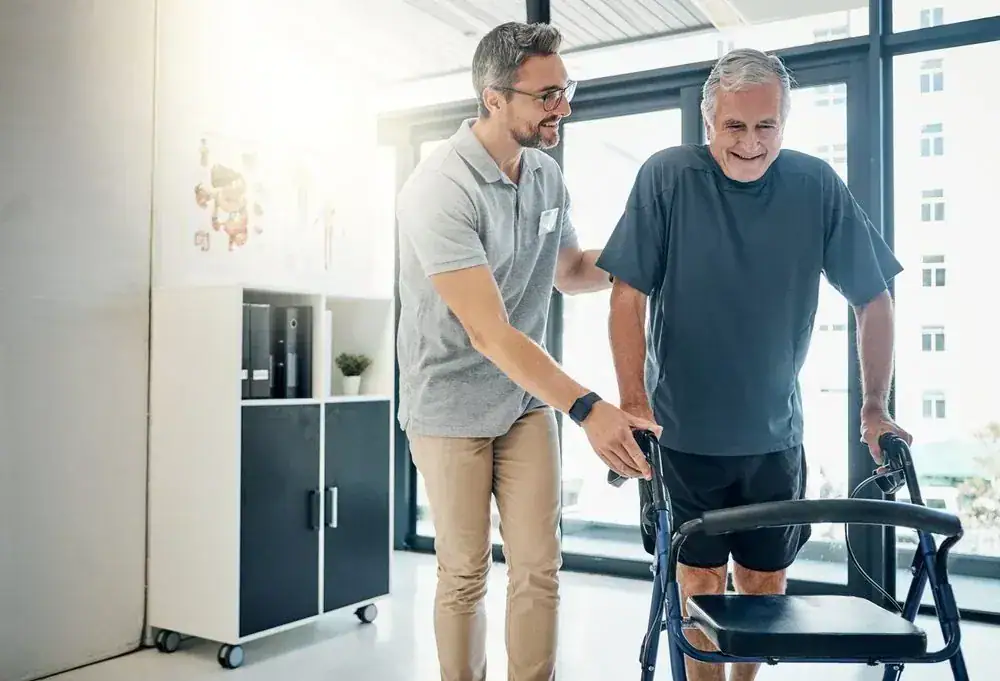
You’re not imagining it. Balance gets harder as you age, and that unsteady feeling when you stand up or walk across a room isn’t something you just live with.
Falls aren’t random accidents. They happen because of specific, measurable factors: weak leg muscles, poor balance, certain medications, or vision changes. The good news is that nearly all of these factors respond to the right kind of physical therapy.
When you work with a physical therapist who specializes in fall prevention, you’re addressing the actual causes. You build strength in the muscles that keep you stable. You practice movements that improve your reaction time. You learn what’s putting you at risk in your own home and how to fix it.
The result isn’t just fewer falls. It’s getting back to activities you’ve been avoiding. It’s not needing to hold onto furniture when you walk through your house. It’s your family worrying less and you feeling more like yourself.
We’ve been serving Long Island communities with physical therapy that’s built around what you actually need, not what a corporate protocol says you should get.
Our therapists work with East Hampton North residents who want to stay in their homes, keep their independence, and stop worrying every time they need to use the stairs. We understand the specific challenges you face here: homes with multiple levels, active lifestyles you want to maintain, and a community where staying mobile matters.
We accept Medicare and work with most insurance plans common in this area. Our team follows evidence-based fall prevention protocols, including balance exercises for seniors that have been proven to reduce fall risk by up to 30%. You’re not getting generic exercises. You’re getting an assessment of your specific risk factors and a program designed around them.

Your first visit is an evaluation. We assess your balance, strength, gait, and any medical conditions or medications that might increase your fall risk. We also talk about where and when you feel unsteady, because that tells us what to focus on.
From there, we build your program. This typically includes strength training for your legs and core, balance exercises that challenge your stability in safe ways, and coordination work that improves your reaction time. If you’re taking multiple medications or have conditions like arthritis or Parkinson’s, we factor that in.
Most people come twice a week for several weeks. Each session is about an hour. You’ll do exercises here, and we’ll give you things to practice at home. We also provide recommendations for simple changes in your home that can reduce trip hazards.
As you get stronger and more stable, we adjust the program. The goal isn’t just to complete therapy. It’s to give you the tools and confidence to stay active and independent long after your sessions end.

Ready to get started?
You get a full fall risk assessment that looks at your strength, balance, walking pattern, vision, medications, and medical history. This isn’t a quick screening. It’s a detailed evaluation that identifies exactly what’s putting you at risk.
Your exercise program includes balancing exercises that progress as you improve, strength training focused on the muscles that prevent falls, and gait training to make your walking pattern more stable. We also incorporate activities like standing from a chair, reaching for objects, and turning your head while walking, because these are the movements where falls often happen.
In East Hampton North, where 14% of residents are over 64 and the median age reflects an aging population, we see a lot of people dealing with the same concerns you are. Many have already experienced a fall or a close call. Others are noticing they’re not as steady as they used to be. Some are being proactive because they’ve seen what happens to friends or family members who didn’t address the issue early.
We also provide home safety guidance. Small changes like removing throw rugs, improving lighting, and installing grab bars can make a significant difference. We’ll talk through what makes sense for your specific living situation.
If you’ve fallen in the past year, you need an evaluation. One fall significantly increases your risk of falling again, and the second fall is often worse than the first.
But you don’t have to wait until you fall. Other signs include feeling unsteady when you walk, needing to hold onto furniture or walls for support, avoiding activities because you’re worried about falling, or having trouble getting up from a chair. If you’re taking four or more medications, that alone puts you at higher risk.
Your doctor may have also mentioned concerns about your balance or recommended physical therapy after a hospitalization. Many people come to us after a spouse or adult child expresses worry. If the people around you are noticing changes in your stability, that’s worth paying attention to.
Medicare Part B covers physical therapy when it’s medically necessary, which includes fall prevention if you have risk factors or a history of falls. You’ll need a referral from your doctor, which most physicians are happy to provide given the serious health consequences of falls.
Your coverage typically includes the evaluation and ongoing therapy sessions as long as you’re making progress toward your goals. There may be a copay depending on your specific plan and whether you’ve met your deductible.
We work with Medicare and most major insurance plans common in the East Hampton area. Our staff can verify your coverage before you start and explain what your out-of-pocket costs will be. We handle the billing and authorization process so you don’t have to navigate that on your own.
The exercises depend on your current ability level. We start where you are, not where a textbook says you should be.
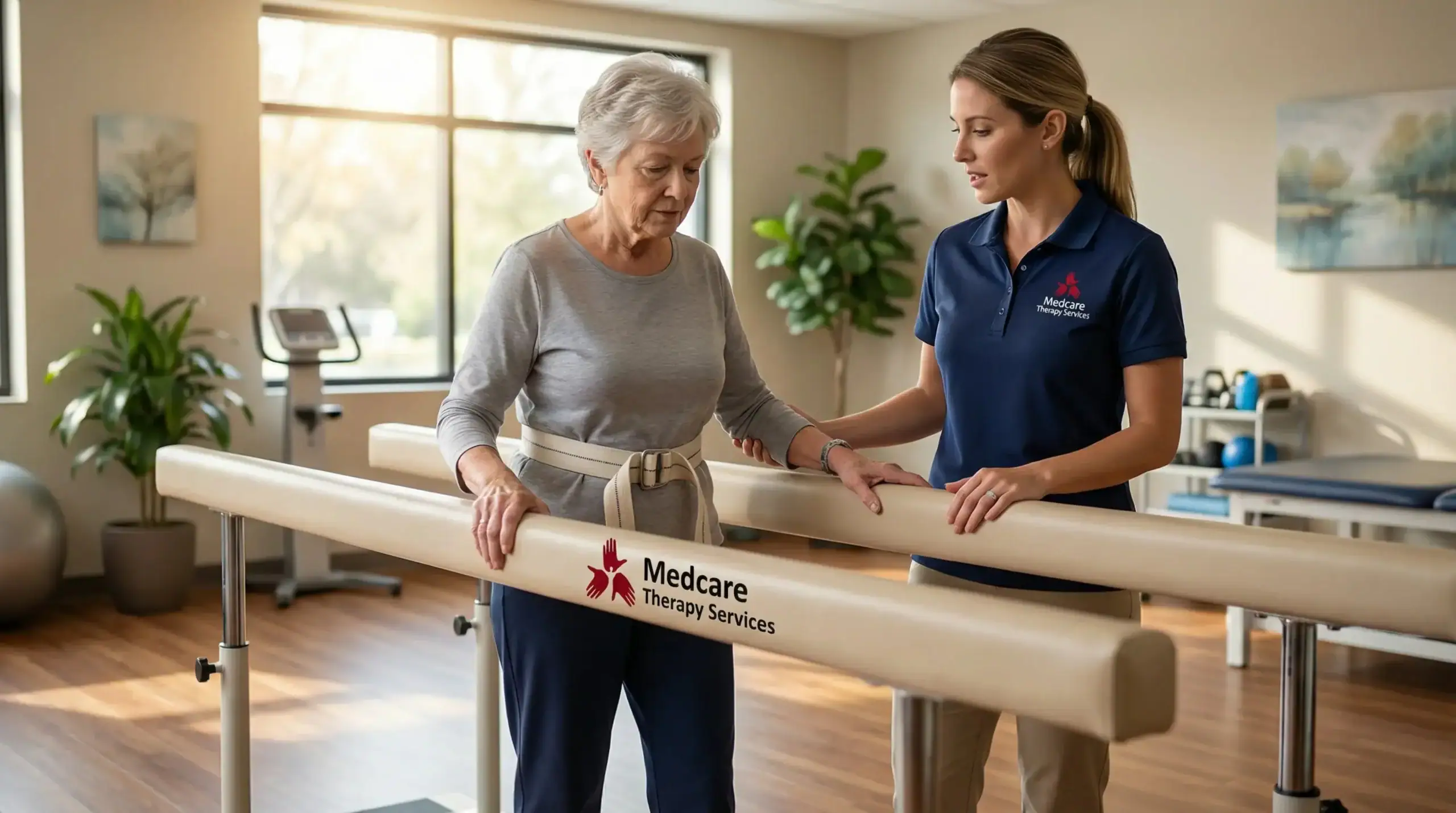
For some people, that means practicing standing from a chair without using your hands, standing on one foot while holding onto a counter, or walking heel-to-toe in a straight line. For others who are less stable, we might start with seated exercises or standing exercises while holding onto parallel bars.
As you improve, we make things harder. That might mean doing the same exercises with your eyes closed, standing on foam surfaces, or adding head turns while you walk. We also incorporate functional movements like reaching for items on a shelf, bending down to pick something up, or stepping over obstacles.
The goal is to challenge your balance in controlled ways so your body learns to react better in real-life situations. Senior balance exercises work because they train the exact systems your body uses to keep you upright.
Most people notice improvements within three to four weeks. You might feel more stable when you walk, have an easier time getting out of a chair, or just feel more confident moving around your home.
The typical program runs eight to twelve weeks with two sessions per week, but this varies based on your starting point and goals. Some people need less time. Others benefit from a longer program, especially if they’re managing multiple health conditions.
The research is clear: balance and strength training can reduce fall risk by 20 to 30% when done consistently. But the exercises only work if you actually do them. That means showing up for your sessions and practicing the home exercises we give you.
After you complete the formal program, you’ll have a maintenance plan to continue on your own. Many people also choose to continue with a once-a-week session or join a community exercise program to maintain their progress.
Fall prevention therapy is specialized. It’s not the same as rehabbing a knee replacement or treating back pain, even though those might be part of your history.
We use specific assessment tools to measure your fall risk, including tests for balance, gait speed, lower body strength, and functional mobility. These measurements tell us exactly where you’re vulnerable and help us track whether the program is working.
The exercises are evidence-based protocols designed specifically to prevent falls. We focus heavily on balance training, which doesn’t always happen in general physical therapy. We also address environmental factors and teach you strategies for moving safely in situations that commonly lead to falls.
In East Hampton North, we see a lot of active seniors who want to maintain their lifestyle, not just avoid injury. Our approach reflects that. We’re not just trying to keep you from falling. We’re trying to keep you doing the things that matter to you.
Yes, but it’s urgent that you start now. Multiple falls indicate significant risk factors that will only get worse without intervention.
After multiple falls, many people develop a fear of falling that leads them to avoid activities. This creates a downward spiral: less activity means weaker muscles and worse balance, which increases fall risk even more. Physical therapy breaks that cycle.
We’ll identify what’s causing your falls. Sometimes it’s muscle weakness. Sometimes it’s a balance disorder or inner ear issue. Sometimes it’s a combination of factors including medications, vision problems, or environmental hazards in your home.
The program will be more intensive than it would be for someone who hasn’t fallen yet, but the potential benefit is also greater. People who’ve fallen multiple times often see the most dramatic improvements because they have the most room to gain. You’re not too far gone. You just need the right intervention before another fall leads to a serious injury.
Other Services we provide in East Hampton North