
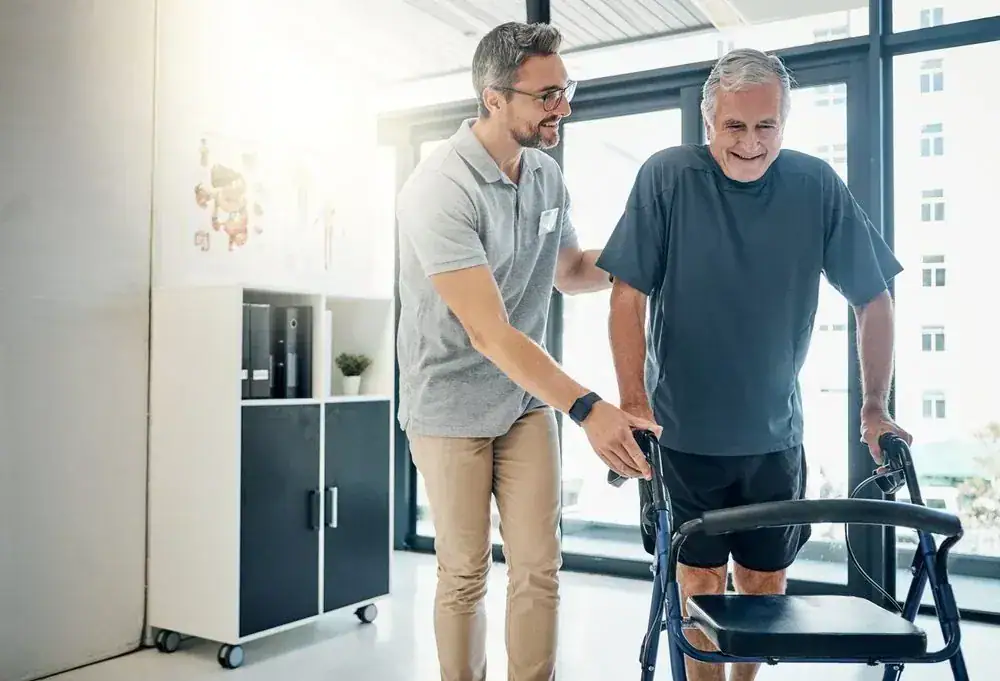
You’re not imagining it. That hesitation before standing up, the extra second you need to steady yourself, the way you avoid certain movements—these are real changes that increase your fall risk.
One in four adults over 65 falls each year. Most of those falls happen at home, in familiar spaces where you should feel safest. The cost isn’t just physical—it’s the independence you lose, the activities you stop doing, the constant worry that sits in the back of your mind.
Physical therapy for balance works because it addresses what’s actually causing the instability. Weak hip muscles, reduced ankle flexibility, slower reaction times, medication side effects—these are measurable problems with measurable solutions. You work with a licensed therapist who evaluates your specific risk factors and builds a program around what your body needs. The exercises target the muscle groups that keep you upright. The training retrains your body’s balance systems. The results show up in how you move through your home, your neighborhood, your life.
You’re not just preventing falls. You’re maintaining the independence that lets you stay in your home, keep your routines, and live without that constant fear.
We’ve been serving Nassau and Suffolk County communities for years, including East Atlantic Beach and the surrounding barrier island neighborhoods. Our physical therapists are licensed, experienced in geriatric care, and trained in evidence-based fall prevention protocols like Otago and STEADI.
We’re Medicare-certified, which means your therapy is typically covered under Medicare Part B. We handle the verification, the paperwork, and the insurance coordination so you can focus on the actual work.
East Atlantic Beach residents face unique challenges—beach access, seasonal weather changes, homes with stairs near the water. We understand the local environment because we work in it every day. Your therapist knows what it means to navigate these neighborhoods and builds your program around your actual daily life, not a generic template.

Your therapist starts with a comprehensive fall risk assessment in your home. They evaluate your strength, balance, gait, home environment, medications, and any chronic conditions that affect stability. This isn’t a quick screening—it’s a detailed look at every factor that could contribute to a fall.
From there, you get a customized program. If you have weak hip abductors, you’ll do specific strengthening exercises. If your balance is compromised by neuropathy, you’ll work on proprioceptive training. If your home has hazards, you’ll get practical recommendations. The program is built around your body, your home, and your goals.
Sessions happen in your home, usually two to three times per week initially. Your therapist guides you through exercises, monitors your progress, and adjusts the program as you improve. You’ll also get exercises to do between sessions—consistency is what builds strength and retrains balance.
Most programs run eight to twelve weeks, but the timeline depends on your starting point and goals. Some people need more time. Some progress faster. Your therapist tracks measurable improvements—how long you can stand on one foot, how steady your gait becomes, how confident you feel moving around your home.

Ready to get started?
You get one-on-one sessions with a licensed physical therapist who specializes in geriatric care and fall prevention. Every session is in your home—no driving to appointments, no waiting rooms, no exposure to illness during flu season.
Your program includes balance training, strength exercises targeting fall-risk muscle groups, gait training to improve how you walk, and functional movement practice for daily activities. If you need it, you’ll also get vestibular therapy for dizziness or inner ear issues.
Your therapist evaluates your home environment and recommends modifications. Sometimes it’s as simple as removing a throw rug or improving lighting. Sometimes it’s installing grab bars or rearranging furniture. These changes matter—60% of fall-related hospitalizations in older adults happen at home.
On Long Island, where many East Atlantic Beach homes have stairs, narrow hallways, and beach access points, these environmental factors are especially important. Your therapist understands local housing and builds recommendations around what’s realistic for your space.
You also get education on managing medications that increase fall risk, footwear that improves stability, and strategies for getting up safely if you do fall. The goal is comprehensive risk reduction, not just exercise.

If you’ve fallen in the past year, you need fall prevention therapy. A previous fall is the strongest predictor of future falls, and it often creates a fear cycle that actually increases your risk.
But you don’t have to wait for a fall. If you feel unsteady when standing from a chair, if you grab walls or furniture for support, if you avoid certain movements because you don’t trust your balance—these are signs that your fall risk is elevated. Chronic conditions like Parkinson’s, arthritis, stroke, or neuropathy also increase your risk significantly.
Taking four or more medications puts you at higher risk, especially if any of those medications cause dizziness, drowsiness, or blood pressure changes. Your doctor can refer you for a fall risk assessment, or you can contact us directly. Medicare Part B covers home-based physical therapy for fall prevention when it’s medically necessary, which includes most situations where you have documented risk factors.
Balance exercises for seniors target the specific systems that prevent falls—your vestibular system, proprioception, muscle strength in key areas, and reaction time. Regular exercise might improve general fitness, but it doesn’t necessarily address fall risk.
Senior balance exercises focus on movements that challenge your stability in controlled ways. You might practice standing on one foot, walking heel-to-toe, or shifting your weight in different directions. These exercises retrain your body’s automatic balance responses. As you age, these responses slow down—balance training speeds them back up.
The exercises also strengthen specific muscle groups that research shows are critical for fall prevention. Your hip abductors, ankle dorsiflexors, and core muscles all play major roles in keeping you upright. A physical therapist knows which muscles need work based on your assessment and builds a program that targets your weak points. You’re not doing generic exercises—you’re doing the specific movements your body needs to reduce your fall risk.
Medicare Part B covers home-based physical therapy for fall prevention when it’s medically necessary and prescribed by your doctor. If you have documented fall risk factors—previous falls, balance problems, gait issues, chronic conditions that affect stability—you typically qualify.
Your therapist needs to establish that the therapy is reasonable and necessary, which means showing that you have specific impairments that physical therapy can improve. Most older adults with balance concerns meet this threshold easily. Medicare covers up to 80% of the approved amount after you’ve met your Part B deductible.
If you have a Medicare Advantage plan, coverage works similarly but you’ll need to check your specific plan’s requirements. Some plans require prior authorization. We handle the insurance verification and billing, so you know what to expect before starting. Medicaid also covers fall prevention therapy in New York, and many supplemental insurance plans cover the remaining 20% that Medicare doesn’t pay.
You’ll notice some improvements within the first few weeks—better confidence, steadier movement, less hesitation. But meaningful fall risk reduction takes consistent work over eight to twelve weeks minimum.
Research on programs like Otago shows that the biggest benefits come from sustained participation. Your body needs time to build strength, retrain balance responses, and develop new movement patterns. This isn’t a quick fix—it’s a rebuilding process.
Your therapist tracks progress using standardized tests like the Berg Balance Scale or Timed Up and Go test. These measurements show objective improvements in your stability and function. Most people continue with a maintenance program after the initial intensive phase, doing exercises independently a few times per week to maintain their gains. Fall prevention isn’t a one-time intervention—it’s an ongoing practice that keeps you stable and independent long-term.
Post-fall rehabilitation is actually one of the most critical times for fall prevention therapy. After a fall, your risk of falling again increases significantly—partly due to physical deconditioning during recovery, partly due to fear and reduced activity.
Your therapist will work with your doctor to understand your injury and any restrictions on your movement. The program starts where you are and progresses gradually. If you’re still healing, early sessions might focus on gentle range of motion, basic strengthening, and safe movement strategies. As you heal, the program advances to more challenging balance and functional exercises.
The goal is twofold: recover from your current injury and prevent the next fall. Many people become more sedentary after a fall because they’re afraid. That inactivity weakens you further and actually increases your risk. Physical therapy breaks that cycle by rebuilding your strength and confidence in a controlled, safe way. You work with someone who understands post-fall recovery and knows how to progress your program without pushing too hard too fast.
No. Prevention is actually the ideal time to start—before a fall happens, before an injury, before your independence is compromised.
If you’re noticing changes in your balance, if you’re feeling less steady than you used to, if you’re starting to avoid activities because you don’t trust your stability—that’s the time to act. Falls are preventable, but only if you address the risk factors before they result in an actual fall.
Many of our East Atlantic Beach clients start therapy because they want to stay active and independent, not because they’ve already experienced a fall. They’re walking on the beach, managing stairs in their homes, staying involved in their community—and they want to keep doing those things safely. A fall prevention program gives you the strength and stability to maintain your lifestyle without the constant worry. You don’t have to wait for a crisis to take action.
Other Services we provide in East Atlantic Beach