
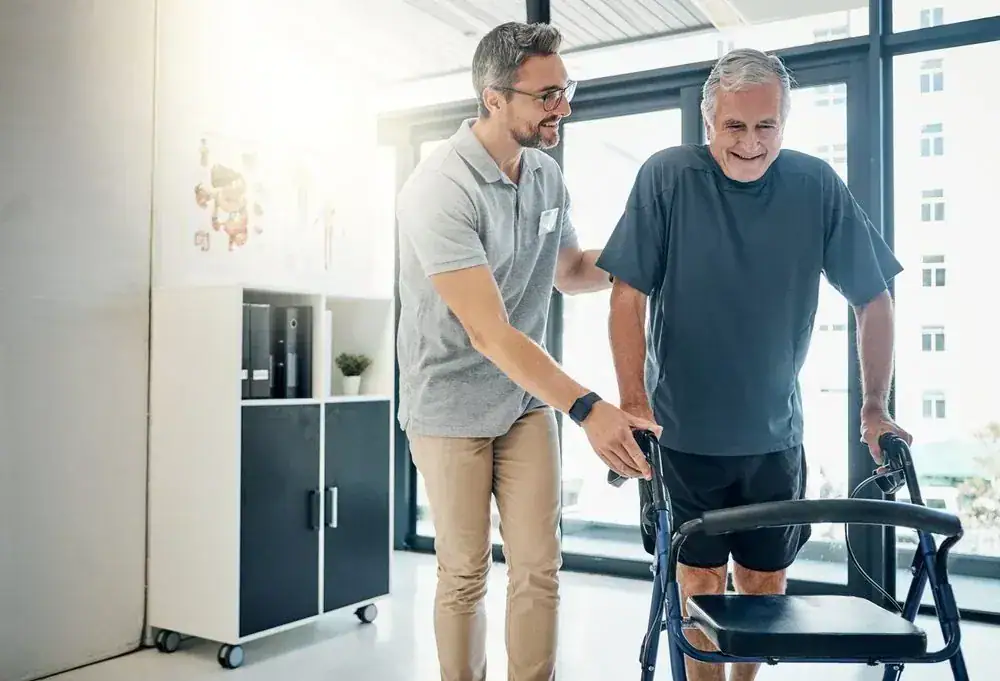
You stop second-guessing every step. Getting up from a chair doesn’t feel like a risk anymore. Walking to the mailbox or moving around your kitchen becomes automatic again, not something you plan around.
That’s what better balance does. It gives you back the freedom to move through your day without fear hanging over you.
When your legs are stronger and your stability improves, you’re not just preventing a fall. You’re preventing the hospitalization, the rehab stay, the loss of independence that comes after. On Long Island, one in three older adults falls each year. Many of those falls lead to hip fractures, surgeries, and months of recovery that change everything.
Balance exercises for seniors aren’t about becoming an athlete. They’re about staying in your own home, doing what you want, when you want. That’s the outcome that matters.
We’ve been providing home-based physical therapy across Long Island for over a decade. We specialize in treating people who have difficulty leaving their home or simply prefer one-on-one care in their own space.
Our therapists are trained in Otago fall prevention protocols, which means the programs we design aren’t guesswork. They’re evidence-based, personalized to your specific risk factors, and built to get results.
We serve Dix Hills and the surrounding Suffolk County communities with Medicare-covered therapy. You don’t drive anywhere. You don’t sit in a waiting room. We come to you, assess your home environment, and work with you where it matters most.

First, we evaluate. A licensed physical therapist comes to your home in Dix Hills and conducts a full assessment. We look at your medical history, current medications, strength, gait, balance, and any previous falls or near-misses. We also walk through your home to identify hazards like loose rugs, poor lighting, or furniture placement that increases risk.
Then we build your program. Based on what we find, we design a custom plan that targets your specific weaknesses. That might include senior balance exercises, strength training for your legs and core, gait training, or coordination drills. Everything is adapted to your current ability level.
You do the work with us, at home. Sessions happen in your living room, kitchen, or hallway—wherever makes sense. We guide you through each exercise, adjust as needed, and track your progress over time. Most people start seeing improvements in stability and confidence within a few weeks.
As you get stronger, we progress the exercises. The goal isn’t just to complete a program. It’s to give you the tools and strength to keep moving safely long after therapy ends.

Ready to get started?
Every program starts with a comprehensive evaluation that identifies all the factors contributing to your fall risk. We assess your strength, flexibility, balance, walking pattern, footwear, medications, and home environment. This isn’t a cookie-cutter approach.
Your therapy includes balancing exercises tailored to your ability. These might be standing exercises, weight shifts, or movements that challenge your stability in controlled ways. We also incorporate strength training because weak legs are one of the biggest fall risk factors for older adults in Dix Hills and across Long Island.
You’ll work on gait training to improve how you walk, turn, and navigate obstacles. We teach you how to get up from a chair safely, how to move from room to room with better control, and how to recover if you start to lose your balance.
Education is part of the program too. We talk about footwear, home modifications, medication side effects, and other risks you might not have considered. The more you understand about why falls happen, the better you can prevent them.
Most people notice a difference within three to four weeks of consistent therapy. That doesn’t mean you’re done at that point, but you’ll likely feel more stable, walk with more confidence, and move around your home with less hesitation.
The timeline depends on where you’re starting from. If you’ve had a recent fall, a stroke, or you’re managing a condition like Parkinson’s or arthritis, it may take longer to build strength and coordination. If you’re relatively active but just feeling unsteady, progress tends to come faster.
What matters more than speed is consistency. Balance improves at any age, whether you’re 65 or 95, but it requires regular practice. We typically recommend twice-a-week sessions at the start, then taper as you get stronger and can maintain exercises on your own.
Yes. Medicare Part B covers outpatient physical therapy when it’s medically necessary, and fall prevention absolutely qualifies. If you’ve had a fall, if you’re at high risk due to balance issues or a chronic condition, or if your doctor recommends therapy, Medicare will typically cover it.
You’ll be responsible for your Part B deductible and 20% coinsurance, the same as other outpatient services. If you have a Medicare Supplement plan, that often covers the coinsurance portion. We also accept most commercial insurance plans.
We handle the billing and work directly with Medicare, so you don’t have to manage paperwork or claims. During your initial call, we’ll verify your coverage and let you know exactly what to expect. No surprises.
You’re working in the environment where you actually live. That means we can assess the real risks in your home—the stairs you use every day, the bathroom layout, the lighting in your hallway. We’re not simulating your life in a clinic. We’re addressing it directly.
It’s also more convenient. No driving, no fighting traffic on the LIE, no waiting rooms. For people in Dix Hills who have mobility challenges or don’t feel safe driving anymore, that’s a huge relief. You get one-on-one attention for the full session, not split time with other patients.
And frankly, most people are more comfortable at home. You’re relaxed, you can move at your own pace, and there’s no pressure to perform in front of strangers. That comfort leads to better engagement, which leads to better results.
Weak legs and poor balance top the list. When your muscles aren’t strong enough to support you or your balance system isn’t responding quickly, even a small misstep can turn into a fall. That’s why physical therapy for balance focuses so heavily on strength and stability training.
Medications are another major factor. If you’re taking four or more prescriptions, your fall risk goes up. Some medications cause dizziness, lightheadedness, or affect your coordination. We review your medication list during the evaluation and can communicate with your doctor if we spot concerns.
Home hazards cause a lot of falls too. Loose rugs, clutter, poor lighting, uneven flooring, and lack of grab bars in the bathroom all increase risk. About 60% of fall-related hospitalizations happen at home, so addressing these hazards is part of what we do during your assessment.
Balance exercises work. The research is clear. Programs like Otago, which our therapists are trained in, have been shown to reduce falls by up to 35% in older adults. That’s not a small number when you consider that falls are the leading cause of injury for people over 65.
Being careful helps, but it’s not enough. If your legs are weak, your reaction time is slow, or your balance is off, caution alone won’t save you from a fall. You need the physical ability to catch yourself, to adjust when you start to tip, to move safely even when conditions aren’t perfect.
The exercises we use strengthen the muscles that keep you upright, improve your coordination, and train your body to respond faster when you’re off balance. It’s not about avoiding movement. It’s about building the strength and control that let you move confidently.
Your therapist will spend about an hour with you. We’ll start by talking through your medical history, any falls you’ve had, medications you’re taking, and what’s been concerning you most about your balance or mobility. This conversation helps us understand your full picture.
Then we’ll do a physical assessment. We’ll watch you walk, stand up from a chair, turn around, and perform some basic balance tests. Nothing painful or overly difficult—we’re just seeing where you are right now. We’ll also check your strength, flexibility, and range of motion.
After that, we walk through your home together. We look for tripping hazards, lighting issues, bathroom safety, and anything else that could increase your fall risk. You’ll get specific recommendations on what to change or add, like grab bars or better lighting. By the end of the visit, you’ll have a clear plan and usually start some exercises right away.
Other Services we provide in Dix Hills