
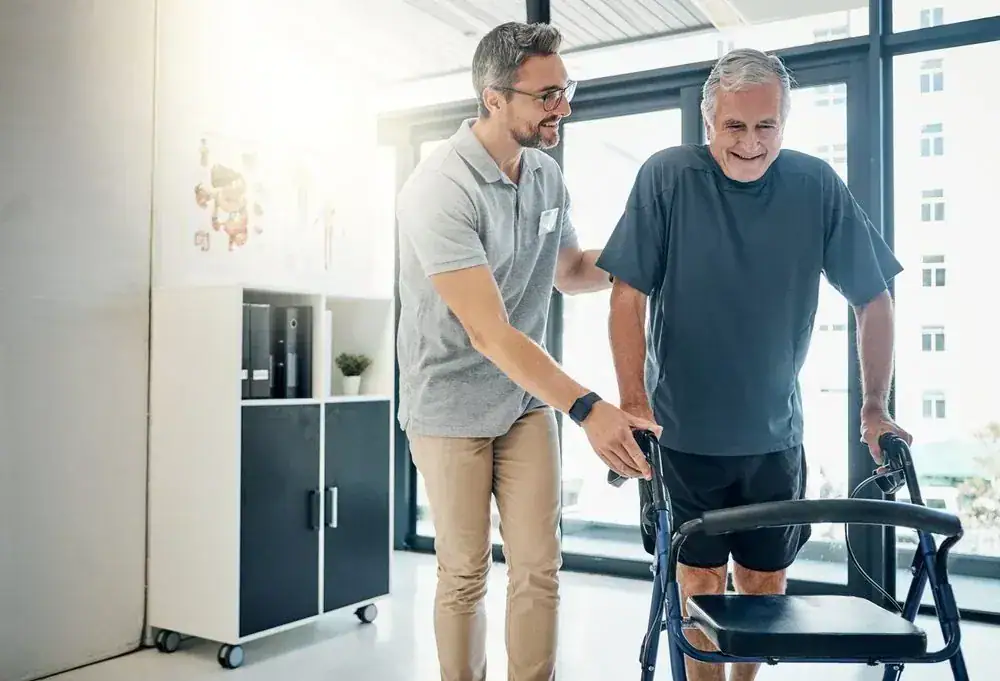
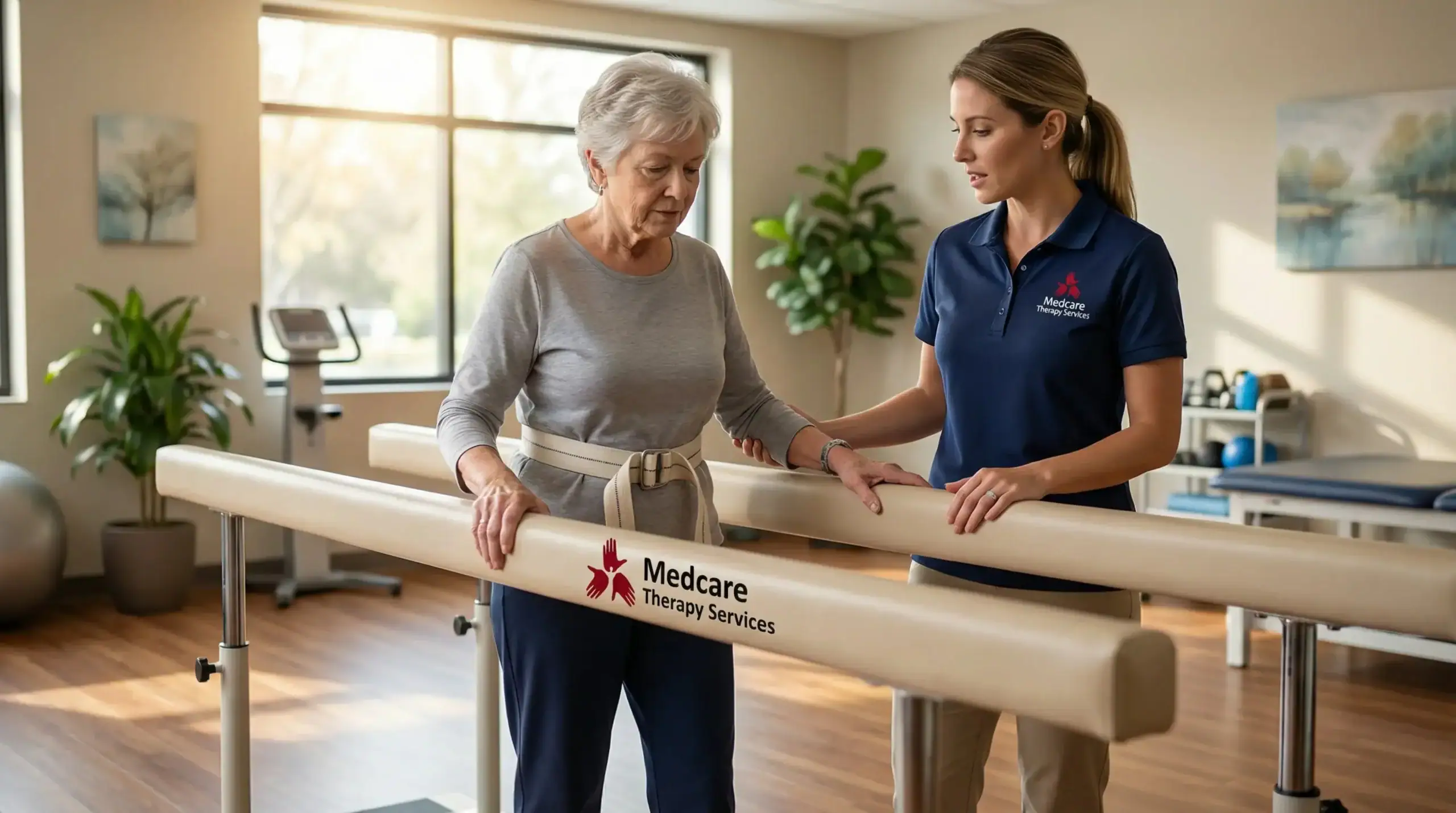
You stop planning your day around what feels safe. The bathroom trip at night doesn’t require a mental checklist. Walking to the mailbox stops feeling like a risk.
That’s what better balance does. It gives you back the freedom to move through your home without second-guessing every step.
Our fall prevention programs focus on senior balance exercises that rebuild strength in the muscles that matter most. You’ll work with a physical therapist who comes to your home, assesses how you move now, and designs a plan that fits your current abilities. No comparing yourself to others in a class. No commute to an office. Just focused work on getting steadier, stronger, and more confident.
The Otago Exercise Program we use has been studied for decades. It reduces falls by 35-40% in older adults when done consistently. You’ll do balance exercises, strength training, and walking practice that’s customized to your needs. And because it happens at home, your therapist can also spot hazards in your environment that increase your risk.
We’ve been serving Nassau and Suffolk County for over 15 years. We specialize in home-based physical therapy for seniors who need care but can’t easily get to an office.
Our therapists are trained in the Otago Exercise Program, which is one of the most researched fall prevention methods available. We accept Medicare and most commercial insurance, so cost doesn’t have to be a barrier.
Cove Neck and the surrounding North Shore communities have higher-than-average senior populations, and Long Island ranks among the top counties in New York for fall-related injuries. We built our practice around addressing that reality with programs that actually work.
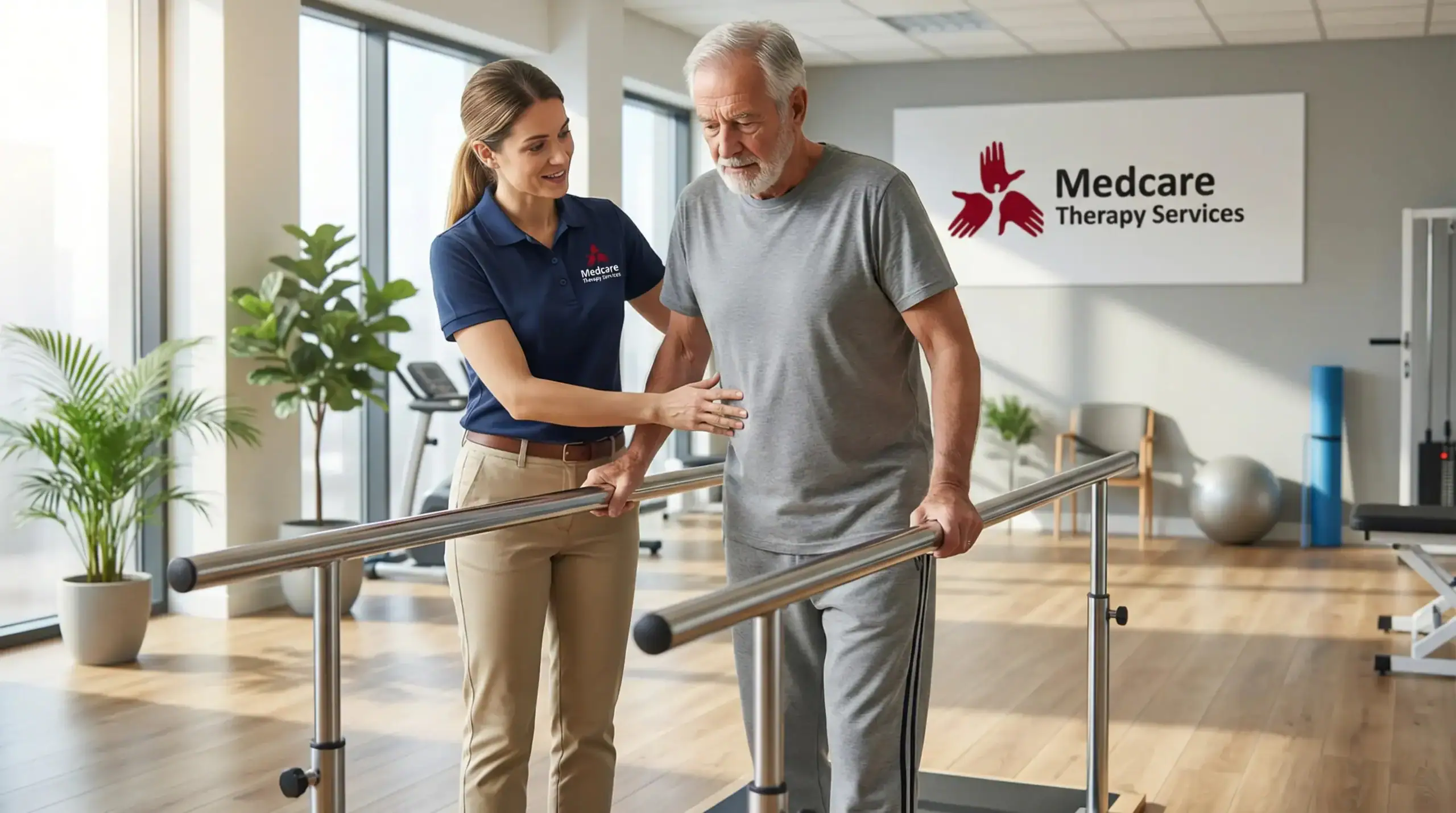
First, we schedule an initial assessment at your home. A licensed physical therapist evaluates your current balance, strength, gait, and mobility. They’ll also look at your living space to identify fall risks like loose rugs, poor lighting, or furniture placement.
From there, they design a personalized exercise plan. You’ll typically do balancing exercises that challenge your stability in safe, controlled ways. Strength training focuses on your legs and core. Walking practice helps you move more confidently in real-world situations.
Sessions happen one-on-one in your home, usually two to three times per week at the start. As you get stronger, the frequency may decrease, but the goal is always the same: build habits you can maintain long-term.
You’re not just doing exercises. You’re retraining your body to catch itself, respond to uneven surfaces, and move without fear. That takes repetition, and it takes guidance from someone who knows how to progress you safely. Our therapists handle both.

Ready to get started?
Every program starts with a full fall risk assessment. Your therapist measures your balance, evaluates your strength, checks your walking pattern, and reviews any medications that might affect stability. This isn’t a generic screening. It’s specific to how you move right now.
Your exercise plan includes balance training that’s appropriate for your current level. That might mean standing on one foot with support, or it might mean more advanced exercises if you’re already fairly steady. Strength exercises target your legs, hips, and core using resistance bands, weights, or just your body weight.
You’ll also get a home safety evaluation. On Long Island, many homes have stairs, narrow hallways, or older layouts that weren’t designed with aging in mind. Your therapist will point out specific changes that reduce risk, like adding grab bars, improving lighting, or removing tripping hazards.
Because we serve Cove Neck and surrounding areas like Glen Cove, Oyster Bay, and the broader North Shore, we understand the types of homes you’re living in. Many are multi-level. Many have basements, outdoor steps, or uneven walkways. We address those realities in your plan.
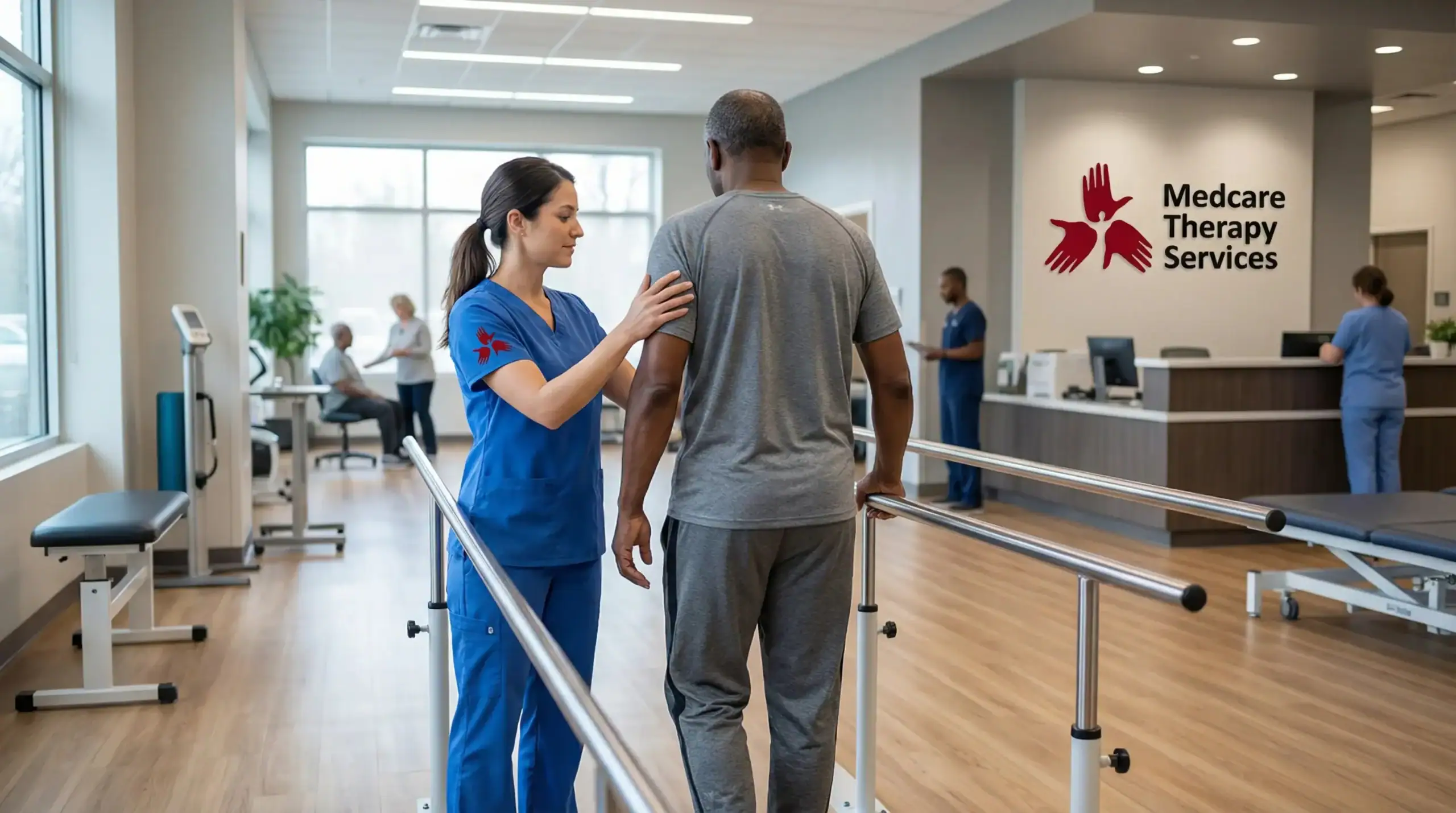
If you’ve fallen in the past year, you’re at higher risk of falling again. If you feel unsteady when you walk, avoid certain activities because you’re afraid of falling, or if you’ve noticed your balance isn’t what it used to be, therapy can help.
Other signs include needing to hold onto furniture when you move around the house, feeling dizzy when you stand up, or having trouble getting up from a chair without using your arms. These are all indicators that your strength or balance has declined enough to increase fall risk.
You don’t need a prescription to start therapy in New York State, though Medicare and most insurers do require one eventually. If you’re unsure whether you’d benefit, we can talk through your specific situation during a quick phone call before scheduling anything.
Yes. Medicare Part B covers physical therapy for fall prevention when it’s medically necessary and prescribed by a doctor. That includes home-based therapy if you have difficulty leaving your home due to mobility issues, health conditions, or other qualifying reasons.
You’ll be responsible for your standard Medicare cost-sharing, which is typically 20% of the approved amount after you’ve met your deductible. Most Medicare Advantage plans also cover home physical therapy, though specific coverage can vary by plan.
We handle the billing and work directly with Medicare and other insurers. If you’re not sure about your coverage, we can verify your benefits before your first visit so there are no surprises. We also accept most commercial insurance plans for seniors who aren’t yet on Medicare.
The Otago Exercise Program is specifically designed to prevent falls in older adults. It’s been tested in multiple research studies and consistently shows a 35-40% reduction in falls when people stick with it. That’s not a marketing claim. That’s data from controlled trials.
The program focuses on exercises that improve the exact movements you need to prevent a fall: stepping quickly to catch your balance, stabilizing on uneven ground, and building leg strength to recover if you start to stumble. It’s progressive, meaning it gets harder as you get stronger, and it’s individualized based on your current abilities.
Regular physical therapy can be helpful, but it’s often designed to recover from an injury or surgery. Otago is preventive. It’s built for people who haven’t fallen yet but are at risk, or who’ve fallen once and want to make sure it doesn’t happen again. Our therapists are trained specifically in this program, which means they know how to adapt it for different fitness levels and home environments.
Most people work with a therapist for 8 to 12 weeks, with sessions happening two to three times per week at the start. As you get stronger and more confident with the exercises, the frequency decreases. The goal is to teach you a routine you can continue on your own.
Some people need more time depending on their starting point. If you’ve had a recent fall, a hospitalization, or significant muscle weakness, it might take a few extra weeks to build up your strength and balance. If you’re already fairly active but want to reduce your risk, you might progress faster.
The program doesn’t end when the therapist stops coming. You’ll have a set of exercises to keep doing at home, and many people continue them for years. Research shows that 70% of people who complete the Otago program are still doing the exercises a year later because they feel the difference it makes.
Yes. Fear of falling is one of the most common reasons people reach out to us, and it’s a valid concern. After a fall, many people start limiting their activities, which actually makes things worse because you lose strength and balance from being less active.
We start by figuring out why you fell. Was it a balance issue? Muscle weakness? A hazard in your home? Dizziness or a medication side effect? Once we understand the cause, we can address it directly with exercises, home modifications, or recommendations to talk with your doctor about medications.
The therapy itself is designed to rebuild your confidence as much as your physical abilities. You’ll practice movements in a controlled way, with support, so you can prove to yourself that you’re getting steadier. That combination of physical improvement and mental reassurance is what helps people get back to living without constant fear.
No. Prevention is just as important as recovery, and we work with plenty of people who haven’t fallen but recognize they’re at risk. Maybe you’ve noticed you’re not as steady as you used to be. Maybe a friend or family member fell and it made you think about your own balance. Maybe your doctor mentioned you should work on fall prevention.
One in four seniors falls every year, but fewer than half ever tell their doctor. A lot of people wait until after a fall to get help, but you don’t have to. If you’re in your 60s, 70s, or older and you’re starting to feel less confident on your feet, that’s enough reason to start.
The earlier you address balance and strength, the easier it is to make improvements. You’re not waiting for a crisis. You’re taking action while you still have good mobility and independence, which makes the whole process smoother and more effective.
Other Services we provide in Cove Neck