
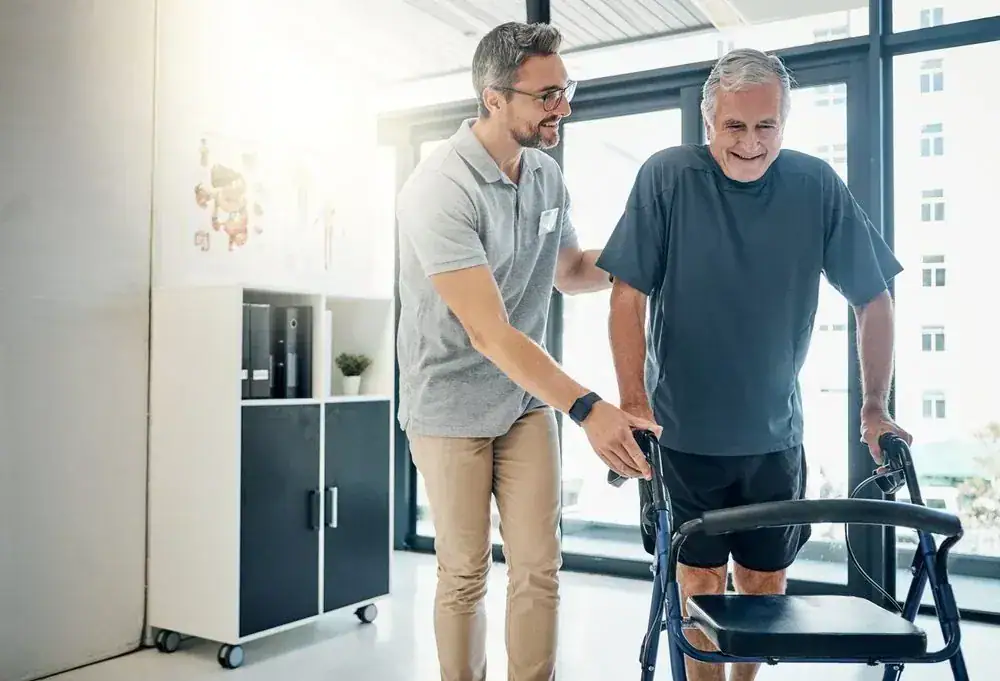
You stop planning your day around what might go wrong. You walk to the mailbox without that split-second hesitation. You get up at night without gripping the wall.
That’s what happens when your balance improves and your legs get stronger. You’re not just preventing falls—you’re getting back to living without fear dictating your schedule.
The difference shows up in how you move through your home, how you feel in a crowd, and how much energy you have at the end of the day. When your body works with you instead of against you, independence isn’t something you hope for. It’s something you actually have.
We’ve been treating patients across Long Island for years, with a focus on keeping older adults safe, strong, and independent. We’re not a corporate chain. We’re local therapists who understand what it’s like to navigate a split-level ranch in winter or manage stairs when your knees aren’t what they used to be.
Suffolk County’s senior population has grown by nearly 37% in the past decade. That means more people in Coram are dealing with balance issues, muscle weakness, and the very real fear of falling at home. We’ve built our fall prevention programs specifically for this community—people who want to age in place without sacrificing safety or dignity.
You’ll work with licensed physical therapists who assess your specific risk factors, then design a program that fits your body and your life. No cookie-cutter plans. No guessing.
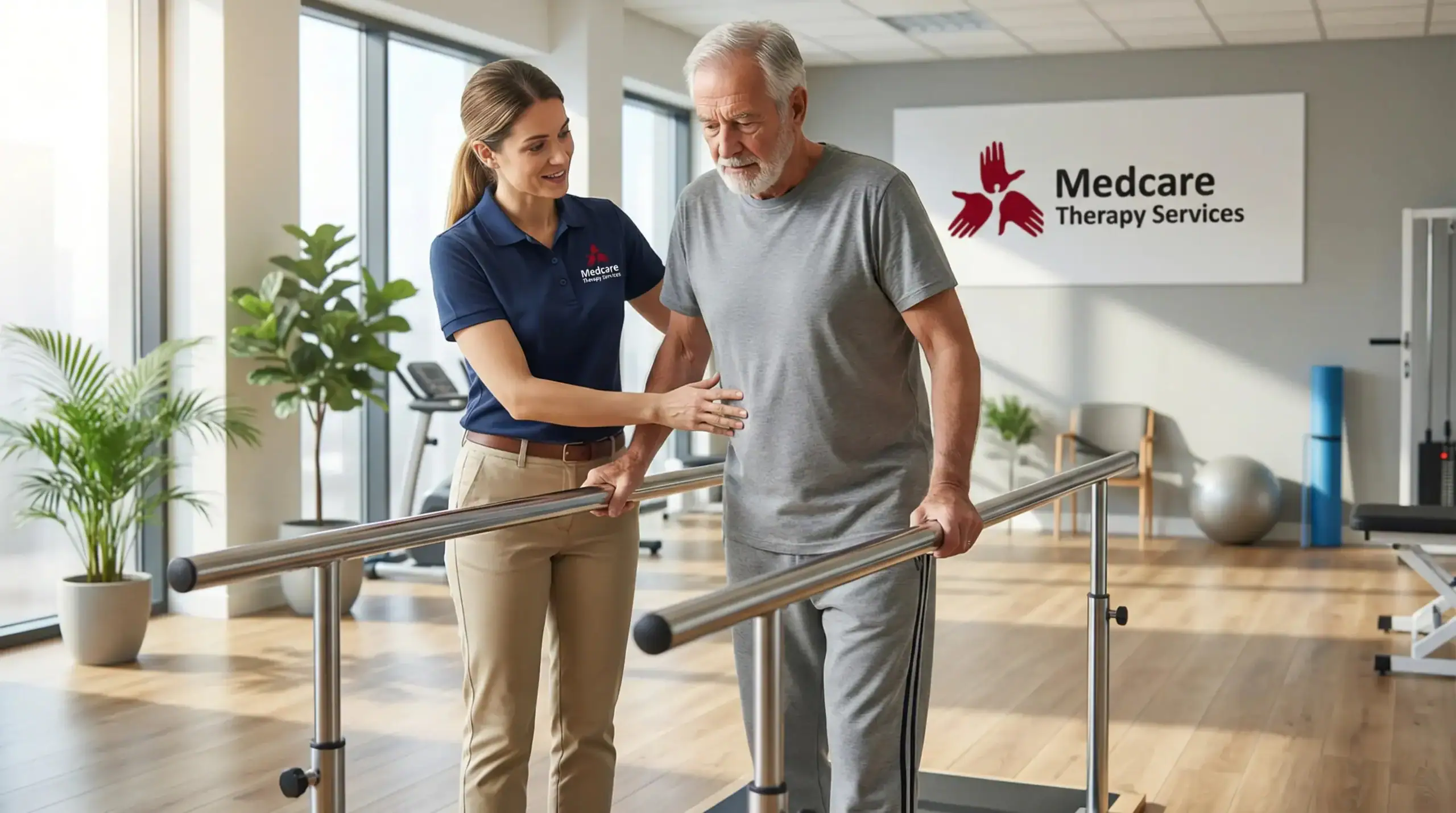
First, we assess where your fall risk actually comes from. That means testing your balance, checking your strength, watching how you walk, and asking about any falls or close calls you’ve had. We’re looking for the real culprits—weak hips, poor ankle stability, vision issues, medication side effects, or just general deconditioning.
Then we build your program. Balance training is the core—exercises that challenge your stability in controlled, safe ways so your body learns to catch itself. Strength work focuses on your legs, hips, and core because those are what keep you upright when you stumble. Gait training helps you walk more confidently and efficiently, especially on uneven surfaces or in tight spaces.
We also talk about your home. Sometimes the biggest risk isn’t your body—it’s the throw rug in the hallway or the lighting in your bathroom. We’ll give you specific recommendations that actually make sense for how you live.
Sessions are typically twice a week to start, and most people see noticeable improvements in 6 to 8 weeks. Medicare and most insurance plans cover this, especially if you’ve had a fall or your doctor has noted balance or walking difficulties.

Ready to get started?
You’ll get a full fall risk assessment using the same evidence-based tools recommended by the CDC. That includes balance testing, strength measurements, gait analysis, and a review of your medical history and medications.
Your exercise program will include balance exercises tailored to your current ability—whether that’s standing on one foot with support or walking heel-to-toe without holding on. Strength training focuses on functional movements like sit-to-stand, step-ups, and hip strengthening because those directly impact your ability to recover from a stumble.
We also incorporate gait training to improve how you walk, especially if you shuffle, take short steps, or feel unsteady on different surfaces. For some patients, we’ll add vestibular rehabilitation if dizziness or inner ear issues are contributing to fall risk.
On Long Island, where many homes have stairs, narrow hallways, and older layouts, we pay special attention to how your environment affects your safety. You’ll get practical advice on lighting, furniture arrangement, bathroom safety, and assistive devices if needed. This isn’t about turning your home into a hospital—it’s about small changes that make a big difference.
If you’ve fallen in the past year, you need it. Falling once doubles your chance of falling again, and the second fall is usually worse than the first.
But you don’t have to wait for a fall. If you’re grabbing walls or furniture when you walk, if you feel unsteady on uneven ground, if you’ve had any close calls or near-misses, or if you’re avoiding activities because you’re worried about falling—those are all signs that your balance or strength needs work.
Your doctor might have mentioned concerns about your gait or balance during a checkup. Maybe you’ve noticed your legs feel weaker, or you’re not as confident on stairs as you used to be. These aren’t just “getting older”—they’re treatable problems. Physical therapy can address them before they lead to a serious injury.
You need someone who knows what they’re looking at. Balance problems come from different sources—inner ear issues, muscle weakness, nerve damage, vision problems, medication side effects—and the wrong exercises won’t fix the right problem.
A physical therapist tests your specific deficits and designs exercises that target what’s actually wrong. We also progress you safely. Too easy, and you don’t improve. Too hard, and you risk falling during the exercise itself. We find that line and move it forward as you get stronger.
There’s also accountability. Most people start home exercise programs and stop after two weeks. When you have scheduled appointments and someone tracking your progress, you actually do the work. And that’s what gets results—not the perfect program, but the one you’ll actually follow.
Yes, if it’s medically necessary. That usually means you’ve had a fall, you’re at high risk for falling, or your doctor has documented balance or gait problems.
Medicare Part B covers physical therapy when it’s prescribed by your doctor and provided by a licensed therapist. You’ll have a copay—typically 20% of the Medicare-approved amount after you’ve met your deductible. Medicare Advantage plans also cover it, though the specifics vary by plan.
The key is documentation. Your doctor needs to note why you need therapy, and we need to show that you’re making progress. As long as you’re improving and therapy is helping you function better, Medicare will continue to cover it. Most fall prevention programs run 6 to 12 weeks, which falls well within typical coverage limits.
Most people notice a difference in 3 to 4 weeks. That’s when you start feeling more stable during everyday activities—getting out of a chair feels easier, you’re not grabbing the counter as much, you feel more confident in the shower.
Measurable improvements on balance tests usually show up around the 6-week mark if you’re coming twice a week and doing your home exercises. Strength takes a bit longer—8 to 12 weeks to see significant gains, especially if you’ve lost muscle mass from inactivity.
The timeline depends on where you’re starting from and how consistent you are with the program. Someone who’s generally active but had a recent fall will progress faster than someone who’s been sedentary for years. But even in more challenging cases, you should see some improvement within the first month. If you’re not, we adjust the plan.
No. It’s actually more urgent, but it’s not too late. Multiple falls mean your risk is high and something specific is wrong—whether that’s muscle weakness, balance deficits, environmental hazards, or a combination.
The first step is figuring out why you’re falling. We’ll do a thorough assessment to identify the contributing factors, and in many cases, we’ll coordinate with your doctor to rule out medical issues like blood pressure problems, medication side effects, or neurological conditions.
Then we address what we can control—your strength, your balance, your gait, and your environment. Even if you have chronic conditions that increase fall risk, physical therapy can significantly reduce how often you fall and how severe those falls are. The goal isn’t perfection. It’s keeping you safe enough to stay independent, and that’s absolutely achievable even after multiple falls.
Yes, because using a walker doesn’t mean you can’t fall—it just changes how and when you might fall. Plenty of people fall while using walkers, especially if they’re not using them correctly or if their legs are too weak to support them even with assistance.
Physical therapy helps you use your walker more effectively and safely. We’ll make sure it’s the right height, that you’re using proper technique, and that you have the strength and coordination to maneuver it through your home.
We’ll also work on strengthening your legs and improving your balance so you’re not as dependent on the walker for every single step. Some patients progress to using the walker only outside or in crowded places, while others become steady enough to switch to a cane or walk independently for short distances. Even if you always need the walker, being stronger and more balanced makes you significantly safer.
Other Services we provide in Coram