
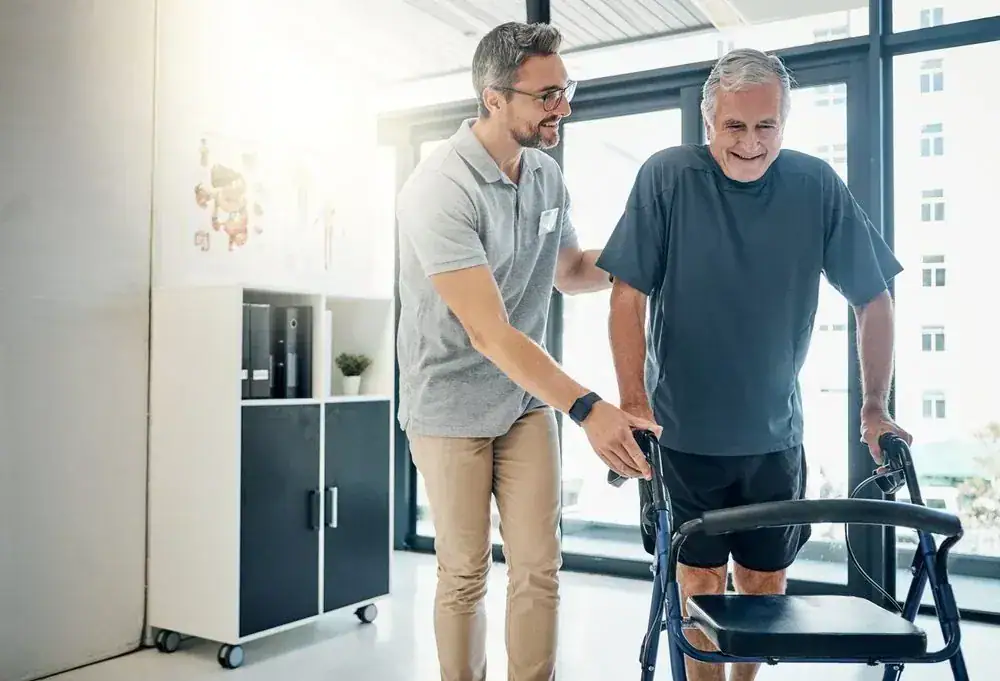
You stop planning your day around what feels safe. The bathroom at night doesn’t feel like a risk. Getting the mail becomes automatic again, not something you think through step by step.
Better balance means you move through your home with less fear and more confidence. You’re not second-guessing every step or avoiding activities you used to enjoy. That shift matters more than most people realize until they get it back.
When seniors across Suffolk County work with physical therapists on targeted balance exercises, fall risk drops by about 23%. That’s not a small number when you consider that one in four older adults falls every year. The exercises aren’t complicated, but they’re specific—and doing them correctly, with someone watching your form and adjusting as you improve, makes the difference between going through the motions and actually getting stronger.
You’re not just doing exercises. You’re retraining how your body responds when you shift weight, reach for something, or stand up from a chair. That’s what keeps you upright when your foot catches the rug or your balance shifts unexpectedly.
We’ve been treating Long Island families since 2010. Our therapists are licensed, Medicare-certified, and trained in evidence-based fall prevention programs that actually work.
We’re affiliated with Physical Therapy Associates of Smithtown and Speonk Physical Therapy—both established practices with decades of experience in Suffolk County. That means you’re getting care from people who know this community, accept your insurance, and have treated hundreds of seniors dealing with the same balance concerns you’re facing.
Commack has one of the highest concentrations of older adults in Suffolk County. Over 201,700 seniors live here, and falls remain the leading cause of injury for anyone over 65. We see it constantly—someone recovers from surgery, loses some strength, and suddenly their home feels less safe. Our job is to reverse that before a fall happens, or prevent another one if you’ve already been through it.

First, your therapist comes to your home and does a full fall risk assessment. They’re looking at your medical history, current medications (four or more increases fall risk), your strength, your balance, and how you move through your space. They’ll also check for hazards—loose rugs, poor lighting, clutter in walkways—things that contribute to 60% of fall-related hospitalizations.
From there, they build a personalized exercise plan. Most of our Commack patients follow the Otago Exercise Program, which is one of the most researched and effective fall prevention tools available. It combines strength training and balance exercises that you do at home, with your therapist guiding you through proper form during each session.
You’ll have regularly scheduled visits where your therapist demonstrates new exercises, watches you perform them, and adjusts intensity as you get stronger. Between visits, you’re doing the exercises on your own—usually three times a week, plus walking. It’s not about spending hours on therapy. It’s about doing the right movements consistently.
Over time, you’ll notice you’re steadier on your feet. You’ll feel more secure going up stairs, getting in and out of the shower, walking on uneven surfaces. Your therapist tracks your progress and modifies your plan as your balance improves. Most patients see measurable improvement within a few weeks.

Ready to get started?
You get a licensed physical therapist or occupational therapist who comes to your home on a schedule that works for you. Every session is covered by Medicare and most commercial insurance plans—you’re not paying out of pocket for something your doctor already recommended.
Your therapist brings everything needed for your exercises. You’re not buying equipment or trying to figure out what to do on your own. They’ll teach you balance exercises, strength training movements, and functional activities that directly reduce fall risk. These aren’t generic senior exercises—they’re specific to your abilities and goals.
In Suffolk County, where the median age continues to climb and more families are caring for aging parents, access to in-home therapy makes a real difference. You don’t need to arrange transportation to a clinic. You don’t need to worry about getting there safely when balance is already a concern. Your therapist meets you where you are.
You’ll also get education on medication management, home safety modifications, and how to recognize early signs that your fall risk is increasing. If you need adaptive equipment—a grab bar, a shower chair, better lighting—your therapist will recommend it and show you how to use it correctly.
The goal isn’t just to prevent falls. It’s to help you keep doing what matters to you without fear holding you back.

Yes. Medicare Part B covers physical therapy and occupational therapy for fall prevention when it’s medically necessary and prescribed by your doctor. You’ll need a referral, but once that’s in place, your therapy sessions are covered the same way they would be at an outpatient clinic.
We’re Medicare-certified, which means we bill directly and handle the paperwork. You’re responsible for your standard co-pay and deductible, but there’s no additional cost for us coming to your home versus you going to a facility. Most of our Commack patients are surprised to learn that in-home therapy is covered—it’s one of the most underutilized Medicare benefits.
If you have a Medicare Advantage plan or supplemental insurance, coverage works similarly, though the specifics depend on your plan. We accept nearly all commercial insurances across Long Island and can verify your benefits before your first visit. You shouldn’t have to guess whether therapy is affordable—we make sure you know what’s covered upfront.
Your exercises depend on your current balance level, strength, and fall risk factors. Most patients start with basic movements—standing on one leg while holding a counter, heel-to-toe walking, sit-to-stand repetitions from a chair. These sound simple, but they’re targeting the exact muscle groups and reflexes that keep you stable.
As you get stronger, your therapist progresses the difficulty. You might do the same exercises with less support, add resistance, or practice on different surfaces. The Otago Exercise Program, which we use frequently, includes specific leg strengthening and balance retraining exercises proven to reduce falls by nearly a quarter in older adults.
You’ll also work on functional movements—the things you actually do every day. Getting in and out of the shower safely. Reaching for something on a high shelf without losing your balance. Walking on carpet, tile, and uneven outdoor surfaces. Your therapist watches how you move and corrects form in real time, which is something you can’t get from a video or a handout. That’s where the real improvement happens.
Most patients notice a difference within three to four weeks if they’re consistent with their exercises. You might feel steadier getting out of bed, more confident on stairs, or less anxious walking outside. Those early wins matter because they build momentum.
Full results—measurable improvements in balance tests, strength gains, reduced fall risk—typically take eight to twelve weeks. That’s the timeline research supports for evidence-based programs like Otago. But everyone’s different. If you’re recovering from a fall or surgery, it might take a bit longer. If you’re doing therapy proactively and your baseline strength is decent, you might improve faster.
The key is showing up for your sessions and doing the home exercises between visits. Your therapist will give you a specific schedule—usually three exercise sessions per week on your own, plus walking. It’s not hours of work. Most routines take 20 to 30 minutes. But skipping days or doing exercises incorrectly slows progress. That’s why having a therapist check in regularly keeps you on track and adjusting the plan as you improve.
Your therapist starts with a conversation. They’ll ask about your medical history, any falls you’ve had, medications you’re taking, and what you’re hoping to get out of therapy. Then they’ll do a physical assessment—checking your strength, balance, flexibility, and how you move through basic activities like standing up, walking, and turning.
They’ll also walk through your home looking for fall hazards. Loose rugs, poor lighting, clutter in hallways, unstable furniture you might grab for support—these things contribute to most in-home falls, and they’re fixable. Your therapist will point them out and suggest modifications that make sense for your space and budget.
By the end of that first visit, you’ll have a clear picture of your fall risk and a personalized plan to address it. Your therapist will teach you a few starter exercises, demonstrate proper form, and watch you do them to make sure you’ve got it. You’ll also schedule your next few sessions and know exactly what to work on between visits. It’s not overwhelming—it’s structured, clear, and focused on what you need most.
It’s exercise, but it’s targeted. The difference between general senior fitness and fall prevention therapy is specificity. Your therapist isn’t just getting you moving—they’re addressing the exact deficits that increase your fall risk.
Research backs this up. Balance and strength training programs reduce fall rates by about 23% in community-dwelling older adults. Multi-component programs that combine exercises with home safety education and medication review are even more effective. The Otago Exercise Program alone has been studied in multiple trials and consistently shows measurable reductions in falls and fall-related injuries.
Here’s why it works: falling isn’t random. It happens when your muscles can’t respond fast enough to a balance challenge, when your reflexes are slower than they used to be, or when your environment creates a hazard your body can’t compensate for. Physical therapy retrains those responses. You’re literally teaching your body to catch itself again. Pair that with removing tripping hazards and managing medications that affect balance, and you’ve addressed the majority of fall risk factors. That’s not just exercise—that’s a systematic approach to keeping you safe.
Convenience matters, especially when balance is already a concern. Getting to a clinic means arranging transportation, navigating parking lots, and moving through unfamiliar spaces—all things that increase fall risk. In-home therapy removes those barriers entirely.
But there’s a bigger reason: your therapist sees how you actually live. They’re working with you in the environment where most falls happen. They can assess the specific challenges in your home—narrow hallways, stairs without railings, bathroom layouts—and teach you how to navigate them safely. That’s something you can’t replicate in a clinic setting.
For Commack residents, especially those in areas where homes are older and not designed with aging in place in mind, this matters. Your therapist can recommend modifications that fit your actual space, not generic advice. And because they’re coming to you, there’s no missed appointments due to weather, transportation issues, or just not feeling up to the trip. You’re more likely to stay consistent, which means you’re more likely to see results.
Other Services we provide in Commack