
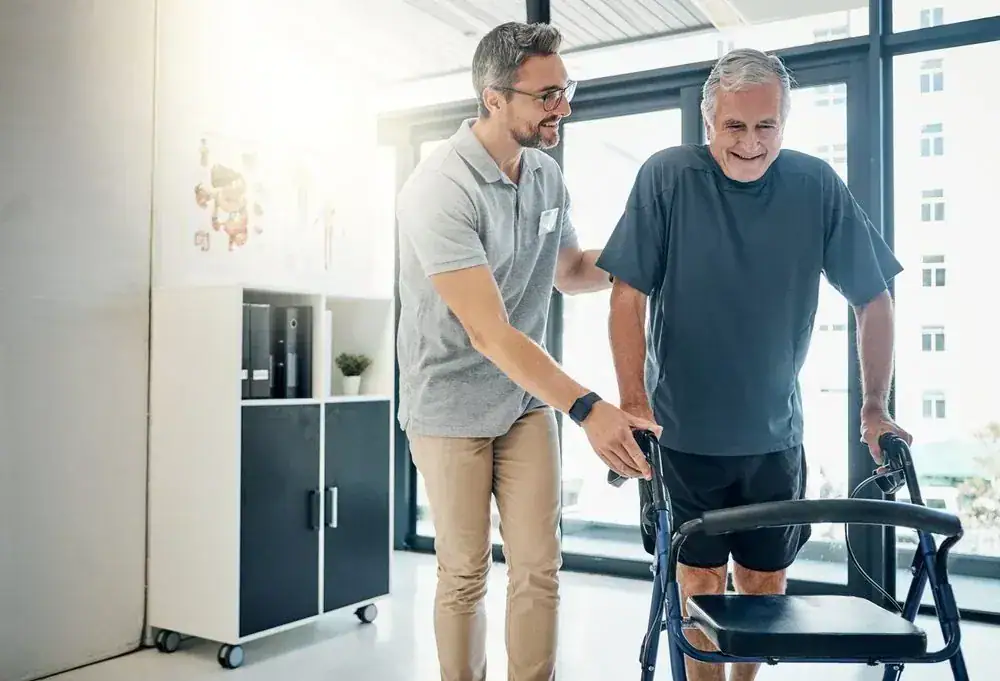
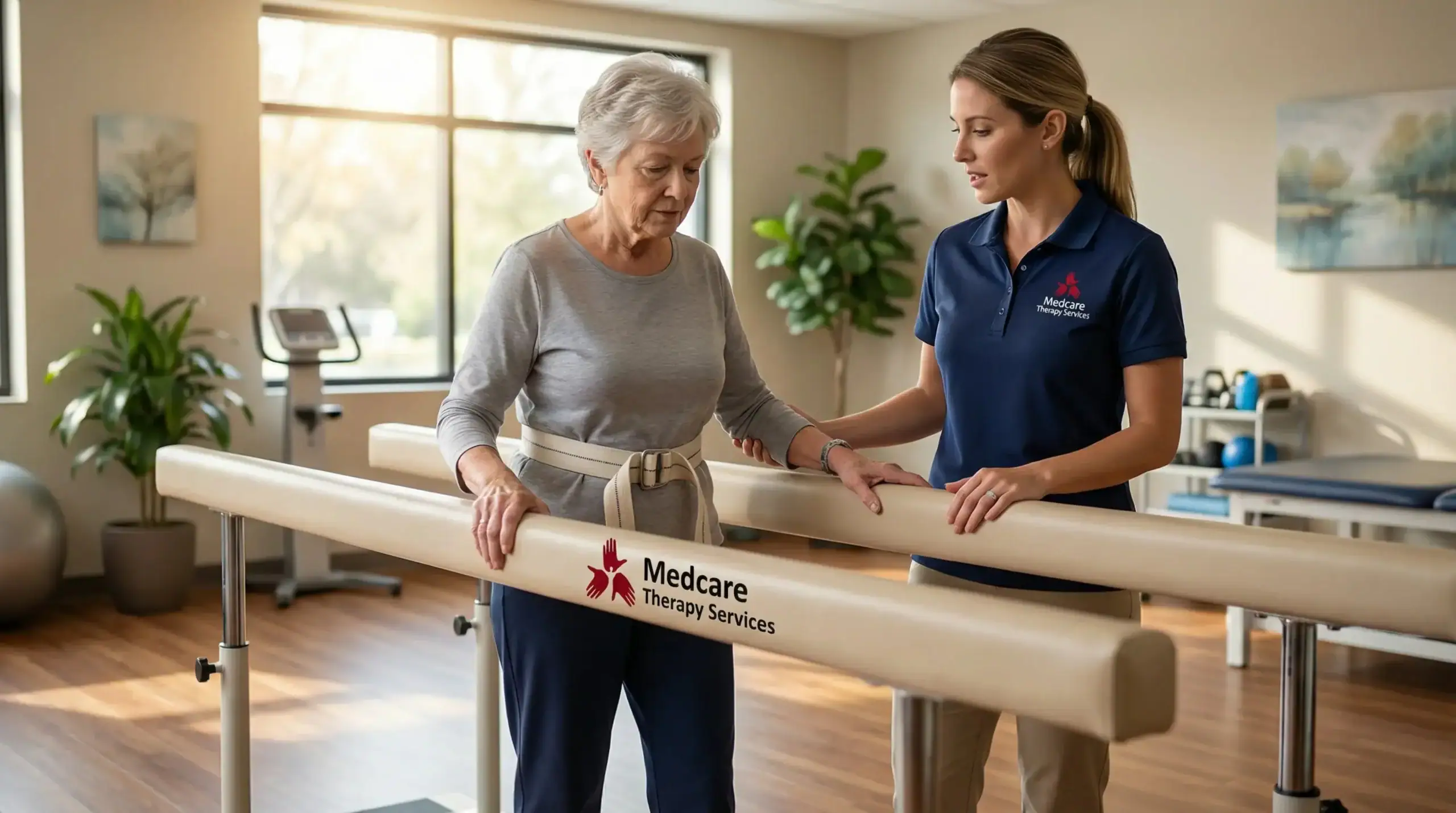
You stop planning your day around what might go wrong. You walk to the mailbox without that knot in your stomach. You reach for something on a shelf without second-guessing whether you’ll stay upright.
That’s what better balance gives you. Not just steadier legs—actual freedom to move through your home and your life without fear taking the lead.
Falls aren’t just about tripping. They’re about what happens after: the hospital stay, the loss of confidence, the slow retreat from the things you used to do without thinking. One in four adults over 65 falls each year, and here on Long Island, the numbers are even higher. Suffolk County ranks among the top five counties in New York for fall-related injuries in older adults.
Physical therapy for balance works because it retrains the systems that keep you upright—your muscles, your reflexes, your ability to catch yourself before a stumble becomes a fall. You’re not just recovering strength. You’re rebuilding the confidence that lets you live without constantly looking down.
We’ve been providing in-home physical and occupational therapy across Long Island for over a decade. We work with patients in Center Moriches and throughout Suffolk County who need care but can’t easily get to a clinic.
Our therapists are licensed, experienced, and Medicare-approved. We don’t rush appointments or rotate you through a system. You get the same clinician, a personalized plan, and treatment that fits your home, your schedule, and your actual goals.
Center Moriches has a growing senior population, and many of you are dealing with the same challenge: you want to stay independent, but the risk of falling is real. We get it. That’s why we come to you—and why our programs focus on results you can feel in your daily routine, not just numbers on a chart.

First, we assess where you are. That means testing your balance, your gait, your strength, and your fall risk. We’re looking at how you move now—not comparing you to anyone else.
Then we build a plan. It’s not generic senior balance exercises pulled from a handout. It’s based on what your body needs to feel stable again. That might mean strengthening your legs and core, improving your reaction time, or retraining how your brain and muscles communicate when you shift your weight.
Each session happens in your home. You’ll work through exercises in the spaces where you actually live—your kitchen, your hallway, your bedroom. We use your environment because that’s where you need to feel confident.
Over time, the exercises get harder. Not in a way that sets you up to fail, but in a way that proves to you what you’re capable of. You’ll notice it first in small moments: standing up from a chair feels easier, walking outside doesn’t require as much focus, you stop bracing yourself every time you turn a corner.
Progress isn’t always linear, but it’s measurable. And it’s yours.

Ready to get started?
Balance training is the foundation, but it’s not the only thing we address. You’ll also work on strength, flexibility, coordination, and posture. All of those affect how well you stay upright when something unexpected happens—a wet floor, an uneven sidewalk, a moment of dizziness.
We also talk about your home setup. Sometimes fall risk isn’t just about your body. It’s about lighting, rugs, clutter, or furniture placement. We’ll point out what we see and help you make changes that lower your risk without turning your house into a hospital room.
If you’ve already fallen, we treat that too. A fall can leave you with pain, weakness, or a fear that’s hard to shake. Our therapy helps you recover physically and mentally, so one fall doesn’t define the rest of your mobility.
Here in Center Moriches and across Long Island, we’re seeing more older adults who want to age in place. That’s possible—but it requires staying strong and stable enough to handle daily life. This program is designed to make that happen, and it’s covered by Medicare and most commercial insurance plans. You’re not paying out of pocket for peace of mind.
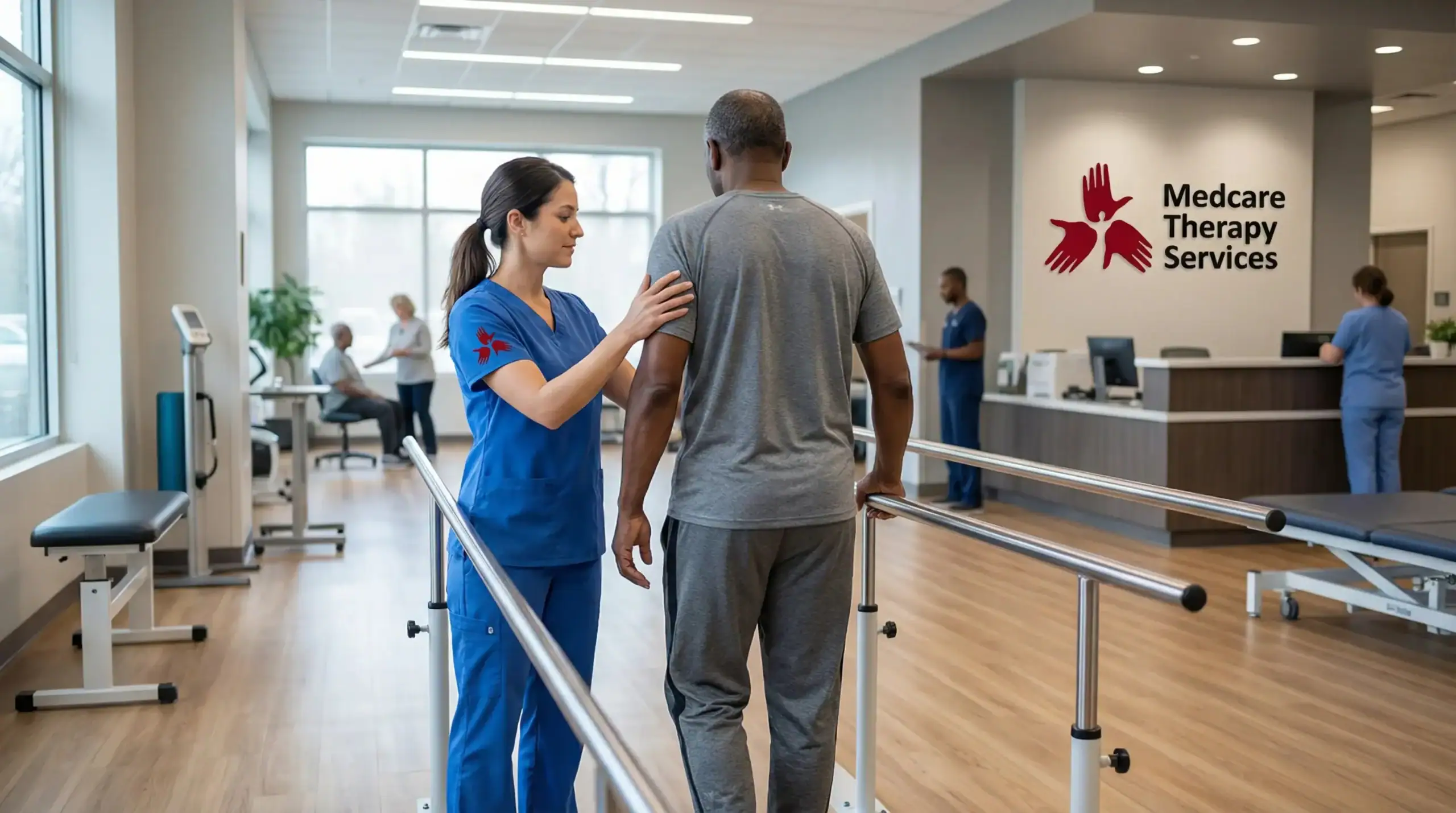
Most people start noticing small changes within two to three weeks. You might feel steadier getting out of bed, or notice you’re not grabbing the counter as often when you walk through the kitchen. Those early wins matter because they show your body is responding.
Significant improvement—the kind that reduces your actual fall risk—usually takes six to eight weeks of consistent therapy. That’s based on research showing that regular balance exercises can cut fall risk by up to 50% when done correctly over time.
Everyone’s timeline is different. If you’re recovering from a fall or dealing with other health issues, it may take longer. But even small gains add up, and we adjust your program as you get stronger so you keep progressing instead of plateauing.
You can do exercises on your own, but starting with a therapist makes a big difference. Here’s why: balance problems don’t all look the same. Your issue might be weak hips, poor proprioception, slow reflexes, or a combination of things. A physical therapist figures out what’s actually causing your instability and builds a program around that.
If you just follow a generic list of senior balance exercises online, you might miss the root problem. Or worse, you could do something that’s too advanced and increase your fall risk instead of lowering it.
Once you’ve worked with a therapist and learned the right exercises for your body, you can absolutely continue some of them independently. We’ll teach you what to do, how to do it safely, and when to progress. But the initial assessment and personalized plan? That’s where real fall prevention starts.
Yes, if it’s medically necessary. Medicare Part B covers outpatient physical therapy, including in-home visits, when it’s prescribed by your doctor and provided by a licensed therapist. Fall prevention qualifies if you have a documented fall risk or history of falling.
You’ll need a referral or prescription from your physician. Once we have that, we handle the rest—verification, billing, and coordination with Medicare. Most patients pay little to nothing out of pocket after their deductible is met.
We also accept most commercial insurance plans. If you’re not sure what your plan covers, call us. We’ll check your benefits before your first visit so there are no surprises. The goal is to make this easy for you to access, not to add more paperwork to your life.
That fear is exactly why we start slow and stay with you the entire time. You’re never asked to do something that puts you at risk. If an exercise feels too hard or too scary, we modify it or try a different approach.
A lot of fall prevention is about rebuilding your confidence, not just your strength. If you’re afraid to move, you’ll move less—and that actually makes you more likely to fall. So part of our job is helping you feel safe enough to challenge yourself in small, controlled ways.
We also use support when needed. That might mean holding onto a counter, using a chair for balance, or having the therapist close by to spot you. As you get stronger and more confident, we gradually reduce the support. But we never push you past what feels manageable. Your trust in your own body is just as important as the physical gains.
The biggest difference is convenience, but it’s not just about saving a trip. When therapy happens in your home, we see how you actually move in your real environment. We’re not guessing what your bathroom looks like or whether you have stairs. We’re working with you in the exact spaces where you need to feel stable.
That means the exercises are more relevant. If you struggle getting in and out of your specific shower, we address that. If your hallway is narrow or your floors are uneven, we factor that in. You’re training for your life, not for a generic therapy gym.
In-home therapy also works better if you have mobility issues, transportation challenges, or health conditions that make leaving the house difficult. You don’t have to arrange rides, sit in a waiting room, or worry about getting to appointments on time. The therapist comes to you, and the session happens when it’s supposed to—no delays, no stress.
First, falling once doesn’t mean the therapy isn’t working. Fall prevention lowers your risk—it doesn’t eliminate it completely. But if you do fall during treatment, we reassess immediately. We look at what happened, whether anything’s changed with your health or your home, and whether we need to adjust your program.
Sometimes a fall happens because you tried something new or pushed a little too hard. That’s feedback. We use it to recalibrate and make sure you’re progressing at the right pace. Other times, a fall points to something we didn’t catch in the initial assessment—a medication side effect, a vision issue, or a new pain that’s affecting how you move.
The key is that you’re not alone in figuring it out. You have a licensed therapist who knows your history, your goals, and your baseline. We don’t just hand you exercises and hope for the best. We stay involved, track your progress, and make changes when needed. That’s the difference between doing this on your own and doing it with professional support.
Other Services we provide in Center Moriches